The Short Answer: No, But the Glass Is Serious Engineering
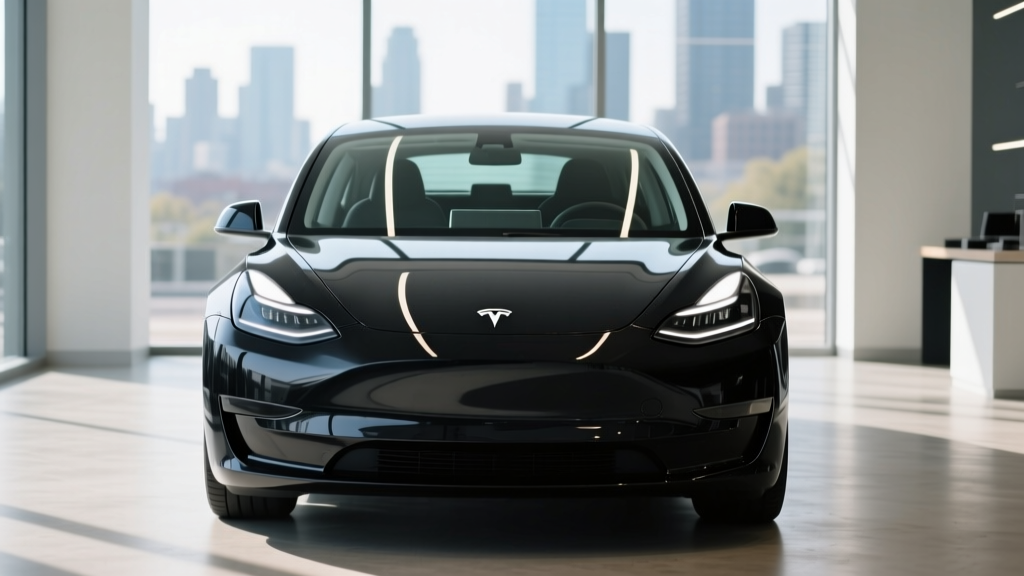
If you've searched "bullet proof windows tesla model 3" after watching the infamous 2019 Cybertruck demo where a metal ball shattered the concept vehicle's glass, you're not alone. The curiosity is understandable — Tesla's marketing often blurs the line between futuristic promises and production reality. But the 2026 Tesla Model 3 does not feature bulletproof windows. No mainstream production sedan sold in the United States does, for that matter. Bullet-resistant glass (technically called ballistic-rated glazing) is a multi-layer polycarbonate laminate that adds hundreds of pounds of weight and thousands of dollars of cost — an option reserved for armored vehicles like the Cadillac One presidential limousine or aftermarket upfitted SUVs.
What the 2026 Model 3 does have is a sophisticated acoustic laminated glass package that is far more advanced than standard automotive tempered glass. Since the "Highland" refresh (introduced for the 2024 model year and carried through 2026), every Model 3 sold in the U.S. features laminated glass on all four side windows in addition to the laminated windshield. This construction sandwiches a polyvinyl butyral (PVB) interlayer between two sheets of glass, delivering measurable benefits in noise reduction, UV blocking, and shatter resistance.
- Reduces cabin noise by up to ~30% at highway speeds vs. tempered glass
- Blocks ~99% of UV-A and UV-B radiation
- Holds together when struck (does not shatter into cubes like tempered glass)
- Provides a theft-deterrence barrier — significantly harder to smash through than tempered
- Contributes to roof-crush and side-impact structural rigidity
But laminated automotive glass is rated for impact, not ballistics. A 9mm round or .44 Magnum — the standard test calibers for NIJ Level II and III-A ballistic ratings — would penetrate it. If personal security in a hostile environment is your concern, you need a dedicated armored vehicle, not a Model 3.
2026 Tesla Model 3: Full EV Specs at a Glance
Before we dig deeper into the glass and safety story, here are the numbers buyers actually need. The 2026 Model 3 continues with three U.S. trims after the Long Range RWD was discontinued in late 2025: Standard Range RWD, Long Range AWD, and Performance AWD.
| Spec | Standard Range RWD | Long Range AWD | Performance AWD |
|---|---|---|---|
| EPA Range | 272 mi | 341 mi | 315 mi |
| Battery (usable) | ~57.5 kWh (LFP) | ~75 kWh (NMC) | ~75 kWh (NMC) |
| Drivetrain | Rear-Wheel Drive | Dual-Motor AWD | Dual-Motor AWD |
| Horsepower | 271 hp | 346 hp | 510 hp |
| 0-60 mph | 5.8 sec | 4.2 sec | 2.9 sec |
| Top Speed | 125 mph | 125 mph | 163 mph |
| Max DC Fast Charge | 170 kW | 250 kW | 250 kW |
| 10-80% DCFC Time | ~25 min | ~27 min | ~27 min |
| Level 2 (11.5 kW) | ~44 mi/hr | ~44 mi/hr | ~44 mi/hr |
| MPGe (combined) | 132 MPGe | 130 MPGe | 118 MPGe |
| Base MSRP | $38,990 | $45,740 | $52,990 |
Source: EPA fueleconomy.gov, Tesla.com. Destination charge ($1,390) additional.
Real-World Range vs. the EPA Sticker
EPA estimate: 341 miles
Observed highway (70 mph, 72°F): ~285-305 miles
Cold-weather highway (30°F, heater on): ~235-265 miles
City/regenerative driving (mild weather): ~330-355 miles
The EPA cycle is weighted toward city and low-speed driving, where regenerative braking recovers significant energy. On sustained 70-75 mph highway runs — the scenario that matters for road trips — expect the Long Range AWD to deliver roughly 85-90% of its sticker range in mild weather. The Standard Range RWD, with its smaller LFP battery and less favorable aerodynamic-to-mass ratio, tends to hit closer to 80-85% of its 272-mile EPA figure on the highway.
Cold weather compounds the loss. Lithium-ion cells suffer higher internal resistance below freezing, and cabin heating (even with the Model 3's efficient heat pump) pulls 2-5 kW continuously. In 20°F conditions on a 75-mph run, plan for roughly 70% of EPA range. Preconditioning the battery while plugged in mitigates some of this — a non-negotiable habit if you live north of the 37th parallel.
Charging Speed: The Real-World Curve
Tesla's published peak DC charge rates — 170 kW for Standard Range, 250 kW for Long Range and Performance — are peak values, not sustained averages. The actual charging curve matters more for trip planning.
| Level | Power | Miles Added per Hour | Notes |
|---|---|---|---|
| Level 1 (120V) | ~1.4 kW | ~4-5 mi/hr | Emergency/trickle only |
| Level 2 (240V, 48A) | 11.5 kW | ~44 mi/hr | Full overnight charge in 7-9 hrs |
| DC Fast (V3 Supercharger) | Up to 250 kW | ~175 mi in 15 min (peak) | 10-80% in ~27 min (LR/Perf) |
| DC Fast (V4 Supercharger) | Up to 250 kW* | Similar to V3 | *Model 3 limited by onboard architecture |
The Model 3 still uses a 400-volt-class architecture, which caps its charge rate below the 800V vehicles like the Hyundai Ioniq 5 (which peaks at 350 kW). The 250 kW peak on the Long Range holds only between roughly 10-30% state of charge, then tapers progressively. Between 50-80%, expect ~100-130 kW. Above 80%, charging slows dramatically to protect the cells — this is why Tesla's navigation system routes you to Superchargers that get you to ~80%, not 100%, for optimal road-trip time.
The LFP Standard Range model has a different charging personality. LFP cells tolerate regular 100% charging (Tesla actually recommends it weekly to maintain cell balancing), but the smaller pack and lower peak rate (170 kW) mean longer DC sessions in absolute minutes, even though the battery is smaller.
Safety Ratings, Glass Construction, and Crash Performance
While the Model 3 doesn't have bulletproof glass, its safety credentials are genuinely top-tier. The NHTSA has awarded the Model 3 a 5-Star Overall Safety Rating across every model year since 2018, with 5 stars in frontal crash, side crash, and rollover resistance.
The IIHS has historically named the Model 3 a Top Safety Pick+ when equipped with acceptable headlights. The laminated side glass introduced with the Highland refresh contributes to side-impact performance by maintaining window integrity during collisions — a meaningful upgrade over the tempered glass used on the 2017-2023 pre-refresh models.
Model 3 Glass Package Breakdown (2026)
- Windshield: Laminated acoustic (standard on all trims)
- Front side windows: Laminated acoustic (all trims)
- Rear side windows: Laminated acoustic (all trims)
- Rear window: Tempered (with defroster)
- Glass roof: Laminated, tinted, UV-blocking
The acoustic laminate measurably lowers cabin noise. Independent testing by multiple outlets has recorded the refreshed Model 3 at roughly 64-66 dB at 70 mph — competitive with luxury sedans costing twice as much. This is a tangible daily benefit that matters more than hypothetical ballistic protection for 99.9% of owners.
Pricing, Trims, and Federal Tax Credit Eligibility
The 2026 Model 3 pricing structure reflects Tesla's ongoing effort to position the sedan as an accessible entry point while the Model Y handles the SUV volume. Here's how the numbers stack up after incentives:
| Trim | MSRP (incl. dest.) | §30D Credit | Effective Price* |
|---|---|---|---|
| Standard Range RWD | $40,380 | $3,750 (partial) | ~$36,630 |
| Long Range AWD | $47,130 | $3,750 (partial) | ~$43,380 |
| Performance AWD | $54,380 | $3,750 (partial) | ~$50,630 |
*Effective price assumes full buyer eligibility. Credit amounts and sourcing requirements subject to change — verify at IRS.gov before purchase.
- MSRP cap: Sedans must be ≤ $55,000 (all Model 3 trims qualify on sticker price)
- Buyer income cap: MAGI ≤ $150K single / $225K head of household / $300K joint
- Battery sourcing: The $7,500 credit splits into two $3,750 halves — critical minerals and battery component requirements. The Model 3's LFP Standard Range uses CATL cells (China), which currently fails the critical-minerals test, qualifying for only $3,750. Long Range/Performance with NMC cells sourced from Panasonic (Nevada) typically qualify for the partial credit as well due to evolving mineral-sourcing rules.
- Point-of-sale transfer: Eligible buyers can transfer the credit to the dealer at purchase for an immediate price reduction
- FEOC exclusion: Vehicles with battery components from "foreign entities of concern" (primarily Chinese-owned firms) after 2024 face restrictions — Tesla's supply chain navigation of this rule has been a moving target
Consult a tax professional. Rules change, and your individual MAGI and filing status determine eligibility.
Interior, Cargo, and Daily Practicality
The 2026 Model 3 interior reflects the Highland refresh's most welcome upgrades: ventilated front seats, ambient lighting, rear-seat touchscreen, acoustic glass, and a substantially quieter cabin. The minimalist ethos remains — no instrument cluster, no physical stalks (turn signals are on the steering wheel rim, which still divides opinion two years in).
Dimensions & Space
- Cargo volume (trunk + frunk): 23.0 cu ft (19.8 rear + 3.1 front)
- Front headroom: 40.3 in
- Front legroom: 42.7 in
- Rear headroom: 37.8 in
- Rear legroom: 35.2 in
- Curb weight: 3,862 - 4,065 lbs (trim dependent)
Rear-seat space is adequate for adults on shorter trips but tighter than a Hyundai Ioniq 6 or BMW i4. The glass roof creates an airy feel but reduces headroom vs. a conventional steel roof with headliner padding. Cargo volume is competitive for the compact luxury sedan segment, and the frunk adds useful space for charging cables or a small bag.
Standout Tech
- 15.4-inch center touchscreen with Ryzen-based processor
- 8.0-inch rear passenger touchscreen (HVAC, media, climate)
- Tesla Vision (camera-only) Autopilot standard; FSD (Supervised) available as $8,000 option or $99/mo subscription
- Sentry Mode with all-camera recording
- Over-the-air updates, Dog Mode, Camp Mode
- Native NACS charge port — full access to Tesla Supercharger network (20,000+ stalls in North America)
Notable Drawbacks
- No physical turn-signal stalk — button-based system on steering wheel requires adaptation
- No Apple CarPlay or Android Auto
- No HUD (head-up display)
- No ultrasonic parking sensors (Tesla Vision only — performance in heavy rain or dirty cameras can degrade)
- FSD (Supervised) remains SAE Level 2 — driver must remain fully engaged at all times
Pros, Cons, and Who Should Buy
✓ Pros
- Best-in-class Supercharger network access (NACS native)
- Excellent efficiency (132 MPGe combined on Standard Range)
- Industry-leading software and OTA updates
- Quiet cabin with laminated acoustic glass all around
- Strong resale value relative to non-Tesla EVs
- Performance trim offers supercar acceleration at sedan pricing
✗ Cons
- Turn-signal buttons on wheel are a real ergonomic regression
- No CarPlay — a dealbreaker for many non-Tesla shoppers
- FSD (Supervised) is expensive and still requires full attention
- Rear seat space trails key competitors
- Tax credit eligibility complicated by battery-sourcing rules
- Insurance costs run 15-25% above segment average
Who the 2026 Model 3 Suits Best
Ideal for: Tech-forward commuters who value efficiency, Supercharger access, and over-the-air feature updates. Single professionals or couples without large car seats. Buyers in states with robust Tesla Supercharger coverage who road-trip 2-4 times per year.
Look elsewhere if: You need maximum rear-seat space (check the Ioniq 6 or BMW i4), you rely on CarPlay, you want physical controls for common functions, or you need Level 4 autonomy (no consumer vehicle offers this).
Model 3 vs. Key Competitors: Is It Worth It?
The compact electric sedan segment in 2026 is meaningfully competitive. Here's how the Model 3 Long Range AWD stacks up against three credible alternatives:
| Metric | Tesla Model 3 LR AWD | Hyundai Ioniq 6 LR AWD | BMW i4 eDrive40 | Polestar 2 LR DM |
|---|---|---|---|---|
| EPA Range | 341 mi | 316 mi | 307 mi | 276 mi |
| Peak DC Charge | 250 kW | 350 kW | 205 kW | 205 kW |
| 0-60 mph | 4.2 sec | 5.1 sec | 5.5 sec | 4.3 sec |
| Base MSRP | $45,740 | $46,500 | $57,900 | $51,300 |
| Charge Port | NACS (native) | CCS1 (NACS adapter avail.) | CCS1 (NACS adapter avail.) | CCS1 (NACS adapter avail.) |
| CarPlay | No | Yes (wireless) | Yes (wireless) | Yes (wired) |
The Model 3 wins on range, efficiency, and native Supercharger access. The Ioniq 6 wins on DC charging speed (its 800V architecture is genuinely faster) and ergonomics. The BMW i4 wins on build quality and driving dynamics but costs significantly more. The Polestar 2 is aging and trails on range.
Frequently Asked Questions
Are Tesla Model 3 windows bulletproof?
No. The 2026 Model 3 uses laminated acoustic glass on the windshield and all four side windows, which improves noise isolation, UV blocking, and shatter resistance — but it is not rated for ballistic protection. Bullet-resistant glass requires multi-layer polycarbonate laminates not used in any mainstream production sedan.
What is the real-world highway range of the 2026 Tesla Model 3?
The Long Range AWD is EPA-rated at 341 miles, but real-world highway driving at 70-75 mph in mild weather yields approximately 285-305 miles. In cold weather (below 30°F), expect 235-265 miles on the highway. The Standard Range RWD delivers roughly 220-240 highway miles in mild conditions.
How fast does the Model 3 charge at a Supercharger?
The Long Range and Performance trims peak at 250 kW on V3/V4 Superchargers, adding up to 175 miles in 15 minutes under ideal conditions. A 10-80% session takes approximately 27 minutes. The Standard Range RWD peaks at 170 kW with a 10-80% time of about 25 minutes. All trims taper significantly above 80% SoC.
Does the 2026 Tesla Model 3 qualify for the $7,500 federal tax credit?
As of early 2026, most Model 3 trims qualify for a partial $3,750 credit under IRS §30D due to battery-sourcing and critical-minerals requirements. The full $7,500 requires both halves of the credit to be satisfied, which Tesla's current supply chain configuration does not consistently meet. Buyer income caps ($150K/$225K/$300K MAGI) and the $55,000 sedan MSRP cap also apply. Verify current eligibility at IRS.gov before purchasing.
Is the Tesla Model 3 still worth buying vs. competitors in 2026?
Yes, if Supercharger network access, efficiency, and software are your top priorities. The Model 3 Long Range AWD offers the best range-per-dollar in its segment and native NACS charging. However, the Hyundai Ioniq 6 charges faster, offers CarPlay, and has more conventional ergonomics. The BMW i4 delivers superior build quality at a higher price. Test-drive all three before deciding.
Does laminated glass on the Model 3 prevent break-ins?
Laminated side glass is significantly harder to break through than tempered glass — a would-be thief needs sustained, repeated strikes rather than a single window-punch. It's a meaningful deterrent but not impervious. Sentry Mode's camera recording adds an additional layer of security, though it cannot prevent a determined break-in.
What is the battery warranty on the 2026 Model 3?
Tesla covers the battery and drive unit for 8 years or 100,000 miles (Standard Range) and 8 years or 120,000 miles (Long Range and Performance), whichever comes first. The warranty guarantees at least 70% battery capacity retention over the coverage period.
Sources: EPA fueleconomy.gov, IRS §30D Clean Vehicle Credits, NHTSA, IIHS, Tesla.com. Pricing and credit eligibility current as of publication; verify before purchase.