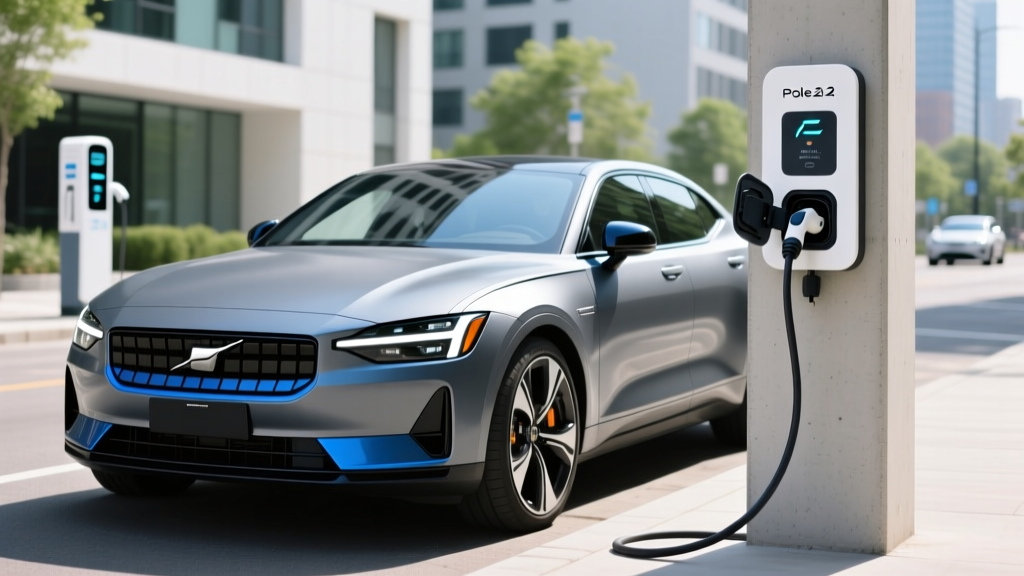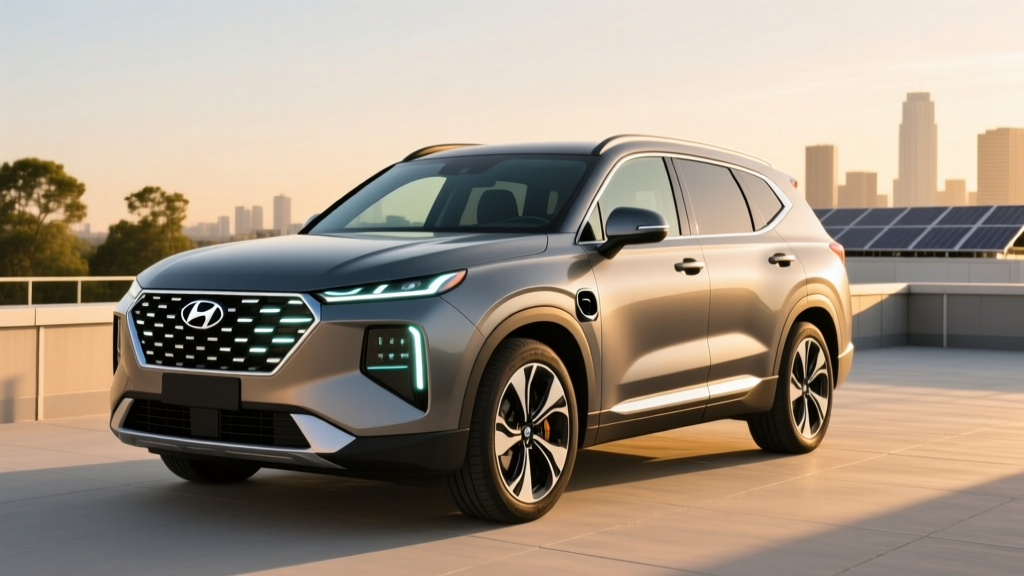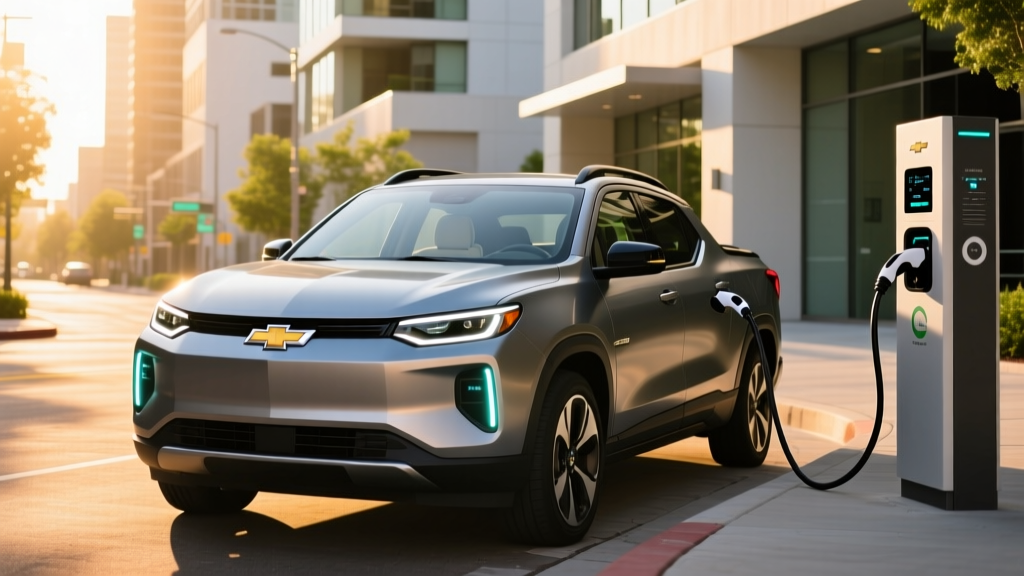
The short answer: The electric Chevrolet S10 is a compact EV pickup built by General Motors exclusively for Latin American markets (primarily Brazil). As of 2026, it is not available for purchase in the United States, and GM has announced no plans to import it. US buyers looking for an electric truck should instead consider the Chevrolet Silverado EV, Ford F-150 Lightning, Rivian R1T, or Hyundai Ioniq 5-based Santa Cruz EV concepts. Below, we break down exactly what the electric S10 offers abroad, how it compares to US-available electric trucks, and what ownership costs look like if a similar compact EV pickup ever reaches American shores.
What Is the Electric Chevrolet S10?
The Chevrolet S10 nameplate has been a staple of GM's Latin American lineup for decades, serving as a midsize pickup roughly analogous to the Colorado sold in the US. In late 2024, GM unveiled an electric version of the next-generation S10 for the Brazilian market, built on a dedicated EV platform. The truck targets fleet operators and urban delivery use cases where compact dimensions, lower operating costs, and zero tailpipe emissions provide clear advantages.
For US shoppers who've encountered the keyword "electric Chevrolet S10" in searches or news feeds, the confusion is understandable. The S10 was once a US-market compact truck (discontinued after 2004 in favor of the Colorado). But the modern electric S10 is a fundamentally different vehicle, engineered for markets with different size requirements, regulatory standards, and charging infrastructure.
Electric Chevrolet S10: Known Specifications
Because the electric S10 is not EPA-certified for US sale, we don't have fueleconomy.gov data. The following specs are based on GM do Brasil's preliminary announcements and Latin American automotive press reports. Treat these as estimated figures subject to change.
| Specification | Electric Chevrolet S10 (Preliminary) |
|---|---|
| Battery Capacity | ~85 kWh (estimated, NMC chemistry) |
| EPA-Equivalent Range | ~230–260 mi (WLTP-based estimate; no EPA rating) |
| Peak DC Fast Charge Rate | ~150 kW (estimated) |
| 10–80% DC Charge Time | ~30 minutes (estimated) |
| Motor Output | ~200 hp / ~228 lb-ft (single motor, RWD expected) |
| 0–60 mph | Not published (est. 7.5–8.5 sec) |
| Payload Capacity | ~1,000 kg (~2,200 lbs) estimated |
| Towing Capacity | Not published for EV variant |
| Connector Standard | CCS2 (Latin American market standard) |
| Estimated MSRP (Brazil) | ~R$ 250,000–300,000 (~$45,000–$55,000 USD equivalent) |
| US Availability | Not available; no announced US plans |
Important caveat: WLTP range figures used in Latin America and Europe typically run 10–15% higher than US EPA estimates for the same vehicle. If the electric S10 were EPA-rated, expect a sticker closer to 220–240 miles. Real-world highway range in cold weather could drop to 170–190 miles.
How Does It Compare to US Electric Trucks?
Since you can't buy the electric S10 in the US, here's how its projected specs stack up against electric trucks you can actually purchase in 2026.
| Spec | Electric S10 (Est.) | Chevy Silverado EV 4WT | Ford F-150 Lightning (Std Range) | Rivian R1T (Dual Motor) |
|---|---|---|---|---|
| EPA Range | ~230 mi (est.) | 390 mi | 240 mi | 270 mi |
| Battery | ~85 kWh | 200 kWh | 98 kWh | 106 kWh |
| Peak DC Charge | ~150 kW | 350 kW | 150 kW | 200+ kW |
| 10–80% Time | ~30 min | ~20 min | ~41 min | ~27 min |
| Horsepower | ~200 hp | 510 hp | 452 hp | 533 hp |
| Towing | N/A | 8,000 lbs | 7,700 lbs | 11,000 lbs |
| Base MSRP | N/A (not US) | $57,900 | $54,995 | $69,900 |
| Federal Tax Credit | N/A | Up to $7,500* | Up to $7,500* | Up to $7,500* |
*Federal EV tax credit eligibility under IRS §30D depends on MSRP caps ($80,000 for trucks/vans/SUVs), buyer income limits ($150K single / $300K joint), and battery critical-mineral sourcing requirements. Always verify current-year eligibility with a tax professional or the IRS website. Point-of-sale transfer is available at participating dealers.
The comparison reveals a significant capability gap. The Silverado EV and F-150 Lightning are full-size trucks with substantially more range, power, and towing capacity than the compact electric S10 would offer. The closest US-market analog to the S10's size class would be a compact EV pickup — a segment that remains largely vacant in the US as of 2026. The Hyundai Santa Cruz and Ford Maverick are compact trucks, but neither currently offers a battery-electric variant.
EV Truck Ownership Costs: What the Data Shows
Whether you're considering a Silverado EV, F-150 Lightning, or waiting for a compact electric truck, the ownership economics follow a consistent pattern. Let's break down a 5-year total cost of ownership (TCO) comparison using a US-available electric truck versus a comparable gas-powered midsize pickup.
| Cost Category (5 Years / 75,000 mi) | EV Truck (e.g., F-150 Lightning) | Gas Truck (e.g., Chevy Colorado 2.7T) |
|---|---|---|
| Purchase Price (after credit) | $47,495 ($54,995 - $7,500) | $38,000 |
| Fuel / Electricity | $3,750 (home L2, $0.15/kWh avg) | $9,375 (22 MPG, $3.50/gal avg) |
| Maintenance | $1,800 (no oil, fewer brake pads) | $3,500 (oil, filters, brakes, plugs) |
| Insurance (avg) | $10,500 ($2,100/yr EV premium) | $8,250 ($1,650/yr) |
| Depreciation (est.) | $22,000 | $16,000 |
| Total 5-Year TCO | $85,545 | $75,125 |
Key takeaways from this breakdown:
- Fuel savings are real: Home-charging an EV truck at $0.15/kWh costs roughly $0.05/mile versus $0.16/mile for a gas truck averaging 22 MPG. Over 75,000 miles, that's ~$5,600 in savings.
- Maintenance savings are real but smaller: Expect to save $1,500–$2,000 over five years from eliminating oil changes and reducing brake wear (thanks to regenerative braking).
- Insurance costs more: EV trucks typically carry a 15–25% insurance premium due to higher repair costs and parts pricing. Budget an extra $300–$500/year.
- Depreciation is the wildcard: EV depreciation has been volatile. Early adopters of the F-150 Lightning saw steeper-than-expected drops in 2023–2024, though values have stabilized. Gas trucks hold value more predictably.
- The upfront gap matters: Even after a $7,500 federal credit, the EV truck costs ~$9,500 more to purchase. The 5-year fuel and maintenance savings (~$7,300 combined) don't fully close that gap unless you drive significantly more than 15,000 miles/year.
Bottom line: EV trucks save money on fuel and maintenance but cost more upfront and in insurance. The breakeven point typically arrives around year 6–8 for average-mileage drivers, or year 4–5 for high-mileage drivers (20,000+ miles/year) who charge primarily at home.
Real-World Ownership: What First-Time EV Truck Buyers Must Know
If you're considering any electric truck — whether a current US model or a future compact option — these practical realities shape daily ownership:
Home Charging Is Almost Mandatory
Public DC fast charging an EV truck is expensive ($0.35–$0.55/kWh at networks like Electrify America or EVgo) and erases most fuel-cost advantages. The economics only work with Level 2 home charging. Expect to invest $800–$2,000 in a 240V / 48A home charger installation (equipment plus electrician labor), and potentially $2,000–$5,000 more if your home needs an electrical panel upgrade from 100A to 200A service.
Range Drops in Cold Weather and at Highway Speeds
Any EV truck's EPA range is a best-case laboratory number. In real-world testing:
- Highway driving at 70+ mph: Expect 85–90% of EPA range
- Cold weather (below 30°F): Expect 65–80% of EPA range without preconditioning; a heat pump helps but doesn't eliminate loss
- Towing: Range can drop 40–50% when towing near max capacity — this is the single biggest range killer for truck owners
DC Fast Charging Slows Above 80%
Advertised "150 kW" or "350 kW" peak charge rates apply only in a narrow state-of-charge window (typically 10–40%). Above 80% SoC, charge rates taper dramatically to protect battery health. A truck that charges 10–80% in 25 minutes may need another 30 minutes to reach 100%. Plan road trips around 80% stops unless you need the full battery.
Charging Infrastructure Varies Wildly
Urban and suburban EV truck owners along the coasts and in major metros have robust public charging options. Rural owners and those in the Great Plains, Mountain West, or rural South may face "charging deserts" where the nearest DC fast charger is 50+ miles away. Check PlugShare or the AFDC station locator before committing to an EV truck if you live outside major metro areas.
Common Misconceptions About Electric Trucks
| Myth | Fact |
|---|---|
| "Electric trucks can't tow anything useful." | The F-150 Lightning tows 7,700 lbs; the Silverado EV tows up to 10,000 lbs in Work Truck trim. Range drops significantly while towing, but capability is real. |
| "EV batteries need replacing every few years." | Modern NMC and LFP batteries are warranted for 8 years / 100,000 miles at 70%+ capacity retention. Real-world degradation data from early Model 3 and Bolt owners shows ~10–15% loss at 100K miles — well within warranty. |
| "The $7,500 tax credit applies to every EV." | IRS §30D has strict requirements: vehicle MSRP caps, buyer income limits, and battery-sourcing rules that disqualify many models. Always verify on irs.gov before purchasing. |
| "Charging an EV truck costs the same as gas." | Home charging at $0.15/kWh costs roughly $0.05/mile. Gas at $3.50/gal in a 22 MPG truck costs $0.16/mile. But public DC fast charging at $0.45/kWh can cost $0.14/mile — nearly the same as gas. |
| "I need a special electric panel to charge at home." | Most homes with 200A service can add a 48A Level 2 charger without a panel upgrade. Homes with 100A service may need an upgrade ($2K–$5K). A licensed electrician should assess your panel before purchase. |
Decision Framework: Should You Wait for a Compact EV Truck or Buy Now?
If you need an electric truck today:
- Full-size work truck (towing, job site): Chevrolet Silverado EV or Ford F-150 Lightning. Both offer 240–390 miles of range, 7,700–10,000 lb towing, and qualify for up to $7,500 in federal credits (verify your eligibility).
- Lifestyle/adventure truck: Rivian R1T remains the most capable all-around electric truck with 270+ mile range, 11,000 lb towing, and genuine off-road capability — but starts at $69,900.
- Budget-conscious daily driver: The F-150 Lightning Pro at ~$54,995 (before credit) is the most affordable full-size electric truck. After the $7,500 credit, it lands near $47,500.
If you specifically want a compact electric truck (S10-size):
- No current US option exists in the compact electric truck segment as of 2026.
- The Ford Maverick and Hyundai Santa Cruz are compact gas/hybrid trucks with no confirmed EV variants on sale.
- GM's Ultium platform could underpin a future US compact EV truck, but nothing has been officially announced.
- If a compact EV truck is essential to your needs, consider a used Chevy Bolt EUV or a small crossover like the Hyundai Kona Electric (261 mi range, ~$33,000) as a temporary bridge until the segment develops.
If you don't actually need a truck:
- A compact EV crossover (Hyundai Ioniq 5, Kia EV6, Tesla Model Y) will deliver better range, faster charging, and lower costs than any electric truck. Trucks carry a range and efficiency penalty due to weight and aerodynamics.
Frequently Asked Questions
Will the electric Chevrolet S10 ever be sold in the United States?
As of 2026, GM has not announced any plans to sell the electric S10 in the US market. The truck is designed and manufactured for Latin American markets. GM's US electric truck strategy centers on the Silverado EV and the Equinox EV / Blazer EV crossovers. If GM introduces a compact electric truck for the US, it would more likely be based on the Colorado platform and branded accordingly.
What's the cheapest electric truck I can buy in the US right now?
The Ford F-150 Lightning Pro starts at approximately $54,995 MSRP. If you qualify for the full $7,500 federal tax credit under IRS §30D (income limits, MSRP caps, and battery-sourcing rules apply), your effective price drops to around $47,500. The Chevrolet Silverado EV 4WT starts at ~$57,900. There are no electric trucks under $50,000 MSRP in the US market as of 2026.
How much does it cost to charge an electric truck at home?
At the US average residential electricity rate of ~$0.16/kWh (EIA 2025 data), fully charging a 100 kWh battery (like the F-150 Lightning standard range) costs approximately $16. That provides roughly 240 miles of range — equivalent to about 11 gallons of gas at $3.50/gal ($38.50). Home charging an EV truck is roughly 55–60% cheaper per mile than fueling a comparable gas truck.
Can I use a regular 120V outlet to charge an electric truck?
Yes, but it's painfully slow. Level 1 charging (120V / 12A) delivers roughly 1.4 kW, adding about 3–4 miles of range per hour to a truck. Fully recharging a 100 kWh battery from empty would take 60–70 hours. Level 1 is only practical for overnight top-ups if you drive fewer than 30 miles per day. A Level 2 home charger (240V / 48A, ~11.5 kW) is strongly recommended and adds roughly 25–30 miles per hour of charging.
Do electric trucks qualify for the $7,500 federal tax credit?
Many do, but eligibility is not universal. Under current IRS §30D rules, the vehicle must have an MSRP under $80,000 (for trucks/vans/SUVs), the buyer must have adjusted gross income below $150,000 (single) or $300,000 (joint), and the battery must meet critical-mineral and component-sourcing requirements that change annually. Some trims may qualify for only $3,750 or nothing at all depending on battery sourcing. Always check the latest eligibility list on irs.gov and consult a tax professional before relying on the credit in your purchase decision.
What happens to an electric truck battery after 100,000 miles?
Federal law requires EV battery warranties of at least 8 years / 100,000 miles. Most manufacturers warrant their batteries to retain at least 70% of original capacity over that period. Real-world data from early long-range EVs (Tesla Model 3, Chevy Bolt) shows typical degradation of 10–15% at 100K miles. Out-of-warranty battery replacement for a truck-sized pack (100–200 kWh) currently costs $15,000–$30,000 depending on size and chemistry, though prices are expected to decline as battery manufacturing scales.