When Tesla Motors went public in June 2010 at $17 per share, skeptics called it the most ambitious IPO since the dot-com bust. Sixteen years later, the company that once hand-built Roadsters in a Silicon Valley garage has reshaped the entire auto industry. For buyers in 2026, the most tangible legacy of that IPO is the Tesla Model 3 — the mass-market sedan that made EVs mainstream. This review covers the 2026 Model 3 lineup in detail: real-world range, charging speeds, tax-credit math, and whether it still earns its spot against a field of competitors that didn't exist when Tesla first rang the NASDAQ bell.
2026 Tesla Model 3 at a Glance: Key Specs
| Spec | RWD Long Range | Long Range AWD | Performance |
|---|---|---|---|
| EPA Range | 363 mi | 346 mi | 330 mi |
| Battery (usable) | ~75 kWh LFP | ~75 kWh NMC | ~75 kWh NMC |
| Max DC Fast Charge | 170 kW | 250 kW | 250 kW |
| 10–80% DC Time | ~28 min | ~18 min | ~18 min |
| Level 2 Rate | 11.5 kW (~44 mi/hr) | 11.5 kW (~44 mi/hr) | 11.5 kW (~44 mi/hr) |
| 0–60 mph | 5.8 sec | 4.2 sec | 2.9 sec |
| Horsepower | 283 hp | 384 hp | 510 hp |
| Drivetrain | RWD | Dual-Motor AWD | Dual-Motor AWD |
| MPGe (combined) | 132 MPGe | 125 MPGe | 119 MPGe |
| Base MSRP | $38,990 | $44,990 | $52,990 |
| Battery Warranty | 8 yr / 120,000 mi | 8 yr / 120,000 mi | 8 yr / 120,000 mi |
Sources: fueleconomy.gov, Tesla spec sheets. Figures reflect 2026 model year.
Real-World Range: What the EPA Sticker Doesn't Tell You
EPA Combined: 363 mi (RWD Long Range)
Expect in practice: ~290–310 mi at sustained highway speeds (70–80 mph). In freezing temperatures (below 30°F), plan for 220–260 mi depending on cabin heat use and whether you precondition. City driving with regen braking returns results closest to the EPA figure, often exceeding 330 mi in mild weather.
The 2026 Model 3 RWD Long Range achieves its 363-mile EPA rating thanks to a combination of low drag coefficient (0.219 Cd), heat-pump climate control, and a highly efficient permanent-magnet motor. But EPA testing runs on a dynamometer with moderate speeds and gentle acceleration — it doesn't replicate an I-70 road trip at 80 mph in January.
Here's what the data actually shows from owner logging and independent testing:
- Highway (75 mph, 65°F): ~300–310 mi usable before the car suggests you find a charger
- Highway (75 mph, 20°F): ~230–260 mi — cold densifies air (more drag) and battery chemistry slows, plus resistive heating draws energy even with the heat pump
- City / suburban mixed (55°F): ~340–360 mi — regen recovers braking energy, and lower speeds cut aero losses dramatically
- Mountain pass (elevation gain): Highly variable; expect 2–3 mi/kWh on steep climbs, partially offset by regen on descent
Practical advice: If your daily commute is under 80 miles round-trip, any Model 3 trim will handle it for days without charging. For road trips, plan around 200–250 miles between Supercharger stops to stay in the fast-charging sweet spot (10–80% SoC) and avoid the steep taper above 80%.
Charging Speed: Supercharger Network and Home Setup
Charging is where Tesla's early-mover advantage from its post-IPO years still pays dividends. The Supercharger network remains the most reliable DC fast-charging infrastructure in North America, and the 2026 Model 3 takes full advantage.
| Charging Level | Power | Speed (miles added) | Use Case |
|---|---|---|---|
| Level 1 (120V household) | ~1.4 kW | ~5 mi/hr | Overnight top-off, emergency |
| Level 2 (240V home / public) | 11.5 kW max | ~44 mi/hr | Daily home charging (full in ~7 hrs) |
| DC Fast (V3 Supercharger) | Up to 250 kW | ~170 mi in 15 min (AWD) | Road trips |
| DC Fast (V4 Supercharger) | Up to 250 kW | ~170 mi in 15 min | Newer stations, same peak rate |
Understanding the charge curve: The 250 kW peak on AWD and Performance trims only holds between roughly 10–35% State of Charge (SoC). After that, the rate tapers — dropping to ~150 kW by 50%, ~100 kW by 65%, and ~50 kW by 80%. This is why the 10–80% time of ~18 minutes is the more useful metric than peak kW. Charging from 80–100% at a DC fast charger can take nearly as long as the first 70%, so plan your stops accordingly.
The RWD Long Range uses an LFP (lithium iron phosphate) battery, which charges at a lower peak of 170 kW. LFP's trade-off is slower fast-charging in exchange for longer cycle life and the ability to regularly charge to 100% without degradation concerns — a significant advantage for daily drivers who want maximum range every morning.
Home charging cost: At the US average residential rate of ~$0.17/kWh, fully charging a 75 kWh battery costs roughly $12.75 — delivering 300+ real-world miles. That's approximately $0.04 per mile, compared to $0.12–$0.15/mi for a 30 MPG gas car at $3.50/gallon.
Performance and Driving Dynamics
The 2026 Model 3 Performance delivers a 2.9-second 0–60 mph time that embarrasses most sports cars at a third of the price. But even the base RWD Long Range at 5.8 seconds is genuinely quick for a daily commuter — faster than most V6 sedans and plenty for confident highway merging.
Key driving characteristics across the lineup:
- Ride quality: The 2024 "Highland" refresh significantly improved suspension compliance, and the 2026 model carries those gains forward. Road noise is well-controlled at highway speeds — a former Model 3 weakness that Tesla addressed with acoustic glass and better damping.
- Regen braking: Strong single-pedal driving mode allows most commutes without touching the brake pedal. The friction brakes last well past 80,000 miles in typical use.
- Handling: Low center of gravity from the floor-mounted battery pack gives confident cornering. The Performance trim adds adaptive dampers and a track mode.
- Towing: Not rated for towing. If you need tow capacity, look at the Model Y or a truck-platform EV.
Pricing, Tax Credits, and True Cost of Ownership
| Trim | Base MSRP | Federal Credit (§30D) | Effective Price |
|---|---|---|---|
| RWD Long Range | $38,990 | Up to $7,500* | ~$31,490* |
| Long Range AWD | $44,990 | Up to $7,500* | ~$37,490* |
| Performance | $52,990 | Up to $7,500* | ~$45,490* |
*Federal tax credit eligibility under IRS §30D depends on: buyer AGI (≤$150K single / ≤$300K joint), vehicle MSRP (≤$55,000 for sedans), and battery critical-mineral + component sourcing requirements that shift annually. As of 2026, qualifying Model 3 trims built at Giga Texas with North American-sourced battery components may receive the full $7,500 as a point-of-sale rebate. Always verify current eligibility at irs.gov and consult a tax professional.
5-year ownership snapshot (Long Range AWD, 15,000 mi/yr):
- Electricity (home charging): ~$3,600 (at $0.17/kWh national average)
- Gasoline equivalent (30 MPG sedan): ~$8,750 (at $3.50/gal)
- Maintenance: ~$800 (cabin filter, wipers, brake fluid check — no oil, spark plugs, or transmission fluid)
- Insurance: ~$1,200–$1,800/yr depending on state and profile (EVs tend to carry higher premiums due to repair costs)
- Estimated 5-yr fuel savings vs. gas: ~$5,150
Tesla's battery and drive-unit warranty covers 8 years or 120,000 miles (whichever comes first) with a minimum 70% capacity retention threshold. Real-world degradation data from high-mileage owners suggests most Model 3 NMC batteries retain 85–90% capacity at 100,000 miles, with LFP packs showing even less degradation thanks to their chemistry advantages.
Interior, Tech, and Cargo Space
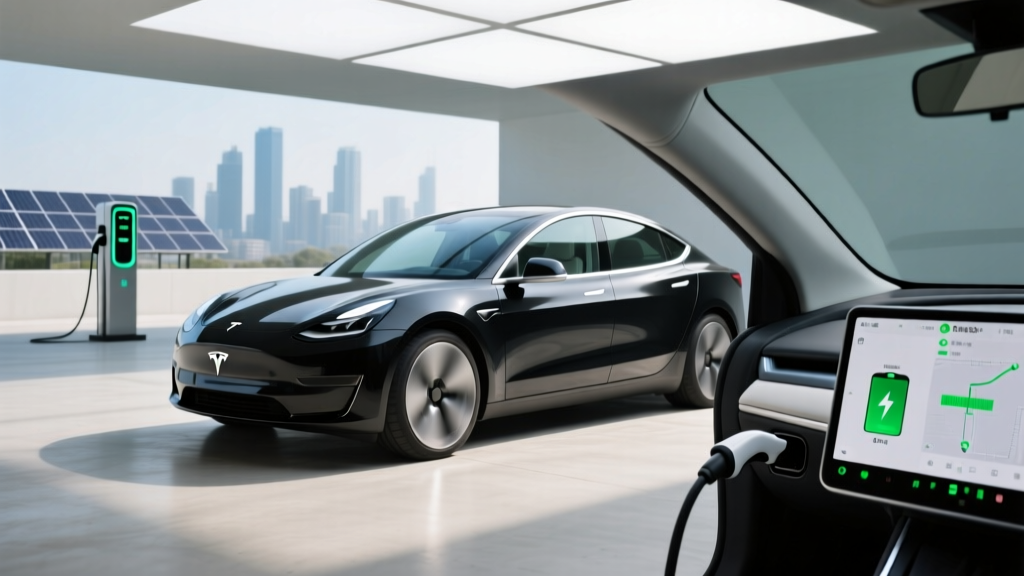
The 2026 Model 3 interior reflects Tesla's minimalist philosophy — a single 15.4-inch center touchscreen controls nearly every function, from climate to mirrors to glove-box release. There is no instrument cluster; speed and navigation appear on the main screen (and a small secondary display for rear passengers on higher trims).
Dimensions:
- Front legroom: 42.7 in
- Rear legroom: 35.2 in (adequate for adults under 6'0", tight for taller passengers)
- Cargo (trunk): 23 cu ft
- Cargo (front trunk / frunk): 3.1 cu ft — useful for charging cables or a small bag
- Total cargo: ~26 cu ft (or ~60 cu ft with 60/40 rear seats folded)
Standout tech:
- Autopilot (standard): SAE Level 2 driver assistance — adaptive cruise, lane-keeping, auto lane-change on highways. The driver must remain engaged at all times.
- Full Self-Driving Supervised (optional, ~$8,000): Adds city-street navigation, traffic-light recognition, and automatic parking. Still SAE Level 2 — not autonomous. Hands-on, eyes-on required.
- Over-the-air updates: Tesla pushes software improvements regularly, adding features and refining efficiency without a dealer visit.
- Sentry Mode / Dashcam: Uses the car's camera suite for 360° security recording when parked.
ADAS clarity: Autopilot and FSD Supervised are SAE Level 2 driver-assistance systems. They do not make the Model 3 self-driving. You are the driver — legally responsible and required to monitor the road. Only Level 4 robotaxi services (Waymo, Zoox) operate without a human driver, and those are geofenced to specific cities.
Who Should Buy the 2026 Tesla Model 3?
Choose the Model 3 RWD Long Range if: You commute under 80 miles daily, have home Level 2 charging, want the lowest cost per mile, and don't need AWD. LFP chemistry means you can charge to 100% daily without guilt.
Choose the Long Range AWD if: You live in a climate with snow or rain, take regular road trips (the 250 kW peak charging is a meaningful advantage), and want the safety margin of dual-motor traction.
Choose the Performance if: You want sports-car acceleration, adaptive dampers, and track capability — and you're willing to sacrifice ~33 miles of range and pay a $8,000 premium over AWD.
Look elsewhere if: You need more than 26 cu ft of cargo (consider the Model Y), you need towing, you want a traditional instrument cluster and physical buttons, or you lack reliable home charging access.
Model 3 vs. Key Competitors in 2026
| Spec | Tesla Model 3 LR AWD | Hyundai Ioniq 6 SEL | BMW i4 xDrive40 | Polestar 2 LR DM |
|---|---|---|---|---|
| EPA Range | 346 mi | 361 mi | 307 mi | 327 mi |
| DC Fast Peak | 250 kW | 235 kW | 205 kW | 205 kW |
| 10–80% Time | ~18 min | ~18 min | ~21 min | ~22 min |
| 0–60 mph | 4.2 sec | 5.1 sec | 4.5 sec | 4.1 sec |
| Base MSRP | $44,990 | $42,500 | $57,900 | $52,500 |
| Charging Network | Supercharger (native) | NACS adapter needed* | NACS adapter needed* | NACS adapter needed* |
| Federal Credit | Up to $7,500 | Up to $7,500 | Up to $7,500 | Likely ineligible (MSRP/sourcing) |
*As of 2026, most non-Tesla EVs use NACS connectors natively or via included adapters following the industry-wide shift to Tesla's charging standard.
The Model 3's edge isn't any single spec — the Ioniq 6 actually beats it on range. It's the combination of Supercharger access, software maturity, resale value, and the price-to-performance ratio that keeps it competitive. The BMW i4 offers a more premium interior but costs $13,000 more. The Polestar 2 is a compelling driver's car but faces sourcing-related credit uncertainty.
The Biggest Pros and Cons
Pros
- Class-leading efficiency (132 MPGe combined on RWD)
- Supercharger network — still the most reliable DC fast-charging ecosystem
- Over-the-air updates keep the car improving post-purchase
- LFP battery on RWD trim allows daily 100% charging with minimal degradation
- Strong resale value relative to most EVs
- Low maintenance costs — no oil, spark plugs, or transmission service
Cons
- Minimalist interior isn't for everyone — no physical buttons, no traditional gauges
- Rear seat is snug for taller adults (35.2" legroom)
- No towing capacity
- Insurance premiums run 15–30% higher than comparable gas sedans
- Build quality has improved but still occasionally inconsistent (panel gaps, trim alignment)
- FSD remains a Level 2 system despite its aspirational name — $8,000 for supervised assistance is steep
Frequently Asked Questions
What is the real-world range of the 2026 Tesla Model 3?
The EPA rates the RWD Long Range at 363 miles combined. In real-world highway driving at 75 mph and moderate temperatures, expect 290–310 miles. In freezing conditions, plan for 220–260 miles. City driving with regenerative braking closely matches the EPA figure.
How fast does the Model 3 charge at home and on the road?
At home on a 240V Level 2 charger, the Model 3 accepts up to 11.5 kW, adding about 44 miles of range per hour — a full charge takes roughly 7 hours. On a V3 or V4 Supercharger, the AWD and Performance trims peak at 250 kW and charge from 10–80% in about 18 minutes. The RWD LFP trim peaks at 170 kW with a 10–80% time of roughly 28 minutes.
How much does the Model 3 cost after the federal tax credit?
If you qualify for the full $7,500 §30D credit (income, MSRP, and battery-sourcing requirements all met), the RWD Long Range drops to approximately $31,490, the Long Range AWD to ~$37,490, and the Performance to ~$45,490. Eligibility depends on your AGI, the vehicle's MSRP being under $55,000 (sedan cap), and current-year critical-mineral and battery-component sourcing rules. Verify at irs.gov and consult a tax professional.
Does the 2026 Model 3 qualify for the federal EV tax credit?
As of 2026, qualifying Model 3 trims assembled at Giga Texas with compliant battery sourcing are eligible for up to $7,500 under IRS §30D. The credit can be applied as a point-of-sale rebate, reducing your out-of-pocket cost at purchase. Eligibility is subject to annual sourcing-rule updates — always check the latest IRS guidance before purchasing.
Is the Tesla Model 3 worth buying vs. competitors in 2026?
The Model 3 remains one of the best value-to-range propositions in the EV sedan segment. Its Supercharger access, software ecosystem, and strong resale value are advantages competitors still struggle to match. However, if you prioritize interior luxury (BMW i4), maximum range (Hyundai Ioniq 6), or Scandinavian design (Polestar 2), the alternatives deserve a test drive. The Model 3 wins on the total package — not any single category.
How long will the Model 3 battery last?
Tesla warranties the battery for 8 years or 120,000 miles with a minimum 70% capacity retention. Real-world data from high-mileage owners shows NMC batteries typically retain 85–90% at 100,000 miles. LFP batteries (RWD trim) show even slower degradation and can be charged to 100% regularly without harm. Full battery replacement outside warranty currently costs $12,000–$16,000 depending on the pack, though this figure has trended downward over time.
Is Tesla Autopilot or FSD actually self-driving?
No. Both Autopilot and Full Self-Driving (Supervised) are SAE Level 2 driver-assistance systems. They can steer, accelerate, and brake within lanes, but the driver must remain fully engaged — hands on or near the wheel, eyes on the road. You are legally responsible for the vehicle at all times. True self-driving (Level 4) is currently only available through robotaxi services like Waymo in select metro areas.
Safety ratings: The 2026 Model 3 earned a 5-star overall rating from NHTSA and a Top Safety Pick+ designation from IIHS.