The Midnight Cherry Red Option: What Changed for 2026
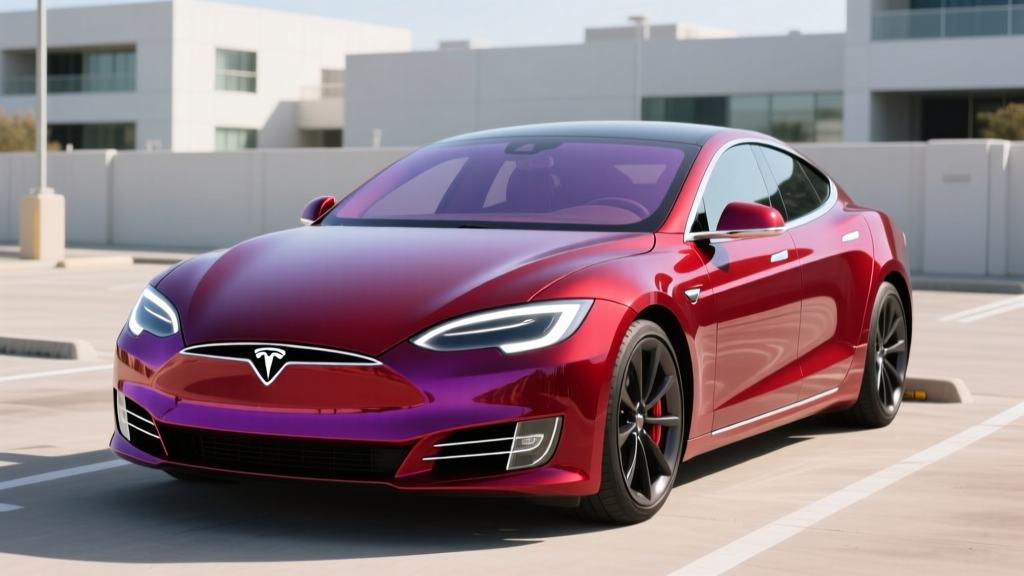
Tesla introduced Midnight Cherry Red as a premium multi-coat exterior color for the Model Y and Model 3 in late 2024, replacing the older Red Multi-Coat in most markets. For the 2026 model year, the paint remains a $2,500 standalone option across the Model 3 and Model Y lineups — and it's become one of the most searched cosmetic upgrades in Tesla's configurator. But a paint color doesn't change the engineering underneath. This review covers what you're actually buying when you spec a 2026 Tesla Model Y Long Range AWD in Midnight Cherry Red: the real-world range, charging behavior, ownership economics, and whether the premium over Solid Black or Pearl White is justified for resale and daily life.
We're focusing on the 2026 Model Y Long Range AWD as the volume configuration, with notes on the Model 3 where the color is also available.
Spec Sheet: 2026 Tesla Model Y Long Range AWD
| Specification | Value |
|---|---|
| EPA Estimated Range | 320 miles |
| Real-World Highway (70 mph) | ~270–290 miles |
| Real-World Cold Weather (30°F) | ~240–260 miles |
| Battery Capacity (usable) | ~78 kWh (NMC chemistry) |
| Drivetrain | Dual-Motor AWD |
| Horsepower | 384 hp combined |
| 0–60 mph | 4.8 seconds |
| Max DC Fast Charge Rate | 250 kW (peak) |
| 10–80% DC Charge Time | ~27 minutes |
| Level 2 Home Charging | 11.5 kW / ~44 mi/hr |
| Efficiency | 122 MPGe combined / 28 kWh/100mi |
| Cargo Volume (rear seats up) | 30.2 cu ft |
| Cargo Volume (rear seats folded) | 72.1 cu ft |
| Front Legroom | 41.8 in |
| Rear Legroom | 38.4 in |
| Base MSRP (before paint/options) | $47,990 |
| As-Tested (Midnight Cherry Red) | $50,490 |
| Federal Tax Credit (§30D) | Up to $7,500 (eligibility varies) |
| Battery & Drivetrain Warranty | 8 years / 120,000 miles |
Real-World Range vs. the EPA Sticker
Expect in practice: 270–290 miles at sustained highway speeds (70–75 mph), dropping to 240–260 miles in sub-freezing temperatures without consistent preconditioning. City driving with regen braking can approach or slightly exceed the EPA figure.
The 320-mile EPA figure for the 2026 Model Y Long Range AWD is competitive in the midsize electric SUV segment, but EPA testing uses a specific drive cycle that doesn't fully represent sustained highway travel or cold climates. According to fueleconomy.gov, the combined rating is 122 MPGe. In our experience and consistent with third-party highway range tests, expect roughly 10–15% reduction at 70+ mph compared to the sticker.
Cold weather compounds this. Lithium-ion NMC cells lose efficiency below 40°F, and cabin heating draws significant power even with Tesla's standard heat pump. If you live in the Upper Midwest or Northeast, budget 240 miles as your practical winter floor before needing a charge. Preconditioning the battery while plugged in — a feature Tesla includes via the app and scheduled departure — recovers some of that loss.
The 78 kWh usable battery (NMC chemistry) provides a good balance of energy density and longevity. Unlike the base Model Y RWD which uses LFP cells and can be charged to 100% daily, this NMC pack benefits from daily charging to 80–90% with occasional 100% charges before road trips. Tesla's battery management system includes a buffer that protects against deep degradation, and the 8-year/120,000-mile warranty covers retention below 70% of original capacity.
Charging Speeds: DC Fast, Level 2, and the Charge Curve
| Charging Level | Power (kW) | Miles Added per Hour | Notes |
|---|---|---|---|
| Level 1 (120V household) | ~1.4 kW | ~4–5 mi/hr | Emergency/trickle only |
| Level 2 (240V home Wall Connector) | 11.5 kW | ~44 mi/hr | Full charge in ~7 hours |
| Level 2 (public, 48A) | 11.5 kW | ~44 mi/hr | Same as home max |
| DC Fast (Tesla Supercharger V3) | 250 kW peak | ~1,000+ mi/hr (initial) | 10–80% in ~27 min |
| DC Fast (CCS adapter, Electrify America) | ~150–250 kW | Varies by station | Depends on station capability |
Tesla's 250 kW peak DC fast-charge rate on the Model Y Long Range is achieved at V3 Superchargers and requires battery preconditioning — which the car initiates automatically when you navigate to a Supercharger. The charge curve is the critical detail most spec sheets omit: the car sustains near-peak rates only between roughly 10–30% State of Charge, then tapers progressively. From 50–80%, expect rates closer to 80–120 kW. This is why the 10–80% time of ~27 minutes is the meaningful metric, not the peak number.
For home charging, the Tesla Wall Connector on a 60-amp circuit delivers up to 11.5 kW (48 amps continuous), adding roughly 44 miles of range per hour. A full overnight session from 20% to 80% takes about 4–5 hours — more than adequate for daily use. Installation typically requires a NEMA 14-60 outlet or hardwired connection on a dedicated 60A breaker; budget $800–$2,000 for professional electrician work depending on your panel's proximity to the garage.
With Tesla's NACS connector now the de facto standard — adopted by Ford, GM, Rivian, and others for 2025+ — Supercharger access remains a major ownership advantage. The Model Y plugs in natively with no adapter needed.
Performance and Driving Dynamics
The dual-motor AWD powertrain produces 384 hp combined and delivers a 4.8-second 0–60 mph time. That's quick by any measure, but the more relevant daily metric is the instant torque delivery: there's no transmission lag, and merging onto highways or passing on two-lane roads requires minimal planning. The single-speed reduction gear means power is always available.
Ride quality on the 2026 Model Y has improved over earlier model years, with revised damper tuning that reduces the crashiness over sharp bumps that plagued 2022–2023 models. The cabin remains quiet at speed, though the absence of a traditional dashboard cluster means all speed and range information lives on the 15.4-inch center touchscreen — a love-it-or-leave-it design choice.
Autopilot comes standard and includes adaptive cruise control, lane centering, and automatic emergency braking. Tesla's Full Self-Driving (Supervised) remains a $8,000 option or $99/month subscription. It is critical to understand that FSD is an SAE Level 2 driver-assistance system: you must remain attentive, keep your hands available, and supervise at all times. It is not autonomous driving.
Pricing, Tax Credits, and What You'll Actually Pay
| Configuration | MSRP |
|---|---|
| Model Y Long Range AWD (base, Solid Black) | $47,990 |
| + Midnight Cherry Red paint | +$2,500 |
| + FSD (Supervised) option | +$8,000 |
| As-tested (Red, no FSD) | $50,490 |
| As-tested (Red + FSD) | $58,490 |
The 2026 Model Y Long Range AWD with Midnight Cherry Red comes in at $50,490 before destination or additional options. Under current IRS §30D rules, this configuration may qualify for up to $7,500 in federal tax credit — but eligibility is not automatic. Per IRS guidelines, the following constraints apply:
- MSRP cap: SUVs must be below $80,000 — the Model Y qualifies.
- Buyer income cap: Modified AGI must not exceed $150,000 (single), $225,000 (head of household), or $300,000 (joint).
- Battery sourcing: Critical minerals and battery components must meet phased percentage thresholds from US or FTA-partner countries. Tesla's supply chain has largely complied for 2025–2026, but verify at purchase.
- Point-of-sale transfer: As of 2024+, you can transfer the credit to the dealer at purchase, reducing your out-of-pocket immediately rather than waiting for tax filing.
If you qualify for the full $7,500, the effective price of a Midnight Cherry Red Model Y Long Range drops to approximately $42,990 — a significant value proposition for a 320-mile AWD electric SUV. Consult a tax professional to confirm your personal eligibility; rules are subject to legislative change.
Interior, Cargo, and Daily Practicality
The Model Y's interior remains minimalist: a single 15.4-inch touchscreen controls virtually everything, from climate to mirrors to glovebox release. There is no traditional instrument cluster, no physical buttons for HVAC, and no Apple CarPlay or Android Auto — Tesla's proprietary infotainment handles navigation, media, and phone integration natively. For some buyers this is refreshing simplicity; for others, it's a dealbreaker.
Cargo space is genuinely excellent. With 30.2 cu ft behind the rear seats and 72.1 cu ft with them folded, the Model Y swallows more gear than most gas-powered midsize SUVs. The front trunk (frunk) adds another ~4.1 cu ft for charging cables or a small bag. Rear legroom at 38.4 inches is adequate for adults on longer trips, though the panoramic glass roof creates a slightly lower headroom sensation than competitors like the Hyundai Ioniq 5.
Notable tech features include:
- Sentry Mode (360° parking surveillance using external cameras)
- Dog Mode and Camp Mode for climate management while parked
- Over-the-air updates that add features post-purchase
- Phone-as-key with Bluetooth proximity unlock
- HEPA air filtration with Bioweapon Defense Mode
Drawbacks worth noting: the lack of physical HVAC controls is distracting while driving, the absence of CarPlay/Android Auto frustrates some users, and Tesla's build quality — while improved — still shows occasional panel-gap inconsistencies that legacy automakers typically catch.
Midnight Cherry Red: Is the Paint Worth $2,500?
The Midnight Cherry Red multi-coat is a deep, dark red that reads as near-black in low light and shifts to a rich burgundy under direct sun. It's a sophisticated color that photographs well and stands out in Tesla-dominated parking lots where Pearl White and Solid Black are ubiquitous. From a resale perspective, red Teslas historically hold a slight premium over white and black in the used market, though the $2,500 upfront cost won't be fully recouped.
Practically, darker colors show swirl marks and dust more readily than white or silver. If you garage the car and maintain it with ceramic coating or paint protection film (PPF), the finish stays stunning. If you park outdoors and run through automatic car washes, expect visible marring within a year. Many Midnight Cherry Red owners invest $1,500–$3,000 in PPF for the front clip and hood to preserve the finish.
Pros, Cons, and the Competition
- 320-mile EPA range with strong real-world efficiency
- 250 kW DC fast charging with native Supercharger access
- Class-leading cargo volume (72.1 cu ft)
- Instant torque, 4.8s 0–60, standard AWD
- Over-the-air updates continuously add features
- Strong §30D credit eligibility (effective price ~$43K)
- Midnight Cherry Red is a standout premium finish
- No Apple CarPlay or Android Auto
- All climate/vehicle controls on touchscreen only
- $2,500 paint option doesn't fully recoup at resale
- Dark paint shows dust and swirl marks easily
- FSD ($8,000) is Level 2 only — not autonomous
- Build quality still inconsistent vs. legacy OEMs
- Rear visibility is limited; relies heavily on cameras
Key competitors in the $45,000–$55,000 electric SUV segment include the Hyundai Ioniq 5 (310-mile Long Range AWD, ~$52,000), Ford Mustang Mach-E Extended Range AWD (312-mile, ~$51,000), and Chevrolet Equinox EV RS (319-mile, ~$48,000). The Model Y's advantages remain the Supercharger network, efficiency per kWh, and cargo space. Its disadvantages are the touchscreen-only interface and lack of phone mirroring.
Who Should Buy the Midnight Cherry Red Model Y?
Choose this EV if: You want a 320-mile AWD SUV with best-in-class cargo space, you have home Level 2 charging access, you value the Supercharger network for road trips, and you appreciate a distinctive exterior that separates you from the sea of white Teslas.
Look elsewhere if: You need physical buttons for climate control, you depend on Apple CarPlay, you park outdoors without paint protection, or you need Level 4 autonomous capability (which doesn't exist in any consumer vehicle at this price point).
The Model Y Long Range AWD in Midnight Cherry Red is best suited for suburban commuters and small families who can charge at home, take 2–4 road trips per year, and want a premium-feeling EV without crossing into luxury-brand pricing. The effective post-credit price of ~$43,000 makes it one of the most compelling value propositions in the segment — if you qualify.
Frequently Asked Questions
What is the real-world range of the 2026 Tesla Model Y Long Range AWD?
The EPA rates it at 320 miles. In real-world highway driving at 70–75 mph, expect 270–290 miles. In cold weather (below 30°F), plan for 240–260 miles without preconditioning. City driving with regenerative braking can match or slightly exceed the EPA figure.
How fast does the Model Y charge at home and on the road?
At home on a 240V Level 2 Wall Connector (11.5 kW), you'll add ~44 miles per hour, with a full charge taking about 7 hours. On a Tesla V3 Supercharger (250 kW peak), the 10–80% charge takes approximately 27 minutes, with the rate tapering significantly above 80%.
Does the 2026 Model Y qualify for the $7,500 federal EV tax credit?
It may, depending on your income, the vehicle's MSRP (under the $80,000 SUV cap), and current battery-sourcing compliance. Per IRS §30D rules, single filers must have a modified AGI under $150,000 and joint filers under $300,000. The credit can be transferred at point of sale to reduce your purchase price immediately. Always verify with a tax professional.
Is Midnight Cherry Red worth the $2,500 premium?
If you value a distinctive, premium appearance and plan to protect the paint (garage parking, ceramic coating, or PPF), yes — it's a striking multi-coat finish. If you park outdoors, use automatic car washes, or prioritize pure value, Pearl White or Solid Black are more forgiving and cheaper.
How does the Model Y compare to the Hyundai Ioniq 5 and Ford Mach-E?
The Model Y leads in cargo space (72.1 vs. ~56 cu ft), Supercharger network access, and efficiency. The Ioniq 5 offers 800V ultra-fast charging (10–80% in ~18 min on 350 kW chargers) and CarPlay. The Mach-E provides a more traditional interior layout with physical controls. All three are strong choices; your preference for interface, charging network, and interior design should drive the decision.
What is the battery warranty on the 2026 Model Y?
Tesla covers the battery and drive units for 8 years or 120,000 miles (whichever comes first), with a guaranteed minimum 70% capacity retention over that period. The NMC chemistry in the Long Range model has demonstrated strong longevity in fleet data, with most vehicles retaining 85–90%+ capacity at 100,000 miles.