When Elon Musk published the original Tesla Master Plan in 2006, it was a four-step roadmap that the company largely executed over the next 15 years. Master Plan Part 2 (2016) added solar roofs, energy storage, and autonomy. Now, with elements of Tesla Master Plan Part 4 emerging through 2025–2026 earnings calls, product reveals, and regulatory filings, buyers want a practical translation: what vehicles are actually coming, what do they cost, and how do they compare to the broader EV market today?
This Tesla Master Plan Part 4 summary focuses on the buyer-relevant pillars — the refreshed Model Y (Juniper), the next-generation compact platform, the Cybercab robotaxi program, and the expanding energy/FSD ecosystem — with the exact specs, pricing, and tax-credit realities you need to make a purchase decision in 2026.
What Tesla Master Plan Part 4 Actually Covers
Unlike the tightly structured earlier plans, Part 4 has been communicated across multiple 2025–2026 investor updates rather than a single blog post. The recurring themes, as stated on Tesla's Q4 2025 earnings call and at the 2025 "We, Robot" event, are:
- Next-generation compact EV platform — a smaller, lower-cost vehicle built on a new unboxed manufacturing process, targeting a sub-$30,000 MSRP.
- Cybercab / Robotaxi — a dedicated Level 4 autonomous vehicle without a steering wheel, intended for Tesla's planned ride-hail network (announced, not yet commercially available).
- FSD (Supervised) maturation — continued neural-net-based Level 2 driver assist on current vehicles, with a path to unsupervised operation in limited geofenced markets.
- Energy storage and grid services — Megapack expansion, Powerwall 3 integration, and virtual power plant programs.
- Optimus humanoid robot — long-term factory automation play (outside the scope of this buyer-focused summary).
For car buyers, the near-term impact centers on two vehicles: the refreshed Model Y and the upcoming compact platform. Let's dig into the one you can actually buy today.
2026 Tesla Model Y (Juniper): The Current-Gen Anchor
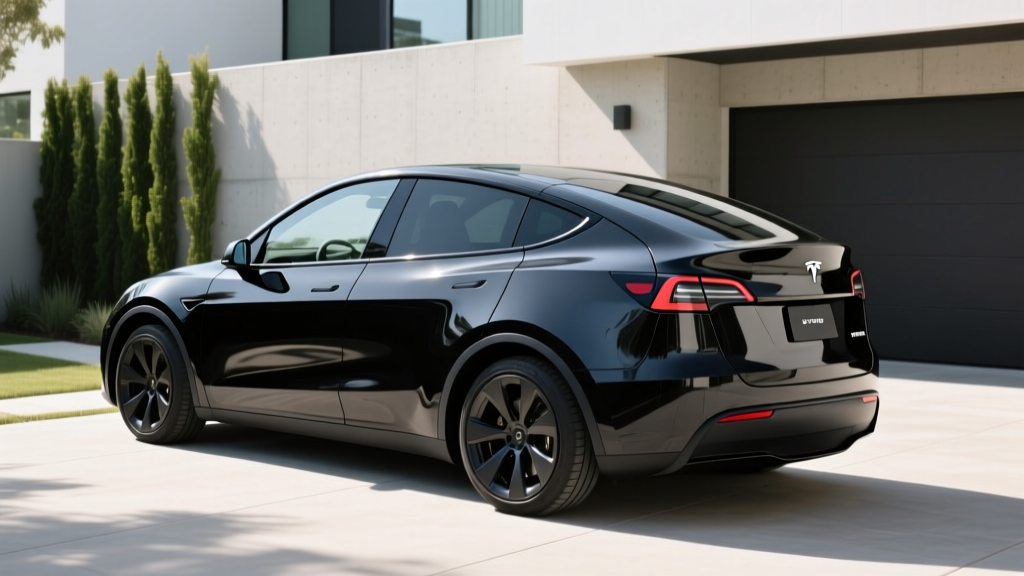
The Juniper-refreshed Model Y launched in early 2025 and carries into the 2026 model year with minor trim adjustments. It remains Tesla's global volume leader and the most direct expression of the Part 4 manufacturing-efficiency push.
| Spec | Long Range RWD | Long Range AWD | Performance |
|---|---|---|---|
| EPA Range | 320 mi | 300 mi | 277 mi |
| Battery (usable) | ~75 kWh, NMC | ~75 kWh, NMC | ~75 kWh, NMC |
| Peak DC Charge | 250 kW | 250 kW | 250 kW |
| 10–80% DC Time | ~27 min | ~27 min | ~27 min |
| Level 2 (11.5 kW) | ~44 mi/hr | ~44 mi/hr | ~44 mi/hr |
| 0–60 mph | 5.8 s | 4.8 s | 3.5 s |
| Horsepower | 346 hp | 384 hp | 456 hp |
| Drivetrain | RWD | Dual-motor AWD | Dual-motor AWD |
| MPGe (combined) | 122 MPGe | 116 MPGe | 111 MPGe |
| Cargo (rear seats up) | 34.3 cu ft (76.2 cu ft folded) | ||
| Rear Legroom | 41.6 in | ||
| Base MSRP | $44,990 | $47,990 | $52,490 |
| Battery Warranty | 8 yr / 120,000 mi (70% capacity retention) | ||
Source: fueleconomy.gov, Tesla.com configurator (2026 MY).
Real-World Range vs. EPA Sticker
EPA sticker: 320 miles (Long Range RWD).
Real-world expectation: Plan on ~260–280 miles at sustained 75-mph highway speeds in moderate weather. In cold weather (below 32°F), expect a 20–30% reduction, bringing effective highway range to ~190–220 miles. City driving with regen braking recovers closer to the EPA figure.
Juniper's improved thermal management and standard heat pump help mitigate winter losses compared to older Model Y variants, but the NMC pack still shows meaningful cold-weather sensitivity. If your commute is primarily sub-40-mile urban trips, the gap between EPA and real-world matters far less than it does for road-trip-heavy owners.
Charging Speed: DC Fast and Home
| Level | Power | Miles Added per Hour | Notes |
|---|---|---|---|
| Level 1 (120V) | ~1.4 kW | ~4 mi/hr | Emergency/trickle only |
| Level 2 (240V, 48A) | 11.5 kW | ~44 mi/hr | Full overnight charge in ~7–8 hr |
| DC Fast (peak) | 250 kW | ~1,000 mi/hr (peak) | Sustained rate tapers above 50% SoC |
The 250 kW peak is only held for a narrow window (roughly 10–35% SoC). Above 80%, the charge curve drops sharply — a typical 10–80% session on a V3 Supercharger takes ~27 minutes, but 10–95% stretches past 45 minutes. On Electrify America or other CCS networks (via the included NACS-to-CCS adapter), expect similar peak rates where chargers support them.
Home charging on a 48A Wall Connector remains the ownership sweet spot: plug in overnight, wake up full. Buyers with 200A electrical panels usually install without a panel upgrade; older 100A homes may need a $1,500–$3,000 service upgrade.
FSD (Supervised): What Level 2 Actually Does
SAE Level 2 — Driver Assist, NOT Self-Driving. Tesla's Full Self-Driving (Supervised) remains a Level 2 system per SAE J3016. The driver must continuously monitor the road and be ready to take over instantly. Hands-on-wheel or eyes-on-road monitoring is enforced. Only dedicated Level 4 services like Waymo operate without a human driver.
FSD (Supervised) costs $8,000 upfront or $99/month as of 2026. It handles highway lane changes, on-ramp-to-off-ramp navigation, and city-street stoplight/stop-sign recognition with increasing competence, but it is not a substitute for attention. NHTSA continues to investigate Autopilot/FSD-involved incidents, and buyers should treat the feature as an advanced cruise-control layer, not autonomy.
Pricing, Tax Credits, and What You'll Actually Pay
| Trim | Base MSRP | §30D Credit | Effective Price |
|---|---|---|---|
| Long Range RWD | $44,990 | Up to $7,500* | ~$37,490 |
| Long Range AWD | $47,990 | Up to $7,500* | ~$40,490 |
| Performance | $52,490 | Up to $7,500* | ~$44,990 |
*§30D eligibility caveats (2026 rules, per IRS.gov):
- MSRP cap: SUVs/vans/pickups must be ≤$80,000 — Model Y qualifies.
- Buyer AGI cap: $150K single / $225K head of household / $300K joint filers.
- Battery sourcing: Critical-mineral and battery-component percentages must meet annual thresholds (70%/85% for 2026). Tesla's shift away from CATL-supplied cells for U.S.-built vehicles has preserved eligibility for most trims, but confirm at point of sale.
- Point-of-sale transfer: The credit can be applied as a down-payment reduction at the dealer, subject to IRS registration.
Consult a tax professional for your specific situation — state credits (e.g., California's CVRP, Colorado's innovative motor vehicle credit) may stack on top.
Who the Model Y Suits Best — and Who Should Look Elsewhere
The 2026 Model Y is the default recommendation for:
- Tech-forward commuters who value Supercharger network access and OTA updates.
- Two-adult-plus-kids families needing ~34 cu ft of cargo and strong safety ratings (IIHS Top Safety Pick+).
- Road-trip drivers in regions with dense Supercharger coverage.
It is a weaker fit for:
- Buyers who prioritize ride comfort and interior material quality (Hyundai Ioniq 5 and Kia EV6 feel more premium at similar prices).
- Those needing three rows — the optional third row is cramped and only for small children.
- Buyers uncomfortable with a nearly buttonless, screen-centric interface.
Pros
- Best-in-class Supercharger network access
- Strong efficiency (122 MPGe combined LR RWD)
- Class-leading cargo volume for the segment
- Continuous OTA feature improvements
- Competitive 0–60 and handling for a crossover
Cons
- Firm ride quality on larger wheels
- Minimalist interior polarizes buyers
- No physical buttons for climate/media
- FSD (Supervised) cost is steep for a Level 2 system
- NMC chemistry degrades faster than LFP if held at 100% daily
How Part 4's Upcoming Compact EV Changes the Math
The next-generation compact platform (sometimes referred to as "Model 2" in media, though Tesla has not officially used that name) is announced for production starting late 2026 / early 2027 at Gigafactory Texas. Preliminary targets cited in investor updates:
- Sub-$30,000 base MSRP
- ~250-mile EPA range (estimated)
- ~50 kWh LFP battery pack
- Smaller footprint than Model 3, aimed at urban buyers globally
These are preliminary/announced figures — not on sale as of this writing. If your purchase timeline can wait 12–18 months and your budget is closer to $30K, this vehicle could reshape the entry-EV segment. If you need a car now, the Model Y, Model 3, or competitors like the Chevy Equinox EV and Hyundai Kona Electric are the current options.
Tesla Master Plan Part 4 Summary FAQ
What is the real-world range of the 2026 Model Y?
EPA-rated 320 miles (Long Range RWD). Expect ~260–280 miles on the highway in mild weather, and ~190–220 miles in freezing temperatures. City driving with regen recovers closer to the sticker number.
How fast does the 2026 Model Y charge?
Peak DC fast charge is 250 kW, with 10–80% in ~27 minutes on a V3 Supercharger. Home Level 2 at 11.5 kW adds ~44 miles per hour, fully recharging overnight.
How much does the 2026 Model Y cost after tax credits?
The Long Range RWD starts at $44,990 and can drop to ~$37,490 after the federal §30D credit, assuming you meet income, MSRP, and battery-sourcing requirements. Confirm eligibility at point of sale.
Is the Model Y worth buying vs. the Hyundai Ioniq 5 or Ford Mustang Mach-E?
If Supercharger network access, efficiency, and cargo space are your priorities, yes. If ride comfort, interior materials, or 800V charging architecture matter more, the Ioniq 5 is a strong rival. The Mach-E competes on driving dynamics but trails on efficiency and charging speed.
What are the biggest pros and cons?
Pros: Supercharger network, efficiency, cargo space, OTA updates, performance. Cons: firm ride, buttonless interior, FSD cost for a Level 2 system, NMC degradation sensitivity.
Does the 2026 Model Y qualify for the federal EV tax credit?
Yes, the Model Y qualifies for up to $7,500 under §30D, subject to buyer AGI limits ($150K/$225K/$300K), the $80K SUV MSRP cap, and battery-sourcing thresholds. Apply via point-of-sale transfer or on your tax return. Verify current-year rules at IRS.gov.
What about Cybercab — can I buy one?
No. Cybercab is announced as a Level 4 robotaxi for Tesla's planned ride-hail network, not a consumer-purchasable vehicle. Production timing and regulatory approval remain uncertain as of 2026.