What Is the Canoo Lifestyle Vehicle?
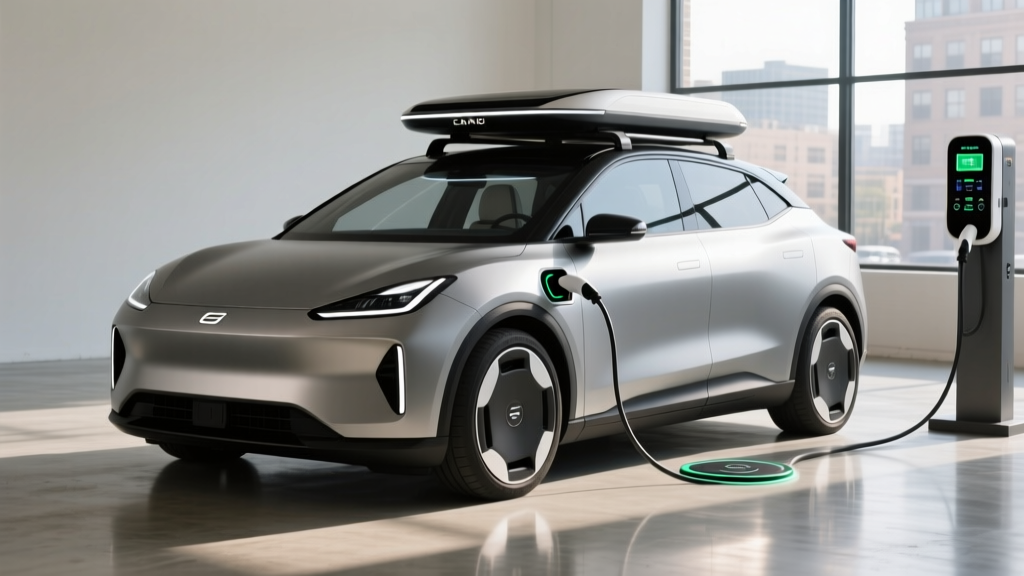
The Canoo Lifestyle Vehicle (LV) is a purpose-built electric van that has drawn attention for its unconventional skateboard platform and spacious, lounge-like interior. Originally conceived as a subscription-only vehicle and later repositioned for both consumer and fleet sales, the LV stands out in a market dominated by crossovers and sedans. But with Canoo navigating a turbulent path through production delays, financial restructuring, and shifting go-to-market strategies, buyers and followers need a clear-eyed look at what this vehicle actually offers — and what remains preliminary.
This review covers the Canoo Lifestyle Vehicle key features that matter most to EV shoppers: real-world range expectations, charging performance, battery chemistry, interior practicality, pricing, and whether it qualifies for federal incentives. Where specs remain unconfirmed or based on pre-production announcements, we flag them clearly.
Canoo Lifestyle Vehicle Key Features at a Glance
| Specification | Canoo Lifestyle Vehicle (Announced) |
|---|---|
| EPA Est. Range | ~230 miles (target, pending EPA cert.) |
| Battery Capacity | ~80 kWh usable (announced) |
| Battery Chemistry | NMC (Nickel Manganese Cobalt) — expected |
| DC Fast Charge (Peak) | Up to ~150 kW (CCS/NACS TBD) |
| 10–80% DC Charge Time | ~30 minutes (target) |
| Level 2 Home Charging | ~11.5 kW / ~30 mi/hr (est.) |
| Drivetrain | RWD (single rear motor); AWD available |
| Horsepower | ~300 hp (RWD); ~350 hp (AWD dual-motor) |
| 0–60 mph | ~6.3 seconds (RWD, est.) |
| Cargo Volume | ~130 cu ft (seats folded) |
| Passenger Capacity | Up to 7 |
| Base MSRP | ~$34,750 (announced target, pre-incentives) |
| Battery/Powertrain Warranty | 8 years / 100,000 miles (target) |
Range and Efficiency: Real-World Expectations
Canoo has targeted an EPA-estimated range of approximately 230 miles for the base rear-wheel-drive Lifestyle Vehicle, drawing from an ~80 kWh (usable) battery pack. For context, that places the LV in the mid-tier among electric vans and compact SUVs — behind the Tesla Model Y Long Range (~310 mi EPA) but comparable to the base Ford Mustang Mach-E Select (~230 mi EPA) and well ahead of shorter-range commercial vans.
- Highway driving (70+ mph): Expect ~180–200 miles before needing a charge. The LV's boxy, upright shape creates significant aerodynamic drag at speed.
- Cold weather (below 32°F): Range can drop 20–30%, bringing effective range down to ~160–185 miles in winter conditions. NMC chemistry is more cold-sensitive than LFP, though Canoo's thermal management system (if equipped with a heat pump) would mitigate some loss.
- City/stop-and-go: Regenerative braking helps recover energy. Expect close to the EPA sticker or slightly above in urban driving — potentially 235–245 miles.
Efficiency is projected in the range of 2.5–2.8 kWh per mile (roughly 110–120 MPGe combined), which is typical for a vehicle with this form factor. The tall roofline and flat front end prioritize interior volume over aerodynamic efficiency — a trade-off that's deliberate given the LV's intended use as a family hauler and urban commuter rather than a road-trip cruiser.
Charging Speed and Infrastructure Compatibility
Charging performance is one of the most important purchase factors for any EV, and the Canoo Lifestyle Vehicle targets respectable but not class-leading DC fast-charging capability.
| Charging Level | Power (kW) | Miles Added per Hour | Notes |
|---|---|---|---|
| Level 1 (120V household) | ~1.4 kW | ~4 mi/hr | Emergency/trickle only; ~55+ hours for full charge |
| Level 2 (240V home) | ~11.5 kW | ~30 mi/hr | Full charge in ~7–8 hours; requires 48A+ circuit |
| DC Fast Charge | Up to ~150 kW peak | ~150+ mi in 15 min (peak) | 10–80% in ~30 min; expect taper above 80% SoC |
A critical detail: kW (kilowatts) measures charging power — the rate at which energy flows into the battery — while kWh (kilowatt-hours) measures total energy capacity. Think of kW as the width of the hose and kWh as the size of the tank. The LV's ~150 kW peak DC rate is solid for daily fast-charging needs but falls short of the 250–350 kW peak rates seen on the Hyundai Ioniq 5, Tesla Model Y, and Porsche Macan EV.
The charge curve matters too. Most EVs sustain peak charging rates only between roughly 10% and 40% State of Charge (SoC), then progressively taper. At a 150 kW-capable station, expect the LV to sustain ~120–140 kW through about 50% SoC, tapering to ~80 kW by 70%, and ~40 kW above 85%. This is typical behavior for NMC chemistry and means the advertised 30-minute 10–80% time assumes optimal battery preconditioning and a capable charger.
As for connector type, Canoo has not definitively confirmed whether production vehicles will ship with CCS1 or the Tesla NACS standard. With the industry broadly shifting toward NACS for 2025–2026 models, it's reasonable to expect NACS adoption, but this remains unconfirmed. Check the official Canoo site for updates.
Performance and Drivetrain
The Lifestyle Vehicle rides on Canoo's proprietary multi-purpose platform — a flat skateboard architecture that houses the battery, motors, and suspension below the floor. This design enables the LV's signature feature: a remarkably low step-in height and a flat floor throughout the cabin, maximizing interior space without increasing the vehicle's overall footprint.
In rear-wheel-drive form, the single rear motor produces an estimated 300 horsepower and propels the LV from 0 to 60 mph in roughly 6.3 seconds. That's brisk for a vehicle of this size and puts it in the same ballpark as a base Tesla Model Y RWD. The optional dual-motor AWD configuration bumps output to approximately 350 hp, with a 0–60 time likely in the low 5-second range.
Real-world driving impressions from pre-production prototypes suggest competent ride quality and responsive handling for a tall van, though the high center of gravity means noticeable body roll in aggressive cornering. This is a comfort-and-utility vehicle, not a performance machine — and that's the right calibration for its target buyers.
Interior Space, Tech, and Standout Features
The interior is where the Canoo Lifestyle Vehicle makes its strongest case. With seating for up to seven and a configurable cabin layout, the LV offers approximately 130 cubic feet of cargo space with rear seats folded — rivaling minivans like the Chrysler Pacifica and exceeding most electric SUVs.
Standout features include:
- Street-view windows: Large, wraparound glass panels provide exceptional outward visibility and a unique, airy cabin feel.
- Flat floor architecture: The skateboard platform eliminates the traditional transmission tunnel, creating a genuinely flat floor from front to rear — useful for cargo, accessibility, and flexible seating arrangements.
- Compact exterior footprint: Despite its spacious interior, the LV is roughly the length of a compact sedan (~175 inches), making it surprisingly easy to park in urban environments.
- Over-the-air (OTA) updates: Canoo has committed to continuous software improvements, though the maturity of the software stack at launch remains to be validated.
Notable drawbacks:
- Infotainment maturity: As a startup, Canoo's software ecosystem is unproven compared to Tesla, Rivian, or legacy OEMs with years of refinement.
- Driver-assistance features: Canoo has referenced Level 2 driver-assist capabilities (adaptive cruise, lane-keeping), but specific SAE Level 2 system details, sensor suites, and real-world performance data are not yet independently validated.
- No towing data published: For buyers who need to tow, the absence of confirmed towing capacity figures is a significant gap.
Pricing, Tax Credits, and Ownership Costs
Canoo has announced a target base MSRP of approximately $34,750 for the rear-wheel-drive Lifestyle Vehicle, with higher trims and the AWD dual-motor variant expected to range from $39,000 to $45,000+ depending on options. These prices position the LV competitively against the base Tesla Model Y (~$44,990), Chevrolet Equinox EV (~$33,000), and Hyundai Ioniq 5 (~$42,450).
| Trim | Est. MSRP | §30D Credit Potential | Effective Price |
|---|---|---|---|
| LV Base (RWD) | ~$34,750 | Up to $7,500* | ~$27,250* |
| LV Mid (RWD, added tech) | ~$39,000 | Up to $7,500* | ~$31,500* |
| LV AWD (Dual-Motor) | ~$44,000 | Up to $7,500* | ~$36,500* |
*Federal tax credit eligibility under IRS §30D is not guaranteed and depends on multiple factors. See the checklist below.
-
Federal §30D EV Tax Credit Requirements (2026):
- Vehicle MSRP must not exceed $55,000 for SUVs/vans or $25,000 for sedans (LV likely qualifies under the van/SUV cap).
- Buyer modified adjusted gross income (AGI) must not exceed $150,000 (single), $225,000 (head of household), or $300,000 (joint filers).
- Battery components must meet escalating domestic-content and critical-minerals sourcing thresholds, which tighten annually. Canoo's supply-chain compliance is unconfirmed for 2026.
- Credit can be transferred to the dealer at point of sale for an immediate price reduction, or claimed on your federal tax return. Consult a tax professional and verify current rules at IRS.gov.
- The vehicle must be assembled in North America to qualify.
Beyond the purchase price, ownership costs will depend on insurance rates (typically 15–25% higher for EVs than comparable gas vehicles), electricity costs in your area, and long-term maintenance. Canoo's projected 8-year/100,000-mile battery and powertrain warranty aligns with the industry standard established by federal mandate, though the practical value of any warranty depends on Canoo's long-term viability as a company — a factor buyers must weigh seriously.
Pros, Cons, and the Verdict
✅ Pros
- Class-leading interior volume in a compact exterior footprint
- Flat-floor skateboard design enables flexible cabin configurations
- Competitive base pricing if MSRP targets hold
- Strong urban visibility with large glass area
- AWD option available for snow/rain climates
❌ Cons
- Company financial stability remains a serious concern
- Production timelines have shifted repeatedly — availability uncertain
- EPA certification and final specs not yet confirmed
- Charging speed (~150 kW peak) trails class leaders (250–350 kW)
- No confirmed towing capacity or validated real-world range data
- Software and ADAS maturity unproven vs. established OEMs
Who Should Consider the Canoo Lifestyle Vehicle?
Choose the LV if: You prioritize maximum interior space in a compact, easy-to-park footprint; you're an urban or suburban driver who values cabin flexibility over highway range; and you're comfortable with the risk profile of buying from an early-stage automaker.
Look elsewhere if: You need proven fast-charging for road trips (consider the Hyundai Ioniq 5 or Tesla Model Y); you require confirmed towing capacity; you want a mature software ecosystem and established dealer/service network; or you cannot absorb the risk that Canoo may not sustain long-term operations and parts support.
How It Compares to Key Competitors
| Feature | Canoo LV (Target) | Tesla Model Y LR | Hyundai Ioniq 5 | Kia EV9 |
|---|---|---|---|---|
| EPA Range | ~230 mi | 310 mi | 305 mi | 279 mi |
| Battery (kWh) | ~80 | ~75 | 77.4 | 100 |
| Peak DC Charge | ~150 kW | 250 kW | 240 kW | 210 kW |
| 10–80% Time | ~30 min | ~22 min | ~18 min | ~24 min |
| Seating | Up to 7 | 5 | 5 | 6–7 |
| Cargo (max cu ft) | ~130 | 76 | 59 | 81 |
| Base MSRP | ~$34,750 | ~$44,990 | ~$42,450 | ~$54,900 |
The Canoo LV's value proposition is clear: more interior space at a lower price than any competitor listed above. But the trade-offs are equally clear — less range, slower charging, and significantly higher execution risk. The Kia EV9 is the closest established competitor in terms of three-row seating and cargo capacity, though it costs substantially more. For buyers who can wait and who accept the startup risk, the LV offers a genuinely differentiated package. For those who need a vehicle now with proven reliability and a robust service network, the Model Y, Ioniq 5, or EV9 are safer bets.
Frequently Asked Questions
What is the real-world range of the Canoo Lifestyle Vehicle?
Canoo targets ~230 miles EPA, but real-world highway driving at 70+ mph will likely yield 180–200 miles. In cold weather (below freezing), expect 160–185 miles. City driving with regenerative braking may match or slightly exceed the EPA figure.
How fast does the Canoo LV charge at home and on the road?
On a Level 2 home charger (240V, ~11.5 kW), expect roughly 30 miles of range per hour of charging, or a full charge in 7–8 hours. On a DC fast charger, peak rate is ~150 kW, with a 10–80% charge in approximately 30 minutes under optimal conditions (preconditioned battery, capable station).
How much does the Canoo Lifestyle Vehicle cost after tax credits?
The announced base MSRP is ~$34,750. If the vehicle qualifies for the full $7,500 federal §30D credit and you meet income and sourcing requirements, the effective price could drop to ~$27,250. However, credit eligibility depends on battery sourcing, North American assembly, MSRP caps, and buyer income limits — all of which should be verified at IRS.gov before purchase.
Is the Canoo LV worth buying versus competitors like the Tesla Model Y or Kia EV9?
If you prioritize maximum cargo and passenger space at the lowest price and can accept the risk of buying from a financially uncertain startup, the LV is compelling on paper. If you need proven range, fast charging, an established service network, and company longevity, the Model Y, Ioniq 5, or EV9 are more dependable choices today.
What are the biggest pros and cons?
Pros: outstanding interior space in a compact footprint, competitive pricing, flat-floor flexibility, AWD availability. Cons: company financial risk, unconfirmed EPA specs, slower DC charging than rivals, unproven software and service infrastructure, no confirmed towing data.
Does the Canoo Lifestyle Vehicle qualify for the federal EV tax credit?
Potentially, but it is not guaranteed. The vehicle must meet §30D requirements including North American assembly, battery critical-mineral and component sourcing thresholds, MSRP caps ($55,000 for vans/SUVs), and buyer income limits. Canoo's supply-chain compliance for 2026 has not been independently confirmed. Always check the latest IRS guidance and consult a tax professional.
Sources: Canoo official specifications, IRS §30D Clean Vehicle Credits, EPA Fuel Economy. All Canoo specs cited are based on the most recent manufacturer-published pre-production targets and are subject to change upon final EPA certification and production launch.