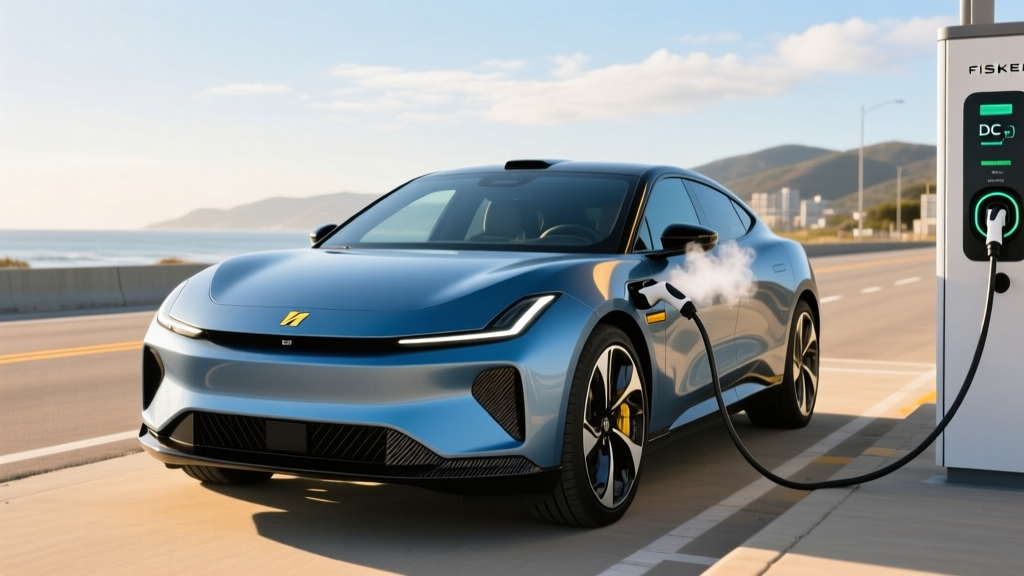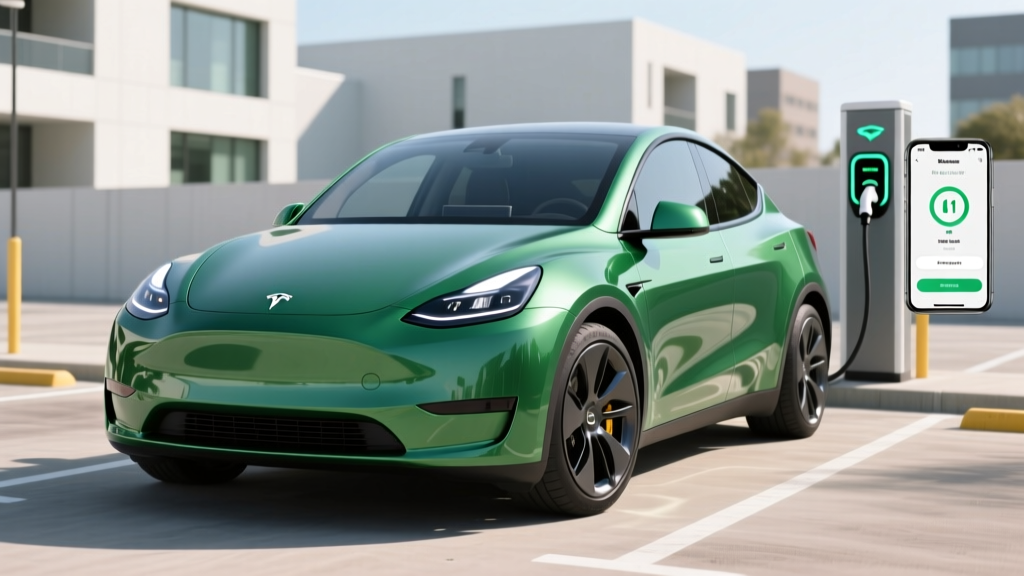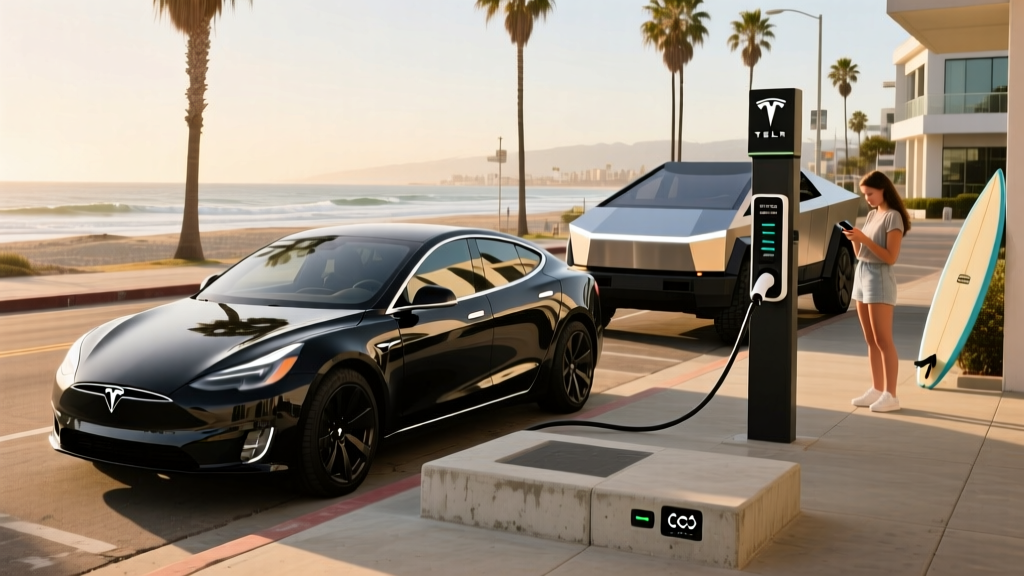
Marina del Rey is one of the most EV-dense ZIP codes in Southern California. Salt air, short coastal commutes, and proximity to LAX make it a unique ownership environment — and one where choosing the right Tesla matters more than just picking a badge. If you are browsing inventory near the marina, test-driving out of the Culver City or Santa Monica service areas, or simply researching which Tesla fits a 90292 lifestyle, this guide breaks down every current 2026 model with exact range, charging, pricing, and tax-credit numbers.
Rather than rehashing marketing copy, we will walk through what each Tesla actually delivers on the 405, PCH, and at the local Superchargers — including the real-world range you can expect when the marine layer burns off and the AC is running hard.
Why Marina del Rey Shapes Your Tesla Decision
Marina del Rey sits at the intersection of three driving realities: stop-and-go Lincoln Boulevard traffic, wide-open stretches of the 405 toward Silicon Beach, and frequent coastal humidity that affects tire grip and cabin conditioning. Most residents live in multi-unit buildings or townhomes, which means home charging access is not guaranteed — a factor that should push you toward models with strong DC fast-charge rates and reliable Supercharger access.
The good news: Tesla's Supercharger network remains the most dependable public charging ecosystem in the US, and Marina del Rey owners are within 2–5 miles of multiple stalls, including the Culver City Supercharger (V3, 250 kW) and the Playa Vista location. The closer question is which Tesla model fits your daily loop and whether the federal tax credit applies to your purchase.
2026 Tesla Lineup: Spec Comparison at a Glance
| Spec | Model 3 RWD | Model 3 Long Range AWD | Model Y Long Range AWD | Model S LR | Model X LR |
|---|---|---|---|---|---|
| EPA Range | 363 mi | 341 mi | 320 mi | 402 mi | 335 mi |
| Battery (usable) | ~60 kWh (LFP) | ~75 kWh (NMC) | ~75 kWh (NMC) | ~100 kWh (NMC) | ~100 kWh (NMC) |
| Peak DC Charge | 170 kW | 250 kW | 250 kW | 250 kW | 250 kW |
| 10–80% DCFC | ~28 min | ~25 min | ~27 min | ~30 min | ~32 min |
| Level 2 Rate | 11.5 kW (~44 mi/hr) | 11.5 kW (~44 mi/hr) | 11.5 kW (~44 mi/hr) | 11.5 kW (~44 mi/hr) | 11.5 kW (~44 mi/hr) |
| 0–60 mph | 5.8 s | 4.2 s | 4.8 s | 3.1 s | 3.8 s |
| Horsepower | 271 hp | 346 hp | 384 hp | 670 hp | 670 hp |
| Drivetrain | RWD | Dual-Motor AWD | Dual-Motor AWD | Dual-Motor AWD | Dual-Motor AWD |
| MPGe (combined) | 132 MPGe | 125 MPGe | 117 MPGe | 120 MPGe | 102 MPGe |
| Base MSRP | $38,990 | $45,490 | $48,990 | $79,990 | $84,990 |
Source: fueleconomy.gov and Tesla US configurator, 2026 model year. Prices exclude destination fee ($1,390–$1,990 depending on model).
Real-World Range: What the EPA Sticker Does Not Tell You
- Model 3 Long Range AWD: EPA 341 mi → expect ~290–310 mi on mixed 405/PCH driving; ~250–270 mi sustained 75 mph highway; ~230 mi in cold snaps (below 45°F, rare but possible Dec–Feb).
- Model Y Long Range AWD: EPA 320 mi → expect ~270–290 mi mixed; ~240 mi highway; ~215 mi cold.
- Model 3 RWD (LFP): EPA 363 mi → expect ~310–330 mi mixed; LFP chemistry suffers less cold-weather degradation than NMC (~5–8% loss vs 10–15% for NMC).
- Model S Long Range: EPA 402 mi → expect ~350–370 mi mixed; ~310 mi highway at 80 mph.
The EPA test cycle includes low-speed city segments that flatter EVs. On the 405 at 70–80 mph, aerodynamic drag dominates, and you will consume roughly 15–20% more energy than the EPA combined figure suggests. Marina del Rey's mild coastal climate is actually an advantage: you will rarely see the 25–30% cold-weather range loss that Midwestern owners experience. But running cabin cooling in August humidity along Washington Boulevard will knock 5–8% off your range.
The LFP (lithium iron phosphate) battery in the Model 3 RWD deserves special mention. LFP cells have lower energy density than NMC (nickel manganese cobalt), which is why the RWD variant carries fewer usable kWh despite a higher EPA range number — it achieves that range partly through lighter weight and RWD efficiency. LFP also tolerates 100% daily charging without accelerated degradation, making it ideal if your apartment complex only offers Level 2 charging at shared stalls and you want to top off nightly.
Charging Speed and Marina del Rey Infrastructure
Tesla's 2026 lineup uses the NACS (North American Charging Standard) connector natively, which means no adapter is required at Superchargers. All current models support preconditioning — the car warms or cools the battery pack as you navigate to a charger, enabling faster charge rates upon arrival. Skipping preconditioning can add 5–10 minutes to a 10–80% session.
| Level | Power / Rate | Miles Added per Hour | Best For |
|---|---|---|---|
| Level 1 (120V) | ~1.4 kW | ~4–5 mi/hr | Emergency overnight top-off |
| Level 2 (240V, 48A) | 11.5 kW | ~44 mi/hr | Home / apartment garage |
| DC Fast (V3 Supercharger) | Up to 250 kW peak | ~1,000 mi/hr (peak) | Road trips, quick top-ups |
| DC Fast (V4 Supercharger) | Up to 350 kW peak | Varies | Newer stations — limited rollout |
Charge curve reality: The "250 kW" peak only applies between roughly 10–30% state of charge. Above 50%, the rate tapers significantly — typically dropping to 80–100 kW by 60% and below 50 kW past 80%. This is why the 10–80% time (~25–32 minutes depending on model) is the meaningful metric, not the peak kW number.
For Marina del Rey apartment dwellers without dedicated home charging, the Culver City and Playa Vista Superchargers are practical weekly stops. A 30-minute session during a grocery run at Trader Joe's on Washington Blvd can restore 200+ miles — enough for most weekly driving. Expect to pay $0.28–$0.36/kWh at Southern California Superchargers during peak hours (4–9 PM weekdays); off-peak rates drop to $0.18–$0.24/kWh.
Performance and Daily Driving Impressions
Every 2026 Tesla delivers instant torque from standstill, which makes Lincoln Boulevard stoplights and 405 on-ramps effortless. The Model 3 RWD's 5.8-second 0–60 time is quicker than most gas-powered sport sedans, while the Model S Plaid-adjacent Long Range at 3.1 seconds borders on supercar territory.
Where the lineup diverges is ride quality and noise. The refreshed Model 3 (often called "Highland" from its 2024 redesign) features significantly improved sound insulation, ventilated front seats, and a rear touchscreen for passengers. The Model Y, while more utilitarian, offers 76.2 cu ft of cargo space with seats folded — enough for kayak gear or a Costco run for a family of four. The Model S and X remain the premium options, with adaptive air suspension that smooths out Venice Boulevard's rougher patches.
Autopilot and FSD (Supervised): SAE Level 2, Not Self-Driving
Tesla Autopilot and Full Self-Driving (Supervised) are SAE Level 2 driver-assistance systems. You must keep your hands on the wheel and eyes on the road at all times. The system can steer, accelerate, and brake within its lane, navigate highway interchanges, and respond to traffic lights — but it does NOT replace an attentive driver. Tesla's naming ("Full Self-Driving") is aspirational, not descriptive of current capability. Only Level 4 services like Waymo operate without a human driver.
In Marina del Rey's mix of bike lanes, pedestrians near the marina, and aggressive 405 merges, FSD Supervised ($8,000 one-time or $99/month) performs competently on highways but still requires intervention in construction zones and unprotected left turns. For most SoCal commuters, the included Autopilot (lane centering + adaptive cruise) is sufficient and far more cost-effective.
Pricing, Tax Credits, and Total Cost
| Model / Trim | Base MSRP | §30D Credit | Effective Price | Eligible? |
|---|---|---|---|---|
| Model 3 RWD | $38,990 | Up to $7,500 | ~$31,490 | Yes — meets MSRP, sourcing, and income caps |
| Model 3 Long Range AWD | $45,490 | Up to $7,500 | ~$37,990 | Yes — under $55,000 sedan cap |
| Model Y Long Range AWD | $48,990 | Up to $7,500 | ~$41,490 | Yes — under $80,000 SUV cap |
| Model S Long Range | $79,990 | $0 | $79,990 | No — exceeds $55,000 sedan MSRP cap |
| Model X Long Range | $84,990 | $0 | $84,990 | No — exceeds $80,000 SUV MSRP cap |
IRS §30D eligibility rules (2026): The federal EV tax credit of up to $7,500 requires meeting ALL of the following:
- MSRP cap: Sedans (Model 3) must be ≤ $55,000; SUVs/trucks (Model Y) must be ≤ $80,000. Model S and X exceed these limits.
- Buyer income cap: Modified AGI ≤ $150,000 (single), ≤ $225,000 (head of household), ≤ $300,000 (joint).
- Battery sourcing: A percentage of critical minerals and battery components must be sourced from the US or FTA partners. Tesla has largely met these thresholds for US-built Model 3 and Y, but requirements tighten annually — verify current-year status at IRS.gov.
- Point-of-sale transfer: As of 2024, you can transfer the credit to the dealer at purchase, reducing your out-of-pocket cost immediately rather than waiting for tax filing.
Important: Tax credit eligibility depends on your personal tax situation and current-year sourcing rules. Consult a tax professional and verify on the IRS clean vehicle credit page before purchasing.
Five-Year Ownership Cost Snapshot
For a Model 3 Long Range AWD purchased at ~$37,990 after credit, five-year ownership in Marina del Rey looks approximately like this:
- Charging: ~$2,400 (assuming 70% home L2 at $0.16/kWh, 30% Supercharger at $0.30/kWh, 12,000 mi/year)
- Insurance: ~$9,500–$12,000 (Tesla premiums run 15–25% higher than comparable non-EV sedans in California)
- Maintenance: ~$800 (cabin air filter, wiper fluid, tire rotation — no oil changes or brake pad replacements under normal regen use)
- Estimated 5-yr total operating cost: ~$13,000–$15,000
Compare that to a similarly equipped BMW 330i at ~$48,000 (no credit): five years of gas at $4.50/gal and 28 MPG combined runs ~$9,600, plus ~$3,500 in maintenance and ~$7,500 in insurance. The Tesla saves on operating costs but carries higher insurance and potentially steeper depreciation in the luxury segment.
Who Should Buy Which Tesla in Marina del Rey?
- You are a single professional or couple with a sub-40-mile daily commute
- You have access to Level 2 charging at home or your apartment building
- You want the lowest entry price with maximum LFP battery longevity
- You do not regularly carry more than one passenger or bulky cargo
- You have a family of 3–4 and need hatchback cargo flexibility (76.2 cu ft)
- You take monthly road trips to Big Bear, Joshua Tree, or San Diego
- You want AWD traction for occasional Sierra drives
- You qualify for the full $7,500 credit, bringing effective price to ~$41,490
- Budget is not a primary constraint and you want maximum range (402 mi) or premium luxury
- You value air suspension, executive rear seating, and the largest touchscreen (17-inch)
- You accept that the §30D credit does not apply due to MSRP caps
Cargo and Passenger Space Breakdown
- Model 3: 23 cu ft trunk + frunk; 42.3 in front legroom, 35.3 in rear. Comfortable for four adults on short trips.
- Model Y: 76.2 cu ft (seats folded), 30.2 cu ft behind rear seats; optional third row (very tight, children only). 41.8 in front legroom, 41.6 in rear.
- Model S: 28 cu ft trunk + frunk; 42.4 in front, 35.4 in rear. The most refined cabin in the lineup.
- Model X: Up to 91 cu ft (seats folded); falcon-wing doors ease child-seat installation in tight marina parking structures.
Pros, Cons, and Key Competitors
- Supercharger network — unmatched reliability for road trips and apartment-dwellers
- Over-the-air updates continuously add features (recent: improved adaptive cruise, trip planner refinement)
- Class-leading efficiency (kWh/100mi) across the lineup
- Strong §30D credit eligibility on Model 3 and Y
- LFP option on Model 3 RWD enables 100% daily charging without degradation concerns
- Minimal scheduled maintenance reduces long-term cost
- No Apple CarPlay or Android Auto — Tesla's native UI is the only option
- Insurance premiums run 15–25% above segment average in California
- Model 3 rear visibility is limited; no traditional instrument cluster
- FSD (Supervised) remains Level 2 despite the name — $8,000 is steep for what it delivers
- Build quality inconsistency (panel gaps, paint) still surfaces on some deliveries
- Model S/X are ineligible for the federal tax credit due to MSRP caps
How Does Tesla Stack Up Against Competitors?
The Model 3's closest rival is the Hyundai Ioniq 6 (EPA 361 mi, ~$37,500), which charges faster on 800V architecture (10–80% in ~18 min at 350 kW) and offers CarPlay. The Model Y competes with the Ford Mustang Mach-E (EPA 312 mi, ~$42,995) and the Hyundai Ioniq 5 (EPA 303 mi, ~$42,600). Where Tesla still wins is the Supercharger network — though competitors now have NACS adapters and growing access, Tesla owners still enjoy seamless plug-and-charge reliability that CCS-based networks have yet to fully match.
The Model S and X face stiffer competition from the Lucid Air (EPA 516 mi Grand Touring, ~$87,400) and the BMW iX (EPA 324 mi, ~$87,000). In this price range, Tesla's value proposition shifts from efficiency to brand, software, and charging infrastructure.
Warranty, Battery Longevity, and Service Access
All 2026 Teslas carry the following warranty coverage:
- Basic vehicle: 4 years / 50,000 miles
- Battery and drive unit: 8 years / 100,000 miles (Model 3 RWD); 8 years / 120,000 miles (Long Range and Model S/X)
- Capacity retention guarantee: Tesla warrants at least 70% battery capacity over the warranty period
Real-world degradation data from Tesla's fleet shows most NMC packs retain 88–92% capacity at 100,000 miles. LFP packs in the Model 3 RWD show even less degradation (typically 90–95% at 100,000 miles), making them a strong choice for high-mileage commuters or rideshare drivers.
Marina del Rey owners are served by the Culver City Service Center and mobile service rangers who can handle most software-related issues, tire replacements, and minor hardware repairs at your home or office. Major body work routes to the larger body shops in Torrance or Santa Monica. Tesla's mobile service is a genuine advantage for apartment-dwellers who cannot easily leave a car at a shop for days.
Frequently Asked Questions
What is the real-world range of a Tesla in Marina del Rey?
In Southern California's mild climate, expect 85–92% of the EPA sticker for mixed driving. A Model 3 Long Range rated at 341 miles EPA will typically deliver 290–310 miles in real-world Marina del Rey commuting. Highway-only driving at 75+ mph drops that to ~250–270 miles. Cold weather is rarely a factor here, but December–January mornings below 50°F can reduce range by 5–10%.
How fast does a Tesla charge at home and on the road?
On a home Level 2 charger (240V, 48A), all 2026 Teslas charge at 11.5 kW, adding roughly 44 miles of range per hour — a full overnight session (8 hours) restores ~350 miles. At a V3 Supercharger (250 kW peak), expect 10–80% in 25–32 minutes depending on the model, with the charge rate tapering significantly above 80% SoC.
Does a Tesla qualify for the $7,500 federal tax credit?
The Model 3 (both trims) and Model Y qualify for up to $7,500 under IRS §30D, provided you meet income caps ($150K single / $300K joint) and the vehicle meets battery-sourcing requirements. The Model S and Model X do NOT qualify because their MSRPs exceed the $55,000 sedan / $80,000 SUV caps. Always verify current eligibility at IRS.gov before purchasing.
Is it worth buying a Tesla vs. competitors in 2026?
Tesla still leads in charging infrastructure, software, and efficiency. If seamless Supercharger access matters to you — especially as an apartment-dweller who relies on public charging — Tesla remains the strongest choice. If you prioritize ride comfort, Apple CarPlay, or faster 800V DC charging, the Hyundai Ioniq 5/6 and Kia EV6 are compelling alternatives with growing Supercharger access via NACS adapters.
What are the biggest drawbacks of owning a Tesla in Marina del Rey?
The top complaints from local owners: higher-than-average insurance premiums (budget 15–25% more than a comparable gas car), no CarPlay/Android Auto, occasional build-quality inconsistencies on delivery, and FSD not living up to its name. For apartment residents, lack of dedicated home charging means relying on Superchargers, which adds $60–$100/month compared to home L2 charging.
Can I install a Level 2 charger in my Marina del Rey apartment or condo?
Many marina-area HOAs and apartment complexes now offer shared Level 2 charging, but dedicated in-unit installations depend on your building's electrical panel capacity and HOA approval. A licensed electrician should assess whether your unit's panel can support a 48A / 60A circuit (requires a 60A breaker). Installation costs typically range from $800–$2,500 for a straightforward run, but panel upgrades can push costs to $3,000–$5,000+ in older marina buildings. California's Energy Commission and local utilities (LADWP, SCE) sometimes offer rebates for residential charger installations.