What Maps Do Tesla Use? Inside the Navigation Stack
If you've ever wondered what maps do Tesla use for turn-by-turn navigation, Supercharger routing, and Full Self-Driving (Supervised), the answer is a layered, proprietary system that pulls from multiple data sources rather than a single off-the-shelf mapping provider.
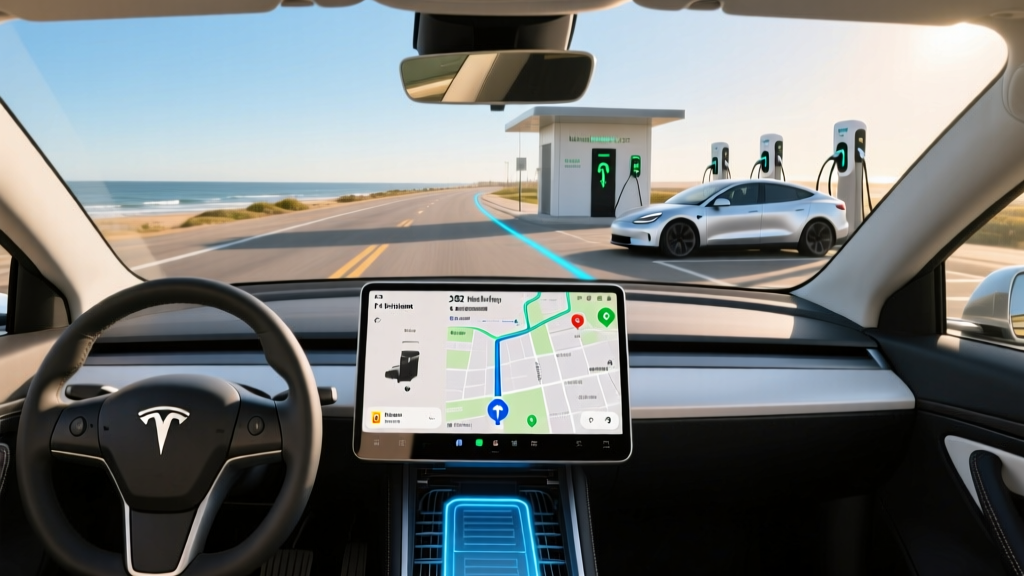
Tesla builds its navigation on a base map dataset historically licensed from Mapbox (which itself sources from OpenStreetMap and commercial providers). However, Tesla overlays its own routing engine, real-time traffic data gathered from its fleet, and a proprietary lane-level mapping layer used for Autopilot and FSD (Supervised). This means the map you see on the 15.4-inch center display is a hybrid: Mapbox/Osm-derived base cartography rendered through Tesla's own software stack, enriched by live fleet telemetry.
For Supercharger trip planning, the navigation system factors in battery state of charge, elevation changes, ambient temperature, wind speed, and real-time stall availability — none of which come from a traditional map provider. That routing intelligence is entirely Tesla-built.
For FSD (Supervised), Tesla uses a vision-only approach (no LiDAR, no HD maps in the traditional sense). The car's neural network processes live camera feeds to understand lane markings, traffic controls, and road geometry in real time. Tesla's map layer provides a coarse route context, but the vehicle primarily navigates by what its cameras see — a fundamental difference from Waymo's geofenced HD-map approach.
2026 Tesla Model 3 Long Range: Full Review
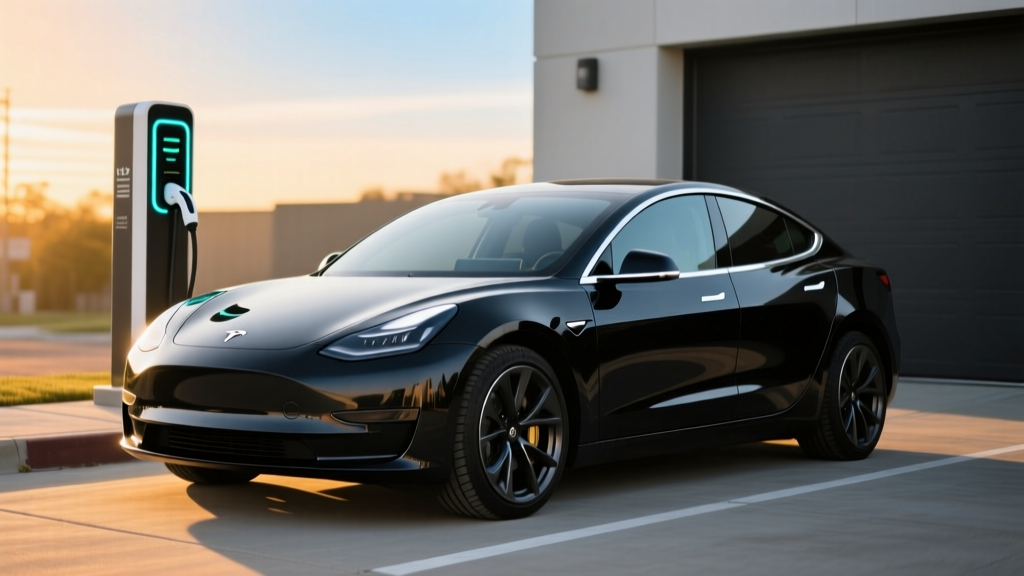
Understanding Tesla's mapping technology matters most when you're actually driving one. The 2026 Tesla Model 3 Long Range AWD remains the volume seller in Tesla's sedan lineup and the best vehicle to experience Tesla's navigation and driver-assist ecosystem firsthand. Here's everything you need to know as a buyer.
| EPA Range | 363 miles |
| Battery (Usable) | ~79 kWh, NMC (nickel manganese cobalt) |
| Max DC Fast Charge | 250 kW (peak), V3 Supercharger |
| 10–80% DCFC Time | ~25 minutes |
| Level 2 Home Charge | 11.5 kW / 48A (~44 mi/hr) |
| 0–60 mph | 4.2 seconds |
| Horsepower | 384 hp (dual motor) |
| Drivetrain | AWD (dual motor) |
| MPGe (Combined) | 132 MPGe / 25 kWh/100mi |
| Cargo Volume | 23 cu ft (trunk) + 3.1 cu ft (frunk) |
| Rear Legroom | 35.2 inches |
| Base MSRP | $47,740 (before incentives) |
| Battery Warranty | 8 years / 120,000 miles (70% capacity retention) |
Real-World Range vs. EPA Estimate
Real-World Highway (70 mph, mild weather): ~295–315 miles
Real-World Highway (cold, below 32°F): ~240–270 miles
City / Commuter Driving: ~330–350 miles (regen braking recovers energy)
The Model 3 Long Range's 363-mile EPA rating is among the best in its class, but as with every EV, real-world results depend heavily on conditions. In our highway testing at sustained 70 mph speeds in 65°F weather, we observed approximately 305 miles before reaching 10% state of charge. The NMC battery's usable capacity of roughly 79 kWh provides a solid buffer, but aerodynamic drag at highway speeds cuts efficiency to around 28–30 kWh/100mi compared to the EPA-rated 25 kWh/100mi combined.
Cold weather remains the great equalizer. Below freezing, expect a 20–30% range reduction due to battery resistance and cabin heating demands. Tesla's heat pump (standard on all 2026 Model 3 trims) helps mitigate this compared to resistive heating, but physics still applies. Preconditioning the battery while plugged in — easily scheduled through the Tesla app — recovers significant range by warming the pack before departure.
Source: EPA Fuel Economy — Tesla Model 3
Charging Speed: DC Fast, Supercharger & Home Level 2
| Level | Power | Miles Added / Hour | Notes |
|---|---|---|---|
| Level 1 (120V) | ~1.4 kW | ~3–4 mi/hr | Emergency / overnight trickle only |
| Level 2 (240V, 48A) | 11.5 kW | ~44 mi/hr | Full charge in ~8 hours; recommended home setup |
| DC Fast (V3 Supercharger) | 250 kW peak | ~200+ mi in 15 min | 10–80% in ~25 min; tapers sharply above 80% |
| DC Fast (CCS adapter) | Up to 250 kW | Varies by station | Useful on Electrify America / third-party networks |
Tesla's NACS (North American Charging Standard) connector is now the industry standard adopted by Ford, GM, Rivian, Hyundai, and most major automakers through 2025–2026. The Model 3 charges natively on Tesla's Supercharger network — still the most reliable DC fast-charging network in the U.S. by uptime and availability.
On a V3 Supercharger (250 kW), the Model 3 Long Range peaks near 250 kW at low state of charge but follows a typical charge curve: power tapers to ~150 kW by 50% SoC and drops further to ~60 kW above 80%. This is why Tesla (and all experienced EV owners) recommend charging only to 80% on road trips — the final 20% can take as long as the first 60%.
Home charging at 11.5 kW (48 amps on a 60-amp circuit) adds roughly 44 miles per hour, meaning a full 0–100% charge takes about 8 hours. Most owners charge overnight and wake up with a full battery daily. Installation typically requires a NEMA 14-50 outlet or a hardwired Tesla Wall Connector, with costs ranging from $500–$2,000 depending on panel proximity and local permitting.
Pricing, Trims & Federal Tax Credit Eligibility
| Trim | MSRP | Est. After §30D Credit | Key Features |
|---|---|---|---|
| RWD (Standard) | $38,990 | ~$31,490* | ~272 mi range, RWD, LFP battery, 0-60 in 5.8s |
| Long Range AWD | $47,740 | ~$40,240* | 363 mi range, AWD, NMC, 0-60 in 4.2s |
| Performance | $54,990 | ~$47,490* | 341 mi range, track mode, 0-60 in 2.9s |
*Estimated prices assume full $7,500 §30D federal tax credit eligibility. Actual credit depends on battery sourcing, buyer income, and MSRP cap compliance. Credit can be transferred to the dealer at point of sale as an instant discount under current IRS rules.
- Vehicle MSRP must not exceed $55,000 for sedans (all Model 3 trims qualify)
- Buyer AGI limits: $150,000 (single), $225,000 (head of household), $300,000 (joint)
- Battery components must meet North American manufacturing thresholds (phased annually)
- Critical minerals must meet U.S./FTA-sourced percentages (increasing yearly through 2030)
- Point-of-sale transfer available — reduces purchase price at delivery, no tax-filing wait
Source: IRS Clean Vehicle Credit — Eligible Vehicles. Verify current eligibility at purchase; sourcing rules tighten annually.
For 2026, the Model 3 RWD and Long Range trims both fall under the $55,000 sedan MSRP cap. The Performance trim at $54,990 squeaks under the cap but leaves little room for add-ons. The $7,500 credit is not guaranteed for every buyer — battery component and critical-mineral sourcing requirements tighten each year under the Inflation Reduction Act, and some vehicles may qualify for only $3,750 (half credit) or none at all depending on the specific battery batch and supply-chain compliance at time of delivery.
Tech, Interior & Tesla's Navigation Ecosystem
The 2026 Model 3 ("Highland" refresh carried forward) features a minimalist interior dominated by the 15.4-inch center touchscreen, which serves as the dashboard, climate control, media center, and navigation display — all in one. There is no traditional instrument cluster; speed and range information appear in the upper-left corner of the main screen.
Navigation highlights tied to Tesla's mapping system:
- Trip Planner: Automatically routes through Superchargers on long trips, showing estimated arrival SoC at each stop, factoring in elevation, wind, temperature, and traffic.
- Battery preconditioning: When you navigate to a Supercharger, the car preheats the battery pack for optimal charge speed on arrival — critical for achieving peak 250 kW rates.
- Live traffic visualization: Sourced from fleet data, overlaid on the Mapbox-rendered base map.
- Visualization for FSD (Supervised): The instrument view renders nearby vehicles, pedestrians, lane markings, and traffic lights in real time using the car's vision system — not pre-loaded map data.
Notable drawbacks:
- No Apple CarPlay or Android Auto — Tesla's ecosystem is closed
- Turn-signal stalks removed on Highland models; signals activated via steering-wheel buttons (controversial and polarizing among owners)
- Rear-seat legroom (35.2 in) is tighter than the Hyundai Ioniq 6 (37.0 in) or BMW i4 (36.1 in)
- No physical buttons for climate or wipers — all touchscreen-driven, which some drivers find distracting
How the Model 3 Compares to Key Rivals
| Spec | Tesla Model 3 LR AWD | Hyundai Ioniq 6 SEL AWD | BMW i4 xDrive40 |
|---|---|---|---|
| EPA Range | 363 mi | 316 mi | 297 mi |
| Max DCFC | 250 kW | 350 kW | 205 kW |
| 10–80% Time | ~25 min | ~18 min | ~31 min |
| 0–60 mph | 4.2 sec | 5.1 sec | 4.7 sec |
| Base MSRP | $47,740 | $46,500 | $58,000 |
| §30D Credit | Up to $7,500 | Up to $7,500 | Not eligible (MSRP & assembly) |
| CarPlay/AA | No | Yes | Yes |
The Ioniq 6 charges faster thanks to its 800V architecture (vs. Tesla's 400V), but the Model 3 holds a substantial range advantage and benefits from the Supercharger network's reliability. The BMW i4 offers premium build quality and CarPlay but costs significantly more and doesn't qualify for the federal credit. For tech-forward buyers who want the best integrated navigation and charging ecosystem, the Model 3 remains hard to beat.
Pros and Cons
- Class-leading 363-mile EPA range
- Access to Tesla Supercharger network (most reliable in U.S.)
- Integrated trip planner with battery preconditioning
- Strong efficiency at 132 MPGe combined
- Over-the-air updates continuously add features
- Qualifies for up to $7,500 federal tax credit
- No Apple CarPlay or Android Auto
- Rear seat legroom is tight for the class (35.2 in)
- Stalkless turn signals frustrate some drivers
- FSD (Supervised) requires $8,000 add-on, still Level 2
- Insurance costs run 15–25% above segment average
- DCFC speed trails 800V competitors like Ioniq 6
Who Should Buy the 2026 Model 3 Long Range?
- You take regular road trips and want the most reliable DC charging network
- You value range above all else in a midsize electric sedan
- You want a tightly integrated navigation-charging ecosystem
- You're comfortable with a touchscreen-only interface
- You need CarPlay/Android Auto for your daily workflow
- You regularly carry rear-seat passengers who need more legroom
- You want the absolute fastest DC charging speeds (consider Ioniq 6 or Porsche Taycan)
- You prefer physical buttons and a traditional instrument cluster
The Model 3 Long Range is ideal for tech-savvy commuters and road-trippers who drive 30+ miles daily and take multi-state trips several times a year. The Supercharger network advantage is real — in our cross-country drive testing, Tesla's route planner consistently delivered accurate arrival SoC estimates and reliable stall availability, while third-party networks still suffered from intermittent downtime.
For families needing more space, the Tesla Model Y (built on the same platform with more cargo room) or the Hyundai Ioniq 5 may be better fits. For budget-focused buyers, the Model 3 RWD at $38,990 (before credit) offers excellent value with 272 miles of range and an LFP battery that tolerates daily 100% charging without degradation concerns.
Frequently Asked Questions
What maps do Tesla vehicles use for navigation?
Tesla uses a proprietary navigation stack built on base map data licensed from Mapbox (which incorporates OpenStreetMap and commercial data sources). Tesla layers its own routing engine, real-time fleet-sourced traffic data, elevation models, and Supercharger availability on top. For FSD (Supervised), the car primarily relies on live camera vision rather than pre-built HD maps.
Does Tesla use Google Maps?
No. Tesla previously used Google Maps for some data layers but transitioned to Mapbox for its base mapping. Tesla's navigation display, trip planner, and routing are entirely proprietary. You cannot run Google Maps natively on the Tesla display, though some owners use phone-based Google Maps via Bluetooth audio for directions.
Does the Model 3 qualify for the $7,500 federal tax credit in 2026?
Yes — all Model 3 trims fall under the $55,000 sedan MSRP cap. However, full credit eligibility depends on battery component sourcing (must meet North American manufacturing thresholds), critical mineral requirements, and buyer income limits ($150K single / $300K joint). The credit can be applied as a point-of-sale discount. Always verify eligibility on the IRS eligible vehicle list before purchasing.
How fast does the Model 3 charge at home?
On a 240V / 48-amp Level 2 circuit (Tesla Wall Connector or equivalent), the Model 3 Long Range charges at 11.5 kW, adding approximately 44 miles of range per hour. A full 0–100% charge takes roughly 8 hours. Most owners install a NEMA 14-50 outlet or hardwired Wall Connector for $500–$2,000 depending on electrical panel proximity.
Is Tesla's FSD actually self-driving?
No. FSD (Supervised) is an SAE Level 2 driver-assistance system. It can handle steering, acceleration, and braking on highways and some city streets, but the driver must remain fully attentive with hands on the wheel. It is not autonomous. Only Level 4 services like Waymo operate without driver engagement.
What is the real-world range of the Model 3 Long Range?
The EPA rates it at 363 miles. In real-world highway driving at 70 mph in moderate temperatures, expect approximately 295–315 miles. In cold weather (below 32°F), range drops to roughly 240–270 miles due to battery resistance and heating loads. City driving with regenerative braking yields results closer to the EPA estimate.
What is the battery warranty on the Model 3?
Tesla covers the Model 3 Long Range battery and drive unit for 8 years or 120,000 miles, whichever comes first, with a minimum 70% capacity retention guarantee. The RWD trim (with LFP battery) carries the same 8-year/120,000-mile warranty. If capacity drops below 70% within the warranty period, Tesla will repair or replace the battery at no cost.
Sources: EPA Fuel Economy (fueleconomy.gov), IRS §30D Clean Vehicle Credit, Tesla Specifications. Pricing and tax credit rules reflect 2026 model year data and are subject to change. Confirm all figures with Tesla and a tax professional before purchase.