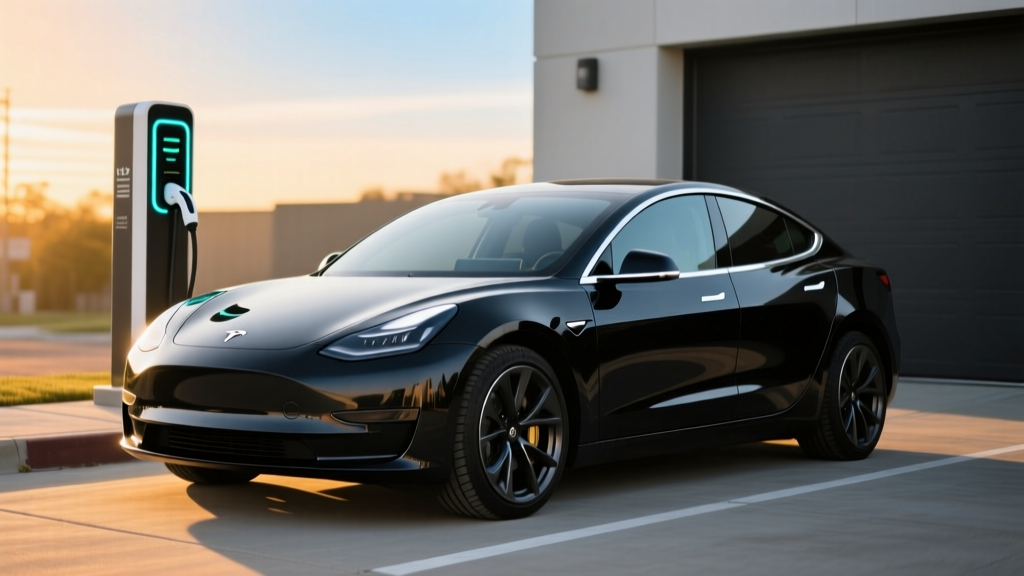
The Tesla Model 3 remains the benchmark compact electric sedan in 2026. After the "Highland" refresh, the Model 3 Long Range AWD and RWD trims offer class-leading efficiency, access to the Supercharger network, and a starting price that undercuts many rivals. But does the math actually work out when you factor in real-world range, home charging costs, and tax credits? This review breaks down every spec you need—and runs a Tesla gas savings calculator so you can see your actual fuel-cost payback.
2026 Tesla Model 3 Quick Specs
| Spec | RWD (Base) | Long Range AWD | Performance |
|---|---|---|---|
| EPA Range | 272 mi | 341 mi | 315 mi |
| Battery (usable) | ~57.5 kWh (LFP) | ~75 kWh (NMC) | ~75 kWh (NMC) |
| MPGe (combined) | 132 MPGe | 134 MPGe | 121 MPGe |
| kWh/100 mi | 25 | 25 | 28 |
| 0–60 mph | 5.8 s | 4.2 s | 2.9 s |
| Horsepower | 283 hp | 346 hp | 510 hp |
| Drivetrain | RWD | Dual-motor AWD | Dual-motor AWD |
| Max DC Fast Charge | 170 kW | 250 kW | 250 kW |
| 10–80% DCFC Time | ~25 min | ~25 min | ~25 min |
| Level 2 Home Rate | 11.5 kW (~44 mi/hr) | 11.5 kW (~44 mi/hr) | 11.5 kW (~44 mi/hr) |
| Base MSRP | $38,990 | $45,990 | $52,990 |
Real-World Range: What to Expect Beyond the EPA Sticker
The Long Range AWD's 75 kWh NMC pack delivers the best real-world range in the lineup. According to fueleconomy.gov, the Long Range achieves 134 MPGe combined, translating to 25 kWh per 100 miles—one of the most efficient EVs in its class.
The base RWD uses a lithium iron phosphate (LFP) battery. LFP chemistry offers longer cycle life and can be charged to 100% daily without degradation concerns, but it's heavier and loses more range in extreme cold than NMC. If you live in northern climates and lack garage parking, the Long Range NMC pack is the more practical choice.
Preconditioning the battery before DC fast charging is critical. Navigate to a Supercharger using the car's built-in routing and the vehicle will warm the pack automatically, enabling peak charge rates. Skipping preconditioning in cold weather can double your charging time.
Charging Speeds: Supercharger Network vs Home Level 2
| Charging Level | Power | Speed (Long Range) | Use Case |
|---|---|---|---|
| Level 1 (120V) | ~1.4 kW | ~5 mi/hr | Emergency top-up |
| Level 2 (240V, 48A) | 11.5 kW | ~44 mi/hr | Overnight home charging |
| DC Fast (Supercharger V3) | Up to 250 kW | ~175 mi in 15 min (peak) | Road trips |
The Long Range and Performance trims peak at 250 kW on V3 Superchargers, reaching 80% state of charge in approximately 25 minutes. However, that peak rate only sustains up to roughly 50% SoC, then tapers progressively. The charge curve looks roughly like this: 250 kW from 10–50%, dropping to ~150 kW at 60%, ~75 kW at 80%, and below 40 kW above 90%. This taper is why 10–80% is the practical fast-charging window.
The base RWD with its smaller LFP pack peaks at 170 kW. It still reaches 80% in about 25 minutes because the smaller battery requires less total energy to fill, but peak miles-per-minute is lower.
For home charging, a Level 2 wall connector on a 60-amp circuit delivers 11.5 kW, adding roughly 44 miles of range per hour. A full overnight charge (8 hours) replenishes about 350 miles—more than enough for daily driving. Installation typically runs $800–$2,000 depending on panel proximity and local permitting. Always consult a licensed electrician for final specs.
Tesla Gas Savings Calculator: Model 3 vs a Comparable Gas Sedan
Let's run a realistic Tesla gas savings calculator comparing the Model 3 Long Range against a typical 30 MPG combined gas sedan (think Toyota Camry or Honda Accord) over 5 years and 60,000 miles.
| Cost Factor | Tesla Model 3 LR | 30 MPG Gas Sedan |
|---|---|---|
| Energy/Fuel Cost per Mile | $0.043 (home charging at $0.14/kWh) | $0.117 (gas at $3.50/gal) |
| 5-Year Fuel/Energy Cost (60k mi) | $2,580 | $7,020 |
| Maintenance (5 yr est.) | ~$1,200 | ~$3,500 |
| Total Operating Cost (5 yr) | $3,780 | $10,520 |
| 5-Year Savings | $6,740 in favor of Model 3 | |
Assumptions: Electricity at $0.14/kWh national average; 25 kWh/100 mi for the Model 3 LR; gas at $3.50/gallon; 30 MPG combined for the gas sedan. If you rely heavily on public DC fast charging at $0.35–$0.50/kWh, your per-mile cost rises to $0.088–$0.125, narrowing the gap significantly. Home charging is where the economics shine.
State incentives and utility off-peak rates can widen the savings further. Some utilities offer EV-specific time-of-use plans with overnight rates as low as $0.07/kWh, cutting your per-mile cost nearly in half.
Pricing, Trims & Federal Tax Credit Eligibility
| Trim | Base MSRP | Est. After §30D Credit | §30D Eligible? |
|---|---|---|---|
| RWD | $38,990 | ~$31,490 | Yes (if sourcing rules met) |
| Long Range AWD | $45,990 | ~$38,490 | Yes (if sourcing rules met) |
| Performance | $52,990 | ~$45,490 | Yes (if sourcing rules met) |
All 2026 Model 3 trims fall under the IRS §30D MSRP cap of $55,000 for sedans. However, eligibility for the full $7,500 federal tax credit depends on multiple factors that change frequently:
- Buyer income caps: AGI must not exceed $150,000 (single), $225,000 (head of household), or $300,000 (joint filers)
- MSRP cap: $55,000 for sedans (all trims qualify)
- Battery sourcing: Critical minerals and battery components must meet escalating domestic-content thresholds per IRS rules
- Point-of-sale transfer: Eligible buyers can apply the credit as an upfront discount at purchase rather than waiting for tax filing
Battery-sourcing requirements tighten annually. Tesla has worked to localize its supply chain for US-built Model 3 vehicles at the Fremont factory, but the credit amount can shift between $3,750 and $7,500 depending on the current critical-minerals and component thresholds. Always verify current eligibility on IRS.gov or consult a tax professional before purchasing.
Interior, Tech & Driver Assistance
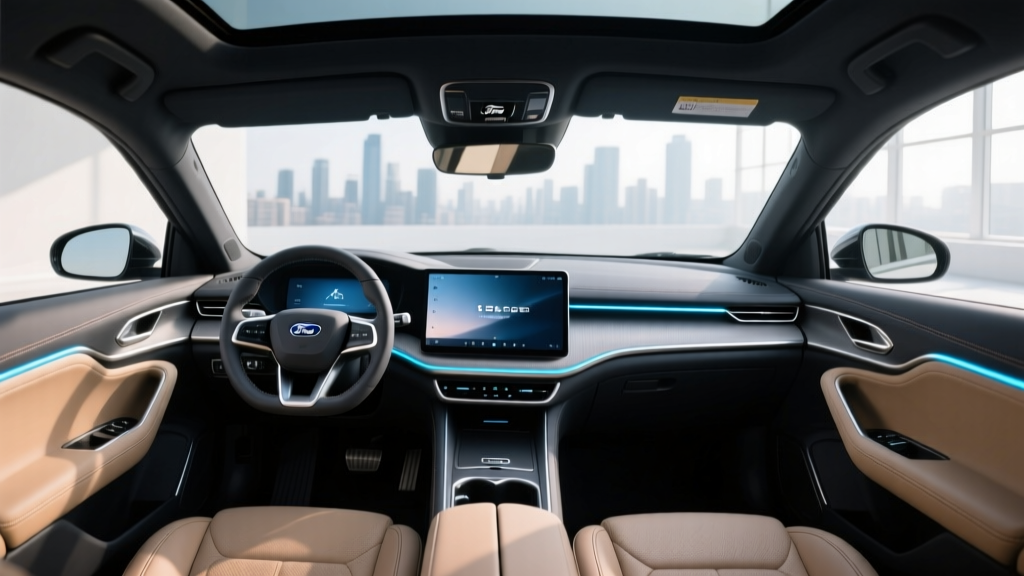
The refreshed Model 3 interior is significantly quieter and more refined than pre-Highland versions, with ventilated front seats, ambient lighting, and improved material quality. The 15.4-inch center touchscreen handles all vehicle controls—there is no instrument cluster, and turn signals are now on the steering wheel rather than a stalk, which requires an adjustment period.
Space and cargo:
- Front headroom: 40.3 in / Rear headroom: 37.8 in
- Front legroom: 42.7 in / Rear legroom: 35.2 in
- Cargo volume: 23 cu ft trunk + rear frunk
Rear legroom is tighter than midsize sedans like the Hyundai Ioniq 6 or BMW i4. If you regularly carry adult rear passengers, test-sit before committing.
Driver assistance: Basic Autopilot (lane centering + adaptive cruise) is standard. Full Self-Driving (Supervised) is a $8,000 option or $99/month subscription.
The Supercharger network remains Tesla's strongest ownership advantage. With over 6,000 V3/V4 stalls in North America, plug-and-charge reliability, and seamless billing, road-trip charging is substantially less stressful than competing CCS networks. Tesla has opened portions of its network to non-Tesla EVs via NACS adapters, but Tesla owners still get priority pricing and the most seamless experience.
Warranty & Long-Term Ownership
Tesla's warranty coverage:
- Basic vehicle: 4 years / 50,000 miles
- Battery & drive unit (RWD/LFP): 8 years / 100,000 miles
- Battery & drive unit (Long Range & Performance/NMC): 8 years / 120,000 miles
- Battery capacity retention threshold: 70% of original capacity during warranty period
Tesla's battery warranty is competitive but not class-leading—Hyundai offers 10 years/100,000 miles on the Ioniq 6 battery. That said, real-world degradation data from Tesla's fleet shows most Model 3 packs retain 90%+ capacity at 100,000 miles. Out-of-warranty battery replacement currently costs $12,000–$16,000 depending on the pack.
Insurance costs run 15–25% higher than equivalent gas sedans. Get quotes before purchasing—some insurers offer EV-specific discounts, but Tesla's repair costs (particularly for collision damage involving the battery pack) drive premiums up.
Pros, Cons & Who Should Buy
Pros
- Class-leading efficiency (25 kWh/100 mi)
- Supercharger network access — best public charging reliability
- Strong real-world range (280–310 mi Long Range)
- LFP option allows worry-free 100% daily charging
- Excellent software and OTA update cadence
- Qualifies for up to $7,500 §30D credit
- Low operating cost: ~$0.04/mi on home charging
Cons
- Rear seat legroom is tight for the class (35.2 in)
- Stalkless steering wheel requires adaptation
- No Apple CarPlay or Android Auto
- FSD costs $8,000 and is still Level 2 only
- Insurance premiums higher than gas equivalents
- Build quality has improved but still inconsistent vs legacy brands
- DC fast charging peaks briefly, tapers significantly after 50%
Who Is the Model 3 For?
Choose the RWD ($38,990) if: You commute under 40 miles daily, charge at home, and want the lowest entry price with LFP's daily-charge-to-100% convenience.
Choose the Long Range AWD ($45,990) if: You take regular road trips, live in a cold climate, need AWD traction, or want the maximum buffer for highway and winter range loss.
Choose the Performance ($52,990) if: You prioritize 2.9-second 0–60 acceleration and track-capable handling over maximum range.
Look elsewhere if: You need spacious rear seating for adults (consider the Ioniq 6 or Model S), require Apple CarPlay, or want a physical instrument cluster and traditional controls.
Frequently Asked Questions
What is the real-world range of the 2026 Tesla Model 3?
The EPA rates the Long Range AWD at 341 miles. In real-world mixed driving, expect 280–310 miles. Highway driving at 75+ mph reduces this to roughly 275–290 miles. Cold weather (below freezing) can drop range 20–30% to 230–260 miles without preconditioning.
How fast does the Model 3 charge at home and on road trips?
At home on a Level 2 charger (11.5 kW), the Model 3 adds about 44 miles of range per hour—a full overnight charge covers most weekly driving. On DC fast chargers, the Long Range and Performance peak at 250 kW, reaching 10–80% in approximately 25 minutes. The RWD peaks at 170 kW with a similar 10–80% time due to its smaller battery.
How much does the Model 3 cost after the federal tax credit?
The RWD starts at $38,990 and drops to approximately $31,490 if you qualify for the full $7,500 §30D credit. The Long Range falls from $45,990 to ~$38,490. Eligibility depends on income caps ($150K single / $300K joint), battery-sourcing requirements, and MSRP limits. Verify current status at IRS.gov before purchase.
Is the Model 3 worth buying vs competitors like the Ioniq 6 or BMW i4?
The Model 3 wins on charging infrastructure (Supercharger access), efficiency, and software. The Hyundai Ioniq 6 offers more rear legroom, a longer warranty (10 yr/100k battery), and Apple CarPlay. The BMW i4 provides superior build quality and a traditional cockpit layout but costs more and charges slower. If public charging reliability matters to you, the Tesla ecosystem is still unmatched.
Does the 2026 Model 3 qualify for the $7,500 federal EV tax credit?
All trims fall under the $55,000 sedan MSRP cap. The full $7,500 credit depends on your income, battery critical-minerals sourcing, and component manufacturing requirements, which tighten annually. The credit can be applied at point of sale as an upfront discount. Check the IRS clean vehicle credit page for current eligibility.
How much money do you save on gas with a Tesla Model 3?
Based on our Tesla gas savings calculator, a Model 3 Long Range owner charging at home saves approximately $6,740 over 5 years and 60,000 miles compared to a 30 MPG gas sedan (at $0.14/kWh electricity and $3.50/gal gas). Savings increase with lower utility rates and decrease if you rely primarily on expensive public DC fast charging.