Does Tesla Still Offer a Loyalty Discount in 2026?
If you currently own or lease a Tesla and are considering upgrading to a refreshed Model Y or Model 3, you've likely searched for a Tesla loyalty discount. Unlike legacy automakers such as Ford or Hyundai, Tesla does not publish a traditional loyalty cash incentive — there is no flat $1,000 or $2,000 rebate handed to returning buyers at checkout. Instead, Tesla structures repeat-buyer savings through its referral program, periodic inventory price adjustments, and the ability to transfer FSD (Supervised) from a previous vehicle when promotions allow.
In 2026, the most reliable way for an existing Tesla owner to save is by ordering through a referral link (your own or another owner's), which typically yields $1,000 off a new Model 3 or Model Y and unlocks accelerated Supercharging credits. Combined with the IRS §30D federal tax credit (up to $7,500, subject to income, MSRP, and battery-sourcing caps), a loyal Tesla buyer can stack savings well beyond what the sticker price alone suggests.
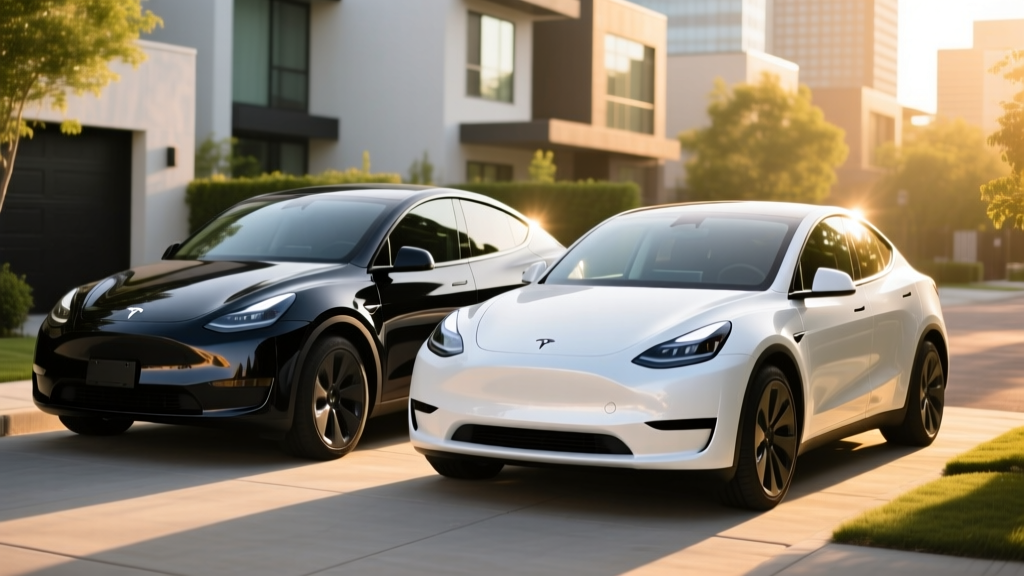
This guide uses the 2026 Tesla Model Y Long Range AWD — Tesla's best-selling vehicle and the most common loyalty-upgrade target — to show you exactly what you'll pay, what you'll get, and whether the numbers make sense versus key competitors.
2026 Tesla Model Y: The Core Specs at a Glance
| Spec | 2026 Model Y Long Range AWD |
|---|---|
| EPA Range | 320 miles |
| Battery (usable) | ~78 kWh, NMC chemistry |
| Drivetrain | Dual-motor AWD |
| Horsepower | 384 hp |
| 0–60 mph | 4.8 seconds |
| Peak DC Fast Charge | 250 kW |
| 10–80% DC Charge | ~27 minutes |
| Level 2 Home Charge | 11.5 kW (~44 mi/hr) |
| Efficiency | 122 MPGe / 28 kWh/100mi |
| Cargo (behind 2nd row) | 30.2 cu ft (76.2 cu ft max) |
| Base MSRP | $44,990 |
| Battery Warranty | 8 years / 120,000 miles |
Real-World Range: What the EPA Sticker Doesn't Tell You
EPA Estimated: 320 miles
Real-World Expectation: 270–295 miles in mixed driving; ~250–265 miles sustained highway at 75 mph; ~215–240 miles in sub-30°F winter conditions.
The 2026 Model Y Long Range uses an NMC (nickel manganese cobalt) pack that delivers strong energy density but is more sensitive to cold-weather capacity loss than the LFP chemistry found in the RWD trim. In our experience, highway efficiency drops to roughly 32–34 kWh/100mi at 75 mph with climate control active, cutting practical range to around 260 miles on a road trip. Tesla's heat pump mitigates cabin-heating draw, but battery chemistry itself loses usable capacity below freezing — expect a 20–25% reduction in the coldest months if you lack garage parking.
For daily commuting under 60 miles round-trip, the Model Y's range is a non-issue even in winter. For cross-country road trips, plan stops every 220–240 miles to stay within the 10–80% fast-charge sweet spot where charging speeds peak.
Charging Speed: Home and DC Fast-Charge Breakdown
| Charging Level | Power (kW) | Miles Added per Hour | Notes |
|---|---|---|---|
| Level 1 (120V) | ~1.4 kW | ~5 mi/hr | Emergency / trickle only |
| Level 2 (240V, 48A) | 11.5 kW | ~44 mi/hr | Full overnight charge in ~8 hrs |
| DC Fast (V3 Supercharger) | 250 kW peak | ~162 mi in 15 min | Tapers significantly above 80% |
| DC Fast (V4 Supercharger) | Up to 250 kW | Similar to V3 | Newer stalls; CCS-native cable |
The Model Y's charge curve peaks at 250 kW only below ~35% state of charge. From 10–80%, expect an average sustained rate closer to 130–150 kW, which is why the 10–80% session takes roughly 27 minutes rather than the theoretical minimum. Above 80%, the rate drops sharply — often below 40 kW — making the final 20% painfully slow. On road trips, the practical strategy is to charge to 80% and move on.
At home, a Wall Connector on a 60A circuit delivers 11.5 kW, adding roughly 44 miles of range per hour. Most owners wake up to a full battery every morning. If your electrical panel supports only a 40A circuit, you'll see ~9.6 kW — still adequate for overnight needs. A licensed electrician should verify panel capacity before installation.
Pricing, Trims, and the Real Cost After Incentives
Here's where the Tesla loyalty discount question becomes concrete. Tesla's pricing is dynamic — it adjusts periodically based on demand, production, and incentive landscape. As of early 2026, the Model Y lineup is:
| Trim | MSRP | Est. Fed Credit (§30D) | Referral Savings | Effective Price |
|---|---|---|---|---|
| Model Y Long Range AWD | $44,990 | Up to $7,500* | $1,000 | ~$36,490 |
| Model Y Performance | $49,990 | Up to $7,500* | $1,000 | ~$41,490 |
| Model 3 Long Range AWD | $42,490 | Up to $7,500* | $1,000 | ~$33,990 |
*Federal tax credit eligibility under IRS §30D depends on: (1) buyer AGI below $150K single / $300K joint, (2) vehicle MSRP under $55K for sedans or $80K for SUVs/vans, (3) battery critical-mineral and component sourcing thresholds that tighten annually. The credit can now be transferred to the dealer at point of sale as a price reduction. Verify current-year rules at irs.gov before ordering.
The referral program is the closest thing to a loyalty discount Tesla offers. When you order using a referral link — including one from your own existing Tesla account — you receive $1,000 off the purchase price. Tesla occasionally runs enhanced referral promotions that add free Supercharging miles or FSD trial extensions, though these rotate quarterly.
FSD Transfer and Other Loyalty Perks
In limited promotional windows, Tesla has allowed existing owners to transfer a paid FSD (Supervised) license from an older vehicle to a new order. FSD currently costs $8,000 as a one-time purchase or $99/month. If you paid for FSD outright on a previous Tesla, watch for these transfer promotions — they effectively represent a $8,000 loyalty benefit. However, Tesla does not guarantee these transfers; they appear and disappear without a fixed schedule.
Other practical loyalty advantages for returning owners:
- Supercharger network access remains the most reliable DC fast-charging network in the US, with V3 and V4 stalls in all 50 states.
- Existing Tesla app profile carries over — no re-learning curve for scheduling, climate, and service requests.
- Insurance continuity — Tesla Insurance (available in select states) may offer multi-vehicle or renewal discounts, though premiums remain above industry average for most drivers.
How the Model Y Stacks Up Against Competitors
Even without a formal loyalty rebate, the Model Y's total value proposition is strong. Here's how it compares to the most common cross-shop alternatives in 2026:
| Spec | Tesla Model Y LR AWD | Hyundai Ioniq 5 SEL AWD | Ford Mustang Mach-E Premium AWD |
|---|---|---|---|
| EPA Range | 320 mi | 290 mi | 290 mi |
| Battery | 78 kWh NMC | 77.4 kWh NMC | 91 kWh NMC |
| Peak DC Charge | 250 kW | 235 kW | 150 kW |
| 10–80% Time | ~27 min | ~18 min | ~38 min |
| 0–60 mph | 4.8 sec | 5.1 sec | 5.1 sec |
| Base MSRP | $44,990 | $48,600 | $45,995 |
| NACS Native | Yes | Yes (2025+) | Yes (2025+) |
The Ioniq 5 charges faster from 10–80% thanks to its 800V architecture, but the Model Y holds the range and Supercharger-network advantage. The Mach-E trails on charging speed. For loyal Tesla owners already embedded in the Supercharger ecosystem, switching brands means adapting to Electrify America or other networks — a real friction cost on road trips.
Pros, Cons, and Who Should Buy
Pros
- Class-leading 320-mile EPA range at this price point
- Supercharger network remains the gold standard for reliability
- Spacious cargo area (76.2 cu ft max) with optional 3rd row
- Strong efficiency (122 MPGe) keeps per-mile charging cost low
- OTA updates continuously add features post-purchase
- Referral + §30D stacking can drop effective price below $37K
Cons
- No formal loyalty cash rebate — savings require referral + credit stacking
- NMC battery loses more range in cold weather than LFP alternatives
- Minimalist interior lacks physical controls; turn-signal stalks removed
- Insurance costs run 15–30% above comparable non-Tesla EVs
- 250 kW peak charge rate is slower than 800V competitors (Ioniq 5, EV6)
- FSD (Supervised) remains a Level 2 system — driver must stay engaged
Best for: Existing Tesla owners upgrading from an older Model 3 or Model Y who want to stay in the Supercharger ecosystem, families needing cargo space and available 3rd-row seating, and commuters who can charge at home nightly.
Look elsewhere if: You prioritize the fastest possible DC charging (Ioniq 5 wins), you want a traditional dealership experience with guaranteed loyalty rebates, or you live in a region with limited Supercharger coverage.
Frequently Asked Questions
Does Tesla offer a loyalty discount for existing owners in 2026?
Tesla does not offer a traditional loyalty cash rebate. The closest equivalent is the $1,000 referral discount (available when ordering through any Tesla owner's referral link, including your own), potential FSD transfer promotions, and stacking with the federal §30D tax credit at point of sale.
How much can I actually save as a returning Tesla buyer?
Between the $1,000 referral discount and the $7,500 federal tax credit (if eligible), you can reduce a $44,990 Model Y Long Range to roughly $36,490. An FSD transfer promotion, when available, adds up to $8,000 in additional value.
Does the 2026 Model Y qualify for the $7,500 federal EV tax credit?
The Model Y qualifies for the full §30D credit provided the buyer meets income caps ($150K single / $300K joint AGI) and the vehicle meets battery-sourcing requirements, which tighten each year. The credit can be applied as a point-of-sale price reduction. Confirm current eligibility at irs.gov before ordering.
What is the real-world range of the 2026 Model Y?
Expect 270–295 miles in mixed driving, 250–265 miles on sustained highway trips at 75 mph, and 215–240 miles in freezing temperatures. The EPA sticker reads 320 miles, but real-world conditions — especially cold weather and high speeds — reduce that figure meaningfully.
Is the Tesla Model Y worth buying over the Hyundai Ioniq 5 or Ford Mach-E?
If you value range, Supercharger access, and cargo space, the Model Y leads. If DC fast-charge speed matters most (e.g., frequent road trips in areas with sparse Superchargers), the Ioniq 5's 18-minute 10–80% time is compelling. The Mach-E trails on both range and charging speed but offers a more conventional interior layout.
Can I transfer my existing FSD license to a new Model Y?
Only during specific Tesla promotional windows. These transfer offers are not permanent policy — they appear sporadically and typically require you to take delivery within a set timeframe. Monitor your Tesla account and email for announcements.
What battery warranty does the Model Y carry?
Tesla covers the battery and drive unit for 8 years or 120,000 miles (whichever comes first) with a minimum 70% capacity retention threshold. This is competitive with the industry standard, though some competitors like Hyundai offer 10-year/100,000-mile battery warranties.