The Rumor vs. Reality: Are Model S and X Going Away?
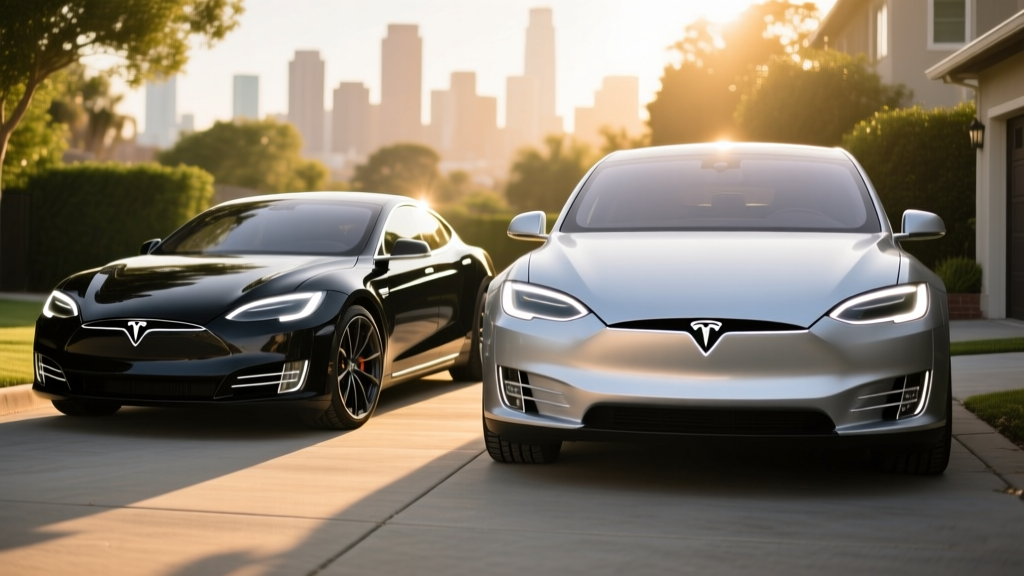
Search forums and EV communities long enough and you'll encounter the recurring question: will Tesla discontinue the Model S and X? As of early 2026, both the Model S sedan and Model X SUV remain in production and available for order on Tesla's website. However, the question isn't baseless. Tesla has progressively shifted its volume focus to the Model 3, Model Y, and the Cybertruck, leaving its flagship legacy models in a state of strategic ambiguity.
The Model S and Model X were last significantly refreshed in 2021 (the "Palladium" update), and since then, updates have been incremental — new wheel options, minor software features, and price adjustments. Meanwhile, the broader EV market has caught up. Competitors like the Lucid Air, BMW i7, Mercedes EQS, and Rivian R1S now offer compelling alternatives in the luxury electric segment. This competitive pressure, combined with Tesla's manufacturing rationalization, keeps the discontinuation conversation alive.
Here's what buyers and watchers need to know right now: current specs, real-world usability, pricing after incentives, and whether these aging flagships still justify their premium positioning.
2026 Model S: Range, Battery, and Efficiency
| Spec | Model S Long Range | Model S Plaid |
|---|---|---|
| EPA Range | 402 miles | 359 miles |
| Battery (usable) | ~95 kWh (NMC) | ~95 kWh (NMC) |
| Drivetrain | Dual-Motor AWD | Tri-Motor AWD |
| Horsepower | 670 hp | 1,020 hp |
| 0–60 mph | 3.1 seconds | 1.99 seconds |
| MPGe (combined) | 120 MPGe | 116 MPGe |
| Efficiency | 28 kWh/100 mi | 29 kWh/100 mi |
| Top Speed | 155 mph | 200 mph |
The Model S uses an NMC (nickel manganese cobalt) battery pack — chosen for its high energy density, which is necessary to achieve these range figures in a sedan form factor. Unlike the LFP packs in the base Model 3, NMC batteries benefit from daily charging limits of 80–90% to maximize long-term health, reserving 100% charges for road trips.
According to fueleconomy.gov, the Model S Long Range achieves 120 MPGe combined, translating to roughly 3.5 miles per kWh — an efficiency figure that remains impressive for a 4,500+ lb luxury sedan.
2026 Model X: Range, Battery, and Utility
| Spec | Model X Long Range | Model X Plaid |
|---|---|---|
| EPA Range | 335 miles | 311 miles |
| Battery (usable) | ~95 kWh (NMC) | ~95 kWh (NMC) |
| Drivetrain | Dual-Motor AWD | Tri-Motor AWD |
| Horsepower | 670 hp | 1,020 hp |
| 0–60 mph | 3.8 seconds | 2.5 seconds |
| MPGe (combined) | 103 MPGe | 100 MPGe |
| Towing Capacity | 5,000 lbs | 5,000 lbs |
| Cargo Volume | 88.1 cu ft (max) | 88.1 cu ft (max) |
The Model X offers seating for up to seven (with the optional third row) and remains one of the few electric SUVs with genuine family-hauling capability combined with a 5,000-lb tow rating. The signature falcon-wing rear doors provide excellent access to second- and third-row seats in tight parking spaces — though they add mechanical complexity that has historically been a reliability concern.
Charging Speed: DC Fast and Home Level 2
| Charging Level | Rate | Model S/X Details |
|---|---|---|
| Level 1 (120V) | ~1 kW | ~3–4 miles per hour — emergency/trickle only |
| Level 2 (240V, 48A) | 11.5 kW | ~34 miles per hour; full charge in ~9–10 hours |
| DC Fast (V3 Supercharger) | Peak 250 kW | 10–80% in ~27–30 minutes |
| DC Fast (V4 Supercharger) | Peak 250 kW (current vehicles) | Same peak; V4 cabinet supports higher future rates |
The Model S and X charge at a peak of 250 kW on Tesla's V3 and V4 Supercharger network. That's competitive but no longer class-leading — the Hyundai Ioniq 5 and Kia EV6 can peak at 350 kW on 800V architecture, and the Lucid Air accepts up to 300 kW.
Charging curve reality: The 250 kW peak only holds between roughly 10–30% state of charge (SoC). By 50% SoC, the rate tapers to approximately 150 kW, and above 80%, it drops below 60 kW. This is why Tesla (and all EV best practices) recommends charging only to 80% on road trips — the final 20% can take as long as the first 70%.
At home on a Tesla Wall Connector (48 amps / 11.5 kW), both vehicles add roughly 34 miles of range per hour of charging. A full overnight charge from 20% to 90% takes about 6–7 hours, which is practical for daily use. Owners should install a NEMA 14-50 outlet or hardwired Wall Connector on a 60-amp circuit — budget $800–$2,000 for professional installation depending on panel proximity and local permit costs.
Both models come with a NACS (North American Charging Standard) connector natively — the connector Tesla developed and which has now been adopted by Ford, GM, Rivian, and most major automakers. This gives Model S and X owners seamless access to the full Supercharger network, which remains the most reliable DC fast-charging infrastructure in North America.
Pricing, Trims, and Federal Tax Credit Eligibility
| Model & Trim | 2026 Base MSRP | Est. As-Tested | §30D Federal Credit |
|---|---|---|---|
| Model S Long Range | $74,990 | $80,000–$90,000 | Not eligible (MSRP exceeds $55,000 sedan cap) |
| Model S Plaid | $89,990 | $95,000–$110,000 | Not eligible (MSRP exceeds $55,000 sedan cap) |
| Model X Long Range | $79,990 | $88,000–$100,000 | Not eligible (MSRP exceeds $80,000 SUV cap) |
| Model X Plaid | $94,990 | $102,000–$115,000 | Not eligible (MSRP exceeds $80,000 SUV cap) |
Tax credit verdict: Neither the Model S nor the Model X qualifies for the IRS §30D federal EV tax credit in 2026. The Model S is classified as a sedan and exceeds the $55,000 MSRP cap; the Model X is classified as an SUV and exceeds the $80,000 MSRP cap. Additionally, buyer income limits ($150,000 single / $300,000 joint AGI) and critical-mineral/battery-sourcing requirements further restrict credit eligibility across the industry.
This is a significant competitive disadvantage. The BMW i7 eDrive50 (starting ~$105,000) also misses the cap, but the Lucid Air Pure (starting ~$69,900) similarly falls outside the sedan cap. However, buyers cross-shopping luxury EVs in this price range tend to be less incentive-dependent — though the total cost of ownership difference over five years can still exceed $7,500.
Interior, Tech, and Driver Assistance
The Model S and X interior remains defined by Tesla's minimalist philosophy: a 17-inch central touchscreen dominates the dash, a 12.3-inch instrument cluster sits behind the yoke (or round steering wheel — Tesla restored the option), and a rear 8-inch screen serves second-row passengers. Build quality improved markedly with the 2021 refresh, with ventilated seats, genuine material upgrades, and better panel consistency.
Cargo capacity:
- Model S: 28.0 cu ft trunk + front trunk (frunk), expanding to 79.3 cu ft with rear seats folded. Rear legroom: 41.3 inches.
- Model X: 14.4 cu ft behind the third row, 37.1 cu ft behind the second row, 88.1 cu ft max. Front legroom: 41.2 inches; second-row: 41.4 inches.
Driver assistance: Both models come with Tesla's Basic Autopilot (lane-keeping, adaptive cruise control). Full Self-Driving (Supervised) is an optional $8,000 add-on (or $99/month subscription). FSD remains a SAE Level 2 system — meaning the driver must remain fully attentive, keep hands on the wheel, and is legally responsible for all driving decisions. Despite the "Full Self-Driving" branding, this is not autonomous driving. Only Level 4 services like Waymo operate without a human driver in geofenced areas.
Standout features:
- Over-the-air software updates that add features years after purchase
- Sentry Mode (360° security camera recording)
- Dog Mode, Camp Mode, and integrated streaming/gaming
- HEPA air filtration with "Bioweapon Defense Mode" (Model X standard, Model S standard)
- Access to the Tesla Supercharger network (~6,000+ stalls in North America)
Warranty and Long-Term Battery Outlook
| Coverage | Terms |
|---|---|
| Basic Vehicle | 4 years / 50,000 miles |
| Battery & Drive Unit | 8 years / 150,000 miles (whichever comes first) |
| Battery Capacity Guarantee | Minimum 70% retention over warranty period |
Tesla's 8-year/150,000-mile battery and drive unit warranty is competitive with the luxury EV segment. The 70% capacity retention threshold is standard — if your battery degrades below 70% of its original capacity within the warranty window, Tesla will replace or refurbish it at no cost.
Real-world degradation data from fleet analytics (including Tessalytics and Recurrent Auto) suggests that Model S/X NMC packs typically lose 8–12% capacity in the first 50,000 miles, then degrade more slowly — often retaining 85–90% at 100,000 miles with proper charging habits (avoiding frequent 100% charges and prolonged storage at extreme SoC). A full out-of-warranty battery replacement currently costs between $15,000–$22,000 depending on the pack configuration.
Pros, Cons, and Who Should Buy
✅ Pros
- Class-leading EPA range (Model S LR: 402 mi)
- Access to the Supercharger network — the most reliable in North America
- Brutal performance (Plaid: sub-2-second 0–60)
- Continuous OTA updates keep software fresh
- Strong cargo/passenger utility (Model X with 7 seats)
- NACS connector — future-proof as the industry standard
❌ Cons
- No federal tax credit eligibility (price cap exceeded)
- 2021-refresh design is aging vs. newer Lucid Air, BMW i7
- Falcon-wing doors (Model X) add repair complexity
- DC fast charging peaks at 250 kW — behind 800V competitors
- Yoke steering polarizing; minimalist interior not for everyone
- Discontinuation risk may affect long-term parts/service support
Who the Model S suits best: Long-distance commuters and road-trippers who prioritize maximum range and Supercharger access. If you regularly drive 200+ miles between charges and want a sedan that can genuinely handle cross-country trips with minimal stops, the Model S Long Range remains unmatched in range.
Who the Model X suits best: Families needing three-row electric seating with tow capability. The Model X occupies a narrow niche — electric 7-seater with 5,000-lb towing and falcon-wing access. If you need space for kids, gear, and a trailer, the options remain limited (Rivian R1S being the primary alternative).
Who should look elsewhere: Buyers seeking the latest interior luxury (Mercedes EQS, BMW i7), those who want the fastest-charging architecture (Hyundai/Kia 800V), or anyone who needs the security of a long-established model with no discontinuation risk.
The Discontinuation Question: What to Watch
Tesla has never officially announced plans to discontinue the Model S or Model X. However, several signals suggest their long-term future is uncertain:
- Production volume: Model S/X production at the Fremont factory represents a small fraction of Tesla's total output — the company has prioritized Model Y, Cybertruck, and next-generation platforms.
- Platform age: The underlying architecture dates to 2012 (Model S) and 2015 (Model X), with the 2021 refresh being largely a body-and-interior update rather than a ground-up redesign.
- Competitive gap: Newer entrants like the Lucid Air (404–516 mi EPA), BMW i7, and upcoming platforms from Mercedes and Audi offer fresher designs with 800V+ charging.
- Elon Musk's public comments: Musk has periodically suggested that Model S/X production could wind down as Tesla focuses on higher-volume, lower-cost vehicles.
If discontinuation does occur, existing owners would still be supported by Tesla's service network and parts supply for a reasonable period — but resale values could be affected, and long-term body-panel availability could become a concern. Buyers considering a Model S or X today should weigh this low-probability but non-zero risk.
Frequently Asked Questions
Has Tesla officially discontinued the Model S and Model X?
No. As of 2026, both the Model S and Model X remain in production and available for order. However, Tesla has not committed to a next-generation redesign, and industry analysts consider their long-term future uncertain given Tesla's focus on higher-volume models.
What is the real-world range of the 2026 Model S?
The Model S Long Range carries a 402-mile EPA estimate. In real-world highway driving at 70–80 mph, expect 340–370 miles. In cold weather (below freezing), plan for 280–320 miles. The Plaid variant delivers approximately 290–320 miles in mixed real-world conditions.
How fast do the Model S and X charge on a road trip?
Both peak at 250 kW on Tesla V3/V4 Superchargers, achieving a 10–80% charge in approximately 27–30 minutes. The charge rate tapers significantly above 50% SoC, which is why road-trip charging typically stops at 80%.
Does the Model S or Model X qualify for the $7,500 federal EV tax credit?
No. Under current IRS §30D rules, the Model S exceeds the $55,000 sedan MSRP cap, and the Model X exceeds the $80,000 SUV MSRP cap. Neither qualifies for the federal credit regardless of buyer income. Some state-level incentives may still apply — check your state's energy office for details.
Is the Model S still worth buying vs. the Lucid Air or BMW i7?
It depends on priorities. The Model S Long Range offers the best combination of range (402 mi EPA) and Supercharger network access. The Lucid Air offers comparable or greater range with a more luxurious interior but lacks Supercharger access (CCS/CHAdeMO networks are less reliable). The BMW i7 offers superior interior refinement and ride quality but less range (~318 mi EPA). If Supercharger reliability and maximum range are paramount, the Model S remains compelling.
What happens to parts and service if Tesla discontinues these models?
Automakers are generally required to maintain parts availability for a minimum period after discontinuation (typically 10 years in many states). Tesla's service infrastructure would continue supporting existing vehicles, though resale values could decline and specialty body parts could become harder to source long-term.
What is the battery replacement cost for the Model S or X?
An out-of-warranty battery pack replacement costs approximately $15,000–$22,000 depending on configuration. Under warranty (8 years / 150,000 miles), Tesla covers replacement if capacity drops below 70%.