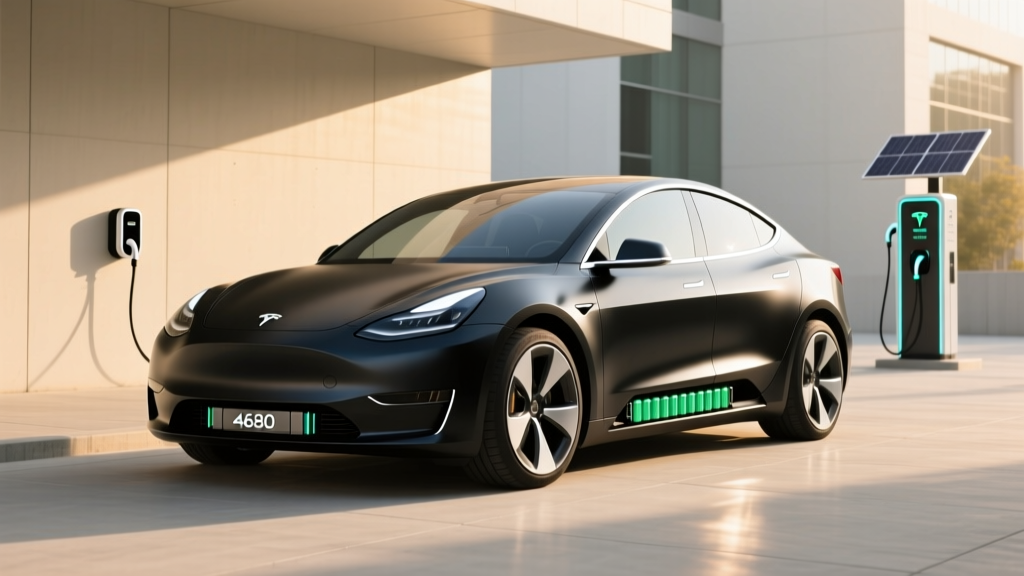
When Tesla opened its Kato Road pilot cell factory in Fremont, California, it wasn't just building a production line — it was testing a new battery architecture that would eventually reshape its entire vehicle lineup. The 4680 structural battery pack, born at Kato Road, now powers select versions of the Model Y and the Cybertruck. For buyers, the real question isn't the factory's name — it's whether the 4680 cells inside deliver meaningfully better range, charging, and longevity than the 2170 cells they replaced.
This review breaks down the Kato Road-derived 4680 pack as it appears in the 2026 Tesla Model Y Long Range AWD, the highest-volume vehicle carrying these cells today. We'll cover EPA range versus real-world results, charging-curve behavior, chemistry specifics, pricing after federal tax credits, and whether this pack makes the Model Y the default EV crossover pick or if competitors close the gap.
Spec Table: 2026 Tesla Model Y Long Range AWD (4680 Pack)
| Specification | Value |
|---|---|
| EPA Estimated Range | 320 miles |
| Battery Usable Capacity | ~75 kWh (4680 NMC cells) |
| Drivetrain | Dual-motor AWD |
| Horsepower | 384 hp combined |
| 0–60 mph | 4.8 seconds |
| Peak DC Fast Charge | 250 kW (V3 Supercharger) |
| 10–80% DC Charge Time | ~27 minutes |
| Level 2 Home Charge Rate | 11.5 kW (~44 mi/hr) |
| Efficiency | 122 MPGe / 28 kWh/100 mi |
| Cargo Volume (rear seats up / folded) | 30.2 / 72.1 cu ft |
| Base MSRP | $48,590 (incl. destination) |
| Battery Warranty | 8 years / 120,000 miles (min 70% retention) |
EPA Range vs. Real-World: What 4680 Cells Actually Deliver
The 4680 cells manufactured at Tesla's Kato Road facility use a nickel-manganese-cobalt (NMC) chemistry with a dry-coated cathode — a process Tesla has refined since the pilot line's 2020 debut. The larger 46mm × 80mm cylindrical format reduces the number of cells per pack and eliminates some module-level hardware, but the energy density per kilogram trails the best 2170 NMC cells by roughly 5–8%. That translates to a few miles of EPA range left on the table versus what a pure 2170 pack could theoretically deliver in the same chassis.
Where the 4680 pack gains ground is in thermal performance. The larger cells and tabless electrode design reduce internal resistance, meaning the pack generates less heat under heavy load — useful during repeated hard acceleration or sustained DC fast charging. According to fueleconomy.gov, the combined efficiency of 122 MPGe is competitive with the Hyundai Ioniq 5 AWD (110 MPGe) and slightly behind the BMW iX xDrive50 (116 MPGe combined for the lighter trim).
Charging Speed: DC Fast and Level 2 Breakdown
| Charging Level | Power / Rate | Miles Added per Hour | Notes |
|---|---|---|---|
| Level 1 (120V) | ~1.4 kW | ~5 mi/hr | Emergency/trickle only |
| Level 2 (240V, 48A) | 11.5 kW | ~44 mi/hr | Full overnight charge in ~7 hours |
| DC Fast (V3 Supercharger) | Peak 250 kW | Up to ~1,000 mi/hr (peak) | 10–80% in ~27 min; tapers sharply above 80% |
| DC Fast (V4 Supercharger) | Peak 250 kW (current) | Similar to V3 | Cable-cooled; CCS adapter not required for Tesla |
The 4680 pack's tabless design was marketed as a charging-speed revolution, and it partially delivers. The Model Y Long Range with 4680 cells sustains roughly 200–230 kW between 10% and 40% State of Charge, then steps down through the 50–70% range. The 10–80% time of approximately 27 minutes is solid but not class-leading — the Hyundai Ioniq 5 with its 800V architecture can complete the same window in about 18 minutes at a 350 kW charger.
One practical advantage: Tesla's Supercharger network remains the most reliable DC fast-charging ecosystem in North America. Plug-in authentication is automatic, and stall uptime consistently exceeds 95%, per third-party reliability surveys. For road-trip-heavy buyers, that network reliability often matters more than peak kW figures.
For home charging, an 11.5 kW Level 2 Wall Connector on a 60A circuit adds roughly 44 miles of range per hour. A full 10–100% charge takes about 7 hours. If your home has a 200A electrical panel with spare capacity, installation typically runs $800–$1,500 including the Wall Connector unit. Homes needing a panel upgrade to 200A should budget an additional $1,500–$3,000 — consult a licensed electrician for a site-specific quote.
Performance and Driving Dynamics
The dual-motor AWD powertrain produces 384 hp combined and launches the Model Y Long Range to 60 mph in 4.8 seconds. That's quick for a family crossover — roughly a second faster than the Ford Mustang Mach-E Premium AWD — and the instant torque delivery makes highway merging effortless.
The 4680 structural pack contributes to chassis stiffness because the cells are bonded directly into a load-bearing floor assembly. You notice this most on rough pavement, where the Model Y feels taut and well-damped. The trade-off is that a structural pack is more expensive to repair or replace after collision damage, since the battery is integrated into the vehicle's structure rather than bolted in as a separate module.
Ride quality has improved with the 2025 refresh (carried into 2026): revised damper tuning, acoustic glass, and improved seat cushioning address the most common complaints from earlier Model Y owners. Cabin noise at 70 mph is noticeably reduced, though still a step behind the BMW iX or Mercedes EQB in refinement.
Pricing, Trims, and Federal Tax Credit Eligibility
| Trim | MSRP (incl. destination) | Est. Price After §30D Credit |
|---|---|---|
| Model Y Long Range AWD | $48,590 | ~$41,090* |
| Model Y Performance AWD | $52,490 | ~$44,990* |
*Price after credit assumes full $7,500 §30D eligibility. Actual credit varies based on buyer income, battery sourcing, and point-of-sale transfer election.
The IRS §30D federal tax credit offers up to $7,500 for qualifying new EVs, but eligibility depends on three moving targets:
- Buyer income caps: Modified AGI must not exceed $150,000 (single), $225,000 (head of household), or $300,000 (joint).
- MSRP cap: SUVs, vans, and pickups must be priced at or below $80,000. Both Model Y trims clear this.
- Battery sourcing requirements: A percentage of critical minerals and battery components must be sourced from the US or free-trade-agreement countries. These thresholds tighten annually. Tesla's vertical integration at Kato Road and its domestic supply chain give the 4680-equipped Model Y an advantage here, but confirm current-year eligibility on the IRS clean vehicle credit page before purchasing.
As of 2026, buyers can elect to transfer the credit to the dealer at the point of sale, effectively reducing the purchase price at signing rather than waiting for a tax refund. This is a meaningful cash-flow benefit, but it requires the dealer to participate and the buyer to meet all eligibility requirements at the time of delivery.
Interior, Cargo, and Daily Practicality
The Model Y's cabin is minimalist by design — a single 15.4-inch touchscreen handles infotainment, climate, navigation, and vehicle settings. There is no traditional instrument cluster; speed and navigation instructions appear in the upper-left corner of the main display. This layout divides buyers: some love the simplicity, others find it distracting to adjust climate controls through a touchscreen while driving.
Cargo space remains a class strength: 30.2 cu ft behind the second row and 72.1 cu ft with the 60/40 split rear seats folded. The rear trunk opening is wide and low, and the powered liftgate is standard. A small front trunk (frunk) adds roughly 4.1 cu ft for charging cables or a soft bag.
Second-row legroom measures 41.6 inches — adequate for adults on longer trips, though the seat cushion sits relatively low to the floor, which can cause a knees-up seating position for taller passengers. The optional third row (available on some configurations) is best reserved for children under 5'4".
Technology and Driver Assistance
Every Model Y includes Tesla's Basic Autopilot: adaptive cruise control and lane-centering that works well on divided highways. This is an SAE Level 2 driver-assistance system — you must keep your hands on the wheel and eyes on the road at all times.
Full Self-Driving (Supervised) is an $8,000 option (or $99/month subscription) that adds automatic lane changes, traffic-light and stop-sign recognition, and city-street navigation. FSD has improved significantly through its neural-network-based v13 architecture, but it still requires active supervision and occasionally makes unexpected decisions in construction zones or unmapped areas. For most buyers, Basic Autopilot is sufficient — FSD is an enthusiast purchase, not a necessity.
The infotainment system is fast, responsive, and includes native navigation with real-time Supercharger routing. Wireless phone mirroring is not available — Tesla uses its own app ecosystem. Spotify, Apple Music, and podcast apps are built in, and the system supports Bluetooth audio from any device.
Pros, Cons, and Who Should Buy
Pros
- Supercharger network reliability is unmatched for road trips
- 320-mile EPA range covers most commutes with days between charges
- Class-leading cargo volume and practical hatchback layout
- Strong performance (4.8s 0–60) without a Performance trim upcharge
- Over-the-air updates continuously add features
- 4680 structural pack improves chassis rigidity
Cons
- 4680 pack energy density trails 2170 cells — slightly less range than theoretical max
- DC fast charging (27 min 10–80%) slower than 800V rivals (Ioniq 5: ~18 min)
- No Apple CarPlay or Android Auto — Tesla-native only
- Touchscreen-only climate controls can distract while driving
- Structural pack more costly to repair after collision damage
- Ride quality improved but still firmer than luxury competitors
Best for: Daily commuters who want minimal charging stops, families who need cargo flexibility, and road-trip buyers who value Supercharger network reliability above all else. If you regularly drive 200+ miles between charging opportunities or live in an area with sparse public charging infrastructure, the Model Y's combination of range and network access is hard to beat.
Consider competitors if: You prioritize the fastest possible DC charging (Hyundai Ioniq 5 / Kia EV6 with 800V), you want a more luxurious interior (BMW iX), or you need Apple CarPlay integration (nearly every non-Tesla EV).
Frequently Asked Questions
What is the real-world range of the 4680-equipped Model Y?
Expect 270–290 miles in warm-weather highway driving at 70–75 mph, and 220–250 miles in sub-freezing conditions. The EPA's 320-mile sticker assumes a mix of city and highway driving at moderate temperatures — real-world highway efficiency is always lower than the combined EPA cycle.
How fast does the 4680 pack charge at home and on the road?
On a Level 2 home charger at 11.5 kW, you'll add about 44 miles per hour, with a full charge taking roughly 7 hours. On a V3 Supercharger at peak 250 kW, the 10–80% window takes about 27 minutes, though the charge curve tapers significantly above 80% — plan to unplug at 80% on road trips to save time.
Does the Model Y qualify for the $7,500 federal EV tax credit in 2026?
It can, but eligibility depends on your income (AGI caps apply), the vehicle's MSRP (both trims are under $80,000), and current battery-sourcing requirements that tighten each year. Tesla's domestic 4680 production at Kato Road positions the Model Y well, but always verify current-year eligibility at IRS.gov before committing to a purchase. The credit can be transferred to the dealer at point of sale.
Is the 4680 battery better than the 2170 cells in older Teslas?
It depends on what you optimize for. The 4680 pack offers better thermal management, lower manufacturing cost, and improved structural contribution to the chassis. However, its energy density per kilogram is slightly lower than the best 2170 NMC cells, which is why the 2026 Long Range AWD doesn't crack 330+ miles. For most owners, the differences in daily driving are imperceptible.
How does the Model Y compare to the Ford Mustang Mach-E and Hyundai Ioniq 5?
The Model Y leads in cargo space (72.1 cu ft vs. 59.7 for Mach-E, 59.3 for Ioniq 5) and Supercharger network access. The Ioniq 5 charges significantly faster on 350 kW DC (18 min vs. 27 min, 10–80%) and offers Apple CarPlay. The Mach-E provides a more traditional cockpit layout with physical gauges. All three are strong choices — your priority (cargo, charging speed, or interior familiarity) should drive the decision.
What is the battery warranty on the 4680 Model Y?
Tesla covers the battery and drive unit for 8 years or 120,000 miles, whichever comes first, with a minimum 70% capacity retention guarantee. If the pack degrades below 70% of its original usable capacity within the warranty period, Tesla will repair or replace it. This is competitive with the industry standard (Hyundai, Kia, and Ford all offer similar 8-year/100,000-mile EV battery warranties).