Tesla Insurance and Non-Tesla Vehicles: What You Need to Know in 2026
If you're shopping for a Tesla and considering bundling your coverage through Tesla Insurance, one of the most common questions is straightforward: does Tesla Insurance cover other cars? The short answer is no, Tesla Insurance currently covers only Tesla vehicles. You cannot add a non-Tesla car, truck, or SUV to a Tesla Insurance policy in 2026. This is a deliberate product design — Tesla leverages real-time vehicle telemetry (braking patterns, steering inputs, Autopilot engagement, mileage) from its own cars to calculate personalized premiums, data it simply cannot access from other manufacturers' vehicles.
Tesla Insurance remains available in a growing but still limited number of states, and coverage is tied to the VIN of a Tesla vehicle. If your household runs a Tesla Model Y alongside a Toyota RAV4, you'll need a separate policy or a traditional insurer for the non-Tesla. For single-Tesla households or buyers planning to go all-electric with Tesla, the real-time safety score model can yield meaningful discounts — but it also means your premium fluctuates with your driving behavior.
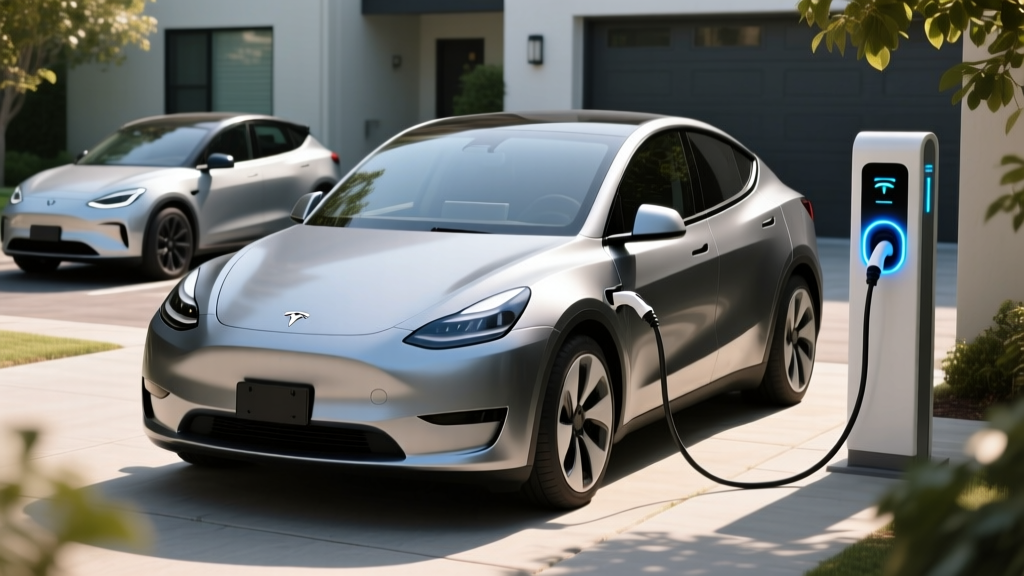
Below, we pair a complete answer to the Tesla Insurance question with a deep-dive review of the 2026 Tesla Model Y Long Range AWD — the vehicle most buyers are insuring when they ask this question.
2026 Tesla Model Y Long Range AWD: Quick Verdict
The 2026 Model Y Long Range AWD (refreshed internally as the "Juniper" update) remains the default midsize electric crossover for American families. EPA-rated at 320 miles of range, with a peak DC fast-charge rate of 250 kW and a starting MSRP around $48,990, it occupies a sweet spot of range, cargo space, and Supercharger network access that competitors still struggle to match. The refreshed interior is quieter, the ride quality is notably improved over pre-2025 models, and the NACS charge port is native — no adapter needed at Tesla Superchargers.
| Spec | Value |
|---|---|
| EPA Range | 320 miles |
| Battery (usable) | ~79 kWh, NMC (nickel manganese cobalt) |
| Drivetrain | Dual-motor AWD |
| Horsepower | ~384 hp combined |
| 0–60 mph | 4.8 seconds |
| Peak DC Fast Charge | 250 kW |
| 10–80% DC Charge Time | ~25 minutes |
| Level 2 Home Charging | 11.5 kW (~44 mi/hr) |
| EPA Efficiency | 117 MPGe combined / 28 kWh/100 mi |
| Cargo (rear seats up) | 30.2 cu ft |
| Cargo (rear seats folded) | 72.1 cu ft |
| Rear Legroom | 39.4 inches |
| Battery Warranty | 8 years / 120,000 miles |
| Base MSRP | $48,990 |
Real-World Range vs. EPA Estimate
EPA Sticker: 320 miles
Real-World Highway (70–75 mph, mild weather): ~265–285 miles
Real-World Cold Weather (below 32°F, mixed driving): ~220–250 miles
Real-World City / Suburban: ~290–310 miles
The EPA's 320-mile figure is achievable in moderate temperatures at suburban speeds with regenerative braking doing heavy lifting. On sustained highway road trips at 75 mph, expect to lose roughly 12–18% off the sticker — a characteristic of all EVs due to aerodynamic drag scaling with the square of velocity. Cold weather compounds this: NMC chemistry loses efficiency below freezing, and cabin heating (even with the Model Y's heat pump) draws meaningful kWh. If your commute includes a 200-mile round trip in a Minnesota winter, plan to charge mid-week rather than stretching a single charge.
The heat pump standard on the Juniper refresh helps — Tesla's octovalve thermal management system scavenges waste heat from the battery and drive units, cutting cabin-heating energy draw by roughly 30% versus resistive heaters. But physics is physics: cold batteries charge slower and deliver less usable capacity.
Charging Speed: DC Fast, Level 2, and the Charge Curve Reality
Tesla's 250 kW peak DC fast-charge rate applies only under ideal conditions — battery preconditioned to optimal temperature, state of charge (SoC) below 20%, and a V3 or V4 Supercharger delivering full power. The charge curve tapers significantly above 50% SoC, and drops sharply past 80%.
| Charge Level | Max Power | Speed (Approx.) |
|---|---|---|
| Level 1 (120V household) | 1.4 kW | ~4–5 mi/hr |
| Level 2 (240V, 48A Wall Connector) | 11.5 kW | ~44 mi/hr |
| DC Fast (Tesla V3/V4 Supercharger) | 250 kW peak | 10–80% in ~25 min |
| DC Fast (CCS adapter at EA/others) | ~150–175 kW typical | 10–80% in ~35 min |
Charging curve nuance: You'll see 250 kW for roughly the first 15–20% of the session (from very low SoC), then the rate steps down through ~175 kW, ~120 kW, and finally ~40–60 kW as you approach 80%. The "10–80% in 25 minutes" claim is accurate for a preconditioned battery at a V3 Supercharger, but a cold battery arriving at a charger without preconditioning can add 5–10 minutes to that session.
At home on a Tesla Wall Connector (48A, 11.5 kW), the Model Y adds roughly 44 miles per hour of charging. A full 10–100% session takes about 8 hours — easily accomplished overnight. If your home electrical panel is limited to a 40A circuit (32A continuous), expect ~30 mi/hr instead. Always consult a licensed electrician before assuming your panel can support a 60A circuit.
Performance, Efficiency, and Drivetrain
The dual-motor AWD Long Range pairs a rear induction motor with a front permanent-magnet synchronous motor for a combined ~384 hp and a 4.8-second 0–60 mph time. That's quick enough to merge confidently onto any freeway and overtake without drama, though the Performance trim (3.5 seconds, ~$53,990) exists for buyers who want sports-sedan acceleration in a crossover.
Efficiency is where the Model Y continues to lead the segment. At 117 MPGe combined (28 kWh per 100 miles), it extracts more miles per kilowatt-hour than the Ford Mustang Mach-E, Hyundai IONIQ 5, and Volkswagen ID.4. Tesla's silicon carbide inverter, low-drag aero (0.23 Cd), and aggressive regen calibration all contribute. On the fueleconomy.gov database, the Model Y Long Range AWD ranks among the most efficient all-wheel-drive EVs sold in the U.S.
Pricing, Trims, and Federal Tax Credit Eligibility
The 2026 Model Y lineup has simplified:
- Long Range RWD: ~$44,990 (limited availability, select markets)
- Long Range AWD: $48,990
- Performance AWD: $53,990
| Trim | MSRP | After §30D Credit (if eligible) |
|---|---|---|
| Long Range AWD | $48,990 | ~$41,490 |
| Performance AWD | $53,990 | ~$46,490 |
Federal tax credit caveats (IRS §30D, 2026 rules): The Model Y qualifies for up to $7,500 in federal tax credits, but eligibility is not automatic. Per IRS guidelines, you must meet all of the following:
- MSRP cap: SUVs must be under $80,000 (Model Y clears this easily)
- Buyer income cap: AGI ≤ $150,000 (single), $225,000 (head of household), $300,000 (joint)
- Battery sourcing: A percentage of critical minerals and battery components must be sourced from the U.S. or FTA partners — Tesla's U.S.-built Model Y has largely met these thresholds, but verify at the point of sale as supply chains shift
- Point-of-sale transfer: You can apply the credit as a down-payment reduction at the dealer rather than waiting for a tax refund
Consult a tax professional to confirm your specific eligibility. State and local incentives (e.g., California CVRP, Colorado state credit) stack on top but vary by jurisdiction — check your state's energy office for current programs.
Interior, Cargo, Tech, and Drawbacks
The Juniper refresh addressed the two loudest complaints about the pre-2025 Model Y: ride harshness and cabin noise. Acoustic glass, revised suspension tuning, and additional sound deadening make the 2026 model noticeably quieter at highway speed. The ventilated front seats, ambient lighting, and rear-seat touchscreen are now standard on Long Range trims.
Cargo space is a Model Y hallmark: 30.2 cu ft behind the second row, expanding to 72.1 cu ft with seats folded. The front trunk (frunk) adds roughly 2.1 cu ft for charging cables or a small bag. Rear legroom at 39.4 inches is adequate for adults, though the sloping roofline limits headroom for passengers over 6'2".
Tech highlights: The 15.4-inch center touchscreen runs Tesla's proprietary infotainment — no Apple CarPlay or Android Auto, which remains a dealbreaker for some buyers. Navigation, over-the-air updates, Sentry Mode dashcam recording, and Dog Mode are excellent. Autopilot (basic lane-keep and adaptive cruise) is standard; Full Self-Driving (Supervised) is an $8,000 add-on or $99/month subscription.
ADAS Reality Check: Tesla Autopilot and FSD (Supervised) are SAE Level 2 driver-assistance systems. You must keep your hands on the wheel and eyes on the road at all times. FSD does not make the Model Y a self-driving car — it is an advanced lane-keeping and navigation-assist feature that still requires active supervision. Only Level 4 services like Waymo operate without a human driver.
Notable drawbacks: No CarPlay/Android Auto. Minimalist interior isn't for everyone (no physical stalks on the refresh — turn signals and gear selection are on the steering wheel/screen). Insurance costs tend to run higher than segment average. Panel gaps, while improved, still vary unit to unit.
Who the Model Y Suits Best
Buy it if: You want a do-everything electric family hauler with best-in-class Supercharger access, strong efficiency, and strong resale value. It's ideal for suburban commuters with home charging, families needing 70+ cu ft of cargo flexibility, and road-trippers who value the density of Tesla's Supercharger network.
Look elsewhere if: You need three rows (Kia EV9, Rivian R1S), you want CarPlay (Hyundai IONIQ 5, Ford Mach-E), you're on a tighter budget (Chevrolet Equus EV, base RWD Model Y if available), or you prioritize ride plushness over sportiness (Genesis GV70 Electrified).
Pros
- 320-mile EPA range with strong real-world efficiency
- 250 kW Supercharger access, no adapter needed
- Class-leading cargo volume for the footprint
- Continuous OTA updates add features post-purchase
- Strong resale value relative to EV segment
Cons
- No Apple CarPlay or Android Auto
- Insurance premiums above segment average
- Turn signals on steering wheel take adaptation
- Rear headroom limited for tall passengers
- FSD subscription cost adds up if not purchased outright
Does Tesla Insurance Cover Other Cars? Final Answer
To return to the core question: Tesla Insurance does not cover non-Tesla vehicles in 2026. It is a single-marque product that uses Tesla-specific telemetry to price premiums. If you own a Model Y and a gasoline car, you'll need two policies. If you're a Tesla-only household, the real-time safety score model can yield premiums 10–30% below traditional insurers — provided your driving habits are clean. Tesla Insurance is currently available in approximately 12 states and expanding; check Tesla's insurance portal for your ZIP code.
For the Model Y itself, the 2026 Juniper refresh is the most refined version yet. The 320-mile range, 250 kW charging, and Supercharger ecosystem make it the lowest-friction EV ownership experience available, even as competitors close the gap on ride quality and interior features. If your household is ready to go all-Tesla, the insurance bundling question resolves itself. If not, budget for a separate policy on the non-Tesla vehicle.
Frequently Asked Questions
Does Tesla Insurance cover other cars in my household?
No. Tesla Insurance covers only Tesla-branded vehicles. Any non-Tesla car, truck, or SUV in your household requires a separate insurance policy from a traditional provider.
What is the real-world range of the 2026 Tesla Model Y Long Range?
The EPA rates it at 320 miles. In real-world highway driving at 70–75 mph, expect 265–285 miles. In cold weather below freezing, plan for 220–250 miles.
How fast does the Model Y charge at home and on the road?
At home on a 48A Level 2 Wall Connector, it charges at 11.5 kW (~44 mi/hr). On a Tesla V3 Supercharger, it peaks at 250 kW and reaches 10–80% in approximately 25 minutes with a preconditioned battery.
Does the 2026 Model Y qualify for the $7,500 federal tax credit?
It can, subject to IRS §30D rules: buyer AGI must be under $150K/$225K/$300K (single/HOH/joint), the MSRP must be under $80K (it is), and battery sourcing requirements must be met at time of purchase. Verify at point of sale and consult a tax professional.
Is the Tesla Model Y worth buying over the Hyundai IONIQ 5 or Ford Mach-E?
The Model Y wins on efficiency (117 MPGe), cargo space (72.1 cu ft), and Supercharger network convenience. The IONIQ 5 wins on 800V charging architecture and CarPlay support. The Mach-E offers a more conventional interior layout. Test-drive all three — the right choice depends on your priorities.
What is the battery warranty on the Model Y?
Tesla covers the battery and drive unit for 8 years or 120,000 miles, whichever comes first, with a minimum 70% capacity retention threshold during the warranty period.