Tesla's Audio Ambition: What Is Immersive Sound?
If you've browsed Tesla's configurator or watched a walk-around video, you've likely encountered the phrase Tesla immersive sound. Unlike legacy automakers that badge their audio with brand names like Burmester or Bowers & Wilkins, Tesla designs its premium audio in-house — a custom amplifier, dedicated subwoofer, and up to 17 speakers (depending on the model) with software-driven spatial processing that simulates a surround-sound stage from stereo or streaming sources.
The system is standard on Model S and Model X, and included with the Premium Interior on Model 3 and Model Y for the 2026 model year. There is no separate "audio package" to option — it's bundled into the trim. That makes the real buyer question less about the speakers themselves and more about whether the vehicle wrapping them is the right fit for your range, charging, and budget needs.
This review breaks down the 2026 Tesla lineup through the lens of the immersive sound experience — and pairs it with the hard numbers (EPA range, kW charge rates, battery chemistry, pricing, and §30D tax-credit eligibility) that actually drive purchase decisions.
2026 Tesla Lineup: Spec Table at a Glance
| Spec | Model 3 Long Range AWD | Model Y Long Range AWD | Model S Long Range | Model X Long Range |
|---|---|---|---|---|
| EPA Range | 363 mi | 320 mi | 402 mi | 348 mi |
| Battery (usable / chemistry) | ~79 kWh / NMC | ~79 kWh / NMC | ~95 kWh / NMC | ~95 kWh / NMC |
| Peak DC Fast Charge | 250 kW | 250 kW | 250 kW | 250 kW |
| 10–80% DC Time | ~25 min | ~25 min | ~30 min | ~30 min |
| Level 2 (11.5 kW) Rate | ~44 mi/hr | ~44 mi/hr | ~52 mi/hr | ~52 mi/hr |
| 0–60 mph | 4.2 sec | 4.8 sec | 3.1 sec | 3.8 sec |
| Horsepower | ~384 hp | ~384 hp | ~670 hp | ~670 hp |
| Drivetrain | Dual-motor AWD | Dual-motor AWD | Dual-motor AWD | Dual-motor AWD |
| MPGe (combined) | 132 MPGe | 122 MPGe | 120 MPGe | 109 MPGe |
| Efficiency (kWh/100 mi) | 25 | 28 | 28 | 31 |
| Immersive Speakers | 17 | 17 | 22 | 22 |
| Base MSRP | $47,740 | $48,990 | $79,990 | $84,990 |
| Battery Warranty | 8 yr / 120,000 mi | 8 yr / 120,000 mi | 8 yr / 150,000 mi | 8 yr / 150,000 mi |
Sources: fueleconomy.gov, Tesla 2026 spec sheets. Range and efficiency figures are EPA estimates.
Real-World Range: What the EPA Sticker Doesn't Tell You
EPA vs reality check: Tesla's EPA numbers are among the most achievable in the EV market thanks to strong efficiency, but physics still applies. Expect ~85–90% of the sticker on mixed highway driving at 70–75 mph, and 70–80% in freezing temperatures with cabin heat running. A Model 3 Long Range rated at 363 mi realistically delivers ~310–325 mi on a summer highway trip and ~260–285 mi in a 25°F winter commute. Model S's heat pump helps, but its larger cabin and heavier mass still cost it ~10–12% in deep cold.
For context, the EPA's fueleconomy.gov listing for the Model 3 Long Range AWD confirms the 132 MPGe combined figure, which translates to roughly 25 kWh per 100 miles — one of the lowest consumption rates in the segment. That efficiency is what lets the smaller 79 kWh pack punch above its weight class on range.
Charging Speed: Supercharger Network Is the Real Audio Track
A premium sound system is nice on a road trip — but only if the road trip is actually pleasant. Tesla's Supercharger network remains the most reliable DC fast-charging ecosystem in the U.S., and all 2026 Teslas use the NACS connector natively (no adapter required, unlike CCS-equipped rivals now transitioning via NACS adapters).
| Charging Level | Power | Typical Miles Added Per Hour | Use Case |
|---|---|---|---|
| Level 1 (120V household) | ~1.4 kW | ~4–5 mi/hr | Overnight trickle / emergency |
| Level 2 (240V home, 48A) | 11.5 kW | ~44–52 mi/hr | Daily home charging |
| DC Fast (V3 Supercharger) | Up to 250 kW peak | ~200 mi in 15 min | Road trips |
Charging-curve reality: Peak 250 kW is only sustained between roughly 10–30% state of charge. Above 50%, the curve tapers to ~100 kW, and above 80% it drops below 40 kW to protect the NMC cells. That's why Tesla quotes 10–80% times (~25 min for Model 3/Y, ~30 min for S/X) rather than 0–100%. For daily driving, set your charge limit to 80% to preserve long-term battery health — NMC chemistry degrades faster when held at 100% than LFP cells would.
Home charging on a 48A Level 2 circuit (the typical Tesla Wall Connector install) replenishes a Model 3 from 20% to 80% in about 5 hours — easily overnight. If your home has a 200A panel, budget $800–$1,500 for a licensed electrician to run a 60A circuit; older 100A panels may require a $2,000–$4,000 service upgrade.
How the Tesla Immersive Sound System Actually Performs
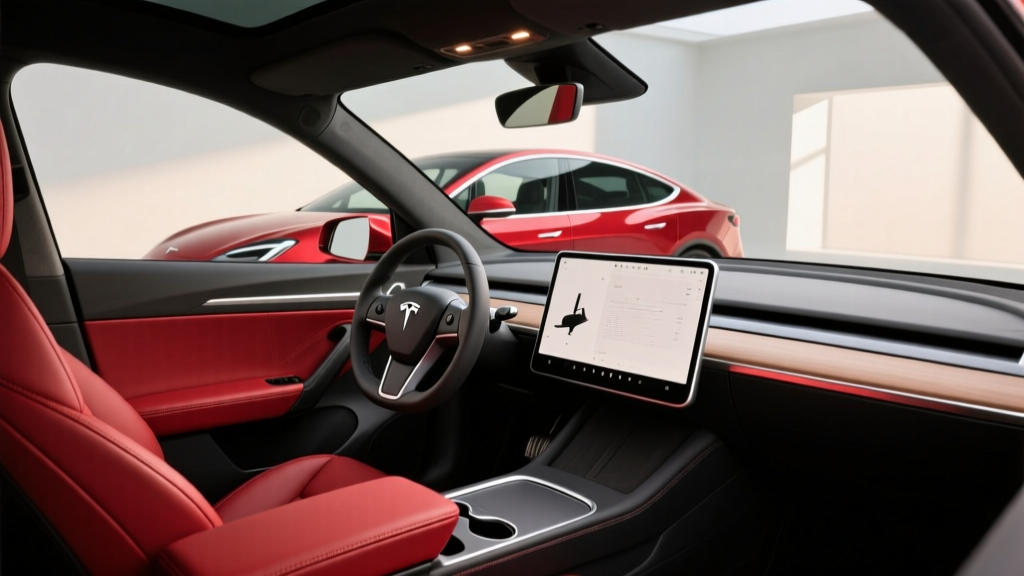
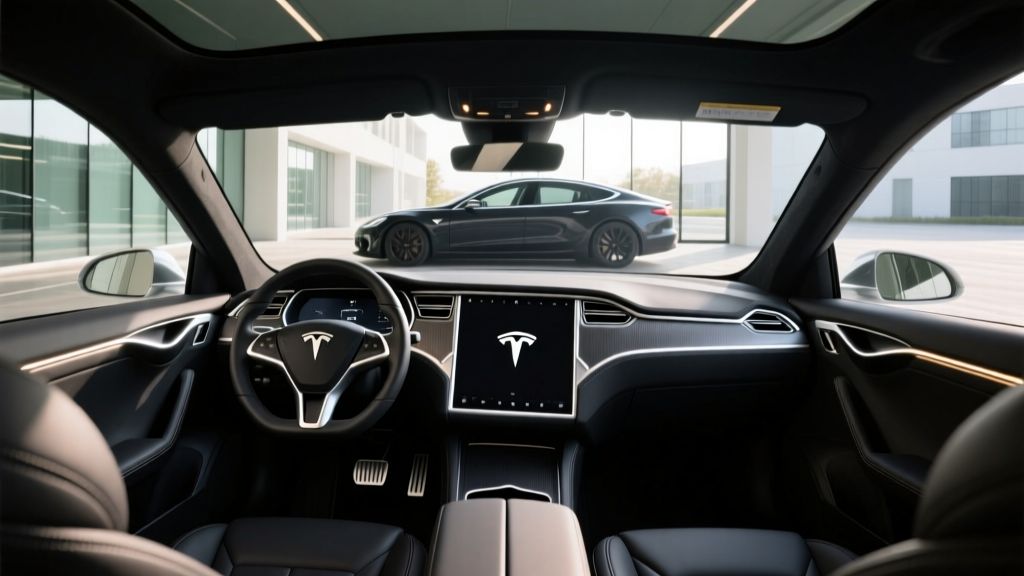
With 17 speakers in the Model 3/Y and 22 in the Model S/X (including dedicated mid-range, tweeters, and a trunk-mounted subwoofer), the system produces a wide, layered soundstage that punches well above what you'd expect from a car in the Model 3's price class. The software applies spatial processing to stereo sources — including Spotify, Apple Music, and Tidal — to simulate surround imaging without requiring Dolby Atmos-encoded tracks.
Where it excels: Clarity at moderate volume, vocal separation, and bass control. The Model S/X's additional drivers fill the larger cabin more convincingly, particularly for classical and jazz content.
Where it falls short: True audiophiles will notice the absence of lossless streaming (Tesla's native apps stream at compressed bitrates), and road noise intrusion in the Model 3 at highway speed does mask some low-level detail. The Model S, with its superior cabin insulation, is the better listening room.
The infotainment itself runs on Tesla's Ryzen-based MCU — fast, responsive, and still the class benchmark for fluidity. Apple CarPlay and Android Auto remain unsupported; you're in Tesla's walled garden for audio, navigation, and vehicle controls.
Pricing, Trims, and Federal Tax Credit Eligibility
For 2026, the IRS §30D clean vehicle credit still offers up to $7,500 — but eligibility is anything but automatic. The credit is split into two $3,750 halves: one for battery-component sourcing and one for critical-mineral sourcing, both with annual tightening requirements. Additionally, buyer adjusted gross income must not exceed $150,000 (single) / $300,000 (joint), and the vehicle's MSRP must fall under the §30D cap ($55,000 for sedans, $80,000 for SUVs/pickups/vans).
| Model | Base MSRP | MSRP Cap Status | Sourcing Credit (est.) | Est. After-Credit Price |
|---|---|---|---|---|
| Model 3 LR AWD | $47,740 | Under $55k cap ✓ | Up to $7,500 | ~$40,240 |
| Model Y LR AWD | $48,990 | Under $80k SUV cap ✓ | Up to $7,500 | ~$41,490 |
| Model S LR | $79,990 | Under $55k sedan cap ✗ | $0 | $79,990 |
| Model X LR | $84,990 | Over $80k SUV cap ✗ | $0 | $84,990 |
Critical caveat: Battery-sourcing rules tighten every year under the Inflation Reduction Act. Always verify current-year eligibility on IRS.gov before purchase, and note that the §30D credit can now be transferred to the dealer as a point-of-sale discount — eliminating the need to wait until tax filing. The Model 3 and Model Y are the only Teslas that currently clear the MSRP cap; buyers eyeing the Model S or X for their superior audio system should budget full MSRP.
Who Should Buy — and Who Should Pass
Choose Model 3 Long Range if: You want the best efficiency-to-price ratio in the lineup, daily-commute range is your priority, and you're eligible for the full $7,500 credit. The immersive sound system is a genuine bonus at this price point.
Choose Model Y Long Range if: You need crossover cargo space (34 cu ft behind the second row, ~76 cu ft folded) and family duty, and you're willing to trade ~40 miles of range for the taller roofline.
Choose Model S if: Audio quality is a top-tier priority (the 22-speaker system in a quieter cabin is Tesla's best listening experience), you value 400+ miles of EPA range, and you're comfortable paying full MSRP without a federal credit.
Choose Model X if: You need three-row seating and falcon-wing rear doors for tight parking — but know that it is the least efficient Tesla (31 kWh/100 mi) and also ineligible for §30D.
Pass on Tesla entirely if: You need Apple CarPlay, prefer physical controls, or live in a region with limited Supercharger access and no home-charging option.
Pros, Cons, and Competitor Context
Pros
- Immersive sound is bundled — no expensive audio package upsell
- Best-in-class Supercharger network with native NACS
- Industry-leading efficiency (Model 3: 25 kWh/100 mi)
- Over-the-air updates continue to refine audio processing
- Strong resale value relative to EV segment average
Cons
- No Apple CarPlay or Android Auto
- Model S/X priced out of §30D tax credit
- NMC chemistry requires 80% daily charge limit for longevity (vs. LFP rivals that tolerate 100%)
- Minimalist interior isn't for everyone — no physical volume knob
- Road noise in Model 3 masks some audio detail at highway speed
Against key rivals: the Hyundai Ioniq 6 offers a comparable Bose system and similar range at a lower price, but lacks Supercharger access. The BMW i4's Harman Kardon system is excellent but the car costs more and charges slower. For pure audio-per-dollar, the Model 3 Long Range is difficult to beat — provided you're comfortable in Tesla's ecosystem.
Frequently Asked Questions
What is the real-world range of Tesla's 2026 models?
Expect ~85–90% of EPA on warm highway drives and ~70–80% in freezing weather. The Model 3 Long Range delivers roughly 310–325 real-world summer highway miles; the Model S Long Range delivers ~340–360.
How fast does a Tesla charge at home and on the road?
At home on Level 2 (11.5 kW), expect ~44–52 miles of range per hour. On a V3 Supercharger, 10–80% takes ~25 minutes for Model 3/Y and ~30 minutes for Model S/X, with tapering above 80%.
Does the Tesla immersive sound system require a subscription?
No. The hardware is included with the Premium Interior on all 2026 models. Streaming services like Spotify and Tidal are built in, though a Premium Connectivity subscription ($9.99/mo) is required for in-car streaming over cellular.
Does any 2026 Tesla qualify for the federal EV tax credit?
Yes — the Model 3 and Model Y qualify for up to $7,500 under §30D, subject to buyer income caps ($150k single / $300k joint) and current-year battery-sourcing rules. Model S and Model X exceed the MSRP cap and do not qualify. Verify at IRS.gov before purchase.
Is Tesla's immersive sound better than branded systems from BMW or Mercedes?
It competes favorably on clarity and imaging, particularly in the Model S/X. However, branded systems like BMW's Bowers & Wilkins and Mercedes' Burmester 4D offer more granular equalizer controls and, in some cases, lossless-source support that Tesla currently lacks.