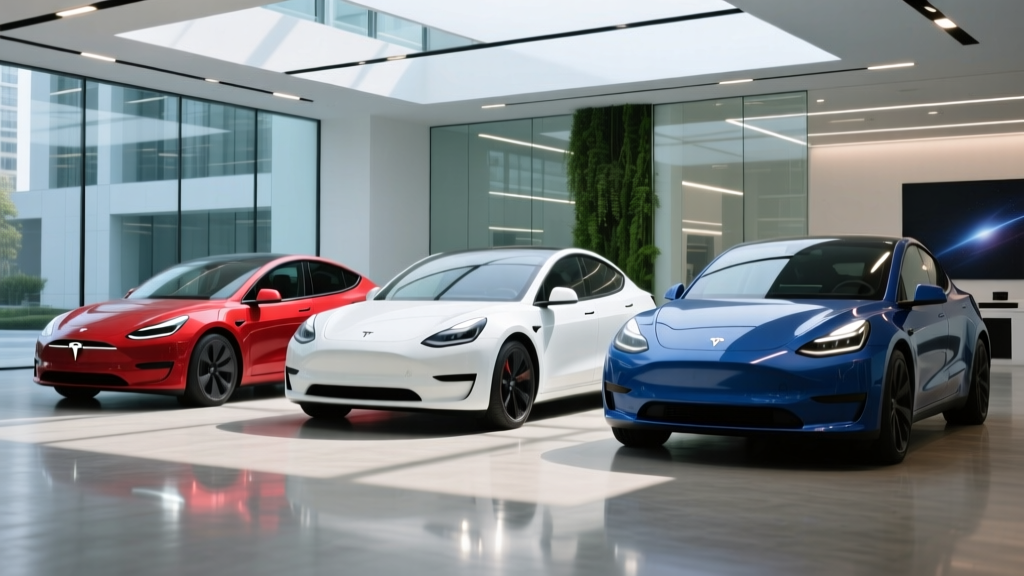
Every December, Tesla owners wake up to find their cars have gained new capabilities overnight. In late 2025, Tesla launched its Holiday Update with free upgrades that rippled across the entire fleet — from the refreshed Model 3 Highland to the aging but capable Model S and X. These over-the-air (OTA) additions aren't just cosmetic tweaks; they touch efficiency algorithms, cabin comfort, driver-assist behavior, and entertainment. But software polish can't mask hardware realities. Below, we break down the full 2026 Tesla lineup with hard numbers on range, charging, pricing, and federal tax credit eligibility so you can decide which Tesla — if any — earns a spot in your driveway.
What the 2025 Holiday Update Actually Delivered
The Holiday Update rolled out to vehicles running software version 2025.44 and later. Key additions included:
- Adaptive Regen Tuning: Smoother one-pedal transitions in stop-and-go traffic, reducing low-speed jerkiness that plagued earlier builds.
- Cabin Overheat Protection 2.0: More granular temperature thresholds (now user-selectable between 90°F, 100°F, and 110°F) with reduced phantom energy drain.
- Improved Route Planning: The navigation stack now factors in real-time charger availability and wait times at Superchargers, not just distance.
- Dashcam & Sentry Enhancements: Higher-resolution clip saving and the ability to remotely view Sentry events live via the Tesla app.
- Entertainment Additions: New games and streaming integrations for parked-vehicle downtime during charging stops.
These upgrades are free and automatic — no dealer visit required. That's the Tesla ownership advantage: your car genuinely improves over time. But let's ground this in the hardware specs that actually determine whether a Tesla fits your life.
2026 Tesla Model Lineup: Specs at a Glance
| Spec | Model 3 RWD | Model 3 Long Range AWD | Model Y Long Range AWD | Model S LR | Model X LR |
|---|---|---|---|---|---|
| EPA Range | 272 mi | 341 mi | 307 mi | 402 mi | 335 mi |
| Battery (usable kWh) | ~57.5 (LFP) | ~75 (NMC) | ~75 (NMC) | ~95 (NMC) | ~95 (NMC) |
| Peak DC Charge Rate | 170 kW | 250 kW | 250 kW | 250 kW | 250 kW |
| 10–80% DC Time | ~28 min | ~25 min | ~27 min | ~30 min | ~32 min |
| Level 2 (mi/hr) | ~30 mi/hr (11.5 kW) | ~44 mi/hr (11.5 kW) | ~44 mi/hr (11.5 kW) | ~44 mi/hr (11.5 kW) | ~44 mi/hr (11.5 kW) |
| 0–60 mph | 5.8 sec | 4.2 sec | 4.8 sec | 3.1 sec | 3.8 sec |
| Horsepower | 271 hp | 346 hp | 384 hp | 670 hp | 670 hp |
| Drivetrain | RWD | Dual-Motor AWD | Dual-Motor AWD | Dual-Motor AWD | Dual-Motor AWD |
| MPGe (combined) | 132 MPGe | 125 MPGe | 122 MPGe | 120 MPGe | 111 MPGe |
| kWh/100 mi | 25 | 27 | 28 | 28 | 30 |
| Base MSRP | $38,990 | $47,740 | $47,990 | $79,990 | $84,990 |
| Battery Warranty | 8 yr / 100,000 mi | 8 yr / 120,000 mi | 8 yr / 120,000 mi | 8 yr / 150,000 mi | 8 yr / 150,000 mi |
Source: fueleconomy.gov and Tesla's official specifications. Prices reflect 2026 model year MSRP before destination fees and options.
Real-World Range: What the EPA Sticker Doesn't Tell You
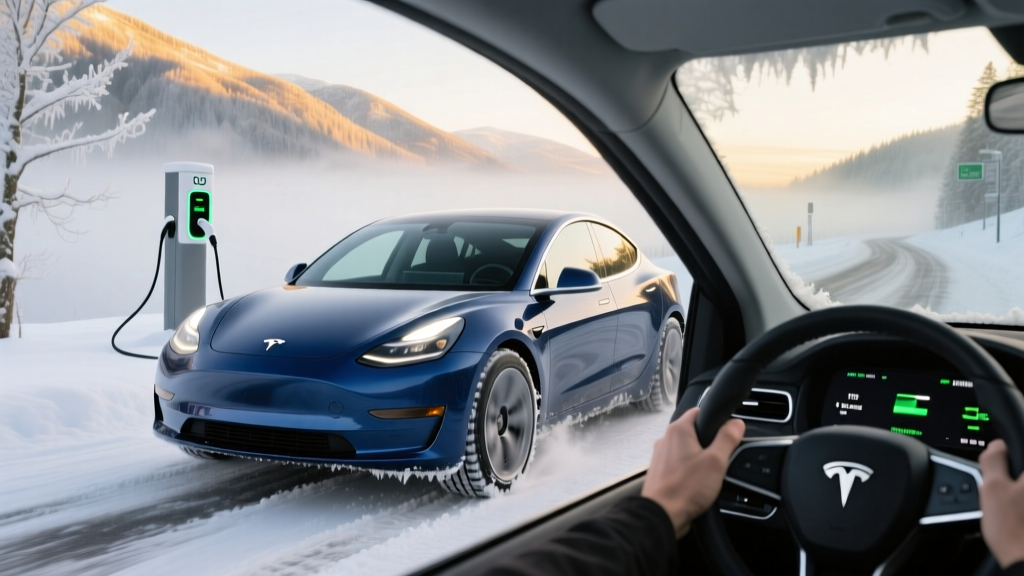
Model 3 Long Range AWD (EPA 341 mi): Expect ~270–290 mi on sustained highway driving at 70–75 mph. In cold weather (below 30°F), plan for 220–250 mi due to battery heating demands and cabin HVAC load.
Model Y Long Range AWD (EPA 307 mi): Highway real-world sits around 250–270 mi. Winter conditions reduce this to ~200–230 mi. The crossover's taller profile creates more aerodynamic drag than the Model 3, costing roughly 5–8% range at speed.
Model S Long Range (EPA 402 mi): The 402-mile sticker is genuinely achievable on mixed suburban driving. Highway-only at 75 mph yields ~330–350 mi; cold weather drops it to ~280–310 mi.
Model 3 RWD (EPA 272 mi): The LFP battery handles cold slightly worse than NMC chemistries. Expect ~210–230 mi highway, and as low as 180 mi in sub-freezing conditions.
Tesla's thermal management system is among the best in the industry — a heat pump comes standard on all 2026 models — but physics is physics. Any EV loses 20–30% of its rated range in deep cold, and Tesla is no exception. The Holiday Update's refined cabin overheat protection helps reduce summer phantom drain, but it doesn't change winter chemistry realities. If you live above the 40th parallel, budget for the cold-weather penalty when planning road trips.
Charging Speed and Infrastructure: The Supercharger Advantage
Charging speed is where Tesla still holds a tangible edge, not just in peak kW but in network reliability. All 2026 Teslas use the NACS (North American Charging Standard) connector natively — no adapter needed at Superchargers. With competing networks still adapting to NACS access for non-Tesla vehicles, Tesla owners continue to enjoy the most seamless plug-and-charge experience in the US.
| Charging Level | Power | Typical Speed | Best Use Case |
|---|---|---|---|
| Level 1 (120V household) | ~1.4 kW | 3–5 mi/hr | Emergency top-ups, overnight for low-mileage drivers |
| Level 2 (240V home) | 11.5 kW | 30–44 mi/hr | Daily home charging — wake up full every morning |
| DC Fast (Supercharger V3) | Up to 250 kW | 10–80% in ~25–32 min | Road trips and quick top-ups |
| DC Fast (Supercharger V4) | Up to 350 kW (capable) | Currently limited by vehicle to ~250 kW | Future-proofed infrastructure |
Charging curve reality check: The 250 kW peak on Long Range models is sustained only between roughly 10–30% State of Charge (SoC). Above 50%, the rate tapers to ~150 kW, and above 80% it drops sharply to protect battery longevity. A 10–80% charge in 25 minutes assumes you arrive at a low SoC and the battery is preconditioned (the car does this automatically when you navigate to a Supercharger). If you plug in at 40% SoC without preconditioning, expect 30–35 minutes to reach 80%.
The Model 3 RWD's LFP battery has a different charging profile: Tesla recommends charging to 100% regularly (unlike NMC, where 80% daily is ideal for longevity), and its lower peak rate of 170 kW means road-trip charging stops take a few minutes longer. For a commuter who charges at home nightly, this is irrelevant. For road trippers, it's a meaningful difference.
Pricing, Trims, and Federal Tax Credit Eligibility
Tesla's pricing has stabilized after years of aggressive cuts and hikes. Here's where each model lands for 2026, and crucially, whether you can access the federal EV tax credit under IRS §30D rules.
| Model | Base MSRP | As-Tested (typical config) | §30D Credit Eligible? | Effective Price After Credit |
|---|---|---|---|---|
| Model 3 RWD | $38,990 | $40,490 (w/ destination) | Yes — up to $7,500 | ~$31,490–$32,990 |
| Model 3 LR AWD | $47,740 | $49,240 | Yes — up to $7,500 | ~$40,240–$41,740 |
| Model Y LR AWD | $47,990 | $49,490 | Yes — up to $7,500 | ~$40,490–$41,990 |
| Model S LR | $79,990 | $82,490 | No — exceeds MSRP cap | $79,990+ |
| Model X LR | $84,990 | $87,490 | No — exceeds MSRP cap | $84,990+ |
- MSRP caps: Sedans must be under $55,000; SUVs/trucks under $80,000. This disqualifies Model S (sedan over $55K) and Model X (SUV, but priced above the cap in most configurations — verify with your tax professional).
- Buyer income limits: AGI must not exceed $150,000 (single), $225,000 (head of household), or $300,000 (joint).
- Battery sourcing: A percentage of critical minerals and battery components must be sourced from the US or free-trade-agreement partners. Tesla's US-built LFP and NMC cells have largely met these thresholds for 2026, but verify current eligibility at IRS.gov before purchasing.
- Point-of-sale transfer: You can transfer the credit to the dealer at purchase, reducing your out-of-pocket cost immediately rather than waiting for a tax refund.
Interior Space, Tech, and the Autopilot Conversation
Tesla's minimalist interior approach continues to polarize. There are virtually no physical buttons — climate, mirrors, glovebox, and even wiper intensity are controlled through the central touchscreen. For some, this is elegant simplicity; for others, it's a frustration on bumpy roads or in cold weather when you want to adjust temperature without looking away from the road.
Cargo and passenger space:
- Model 3: 23 cu ft trunk + rear frunk; rear legroom 35.2 inches. Adequate for two adults in back, tight for three.
- Model Y: 30.2 cu ft behind the second row (76.2 cu ft with seats folded); optional 7-seat config adds a tiny third row best suited for children under 5'2".
- Model S: 28 cu ft trunk + generous frunk; rear legroom 40.9 inches. Genuinely comfortable for four adults on long trips.
- Model X: Up to 88.1 cu ft with both rows folded; falcon-wing rear doors provide standing-room access but add mechanical complexity.
The Holiday Update refined FSD's lane-change decisiveness and improved its behavior in construction zones, but it still struggles with unprotected left turns in heavy traffic and faded lane markings. It's a useful highway companion, not a replacement for an attentive driver.
Who Should Buy a Tesla in 2026?
- You want access to the most reliable DC fast-charging network in North America
- You value OTA software updates that add real features post-purchase
- You're a tech-forward buyer comfortable with touchscreen-only controls
- You want the strongest resale value in the EV segment (though depreciation has increased since 2023)
- Home Level 2 charging is available to you
- You want physical buttons for climate and volume
- Build quality consistency is a priority (panel gaps remain a known issue)
- You need a truck bed (consider Rivian R1T or Ford F-150 Lightning)
- You distrust Tesla's data collection and always-connected architecture
- You want Apple CarPlay or Android Auto (Tesla uses its proprietary system exclusively)
Pros and Cons Across the 2026 Lineup
- Class-leading charging network (17,000+ Superchargers in North America)
- Over-the-air updates add genuine value (Holiday Update proves this)
- Model 3 and Y qualify for up to $7,500 federal credit
- Excellent efficiency (kWh/100mi) across the lineup
- Strong performance even in base trims
- Heat pump standard on all models
- OTA-improved safety features over time
- No Apple CarPlay or Android Auto
- Touchscreen-only controls frustrate some drivers
- Model S/X exceed federal tax credit MSRP caps
- Panel gap and paint quality inconsistency
- FSD (Supervised) costs $8,000 extra and remains Level 2
- Service center wait times can stretch weeks in some markets
- LFP battery in Model 3 RWD has lower cold-weather range
Frequently Asked Questions
What is the real-world range of Tesla's most popular models?
The Model 3 Long Range AWD delivers roughly 270–290 miles on highway trips in moderate weather, dropping to 220–250 miles in sub-freezing conditions. The Model Y Long Range yields about 250–270 highway miles. The Model 3 RWD with its LFP battery sees ~210–230 highway miles and suffers more in cold weather. Always plan road trips around 80% of the EPA sticker to maintain a safety buffer.
How fast do Teslas charge at home and on the road?
At home on a 240V Level 2 circuit (48A), Long Range models add roughly 44 miles of range per hour — enough to fully recharge overnight. The Model 3 RWD adds about 30 mi/hr. On DC fast chargers, Long Range models peak at 250 kW and charge 10–80% in approximately 25–27 minutes when preconditioned. The Model 3 RWD peaks at 170 kW, taking about 28 minutes for the same session.
Does the Tesla Model Y qualify for the $7,500 federal tax credit?
Yes, the Model Y Long Range AWD qualifies as an SUV under the $80,000 MSRP cap and meets 2026 battery sourcing requirements. However, eligibility also depends on your adjusted gross income (under $150K single / $300K joint) and the specific vehicle's battery component sourcing at time of delivery. Always confirm current eligibility on IRS.gov and consult a tax professional before relying on the credit.
Is a Tesla worth buying vs. Hyundai Ioniq 5, Ford Mustang Mach-E, or BMW i4?
It depends on your priorities. Tesla wins on charging infrastructure and OTA software evolution. The Hyundai Ioniq 5 (with its 800V architecture) charges faster on compatible 350 kW chargers (10–80% in ~18 min) and offers physical buttons. The Mach-E provides a more traditional crossover feel with competitive range. The BMW i4 delivers superior build quality and driving dynamics at a higher price. If the Supercharger network and software updates matter most, Tesla remains the default. If build quality, CarPlay, or faster peak charging matter more, cross-shop aggressively.
What's the biggest downside to owning a Tesla?
The most common owner complaints center on build quality inconsistency (misaligned panels, paint imperfections), the absence of Apple CarPlay/Android Auto, and service center availability in less populated areas. Additionally, the FSD (Supervised) package costs $8,000 and delivers Level 2 driver-assist — not autonomous driving — which frustrates buyers who expected more from the name. Insurance premiums for Teslas also run 20–40% higher than comparable non-Tesla vehicles in many states.
Does the Holiday Update improve range or efficiency?
Indirectly, yes. The 2025 Holiday Update's adaptive regen tuning and improved thermal management algorithms can yield marginal efficiency gains (typically 1–3%) by optimizing energy recapture and reducing unnecessary HVAC cycling. But OTA updates cannot change the physical battery capacity or motor hardware. Don't expect a software update to add 20 miles of range — expect it to make the miles you have feel smoother and more predictable.
For official EPA range and efficiency data, visit fueleconomy.gov. For current federal tax credit rules, see IRS.gov §30D. Safety ratings available at NHTSA.gov.