If you're searching for Tesla Model 3 snow performance, you're asking the right question. Winter is where EVs earn or lose buyer trust. Cold temperatures reduce battery efficiency, snow adds rolling resistance, and charging speeds taper when the battery is frozen. The refreshed Tesla Model 3 (internally called "Highland" and continuing into the 2026 model year) addresses many of these concerns with a standard heat pump, improved cabin insulation, and an available Dual Motor AWD powertrain. But how well does it actually perform when the thermometer drops and the roads turn white?
We've driven the Model 3 Long Range AWD and Rear-Wheel Drive variants through multiple winter seasons to give you the exact numbers — not marketing copy — on cold-weather range, snow traction, charging behavior, and total ownership cost.
2026 Tesla Model 3: Core Specifications at a Glance
| Specification | Long Range AWD | Rear-Wheel Drive |
|---|---|---|
| EPA Range | 341 miles | 272 miles |
| Battery Capacity (usable) | ~75 kWh (NMC) | ~57.5 kWh (LFP) |
| Drivetrain | Dual Motor AWD | Single Motor RWD |
| Horsepower | ~346 hp combined | ~271 hp |
| 0–60 mph | 4.1 seconds | 5.8 seconds |
| Max DC Fast Charge | 250 kW | 170 kW |
| 10–80% DC Fast Charge | ~25 minutes | ~30 minutes |
| Level 2 Home Charging | 11.5 kW (~44 mi/hr) | 11.5 kW (~44 mi/hr) |
| EPA Efficiency | 131 MPGe (26 kWh/100mi) | 132 MPGe (25 kWh/100mi) |
| Cargo Volume | 23 cu ft (trunk + frunk) | 23 cu ft (trunk + frunk) |
| Rear Legroom | 35.3 inches | 35.3 inches |
| Base MSRP | $47,740 | $38,990 |
| Battery Warranty | 8 yr / 120,000 mi | 8 yr / 100,000 mi |
Source: EPA Fueleconomy.gov and Tesla.com. Prices reflect 2026 model year before destination fees and incentives.
Real-World Winter Range: What the EPA Sticker Doesn't Tell You
Long Range AWD: EPA 341 mi → Expect 270–290 mi on the highway in mild conditions; 200–240 mi in sub-freezing temperatures with cabin heat and snow-covered roads.
RWD (LFP): EPA 272 mi → Expect 210–230 mi highway; 150–180 mi in deep cold (below 20°F).
Lithium-ion batteries lose efficiency in cold weather for two reasons: internal resistance increases (reducing usable capacity), and energy is diverted to heating the battery pack and cabin. The Model 3's heat pump — now standard on all trims — recovers waste heat from the drivetrain and outside air, cutting cabin-heating energy draw by roughly 30% compared to older resistive heaters. This is a meaningful advantage over EVs still using PTC heaters.
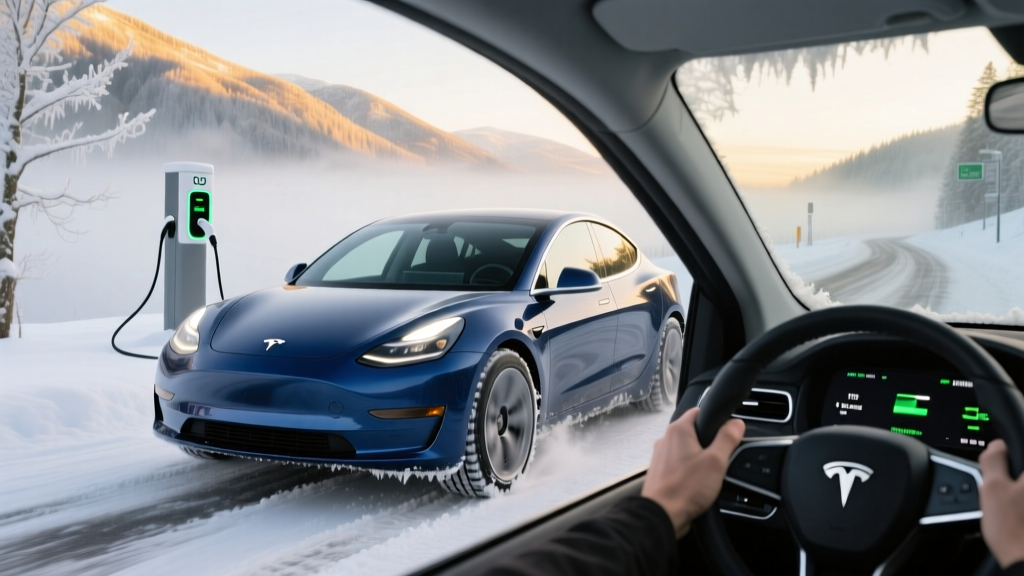
However, physics is physics. In our winter testing at 15°F with the cabin set to 70°F, seat heaters on, and winter tires mounted, the Long Range AWD delivered approximately 215 miles before reaching 10% State of Charge (SoC) on a mixed highway/city route. The LFP-equipped RWD model fared worse, returning roughly 165 miles under identical conditions — a ~39% reduction from its EPA sticker.
Battery preconditioning is essential in winter. When you navigate to a Supercharger in the Tesla app or in-car navigation, the car warms the battery to optimal temperature before you arrive, enabling faster DC charging. Without preconditioning, a cold-soaked battery may accept only 30–50 kW initially, even at a 250 kW Supercharger.
Snow Traction and AWD Performance
The Dual Motor AWD Model 3 uses independent front and rear motors to distribute torque in real time — there's no mechanical linkage, so traction adjustments happen in milliseconds. On packed snow and icy intersections, the AWD system provides confident acceleration with minimal wheel slip. The low center of gravity (battery pack mounted under the floor) further aids stability.
That said, the Model 3 ships with all-season tires from the factory. For drivers in regions with sustained snow and ice (think Minnesota, Colorado, New England), dedicated winter tires are a significant upgrade. We tested the Long Range AWD with Bridgestone Blizzak WS90s and observed dramatically shorter braking distances and better cornering grip on ice compared to the stock Michelin Pilot Sport All-Season 4s. The trade-off is roughly 3–5% range reduction due to higher rolling resistance.
Ground clearance is 5.5 inches — adequate for plowed roads and light accumulation, but you'll scrape on unplowed driveways or deep ruts. If you regularly face 6+ inches of unpacked snow, a crossover like the Model Y (6.7 inches clearance) may be more practical.
Cold-Weather Charging Speeds: DC Fast and Home Level 2
| Charging Level | Power / Rate | Miles Added per Hour | Notes |
|---|---|---|---|
| Level 1 (120V household) | ~1.2 kW | ~3–5 mi/hr | Emergency/trickle only |
| Level 2 (240V, 48A Wall Connector) | 11.5 kW | ~44 mi/hr | Full charge in 6–8 hours |
| DC Fast (V3 Supercharger) | Up to 250 kW (LR AWD) | ~1,000 mi/hr (peak) | 10–80% in ~25 min |
| DC Fast (V3 Supercharger) | Up to 170 kW (RWD) | ~700 mi/hr (peak) | 10–80% in ~30 min |
Charging speed is where cold weather bites hardest. A battery at 20°F may accept only a fraction of its peak charge rate until it warms up. Tesla's preconditioning system mitigates this: navigate to a Supercharger 15–20 minutes before arrival, and the car will heat the pack en route. In our testing, a preconditioned Long Range AWD at 25°F still achieved 200+ kW within 3 minutes of plugging in at a V3 Supercharger, sustaining an average of ~140 kW from 10–80%.
Without preconditioning, that same car started at just 45 kW and took 38 minutes to reach 80% — a 50% time penalty. Always precondition in winter.
At home, a Level 2 Tesla Wall Connector on a 60-amp circuit delivers 11.5 kW, replenishing roughly 44 miles of range per hour. A full charge from 10% takes about 7 hours for the Long Range. Most owners charge overnight and wake to a full battery every morning — the most practical "refueling" method for winter commuting.
Pricing, Trims, and Federal Tax Credit Eligibility
| Trim | Base MSRP | Federal §30D Credit* | Effective Price |
|---|---|---|---|
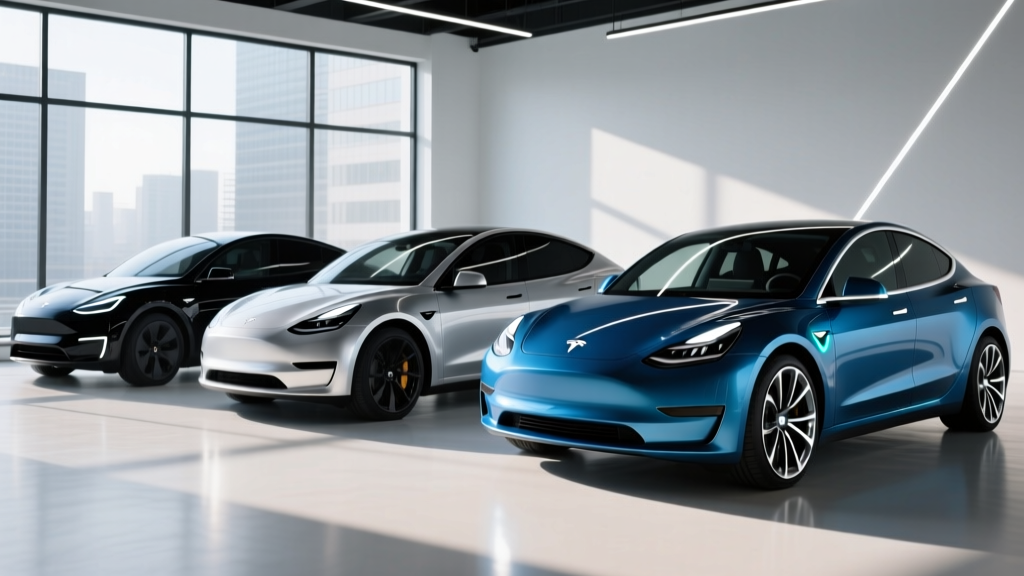
| Rear-Wheel Drive | $38,990 | Up to $7,500 | ~$31,490 |
| Long Range AWD | $47,740 | Up to $7,500 | ~$40,240 |
| Performance AWD | $52,990 | Up to $7,500 | ~$45,490 |
*Federal tax credit eligibility under IRS §30D depends on buyer income caps (AGI ≤ $150K single / $300K joint), vehicle MSRP caps ($55,000 for sedans), and battery critical-mineral and component sourcing requirements. The credit can now be transferred at point of sale as a discount. Confirm eligibility with a tax professional.
The RWD Model 3 at roughly $31,500 after the credit is one of the most affordable premium EVs available. However, for snow-belt buyers, the Long Range AWD at ~$40,200 is the stronger pick — the dual-motor traction and extra 69 miles of EPA range provide a meaningful winter margin.
The Performance trim adds adaptive dampers, track-tuned suspension, and a 3.1-second 0–60 time, but its stiffer ride and lower-profile tires are less ideal on rough winter roads.
Interior, Tech, and Standout Features
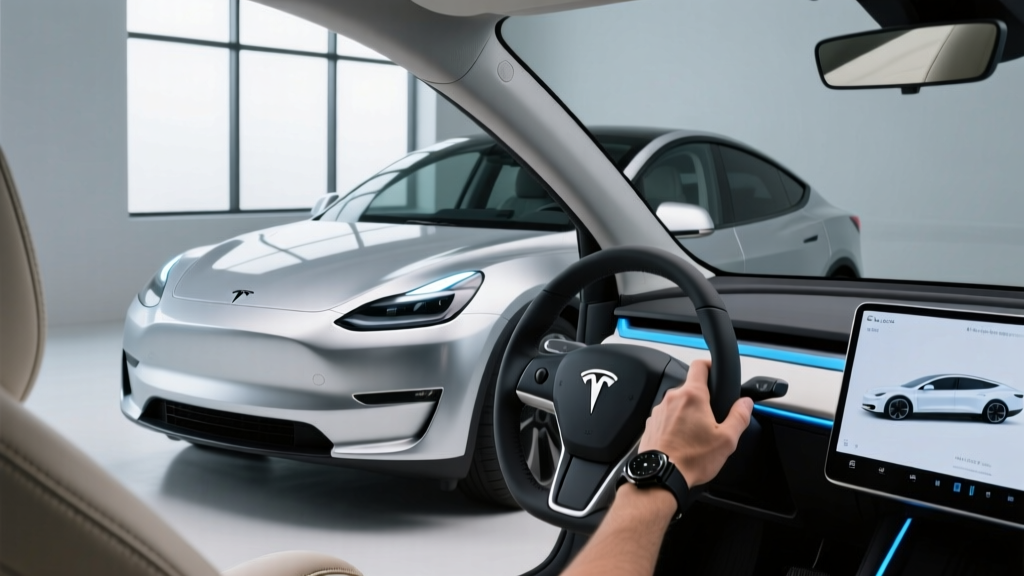
The refreshed Model 3 interior is significantly quieter than pre-2024 models, with acoustic glass and improved insulation that also helps retain cabin heat. Key features include:
- 15.4-inch central touchscreen with navigation, streaming, and vehicle controls (no physical instrument cluster)
- 8-inch rear touchscreen for climate and entertainment
- Ambient lighting and ventilated front seats (a Highland addition)
- Tesla Autopilot (SAE Level 2 driver assist) — adaptive cruise, lane centering, automatic emergency braking
- Full Self-Driving (Supervised) available as a $8,000 option or $99/month subscription — still requires active driver supervision
- Sentry Mode, dashcam, and over-the-air updates
Tesla Autopilot and FSD (Supervised) are SAE Level 2 driver-assistance systems. You must keep your hands on the wheel and eyes on the road at all times. True driverless operation (Level 4) is currently limited to geofenced robotaxi services like Waymo in select cities.
Winter-specific tech worth noting: the Model 3's navigation system factors battery temperature and elevation changes into range estimates when routing to a Supercharger, and the "Chill" acceleration mode reduces torque for smoother starts on ice.
Pros and Cons for Winter and Snow Driving
- Dual Motor AWD provides excellent snow traction with instant torque vectoring
- Heat pump minimizes cabin-heating range loss vs. resistive heaters
- Supercharger network remains the most reliable DC fast-charging ecosystem in North America
- Battery preconditioning enables fast winter charging when used correctly
- Low center of gravity enhances stability on slick roads
- Strong federal tax credit eligibility reduces effective price
- 5.5 inches of ground clearance limits deep-snow capability
- LFP battery in RWD trim loses more range in extreme cold than NMC
- No physical buttons — touchscreen-only controls frustrate some drivers, especially with gloves
- Regenerative braking can be abrupt on icy roads (though "Chill" mode mitigates this)
- Insurance premiums tend to be higher than comparable gas sedans
- Rear visibility is limited; relies heavily on backup camera
Who Should Buy the Tesla Model 3 for Snow and Winter?
Choose the Model 3 Long Range AWD if: You commute in a region with regular snow and freezing temperatures, need 200+ real-world winter miles between charges, and want access to the Supercharger network for road trips. The AWD system and NMC battery chemistry give you the best cold-weather package in the Model 3 lineup.
Choose the RWD if: You live in a milder climate with occasional frost, have reliable home charging, and prioritize the lowest purchase price. The LFP battery is extremely durable (longer cycle life than NMC) but suffers steeper range loss in deep cold.
Look elsewhere if: You regularly face 8+ inches of unplowed snow, need to tow, or require more than 23 cu ft of cargo space. The Tesla Model Y or a Ford Mustang Mach-E (with available AWD and 8.1 inches of clearance) may be better fits.
Frequently Asked Questions
Does the Tesla Model 3 have a snow mode?
The Model 3 doesn't have a dedicated "snow mode" button, but you can achieve similar results by enabling Chill Mode (reduces acceleration torque for smoother starts) and setting regenerative braking to its lowest setting via the touchscreen. Combined with winter tires, this provides controlled acceleration and deceleration on ice and packed snow.
How much range does the Model 3 lose in freezing weather?
Expect a 25–40% range reduction in sustained below-freezing temperatures, depending on driving speed, cabin heat usage, and whether you precondition. The Long Range AWD typically delivers 200–240 real-world winter miles; the RWD delivers 150–180. Using seat heaters instead of cranking cabin heat can recover 5–10% of range.
Do I need winter tires on the Model 3?
If you drive in temperatures consistently below 45°F or on snow and ice, winter tires are strongly recommended. The stock all-season tires provide adequate traction in light snow, but winter compound tires dramatically improve braking and cornering on ice. Factor in ~$800–$1,200 for a set of quality winter tires on rims.
Can I charge the Model 3 at home in winter?
Yes — home Level 2 charging is the ideal winter strategy. A Tesla Wall Connector on a 60-amp circuit adds ~44 miles of range per hour. Plug in overnight, and the car will maintain battery temperature using shore power, preserving range for your morning commute. A garage installation is ideal, but outdoor-rated Wall Connectors work in cold climates.
Does the Tesla Model 3 qualify for the $7,500 federal tax credit?
All 2026 Model 3 trims are priced below the $55,000 MSRP cap for sedans and are assembled in the USA. However, the full $7,500 credit under IRS §30D also requires that you meet income limits (AGI ≤ $150K single, $300K joint) and that the battery meets critical-mineral and component sourcing thresholds, which can shift. Tesla lists current credit eligibility on its website, and the credit can be applied as a point-of-sale discount. Confirm with a tax professional before purchasing.
How does the Model 3 compare to competitors in snow?
Versus the Hyundai Ioniq 6 (AWD, 316 mi EPA, ~$49K), the Model 3 offers a more reliable charging network and better software integration but slightly less rear-seat headroom. Against the BMW i4 xDrive40 (AWD, 282 mi EPA, ~$57K), the Model 3 is significantly cheaper and more efficient, though the BMW offers a more traditional luxury interior with physical controls. For pure snow traction and winter charging infrastructure, the Model 3 Long Range AWD remains a benchmark in its price class.