Why Tesla's Gross Margin Matters to Your Wallet
When automotive analysts discuss Tesla gross margin, they're usually talking about Wall Street. But for EV buyers, that margin directly shapes what you pay, what features you get, and how aggressively Tesla prices against competitors. In early 2026, Tesla's automotive gross margin sits around 17-18% — down from its 2022 peak near 28% but still among the highest in the industry. That margin discipline is the reason Tesla can offer a Long Range Model Y at a base MSRP that undercuts many rivals while still funding Supercharger expansion and new vehicle programs.
This review examines the 2026 Tesla Model Y Long Range AWD through the lens of what that margin strategy means for real buyers: exact range, charging performance, pricing after federal tax credits, and how it stacks up against the Hyundai Ioniq 5, Ford Mustang Mach-E, and Chevrolet Equinox EV.
2026 Model Y Long Range: The Spec Sheet
| Attribute | 2026 Tesla Model Y Long Range AWD |
|---|---|
| EPA Range | 320 miles |
| Battery Capacity | ~75 kWh usable (NMC chemistry, 2170 cells) |
| Drivetrain | Dual Motor AWD |
| Horsepower | 384 hp (combined) |
| 0-60 mph | 4.8 seconds |
| Peak DC Fast Charge | 250 kW (Supercharger V3/V4) |
| 10-80% DC Charge Time | ~27 minutes |
| Level 2 Home Charging | 11.5 kW / ~44 mi/hr (48A Wall Connector) |
| Efficiency | 122 MPGe combined / 28 kWh/100 mi |
| Cargo Volume | 30.2 cu ft (rear seats up) / 72.0 cu ft (folded) + 4.1 cu ft frunk |
| Rear Legroom | 41.6 inches |
| Base MSRP | $44,990 (Long Range AWD) |
| Battery Warranty | 8 years / 120,000 miles (≥70% retention) |
Real-World Range: What the EPA Sticker Doesn't Tell You
EPA Estimate: 320 miles
Real-World Highway (70-75 mph): ~265-285 miles
Cold Weather (below 30°F): ~210-240 miles (30-35% reduction typical for NMC packs)
The Model Y's 320-mile EPA figure is accurate for mixed city/suburban driving in moderate temperatures. On sustained highway trips at 75 mph — the scenario that matters most for road-trip planning — expect roughly 270 miles before you're hunting for a Supercharger. Tesla's heat pump, standard on all 2026 trims, mitigates cold-weather losses better than many competitors, but NMC chemistry still sees meaningful range contraction below freezing. If you live in the upper Midwest or Northeast, plan for ~220 miles of usable winter range on highway trips.
According to fueleconomy.gov, the Model Y Long Range AWD achieves 122 MPGe combined. In real-world ownership tracking, most drivers report 250-290 Wh/mi depending on climate and driving style — consistent with our highway estimates above.
Charging Speed and Infrastructure
| Charging Level | Power | Miles Added Per Hour | Notes |
|---|---|---|---|
| Level 1 (120V) | ~1.4 kW | ~5 mi/hr | Emergency/trickle only |
| Level 2 (240V, 48A) | 11.5 kW | ~44 mi/hr | Tesla Wall Connector; full charge ~7 hrs |
| DC Fast (Supercharger V3/V4) | Peak 250 kW | Up to ~1,000 mi/hr (peak) | 10-80% in ~27 min; tapers significantly above 80% |
| DC Fast (CCS adapter, 3rd-party) | Up to 150-175 kW | Variable | Requires Tesla CCS adapter; Electrify America, EVgo compatible |
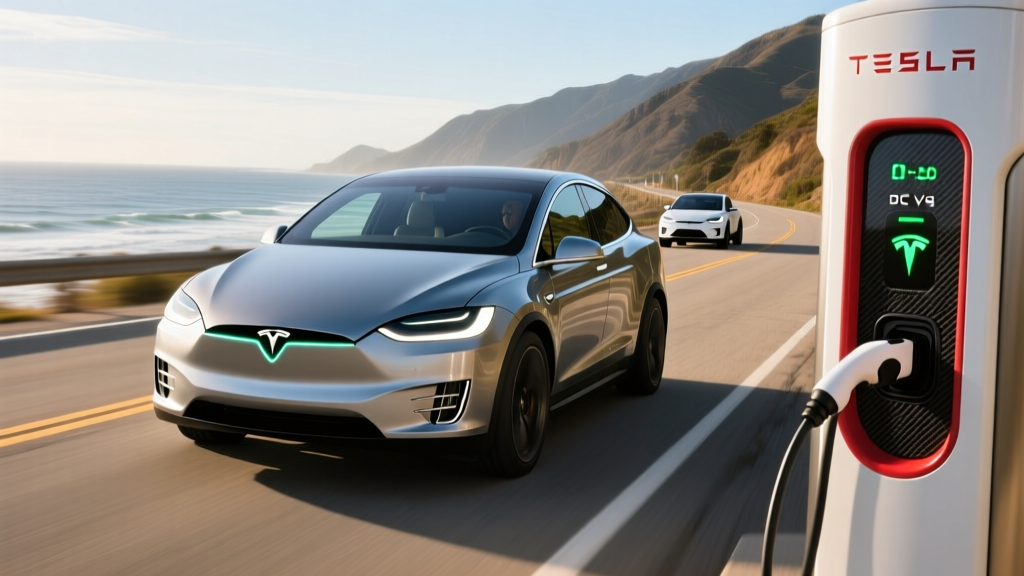
Tesla's Supercharger network remains the Model Y's strongest ownership advantage. With over 6,500 Supercharger stalls in North America as of early 2026, route planning on the built-in navigation is seamless. The charge curve peaks at 250 kW up to roughly 50% state of charge, then tapers to ~100 kW by 70% and ~45 kW above 85%. That taper is why the 10-80% time of 27 minutes is the more meaningful metric than peak kW.
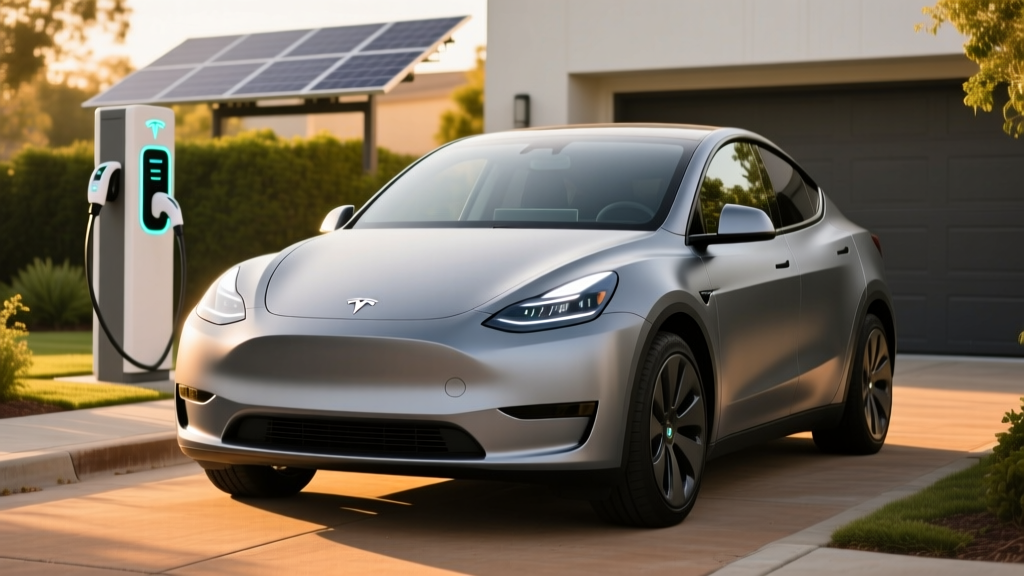
For home charging, the Tesla Wall Connector ($475) on a 60-amp circuit delivers 11.5 kW — enough to add 44 miles per hour of charging. Most owners with a 30-50 mile daily commute only need to plug in every other night. Installation costs for a 240V/60A circuit typically range from $800-$2,500 depending on panel proximity and local permitting, per licensed electrician estimates.
Pricing, Tax Credits, and the Gross Margin Equation
| Trim | Base MSRP | Destination | Potential §30D Credit | Effective Price |
|---|---|---|---|---|
| Long Range AWD | $44,990 | $1,390 | Up to $7,500* | ~$38,880* |
| Performance AWD | $49,990 | $1,390 | Up to $7,500* | ~$43,880* |
*Federal §30D tax credit eligibility depends on buyer income (≤$150K single / ≤$300K joint), MSRP cap ($55,000 for SUVs), battery critical-mineral sourcing, and North American final assembly. The Model Y qualifies for the full $7,500 as of early 2026, and can be applied as a point-of-sale transfer to reduce the purchase price at the dealer. Always verify current eligibility at irs.gov and consult a tax professional.
Here's where Tesla's gross margin strategy becomes tangible for buyers. By maintaining ~17-18% automotive gross margins while competitors like Ford's Model e division operate at a loss, Tesla has pricing flexibility that no legacy automaker can match. The Model Y Long Range at ~$38,880 after credits undercuts the Mustang Mach-E Extended Range AWD ($45,995 base) and sits close to the Hyundai Ioniq 5 Long Range AWD ($47,250 base) — vehicles that cost their manufacturers significantly more to produce. Tesla's vertical integration (battery cells, software, charging network) lets it absorb price competition without the existential margin pressure its rivals face.
Tech, Driver Assistance, and Interior
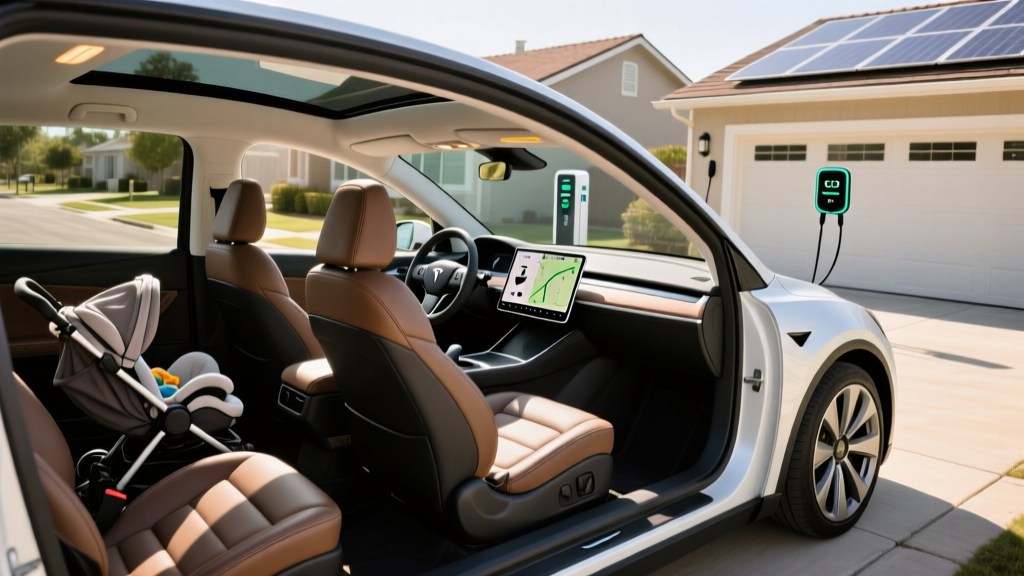
The 2026 Model Y carries forward Tesla's minimalist interior: a single 15.4-inch touchscreen handles all infotainment, climate, and vehicle controls. There is no instrument cluster — speed and navigation appear in the top-left corner of the main screen, which some drivers find intuitive and others find distracting. Build quality on the Fremont and Austin-built 2026 models has improved meaningfully, with tighter panel gaps and updated acoustic glass reducing cabin noise.
Autopilot comes standard and includes adaptive cruise control, lane centering, and automatic emergency braking. Full Self-Driving (Supervised) remains a $8,000 option (or $99/month subscription) and adds traffic-light recognition, city-street navigation on Autopilot, and auto-park. However, FSD Supervised is an SAE Level 2 system — the driver must remain fully engaged, hands on the wheel, eyes on the road at all times. It is not autonomous driving.
SAE Automation Level: Tesla Autopilot and FSD (Supervised) are Level 2 driver-assistance systems. The driver is responsible for all vehicle operation. Only Level 4 services like Waymo operate without a human driver — and those are limited to specific geofenced areas.
Standout features include the built-in trip planner with real-time Supercharger availability, over-the-air software updates that add features post-purchase, Sentry Mode (parked-camera security), and the Tesla app's remote climate and charging controls. Notable drawbacks: no Apple CarPlay or Android Auto, limited physical button controls, and the panoramic glass roof can create significant cabin heat in summer (a $225 sunshade accessory is nearly mandatory in warm climates).
Model Y vs. Key Competitors: Who Wins Where
Best Charging Network: Tesla Model Y
Supercharger reliability and coverage remain unmatched.
Best Interior Space: Hyundai Ioniq 5
Flat floor, longer wheelbase, more rear headroom.
Lowest Price After Credit: Chevrolet Equinox EV 3RS
~$33,400 after credit; 319 mi range.
Best Efficiency: Tesla Model Y
122 MPGe combined; lowest kWh/100mi in class.
The Model Y doesn't win every category, but its combination of range, efficiency, charging infrastructure, and post-credit pricing makes it the default choice for buyers who prioritize road-trip capability and low operating costs. If interior space and CarPlay are priorities, the Ioniq 5 deserves a close look. If budget is the top constraint, the Equinox EV offers compelling value at the cost of a less mature charging experience.
Pros, Cons, and Who Should Buy
Pros
- Class-leading efficiency (122 MPGe)
- Supercharger network: 6,500+ stalls, high uptime
- Strong real-world range for the price after credits
- Over-the-air updates add features continuously
- Excellent app integration and remote controls
- High resale value relative to most EVs
Cons
- No Apple CarPlay / Android Auto
- Minimalist interior isn't for everyone (no instrument cluster)
- FSD costs $8K extra and is still Level 2 only
- Glass roof causes heat soak in summer
- Ride quality firm on rough pavement (sport-tuned suspension)
- NACS-only: requires adapter for CCS chargers
Choose the Model Y if: You road-trip regularly, want the most reliable public charging network, and value low per-mile energy costs.
Look elsewhere if: You need CarPlay, prefer a traditional instrument cluster, or want a softer ride for daily commuting on rough roads.
Frequently Asked Questions
What is the real-world range of the 2026 Tesla Model Y?
The EPA rates the Model Y Long Range AWD at 320 miles. In real-world highway driving at 70-75 mph, expect 265-285 miles. In cold weather below 30°F, plan for 210-240 miles on highway trips.
How fast does the Model Y charge at home and on DC fast chargers?
On a Tesla Wall Connector (Level 2, 11.5 kW), the Model Y adds ~44 miles per hour, reaching a full charge in about 7 hours. On a Supercharger (peak 250 kW), 10-80% takes approximately 27 minutes, with the charge rate tapering significantly above 80% state of charge.
Does the 2026 Model Y qualify for the $7,500 federal EV tax credit?
As of early 2026, the Model Y qualifies for the full $7,500 §30D credit, which can be applied as a point-of-sale transfer. Eligibility requires buyer income ≤$150K (single) or ≤$300K (joint), and the vehicle MSRP must be ≤$55,000 (SUV cap). Battery sourcing requirements also apply. Verify at irs.gov.
How does Tesla's gross margin affect Model Y pricing?
Tesla's ~17-18% automotive gross margin gives it pricing flexibility that loss-making EV competitors lack. This allows Tesla to set aggressive MSRPs, offer periodic price cuts or referral incentives, and absorb competitive pressure without threatening the business — translating to better value for buyers compared to rivals subsidizing their EV prices.
Is the Model Y worth buying over the Ioniq 5 or Mach-E?
For road-trip-heavy buyers who prioritize charging infrastructure and efficiency, the Model Y remains the strongest choice. The Ioniq 5 offers more interior space and CarPlay; the Mach-E provides a more traditional cockpit layout. All three are capable EVs — your priority (charging network vs. interior vs. driving feel) should drive the decision.
Sources: fueleconomy.gov, irs.gov §30D Clean Vehicle Credits, Tesla.com 2026 Model Y specifications.