Quick Verdict: The Electric Bavarian Cruiser
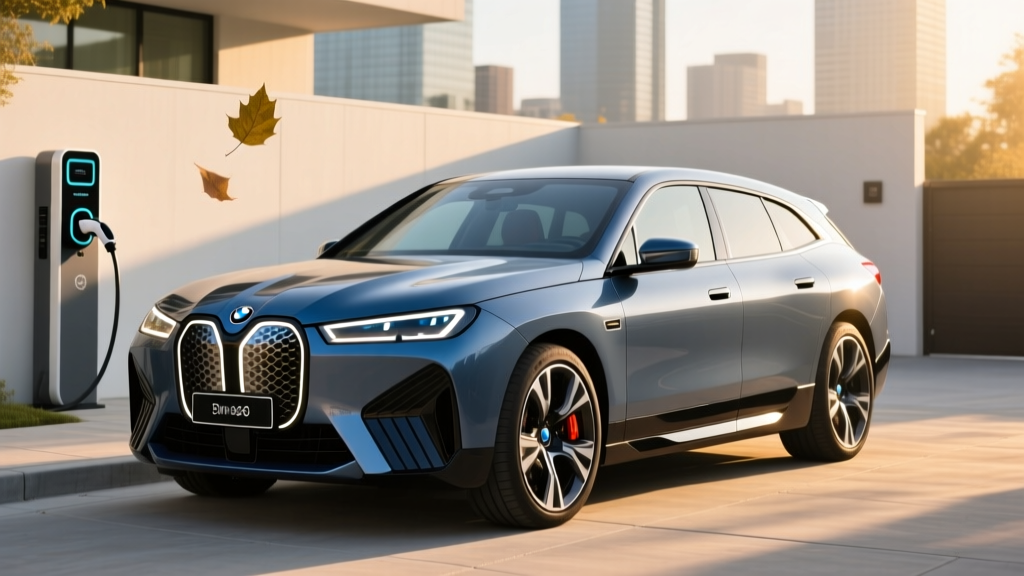
The 2026 BMW iX xDrive60 occupies a specific niche in the luxury EV SUV segment: it's the comfort-first, tech-dense grand tourer that prioritizes ride refinement and cabin serenity over outright sportiness. With 516 horsepower from its dual-motor all-wheel-drive powertrain, a usable battery capacity of 105.2 kWh, and an EPA-estimated range of 307 miles, the xDrive60 is engineered for long-distance composure rather than track-day theatrics. Against the Tesla Model X, Mercedes-Benz EQE SUV, and Audi Q8 e-tron, the iX differentiates through interior material quality, BMW's iDrive 8.5 infotainment, and a suspension tune that absorbs highway imperfections with genuine authority. The question for buyers spending near $90,000 is whether that refinement justifies the price — and whether the federal tax credit applies.
Range, Battery, and Efficiency
The iX xDrive60 draws from a 105.2 kWh (usable) lithium-ion battery pack using NMC (nickel-manganese-cobalt) chemistry. BMW positions this cell choice for energy density over the cycle-life advantages of LFP, which aligns with the vehicle's long-range, premium-positioning strategy. The pack sits within a dedicated skateboard architecture, contributing to a low center of gravity and the flat floor that gives the cabin its spacious feel.
The EPA rates the 2026 iX xDrive60 (with 20-inch wheels) at 307 miles. However, real-world results vary significantly:
- Highway driving (70-80 mph): Expect 260–280 miles. The iX's tall, wide SUV profile creates aerodynamic drag that reduces efficiency at sustained speed.
- Cold weather (below 32°F): Range drops 20–30%, landing between 215–245 miles. The heat pump (standard on US models) mitigates cabin energy draw but cannot fully offset battery chemistry slowdown.
- City/mixed driving (moderate temps): 290–310 miles is achievable, especially with regenerative braking set to adaptive or high.
For context, the EPA combined efficiency rating is 86 MPGe (approximately 39 kWh per 100 miles). That's competitive with the Audi Q8 e-tron (87 MPGe) but trails the more aerodynamically optimized Tesla Model X (102 MPGe).
| Metric | Value |
|---|---|
| Battery Capacity (Usable) | 105.2 kWh |
| Chemistry | NMC (Nickel-Manganese-Cobalt) |
| EPA Range (20" wheels) | 307 miles |
| EPA Efficiency | 86 MPGe / 39 kWh/100mi |
| Drivetrain | Dual-motor AWD (xDrive) |
| Heat Pump | Standard |
Charging Speed: DC Fast and Level 2
BMW equips the iX xDrive60 with a peak DC fast-charging rate of 195 kW via its CCS1 connector (NACS adapter availability varies by market; in the US, BMW provides a Tesla Supercharger adapter for access to the NACS network). On a compatible 200+ kW charger — such as Electrify America's 350 kW stalls or Tesla Supercharger V4 with CCS adapter — the iX can add roughly 90 miles of range in 10 minutes under optimal conditions.
The 10–80% charge time is rated at approximately 34 minutes. That figure assumes battery preconditioning is active (the car navigates to a charger via the infotainment system, warming the pack to optimal temperature). Without preconditioning — for instance, plugging in at a random charger without navigation routing — cold-soak can extend that time to 45+ minutes, particularly in winter.
The charge curve is typical of large NMC packs: peak rate sustains from roughly 10–40% SoC, then tapers progressively. From 80–100%, expect another 30+ minutes as the battery management system reduces current to protect cell longevity. For daily driving, charging to 80% is the practical ceiling.
| Charge Level | Power | Time / Rate |
|---|---|---|
| Level 1 (120V household) | ~1.4 kW | ~3 mi/hr (emergency/trickle only) |
| Level 2 (240V home/public) | 11 kW (onboard charger max) | ~28 mi/hr; 0–100% in ~10.5 hours |
| DC Fast Charge (CCS1) | 195 kW peak | 10–80% in ~34 minutes |
| Tesla Supercharger (via adapter) | Up to 195 kW (stall-dependent) | Same curve; adapter required |
Home charging note: The iX's 11 kW onboard charger means a 48-amp Level 2 circuit (the most common residential installation on a 60-amp breaker) delivers the full 11.5 kW the car can accept. An overnight charge from 20–80% takes roughly 5.5 hours, easily covering daily needs. Installation costs for a 240V/60A circuit typically range from $800–$2,000 depending on panel proximity and local permitting. A full panel upgrade (100A to 200A service) can add $2,000–$4,000 if your home's electrical service is older.
Performance and Driving Dynamics
The xDrive60's dual-motor setup produces 516 horsepower and 564 lb-ft of torque, routing power to all four wheels through BMW's xDrive all-wheel-drive system. The result is a 0–60 mph time of 4.4 seconds — quick by any measure, and genuinely rapid for a 5,600-pound SUV. The M60 variant (a separate, higher-performance trim) bumps output to 610 hp and drops the 0–60 to 3.6 seconds, but the xDrive60 strikes the better balance between performance and efficiency for most buyers.
Driving dynamics favor comfort over agility. The adaptive air suspension (standard) soaks up expansion joints and potholes with a compliance that the stiffer Tesla Model X cannot match. Steering is precise but light, with minimal road feedback — a deliberate choice for a luxury GT. The iX is not a sports SUV in the Porsche Cayenne EV mold; it's a high-speed cruiser that excels on interstate stretches and mountain passes where isolation matters more than apex-carving.
Regenerative braking offers three modes: low (coasting), high (one-pedal-capable), and adaptive (which uses radar and navigation data to modulate regen based on traffic and terrain). The adaptive mode is genuinely intelligent — it'll coast approaching a green light but increase regen when you're closing on a slower vehicle or approaching a curve.
Interior, Cargo, and Technology
The iX cabin is where BMW's investment shows most clearly. The minimalist dashboard centers on a curved display housing a 14.9-inch touchscreen and 12.3-inch digital instrument cluster, both running iDrive 8.5. The system supports wireless Apple CarPlay and Android Auto, over-the-air updates, and BMW's Intelligent Personal Assistant voice control. Physical controls are sparse — climate and volume use a combination of touch-sensitive panels and a rotary controller on the center console.
Material quality is excellent: SensaTec synthetic leather is standard, with genuine Merino leather and open-pore wood trim available. The hexagonal steering wheel is distinctive (and polarizing). Front seats are 18-way power-adjustable with heating standard; ventilation and massage are optional.
Cargo and passenger space:
- Rear legroom: 38.5 inches (generous for the segment)
- Cargo volume behind rear seats: 35.5 cu ft
- Cargo volume with rear seats folded: 77.9 cu ft
- Frunk (front trunk): None — the iX uses the under-hood space for power electronics
The absence of a frunk is a notable omission at this price point; the Tesla Model X offers 8.8 cu ft of front storage. However, the iX's rear cargo area is well-shaped, with a low load floor and a power liftgate standard.
Driver assistance: The iX comes standard with BMW's Driving Assistant Professional, which includes adaptive cruise control with stop-and-go, lane-keeping assist, and automatic emergency braking. The optional Highway Assistant (a SAE Level 2 system) allows hands-off driving at speeds up to 85 mph on divided highways, provided the driver maintains eye contact with the road (monitored via an interior camera). This is not autonomous driving — the driver remains responsible and must be prepared to take over immediately.
Pricing, Trims, and Federal Tax Credit
The 2026 BMW iX xDrive60 carries a base MSRP of $87,250 (including destination). A well-equipped example with the Premium Package (heated steering wheel, panoramic sunroof, Harman Kardon audio), Driving Assistant Professional, and 21-inch wheels typically lands in the $94,000–$98,000 range before incentives.
| Trim | Base MSRP | Key Differentiators |
|---|---|---|
| xDrive50 | $85,200 | 516 hp, 307-mi range (same as xDrive60 for 2026) |
| xDrive60 | $87,250 | Additional standard equipment, sport-tuned suspension |
| M60 | $111,500 | 610 hp, M Sport differential, 280-mi range |
Federal tax credit eligibility (IRS §30D): The iX xDrive60's eligibility for the $7,500 federal EV tax credit is uncertain for 2026 and depends on battery component and critical mineral sourcing requirements that BMW has been working to satisfy through North American and allied-nation supply chains. Additionally, the vehicle must meet MSRP caps ($80,000 for SUVs — which the base xDrive50 barely exceeds, disqualifying it) and buyer income limits ($300,000 joint / $150,000 single for new EV purchases). As of early 2026, BMW has not confirmed full §30D compliance for the iX lineup. Buyers should verify current eligibility on the fueleconomy.gov credit lookup and consult a tax professional before assuming the credit applies. The point-of-sale transfer option (allowing the credit to reduce the purchase price at the dealer) is available if the vehicle qualifies.
Warranty and Ownership Costs
BMW provides a 4-year/50,000-mile limited warranty and a 8-year/100,000-mile battery warranty that guarantees the pack will retain at least 70% of its original capacity. This is industry-standard and matches Tesla, Mercedes, and Audi. The powertrain (motors, power electronics) is covered under the same 8-year/100,000-mile term.
BMW includes 3 years/36,000 miles of complimentary scheduled maintenance (brake fluid, cabin filters, vehicle checks) and 4 years of unlimited BMW Charging at Electrify America stations (30-minute sessions). This offsets public charging costs for moderate-mileage drivers during the lease/warranty period.
Insurance premiums for the iX xDrive60 are elevated — expect $2,800–$3,600 annually depending on location and driving record, per industry estimates. This reflects the vehicle's repair costs (aluminum and carbon-fiber-reinforced plastic body panels) and high MSRP. Depreciation is moderate for the luxury EV segment: industry data suggests the iX retains approximately 50–55% of its value after 3 years, trailing the Tesla Model X (which benefits from stronger brand demand in the used EV market) but comparable to the Audi Q8 e-tron.
Pros, Cons, and Who Should Buy
Pros
- Exceptional ride quality and cabin quietness
- High-quality interior materials and build
- 307-mile EPA range is competitive
- 195 kW DC charging is adequate for road trips
- Generous rear-seat legroom
- Standard heat pump improves cold-weather efficiency
- Complimentary Electrify America charging (4 years)
Cons
- Base MSRP exceeds $80,000 SUV cap for federal tax credit
- No frunk (front trunk)
- 86 MPGe trails more aerodynamic rivals
- Touch-sensitive climate controls lack tactile feedback
- Highway range drops significantly (260–280 mi at 75 mph)
- Polarizing exterior styling (large kidney grille)
- Insurance costs are above segment average
Who this EV suits best:
- Executive commuters who prioritize cabin serenity and ride quality over sporty handling
- Families needing generous rear-seat space for child seats and cargo (35.5 cu ft is ample for strollers and groceries)
- Road-trippers willing to plan 30-minute DC fast-charge stops every 250 miles
- BMW loyalists transitioning from an X5 or X7 who want electric powertrain without sacrificing interior luxury
Who should look elsewhere: Buyers seeking maximum efficiency (Tesla Model X), third-row seating (Tesla Model X, Rivian R1S), or sub-$70,000 pricing (Genesis Electrified GV70, Cadillac Lyriq).
Competitor Comparison: iX vs. Model X vs. EQE SUV
| Spec | BMW iX xDrive60 | Tesla Model X Long Range | Mercedes EQE 350+ SUV |
|---|---|---|---|
| Base MSRP | $87,250 | $79,990 | $78,050 |
| EPA Range | 307 mi | 335 mi | 305 mi |
| Battery (usable) | 105.2 kWh | ~100 kWh | 90.6 kWh |
| 0–60 mph | 4.4 sec | 3.8 sec | 6.4 sec |
| DC Fast Charge (peak) | 195 kW | 250 kW | 170 kW |
| Efficiency (MPGe) | 86 | 102 | 89 |
| Cargo (rear seats up) | 35.5 cu ft | 37.1 cu ft (+ 8.8 frunk) | 34.0 cu ft |
| Third Row | No | Optional (small) | No |
The iX wins on interior quality and ride comfort. The Model X wins on range, efficiency, charging speed, and Supercharger network access. The EQE SUV is the value play — lower MSRP, similar range, but less power and a less engaging drive. Your priority determines the winner.
Frequently Asked Questions
What is the real-world range of the 2026 BMW iX xDrive60?
The EPA estimates 307 miles, but real-world highway driving at 70–80 mph yields 260–280 miles. In cold weather (below freezing), expect 215–245 miles. City driving in moderate temperatures can approach or slightly exceed the EPA figure thanks to regenerative braking.
How fast does the iX xDrive60 charge at home and on the road?
At home on a 240V Level 2 charger (11 kW), the iX adds about 28 miles per hour, reaching a full charge from empty in roughly 10.5 hours. On a DC fast charger (195 kW peak), the 10–80% charge takes about 34 minutes with battery preconditioning active.
Does the 2026 BMW iX qualify for the $7,500 federal EV tax credit?
Likely not. The base xDrive50 MSRP of $85,200 exceeds the $80,000 cap for SUVs under IRS §30D rules, disqualifying it. The xDrive60 and M60 are similarly above the cap. Additionally, battery sourcing requirements must be met. Always verify current eligibility on fueleconomy.gov and consult a tax professional.
Is the iX xDrive60 worth buying over the Tesla Model X or Mercedes EQE SUV?
If interior luxury, ride comfort, and cabin quietness are your top priorities, yes. If you want maximum range, charging speed, and Supercharger network convenience, the Model X is the stronger choice. If you want a lower price point with comparable range, the EQE SUV offers better value.
Does the iX have a frunk (front trunk)?
No. BMW uses the under-hood space for power electronics and the HVAC system. All cargo must go in the rear (35.5 cu ft with seats up, 77.9 cu ft folded).
What is the battery warranty?
BMW guarantees the 105.2 kWh battery pack for 8 years or 100,000 miles, whichever comes first, with a minimum capacity retention of 70%. The powertrain (motors, inverters) shares the same coverage.
Can the iX use Tesla Superchargers?
Yes, with a BMW-provided CCS-to-NACS adapter. The iX will charge at up to its 195 kW peak rate on compatible Supercharger V3/V4 stalls. Access requires the adapter and the BMW Charging app or Tesla app for payment.