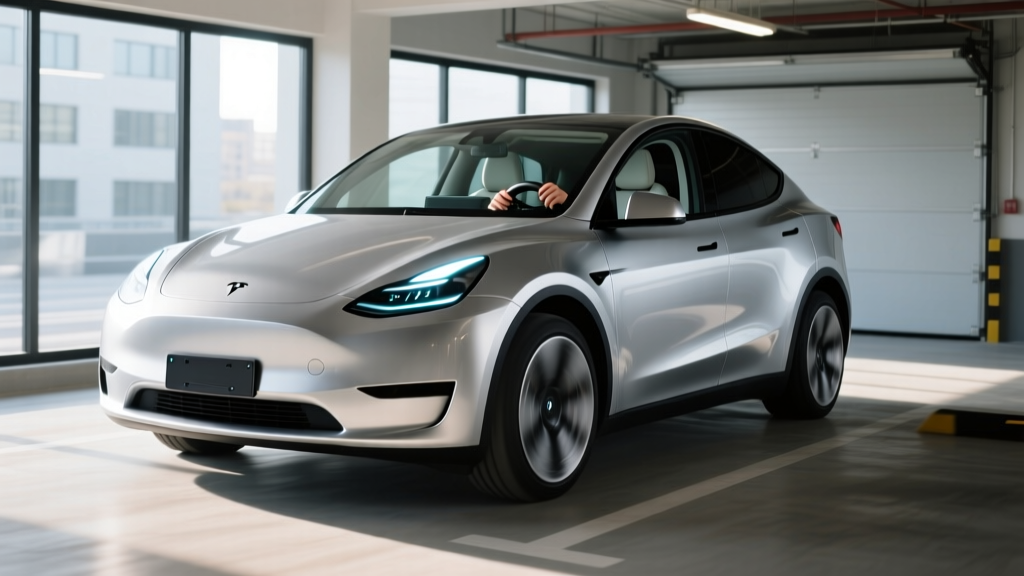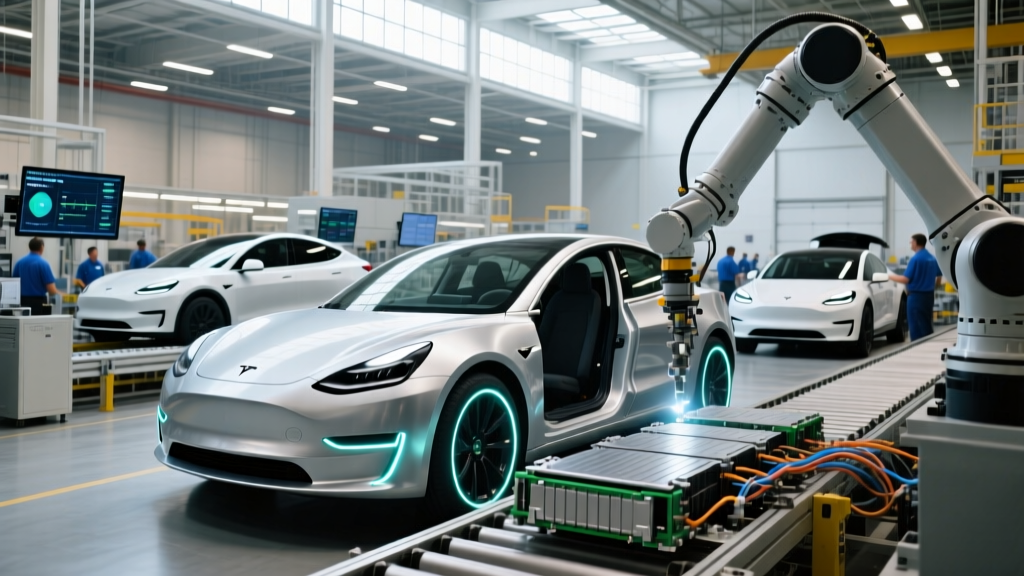
Tesla's Fremont, California factory is where it all started for the brand's mass-market ambitions. Acquired from Toyota and GM in 2010 and retooled into an EV-only production facility, the plant now cranks out hundreds of thousands of vehicles annually across the Model S, Model 3, Model X, and Model Y lineup. For EV enthusiasts, a Tesla Fremont tour offers a rare look at stamping, body-in-white assembly, paint, battery pack integration, and final quality checks — all under one roof.
But beyond the spectacle of robotic arms and conveyor systems, the real value of understanding what comes off this line is knowing the exact specifications of the vehicles produced there. Whether you're booking a tour, considering a purchase, or simply benchmarking Fremont-built Teslas against competitors, this guide pairs the factory experience with the hard data you need to evaluate every current model.
Booking a Tesla Fremont Tour in 2026
Tesla does not offer public walk-in tours of the Fremont factory the way some legacy automakers do. Access is typically granted through:
- Owner events: Tesla periodically hosts delivery celebrations or owner appreciation days that include limited factory floor access.
- Educational and media visits: University engineering groups, journalists, and industry analysts can request access through Tesla's communications team.
- Employee referrals: Current Tesla employees may be able to sponsor guest visits during designated open periods.
If you're planning a trip to the Bay Area with EV interest, the Fremont factory exterior is visible from public roads near 45500 Fremont Boulevard, and the nearby Tesla showroom and service centers in the region often have the full current lineup available for test drives — a practical complement to any factory visit.
The Fremont-Built Lineup: 2026 Specifications at a Glance
Every Model S, Model 3, Model X, and Model Y sold in North America rolls out of Fremont. (The Austin Gigafactory handles additional Model Y and Cybertruck production; Shanghai and Berlin serve other markets.) Below is a consolidated spec table covering the most popular trims as of the 2026 model year.
| Spec | Model 3 RWD | Model 3 Long Range AWD | Model Y Long Range AWD | Model S Long Range | Model X Long Range |
|---|---|---|---|---|---|
| EPA Range | 272 mi | 341 mi | 320 mi | 402 mi | 348 mi |
| Battery (usable) | ~57.5 kWh (LFP) | ~78 kWh (NMC) | ~78 kWh (NMC) | ~95 kWh (NMC) | ~95 kWh (NMC) |
| Drivetrain | RWD, single motor | AWD, dual motor | AWD, dual motor | AWD, dual motor | AWD, dual motor |
| 0-60 mph | 5.8 sec | 4.2 sec | 4.8 sec | 3.1 sec | 3.8 sec |
| Horsepower | 283 hp | 384 hp | 384 hp | 670 hp | 670 hp |
| Peak DC Fast Charge | 170 kW | 250 kW | 250 kW | 250 kW | 250 kW |
| 10-80% DC Time | ~25 min | ~28 min | ~27 min | ~32 min | ~33 min |
| Level 2 Home Rate | 11.5 kW (~44 mi/hr) | 11.5 kW (~44 mi/hr) | 11.5 kW (~44 mi/hr) | 11.5 kW (~44 mi/hr) | 11.5 kW (~44 mi/hr) |
| Efficiency (MPGe) | 132 MPGe | 125 MPGe | 122 MPGe | 124 MPGe | 111 MPGe |
| Base MSRP | $38,990 | $47,740 | $48,990 | $79,990 | $84,990 |
Sources: EPA fueleconomy.gov, Tesla.com. Specs reflect 2026 model year and may vary by configuration.
Real-World Range: What the EPA Sticker Doesn't Tell You
EPA range estimates are standardized, but they don't capture the variables that matter most in daily ownership. Here's what to expect from Fremont-built Teslas in the real world:
Model 3 RWD (EPA 272 mi): Expect 230-250 mi on highway trips at 70+ mph. The LFP battery handles cold better than NMC at low states of charge, but winter range loss of 15-25% is still typical in sub-30°F conditions.
Model 3 Long Range AWD (EPA 341 mi): Highway cruising yields 270-290 mi. City and suburban driving with regen braking can push past 320 mi in mild weather. Cold-weather highway range drops to roughly 240-260 mi.
Model Y Long Range AWD (EPA 320 mi): The crossover's taller profile and added weight reduce highway efficiency — plan for 255-275 mi at interstate speeds, 215-240 mi in freezing temperatures.
Model S Long Range (EPA 402 mi): The efficiency king of the lineup. Real-world highway range of 330-360 mi is achievable in temperate weather; expect 280-310 mi in cold or mountainous terrain.
Model X Long Range (EPA 348 mi): Heavy and aerodynamically challenged — 275-300 mi highway is realistic, dropping to 230-260 mi in winter.
One factor Tesla owners should internalize: the heat pump system (standard on all current Fremont models) significantly reduces cold-weather cabin heating energy draw compared to resistive heaters, preserving range in winter. Preconditioning the battery via the Tesla app before a DC fast-charge stop also unlocks peak charging speeds — without it, you'll see throttled kW rates at the Supercharger.
Charging Speed: Supercharger Network and Home Setup
Tesla's charging advantage remains the proprietary Supercharger network — now opening to non-Tesla EVs via NACS adapters — but the speed you experience depends on your specific model's charge curve.
| Model | Peak DC kW | 10-80% Time | Sustained Avg kW (10-80%) | Level 2 kW (Home) | Level 1 (120V) Mi/Hr |
|---|---|---|---|---|---|
| Model 3 RWD | 170 kW | ~25 min | ~110 kW | 11.5 kW | ~4 mi/hr |
| Model 3 LR AWD | 250 kW | ~28 min | ~155 kW | 11.5 kW | ~4 mi/hr |
| Model Y LR AWD | 250 kW | ~27 min | ~160 kW | 11.5 kW | ~4 mi/hr |
| Model S LR | 250 kW | ~32 min | ~150 kW | 11.5 kW | ~3 mi/hr |
| Model X LR | 250 kW | ~33 min | ~145 kW | 11.5 kW | ~3 mi/hr |
Key insight on charge curves: The "peak 250 kW" number is reached only briefly, typically between 10-30% state of charge on a preconditioned battery. Above 50% SoC, the rate tapers significantly — often to 80-100 kW — and above 80%, it drops further to protect battery longevity. This is why the 10-80% metric is the most useful comparison figure; charging from 80-100% can add another 20-30 minutes.
For home charging, a Tesla Wall Connector on a 60-amp circuit delivers up to 11.5 kW (roughly 44 miles of range per hour of charging). Most owners charging overnight from 20-80% will replenish their battery in 4-6 hours depending on the model. Installation costs for a Level 2 home setup typically range from $500 (simple outlet near panel) to $2,500+ if a panel upgrade or long conduit run is needed — consult a licensed electrician for a site-specific quote.
Pricing, Trims, and Federal Tax Credit Eligibility
The §30D federal EV tax credit remains a significant purchase factor, but eligibility is anything but automatic. Here's the current framework:
- MSRP caps: Sedans (Model 3, Model S) must have an MSRP at or below $55,000. SUVs/trucks (Model Y, Model X) must be at or below $80,000.
- Buyer income limits: Adjusted gross income must not exceed $150,000 (single), $225,000 (head of household), or $300,000 (joint filing).
- Battery sourcing: The vehicle must meet critical minerals and battery component requirements set by the IRS, which have tightened annually. Tesla's North American supply chain positioning has generally kept key trims eligible, but this changes — always verify at IRS.gov before purchasing.
- Point-of-sale transfer: Eligible buyers can transfer the credit to the dealer at purchase, reducing the out-of-pocket price directly rather than waiting for a tax refund.
| Model / Trim | Base MSRP | §30D Eligible? | Effective Price (if eligible) |
|---|---|---|---|
| Model 3 RWD | $38,990 | Yes (meets MSRP + sourcing) | $31,490 |
| Model 3 LR AWD | $47,740 | Yes (under $55K sedan cap) | $40,240 |
| Model 3 Performance | $54,990 | Yes (at $55K cap) | $47,490 |
| Model Y LR AWD | $48,990 | Yes (under $80K SUV cap) | $41,490 |
| Model Y Performance | $53,490 | Yes | $45,990 |
| Model S LR | $79,990 | No (exceeds $55K sedan cap) | $79,990 |
| Model X LR | $84,990 | No (exceeds $80K SUV cap) | $84,990 |
Tax credit eligibility is subject to change based on IRS sourcing rule updates. Verify current status at IRS.gov §30D and consult a tax professional for your specific situation.
Interior, Cargo, and Practicality
Fremont-built Teslas share a minimalist interior philosophy — large central touchscreen, minimal physical buttons, and a flat floor thanks to the skateboard platform. But practicality varies significantly across the lineup:
| Model | Rear Cargo (cu ft) | Front Trunk (cu ft) | Rear Legroom (in) | Seating |
|---|---|---|---|---|
| Model 3 | 23 cu ft (trunk) | 3.1 cu ft | 35.2 in | 5 passengers |
| Model Y | 34 cu ft (behind 2nd row); 76 cu ft folded | 4.1 cu ft | 36.5 in | 5 (optional 7) |
| Model S | 28 cu ft (trunk + frunk combined) | Included above | 35.4 in | 5 passengers |
| Model X | 57 cu ft (behind 2nd row); 88 cu ft folded | 6.6 cu ft | 35.5 in (2nd row) | 5, 6, or 7 |
The Model Y's hatchback design and optional third row make it the clear family hauler. The Model X's falcon-wing rear doors ease car-seat installation in tight parking spaces — a genuinely useful feature, not just a gimmick. The Model 3's trunk is adequate for commuting and weekend trips but won't swallow large cargo without folding the rear seats.
Driver Assistance and Technology
All current Fremont-built Teslas ship with Basic Autopilot (lane centering, traffic-aware cruise control) and the option to upgrade to Full Self-Driving (Supervised) for an additional fee (currently $8,000 one-time or $99/month).
Despite the "Full Self-Driving" name, Tesla's FSD (Supervised) is an SAE Level 2 driver-assistance system. The driver must remain fully engaged, hands on or near the wheel, eyes on the road, and ready to take over at any moment. This is not autonomous driving. Level 4 driverless capability (no human backup needed in defined areas) is offered commercially only by services like Waymo in select cities.
The infotainment system across all models runs on a 15.4-inch central touchscreen (Model 3 and Model Y) or a 17-inch display (Model S and Model X), with over-the-air updates adding features regularly. A rear-seat entertainment screen is standard on Model S and X and available on refreshed Model 3 and Y trims. The Tesla app provides remote preconditioning, charge monitoring, location tracking, and Summon functionality.
Warranty and Long-Term Battery Outlook
Tesla's warranty structure is consistent across the Fremont lineup:
- Basic Vehicle Limited Warranty: 4 years / 50,000 miles, whichever comes first.
- Battery and Drive Unit Warranty:
- Model 3 RWD: 8 years / 100,000 miles (70% minimum capacity retention)
- Model 3 LR, Model Y, Model S, Model X: 8 years / 120,000 miles (70% minimum retention)
Tesla's LFP batteries (Model 3 RWD) are rated for higher cycle counts — typically 3,000+ full cycles before significant degradation — compared to NMC packs at roughly 1,500-2,000 cycles. In practical terms, both chemistries should outlast the warranty period with normal use. Real-world fleet data suggests most Tesla packs retain 85-92% capacity at 100,000 miles, well above the warranty threshold.
Out-of-warranty battery replacement costs remain a concern for long-term owners: approximately $7,000-$12,000 for a Model 3 pack and $12,000-$20,000 for Model S/X, depending on capacity and labor. Tesla's remanufactured pack program can reduce this cost.
Pros and Cons of the Fremont-Built Lineup
Pros
- Access to the Supercharger network — the most reliable and widespread DC fast-charging infrastructure in North America
- Industry-leading efficiency (kWh/mi) across the lineup
- Over-the-air updates continuously improve vehicle functionality
- Model 3 and Model Y offer excellent value after §30D tax credit
- LFP option on Model 3 RWD provides exceptional cycle life and 100% daily charging tolerance
- Strong resale values relative to most EV competitors
Cons
- Model S and Model X do not qualify for the federal tax credit due to MSRP caps
- Minimalist interior isn't for everyone — no physical climate or volume controls
- Service center wait times can be lengthy in high-population areas
- FSD (Supervised) remains Level 2 and requires constant driver attention despite the premium price
- Model 3 trunk space is limited for a vehicle in its price class
- No Apple CarPlay or Android Auto — Tesla's proprietary system only
Who Should Buy a Fremont-Built Tesla?
The answer depends entirely on your use case and budget:
- Commuters and budget-conscious buyers: The Model 3 RWD at ~$31,490 after the tax credit is the strongest value in the EV market for daily driving with Supercharger access.
- Families needing cargo space: Model Y Long Range AWD offers the best combination of range, interior volume, optional third row, and credit eligibility.
- Road-trippers prioritizing range: Model S Long Range's 402-mile EPA rating is the highest of any production EV sold in the US, though you'll pay full MSRP.
- Those wanting maximum space and presence: Model X is the only EV with falcon-wing doors and genuine 7-seat capability, but the $84,990+ price and no tax credit make it a luxury commitment.
Frequently Asked Questions
Can the public tour the Tesla Fremont factory?
Not through general admission. Tesla does not sell tour tickets. Access is typically limited to owner events, educational groups, media, and employee-sponsored visits. Check Tesla's official channels for any announced public events.
What is the real-world range of the Model 3 Long Range?
The EPA rates it at 341 miles. In real-world highway driving at 70-80 mph in moderate temperatures, expect 270-290 miles. In sub-30°F winter conditions, plan for 240-260 miles. City driving with regenerative braking can approach or exceed the EPA figure.
How fast does the Model Y charge at a Supercharger?
The Model Y Long Range AWD peaks at 250 kW on a V3 or V4 Supercharger, reaching 10-80% in approximately 27 minutes with a preconditioned battery. Sustained average across that window is roughly 160 kW. Charging above 80% tapers significantly.
Does the Model 3 qualify for the $7,500 federal tax credit?
Yes, the Model 3 RWD ($38,990) and Model 3 Long Range AWD ($47,740) both fall under the $55,000 sedan MSRP cap. Eligibility also depends on your income (under $150K single / $300K joint) and the vehicle meeting current IRS battery sourcing requirements. Verify at IRS.gov.
Is a Fremont-built Tesla worth buying vs. competitors?
For buyers who value Supercharger access, OTA updates, and strong efficiency, the Model 3 and Model Y remain category leaders. Competitors like the Hyundai Ioniq 5, BMW i4, and Ford Mustang Mach-E offer compelling alternatives with different interior philosophies and CCS/NACS charging compatibility. Test-drive both before deciding — the minimalist Tesla interior is a dealbreaker for some and a selling point for others.
What's the difference between LFP and NMC batteries in Tesla models?
The Model 3 RWD uses a lithium iron phosphate (LFP) battery — heavier but longer-lasting, tolerant of daily 100% charging, and free of cobalt and nickel. Long Range and Performance models use nickel-manganese-cobalt (NMC) chemistry — higher energy density (more range per pound) but Tesla recommends daily charging to 80% for longevity. Choose LFP for maximum battery lifespan on a commute; choose NMC for maximum range on road trips.