Why Tesla Dual Motor 0-60 Performance Still Matters in 2026
Acceleration numbers tell only part of the story, but they reveal a lot about a powertrain's engineering depth. Tesla's dual motor all-wheel-drive (AWD) configurations across the Model 3, Model Y, and Model S remain some of the quickest production EVs on the road — and their tesla dual motor 0-60 times consistently outperform gas cars costing twice as much. But straight-line speed is just one variable in a complex purchase decision.
This review breaks down every current Tesla dual motor variant available in the U.S. for the 2025-2026 model years: the Model 3 Long Range AWD, Model Y Long Range AWD, and Model S (dual motor standard and Plaid tri-motor). You'll find exact EPA range figures, real-world range adjustments, DC fast-charge curves, home charging speeds, IRS §30D tax credit eligibility, and a clear-eyed look at who each vehicle actually suits.
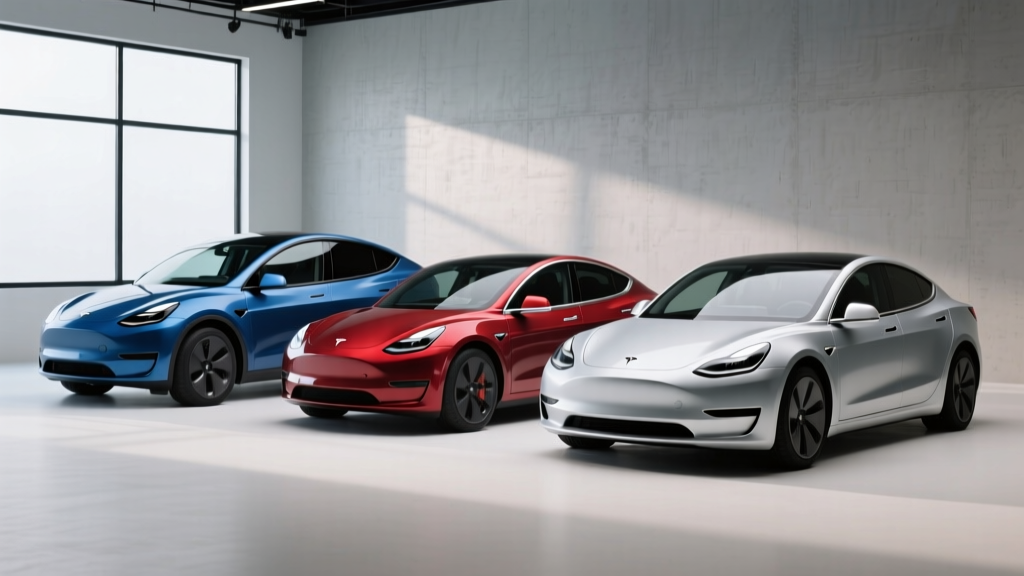
Tesla Dual Motor Lineup: Side-by-Side Specs
Before diving into each model individually, here's a consolidated spec table covering every current Tesla dual motor (and tri-motor Plaid) variant. All figures reflect 2025-2026 model-year data from Tesla and fueleconomy.gov.
| Spec | Model 3 Long Range AWD | Model Y Long Range AWD | Model S (Dual Motor) | Model S Plaid (Tri-Motor) |
|---|---|---|---|---|
| EPA Range | 363 mi | 320 mi | 402 mi | 359 mi |
| Real-World Range (highway/cold) | ~290-310 mi / ~250-270 mi | ~260-280 mi / ~220-240 mi | ~330-350 mi / ~280-300 mi | ~290-310 mi / ~250-270 mi |
| Battery Capacity (usable) | ~75 kWh (NMC) | ~75 kWh (NMC) | ~95 kWh (NMC) | ~95 kWh (NMC) |
| 0-60 mph | 4.2 sec | 4.8 sec | 3.1 sec | 1.99 sec |
| Horsepower | ~384 hp | ~384 hp | ~670 hp | ~1,020 hp |
| Drivetrain | Dual Motor AWD | Dual Motor AWD | Dual Motor AWD | Tri-Motor AWD |
| Max DC Fast Charge | 250 kW (V3 Supercharger) | 250 kW (V3 Supercharger) | 250 kW (V3 Supercharger) | 250 kW (V3 Supercharger) |
| 10-80% DC Charge Time | ~27 min | ~27 min | ~30 min | ~30 min |
| Level 2 Home Charge | 11.5 kW (~44 mi/hr) | 11.5 kW (~44 mi/hr) | 11.5 kW (~44 mi/hr) | 11.5 kW (~44 mi/hr) |
| MPGe (combined) | 131 MPGe | 122 MPGe | 120 MPGe | 116 MPGe |
| kWh/100 mi | 26 | 28 | 28 | 29 |
| Cargo Volume | 23 cu ft (rear) + frunk | 76 cu ft (rear folded) + frunk | 28 cu ft (rear) + frunk | 28 cu ft (rear) + frunk |
| Battery Warranty | 8 yr / 120,000 mi | 8 yr / 120,000 mi | 8 yr / 150,000 mi | 8 yr / 150,000 mi |
| Base MSRP (2025) | $47,740 | $48,240 | $79,990 | $94,990 |
Model 3 Long Range AWD: The Sweet-Spot Dual Motor
The refreshed Model 3 Long Range AWD (internally called the "Highland" refresh) delivers the best efficiency-to-performance ratio in Tesla's lineup. Its 4.2-second 0-60 time beats most sports sedans under $80,000, and its 363-mile EPA range is the longest of any dual motor Tesla currently sold.
The ~75 kWh NMC (nickel manganese cobalt) battery pack provides excellent energy density, though it requires more careful state-of-charge management than LFP chemistry — Tesla recommends daily charging to 80% for longevity, with 100% reserved for road trips.
Charging Performance
At a V3 Supercharger (250 kW peak), the Model 3 Long Range AWD sustains peak charge rate only briefly before tapering. Expect a realistic 10-80% session in approximately 27 minutes. Above 80%, the charge curve slows significantly to protect the battery — plan on an additional 15-20 minutes if you need a full charge. At home on a Level 2 Wall Connector (11.5 kW / 48-amp circuit), you'll add roughly 44 miles of range per hour, meaning a full overnight charge from 20% to 80% takes about 4 hours.
Tax Credit & Pricing
At $47,740 MSRP, the Model 3 Long Range AWD sits under the IRS §30D sedan MSRP cap of $55,000. If you meet the adjusted gross income limits ($150,000 single / $300,000 joint) and the vehicle's battery sourcing meets critical-mineral and component requirements for the current tax year, you may qualify for up to $7,500 in federal tax credit — potentially transferred at the point of sale to reduce your purchase price directly. Always verify current eligibility on IRS.gov before purchasing, as sourcing rules tighten periodically.
Model Y Long Range AWD: The Family Dual Motor Workhorse
The Model Y Long Range AWD is the best-selling EV in the U.S. for good reason: 76 cubic feet of cargo space with rear seats folded, available third-row seating, and a dual motor powertrain that delivers a 4.8-second 0-60 time despite its crossover proportions.
Its ~75 kWh NMC pack and slightly taller, heavier body result in 320 miles of EPA range and 122 MPGe combined. The real-world highway range sits closer to 260-280 miles at 70-75 mph — adequate for most trips but requiring one charging stop on routes over 300 miles.
Charging & Efficiency
Charging specs mirror the Model 3: 250 kW peak on V3 Superchargers, 10-80% in roughly 27 minutes, and 11.5 kW Level 2 capability at home. Efficiency at 28 kWh/100 miles means home electricity costs are approximately $0.04-$0.06 per mile depending on your local rate (national average ~$0.17/kWh), compared to $0.12-$0.16/mile for a 25 MPG gas crossover.
Tax Credit Eligibility
At $48,240, the Model Y Long Range AWD falls under the §30D SUV/truck MSRP cap of $80,000 (the Model Y is classified as an SUV by the IRS). The same income limits and battery-sourcing requirements apply. Point-of-sale transfer is available at participating dealers, effectively reducing the out-of-pocket price to approximately $40,740 if you qualify for the full $7,500.
Model S & Model S Plaid: Premium Dual and Tri-Motor Performance
The Model S remains Tesla's flagship sedan, offering 402 miles of EPA range in the standard dual motor configuration — the longest of any production Tesla. The dual motor Model S hits 0-60 in 3.1 seconds with approximately 670 hp, while the tri-motor Plaid variant achieves a staggering 1.99-second 0-60 with 1,020 hp, making it one of the quickest production cars ever built.
Both use a larger ~95 kWh NMC pack. The Model S battery warranty extends to 8 years/150,000 miles (vs. 120,000 for Model 3/Y), reflecting its premium positioning.
Charging Curve Reality
Despite the larger battery, peak DC charging is capped at 250 kW on current V3 Superchargers. The 10-80% session takes approximately 30 minutes — slightly longer than Model 3/Y due to the bigger pack. Tesla's anticipated V4 Superchargers (expected to support higher peak rates) could improve this for future hardware revisions, but current owners are limited to 250 kW.
Pricing & Tax Credit Reality
At $79,990 (dual motor) and $94,990 (Plaid), neither Model S variant qualifies for the federal §30D tax credit. The sedan MSRP cap is $55,000, and even though the Model S is technically classified as a sedan, its price far exceeds the threshold. Buyers at this price point are paying for range, luxury, and performance — not incentive optimization.
Charging Infrastructure & Home Setup Costs
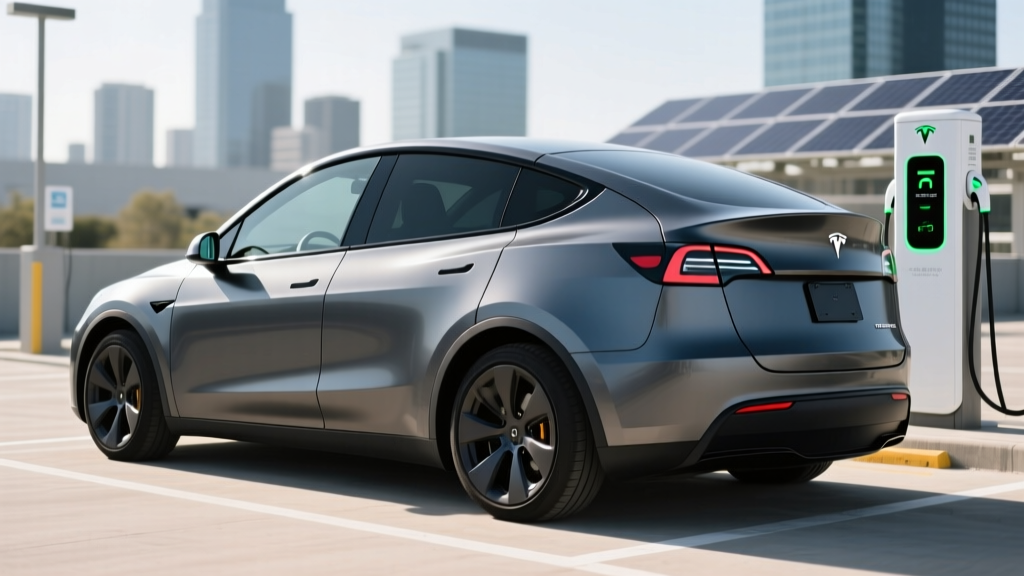
Owning any Tesla dual motor means engaging with the Supercharger network — currently the most reliable DC fast-charging ecosystem in the U.S. with over 6,000 stations and 30,000+ stalls nationwide. Tesla's NACS (North American Charging Standard) connector is now the industry standard, with Ford, GM, Rivian, and others adopting it through 2025-2026.
| Charging Level | Power (kW) | Miles Added Per Hour | Typical Use Case |
|---|---|---|---|
| Level 1 (120V household) | ~1.4 kW | ~3-5 mi/hr | Emergency/overnight trickle |
| Level 2 (240V Wall Connector) | 11.5 kW | ~44 mi/hr | Daily home charging |
| DC Fast (V3 Supercharger) | Up to 250 kW | ~1,000 mi/hr (peak) | Road trip charging |
Home Level 2 installation with a Tesla Wall Connector typically costs $800-$2,500 total (unit + electrician + permit), assuming your electrical panel has spare capacity. A 200-amp panel upgrade can add $1,500-$3,000. Always get a licensed electrician's assessment before committing.
Autopilot, FSD, and Safety: What You Actually Get
Every Tesla dual motor comes standard with Basic Autopilot (traffic-aware cruise control and autosteer). Full Self-Driving (Supervised) remains an $8,000 option or $99/month subscription. Despite the "FSD" branding, this is an SAE Level 2 driver-assistance system — you must remain engaged, hands on or near the wheel, and eyes on the road at all times.
Safety ratings are strong: the Model 3 and Model Y both earned IIHS Top Safety Pick+ awards (when equipped with acceptable headlights) and 5-star NHTSA overall ratings. The Model S also holds a 5-star NHTSA rating.
Who Should Buy a Tesla Dual Motor — And Who Shouldn't
Choose Model Y Long Range AWD if: You need family-hauler versatility, value the available third row, and take road trips with gear. Ideal for: families of 4-5, weekend warriors, and buyers who want crossover practicality with sports-sedan acceleration.
Choose Model S (Dual Motor) if: Budget is flexible, you want 400+ miles of range with premium comfort, and you prioritize sedan refinement over SUV utility. Ideal for: executive commuters, long-distance drivers who want minimal charging stops, and performance enthusiasts who don't need Plaid-level power.
Choose Model S Plaid if: You want the ultimate expression of Tesla's performance engineering and the $95K+ price doesn't deter you. Ideal for: track-capable sedan buyers who also want daily usability.
Look elsewhere if: You need a truck bed (consider Rivian R1T or Ford F-150 Lightning), prefer traditional dealer service networks, want LFP battery chemistry for daily 100% charging (base Model 3 RWD offers this), or require third-party repair accessibility.
Pros
- Best-in-class Supercharger network reliability
- Dual motor 0-60 times outperform most ICE competitors
- Over-the-air updates continuously add features
- Class-leading efficiency (kWh/100mi)
- Model 3/Y qualify for up to $7,500 federal tax credit
- Strong resale value relative to EV segment average
Cons
- Service center wait times can stretch weeks in some regions
- No Apple CarPlay or Android Auto integration
- FSD (Supervised) costs $8K and remains Level 2 only
- NMC battery recommends 80% daily charge limit (not 100%)
- Insurance premiums run 15-25% higher than comparable ICE vehicles
- Model S pricing excludes it from federal tax credit eligibility
Frequently Asked Questions
What is the fastest Tesla dual motor 0-60 time?
Among dual motor configurations, the Model S dual motor achieves a 3.1-second 0-60 mph time. The Model S Plaid (tri-motor) reaches 1.99 seconds but uses three motors, not two. The quickest strictly dual motor Tesla is the Model S at 3.1 seconds, followed by the Model 3 Long Range AWD at 4.2 seconds.
Does the Tesla dual motor AWD system improve range?
Dual motor AWD generally reduces range compared to single-motor RWD variants due to added weight and drivetrain losses. For example, the Model 3 RWD achieves an EPA-estimated 363 miles (with LFP in some markets), while the Long Range AWD achieves 363 miles but uses a larger NMC pack. The AWD system's primary benefits are traction in inclement weather and improved acceleration, not range extension.
How much does it cost to charge a Tesla dual motor at home?
Charging a Model Y Long Range AWD (~75 kWh usable) from 20% to 80% requires about 45 kWh. At the U.S. average residential rate of $0.17/kWh, that's roughly $7.65 per session, or about $0.04-$0.05 per mile. Compare this to $0.12-$0.16/mile for a 25 MPG gas crossover at $3.50/gallon.
Does the Model Y dual motor qualify for the $7,500 federal tax credit?
The Model Y Long Range AWD at $48,240 MSRP falls under the §30D SUV cap of $80,000. Eligibility depends on your income (≤$300K joint / ≤$150K single), and the vehicle must meet battery component and critical mineral sourcing requirements for the current tax year. Verify on IRS.gov before purchasing. The point-of-sale transfer option can apply the credit directly to your purchase price.
Is a Tesla dual motor worth it over single motor RWD?
If you live in a region with snow, ice, or frequent rain, the dual motor AWD system provides meaningfully better traction and stability. The acceleration improvement (4.2s vs. 5.8s 0-60 in the Model 3) is noticeable in highway merging scenarios. If you live in a dry, warm climate and prioritize cost savings, the single-motor RWD variant saves $3,000-$5,000 and may offer slightly more range.
What is the battery replacement cost for a Tesla dual motor?
Out-of-warranty battery replacement for Model 3/Y runs approximately $12,000-$16,000; Model S is $18,000-$22,000. However, Tesla's battery warranty covers defects and degradation below 70% capacity for 8 years / 120,000 miles (Model 3/Y) or 8 years / 150,000 miles (Model S). Real-world degradation data from fleet studies shows most Tesla NMC packs retain 85-90% capacity after 100,000 miles, making out-of-warranty replacement uncommon within the first decade.