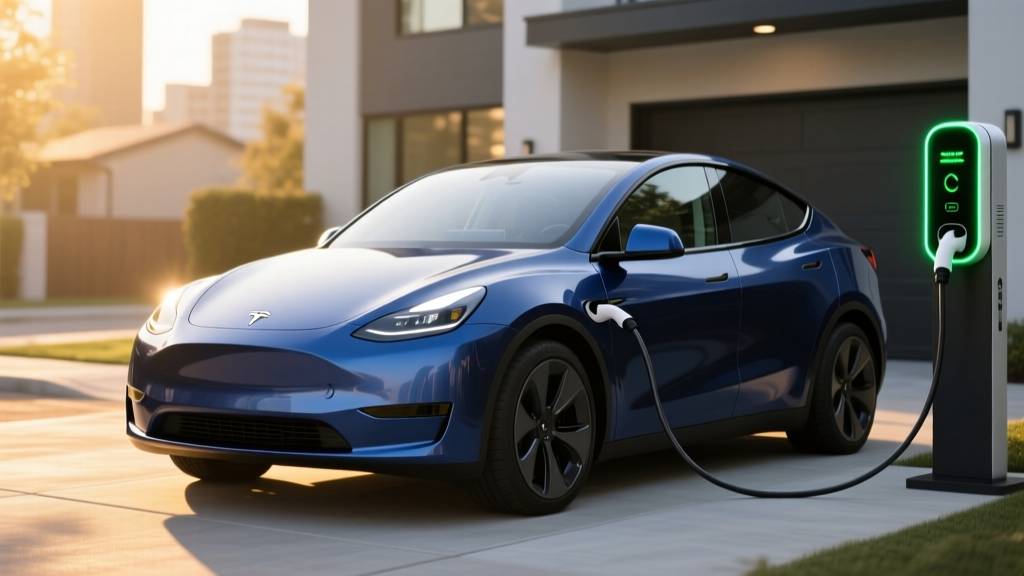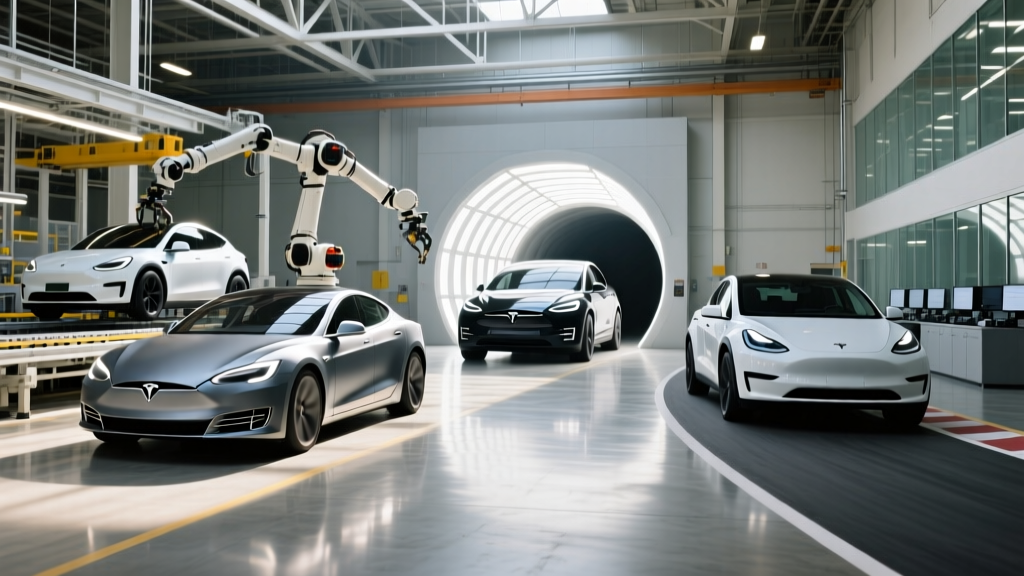
If you live near the Bay Area or follow EV manufacturing, the phrase Tesla in Fremont, California is more than a headline—it's the 5.3-million-square-foot plant where every U.S.-market Model S, Model 3, Model X, and Model Y is still assembled. For buyers, that matters: Fremont-built Teslas carry specific VIN patterns, qualify (or don't) for the §30D federal credit based on battery sourcing, and ship with the latest Highland/Juniper-refresh hardware depending on the model year.
This profile walks through the four vehicles rolling off the Fremont line in 2026, with exact EPA range, battery chemistry, DC fast-charge curves, pricing, and tax-credit eligibility—so you can decide which one actually fits your commute, garage, and budget.
Why Fremont Still Matters in 2026
Despite Gigafactory Texas handling a large share of Model Y output and Giga Berlin serving Europe, Fremont remains Tesla's most diversified facility. It is the only plant that builds all four consumer vehicles, and it's where the company introduced the Highland Model 3 refresh and subsequent Juniper Model Y updates before they propagated elsewhere. For West Coast buyers, Fremont proximity also means shorter delivery logistics, easier factory pickup, and strong regional Supercharger density—over 120 stalls within a 30-mile radius of the plant itself.
2026 Tesla Lineup Spec Table: Model S, 3, X, and Y
| Model | Trim | EPA Range | Battery (kWh, chem.) | 0-60 mph | HP | Drivetrain | Base MSRP |
|---|---|---|---|---|---|---|---|
| Model 3 | RWD | 363 mi | ~60 kWh, LFP | 5.8 s | 283 | RWD | $38,990 |
| Model 3 | Long Range AWD | 363 mi | ~79 kWh, NMC | 4.2 s | 346 | Dual-motor AWD | $45,240 |
| Model 3 | Performance | 315 mi | ~79 kWh, NMC | 2.9 s | 510 | Dual-motor AWD | $52,990 |
| Model Y | Long Range AWD | 320 mi | ~78 kWh, NMC | 4.8 s | 384 | Dual-motor AWD | $44,990 |
| Model Y | Performance | 285 mi | ~78 kWh, NMC | 3.5 s | 480 | Dual-motor AWD | $51,490 |
| Model S | Long Range | 402 mi | ~100 kWh, NMC | 3.1 s | 670 | Dual-motor AWD | $79,990 |
| Model S | Plaid | 359 mi | ~100 kWh, NMC | 1.99 s | 1,020 | Tri-motor AWD | $89,990 |
| Model X | Long Range | 335 mi | ~100 kWh, NMC | 3.8 s | 670 | Dual-motor AWD | $79,990 |
| Model X | Plaid | 311 mi | ~100 kWh, NMC | 2.5 s | 1,020 | Tri-motor AWD | $94,990 |
Sources: fueleconomy.gov, Tesla spec sheets. Figures reflect 2026 model-year EPA data and may vary slightly by wheel option.
Real-World Range: What the Sticker Doesn't Say
EPA 363 mi (Model 3 LR) → Expect ~300-320 mi on mixed highway driving at 70-75 mph. In freezing temperatures (below 32°F), plan for 20-30% loss, dropping effective range to ~220-260 mi unless you precondition the battery while plugged in.
Tesla's thermal management is among the best in the industry—heat pumps are standard across the 2026 lineup—but physics still governs cold-weather losses. The LFP chemistry in the Model 3 RWD is more resistant to calendar degradation, but it also has a slightly flatter discharge curve, meaning the car may report range less granularly below 10% SoC. For NMC packs (Long Range, Performance, S, X), sustained highway driving at 80 mph can shave 12-18% off the EPA number even in mild weather due to aero drag.
Charging Speed: DC Fast, Level 2, and the Taper Reality
| Model | Max DC kW | 10-80% Time | Level 2 (kW / mi-hr) | Connector |
|---|---|---|---|---|
| Model 3 RWD | 170 kW | ~25 min | 11.5 kW / ~44 mi/hr | NACS |
| Model 3 LR / Perf | 250 kW | ~18 min | 11.5 kW / ~44 mi/hr | NACS |
| Model Y LR / Perf | 250 kW | ~20 min | 11.5 kW / ~40 mi/hr | NACS |
| Model S / X LR | 250 kW | ~25 min | 11.5 kW / ~36 mi/hr | NACS |
| Model S / X Plaid | 250 kW | ~22 min | 11.5 kW / ~36 mi/hr | NACS |
The peak kW number is just that—a peak. On a V3 Supercharger (250 kW), the Model 3 Long Range sustains ~200-230 kW from roughly 10-45% SoC, then tapers to ~100 kW by 70%, and ~40 kW above 85%. That taper is why a 10-80% session is ~18 minutes, but 10-100% can take 40+ minutes. For home Level 2 on a 48A circuit (60A breaker), expect the full 11.5 kW; on a 32A circuit, you'll see ~7.7 kW and roughly 30 mi/hr of added range.
Pricing and the §30D Federal Tax Credit
| Model / Trim | MSRP | §30D Eligible? | Effective Price (est.) |
|---|---|---|---|
| Model 3 RWD | $38,990 | Partial ($3,750)* | ~$35,240 |
| Model 3 Long Range AWD | $45,240 | Partial ($3,750)* | ~$41,490 |
| Model 3 Performance | $52,990 | Partial ($3,750)* | ~$49,240 |
| Model Y Long Range AWD | $44,990 | Partial ($3,750)* | ~$41,240 |
| Model Y Performance | $51,490 | Partial ($3,750)* | ~$47,740 |
| Model S / X (all trims) | $79,990+ | No (MSRP cap) | MSRP |
*As of 2026, most Fremont-built Model 3/Y trims qualify for the $3,750 critical-minerals half of the §30D credit; the $3,750 battery-component half depends on sourcing rules that tighten annually. Model S and X exceed the $55,000 sedan / $80,000 SUV MSRP cap and are ineligible. Buyer AGI limits apply ($150k single / $300k joint). Verify at IRS.gov §30D and consider point-of-sale transfer at delivery.
Efficiency: MPGe and kWh/100mi
Tesla's drivetrain efficiency remains a benchmark. The Model 3 RWD achieves roughly 132 MPGe combined (~25 kWh/100mi), while the Model Y Long Range lands around 120 MPGe (~28 kWh/100mi). The heavier Model S Long Range sits near 120 MPGe combined, and the Plaid variants drop to ~100-110 MPGe due to the tri-motor setup and higher performance tuning. For context, a gas sedan at 30 MPG costs roughly $0.13/mi at $3.90/gal; the Model 3 RWD at $0.13/kWh (national average) costs ~$0.03/mi—a four-to-five-fold reduction in energy cost per mile.
Cargo, Passenger Space, and Practicality
The Model 3 offers 23 cu ft of trunk space plus a small frunk, adequate for two carry-ons and groceries but tight for a family road trip. The Model Y is the cargo champion of the Fremont lineup: 76 cu ft with rear seats folded, 30 cu ft behind the second row, and an optional third row (best suited for children under 5'4"). Model S provides 28 cu ft of rear cargo plus a generous frunk, while Model X delivers up to 92 cu ft with both rear rows folded—though the falcon-wing doors require vertical clearance and can be finicky in tight garages.
Legroom is generous across the board: 42.7" front / 37.8" rear in the Model 3, and slightly more in the S/X. The Model Y's elevated seating position appeals to crossover buyers transitioning from ICE SUVs.
Warranty and Long-Term Battery Health
All 2026 Teslas carry an 8-year/100,000-mile battery and drive-unit warranty (120,000 miles for Model S/X Long Range and Plaid). The warranty guarantees at least 70% capacity retention over the term. Real-world data from high-mileage fleets suggests NMC packs in the Long Range trims retain ~85-90% capacity at 100,000 miles when charged primarily to 80% and DC-fast-charged moderately. LFP packs (Model 3 RWD) tolerate regular 100% charges and show minimal calendar degradation, making them ideal for daily commuters who charge at home nightly.
Tech, Driver Assistance, and the SAE Level 2 Caveat
Autopilot and FSD (Supervised) are SAE Level 2 systems. You must keep your hands on the wheel and eyes on the road at all times. Tesla is not a self-driving car in the legal or technical sense. Only Level 4 services like Waymo operate without a human driver in defined geofenced areas.
Standard Autopilot includes traffic-aware cruise and lane-keeping. FSD (Supervised) adds city-street navigation, stop-sign/light recognition, and lane-change suggestions, but driver supervision is non-negotiable. The 2026 infotainment stack uses a Ryzen-based MCU with a 15.4" center display (Model 3/Y) or 17" (Model S/X), wireless Apple CarPlay/Android Auto (finally added in late 2024), and over-the-air updates that continue to refine regen profiles and thermal preconditioning logic.
Pros and Cons at a Glance
Pros
- Class-leading efficiency (kWh/100mi) across all trims
- Supercharger network: 60,000+ global stalls, highest uptime of any DC network
- LFP option on Model 3 RWD for worry-free 100% daily charging
- OTA updates continuously add features post-purchase
- Strong resale value relative to EV market average
Cons
- No Apple CarPlay/Android Auto native integration (wireless mirroring only on newer builds)
- Model S/X pricing pushes past §30D MSRP caps—no federal credit
- Build-quality variance still reported at higher rates than legacy OEMs
- Insurance premiums 20-40% above segment average (IIHS data)
- FSD (Supervised) remains Level 2 despite the name
Who Should Buy a Fremont-Built Tesla?
Model 3 RWD: Solo commuters, apartment dwellers with workplace charging, and budget-conscious buyers who want the lowest cost-per-mile in the lineup. LFP chemistry rewards daily 100% charging habits.
Model 3 Long Range / Model Y Long Range: Families and road-trippers who need 300+ real-world highway miles and dual-motor AWD for snow or mountain passes. The Model Y's cargo volume makes it the default for parents with strollers and gear.
Model S / X: Buyers who want executive-sedan space (S) or three-row SUV practicality (X) with tri-motor Plaid performance as an option. Just know you're paying full MSRP—no federal credit—and insurance will reflect the repair-cost reality of aluminum-intensive bodies.
Frequently Asked Questions
What is the real-world range of the 2026 Model 3 Long Range?
EPA-rated at 363 miles, but expect 300-320 miles on highway-heavy trips at 70-75 mph, and as low as 220-260 miles in sub-freezing weather without preconditioning.
How fast does a Fremont-built Tesla charge at home?
On a 48A Level 2 circuit, all 2026 models accept 11.5 kW, adding roughly 36-44 miles of range per hour depending on the model's efficiency. A full overnight charge (8 hours) replenishes ~280-350 miles.
Does the 2026 Model Y qualify for the $7,500 federal tax credit?
Most trims qualify for $3,750 (the critical-minerals half) as of 2026. The battery-component half depends on sourcing rules that tighten each year. Verify current eligibility at IRS.gov before purchase.
Is Tesla's FSD actually self-driving?
No. FSD (Supervised) is an SAE Level 2 driver-assist system. You must remain fully engaged. Only Level 4 robotaxi services like Waymo operate without a human driver.
Model Y vs. Model 3: which is worth buying?
Choose the Model Y if you need cargo space, optional third-row seating, or a higher ride height. Choose the Model 3 if you prioritize efficiency, lower MSRP, and a sportier driving feel. Both share the same powertrain options and Supercharger access.
Are Fremont-built Teslas different from Texas-built ones?
Mechanically identical for the same model year. Fremont builds all four models; Giga Texas focuses on Model Y and Cybertruck. Some buyers prefer Fremont VINs for perceived build-quality consistency, though Tesla has standardized processes across plants.