What Is Tesla Dog Mode and Why It Matters for EV Owners
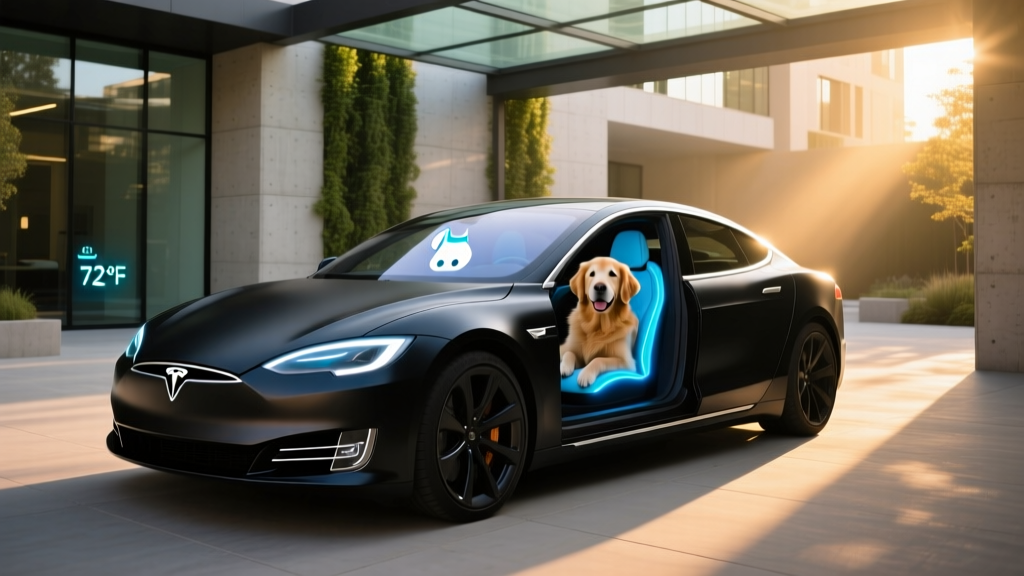
If you've ever searched "tesla dog" online, you've likely stumbled onto one of the most talked-about features in the EV world: Dog Mode. Introduced via an over-the-air software update and refined across subsequent releases, Dog Mode is a climate-control setting that keeps your Tesla's cabin at a safe, preset temperature while you step away from the vehicle — and displays a prominent message on the center touchscreen so passersby know your pet is comfortable and the car is intentionally left running.
For EV owners who travel with pets, this feature eliminates the single biggest anxiety of leaving an animal in a parked car. Unlike a gas car idling (which wastes fuel, emits exhaust, and can still overheat), a Tesla in Dog Mode draws power from its high-voltage traction battery to run the HVAC compressor — no engine, no fumes, no moving parts. In 2026, every new Tesla sold in the U.S. includes Dog Mode as standard software functionality.
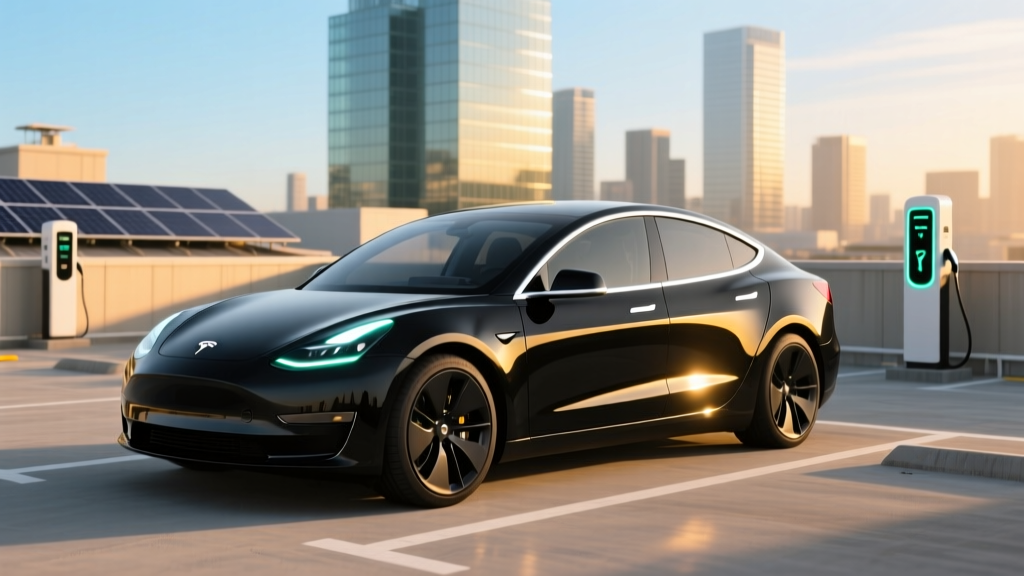
But Dog Mode doesn't exist in a vacuum. It's one feature among hundreds in vehicles that buyers evaluate on range, charging speed, price, and daily usability. Below, we break down the 2026 Tesla lineup through the lens of a pet owner — examining which models best support life with a dog, complete with hard specs on range, charging, cargo space, and tax-credit eligibility.
2026 Tesla Lineup: Dog Mode Across Every Model
Dog Mode operates identically across the Tesla fleet: activate it via the climate menu on the touchscreen or the Tesla mobile app, set your target temperature, and walk away. The system monitors cabin temperature continuously, adjusts HVAC output as needed, and displays the current cabin temperature on the exterior screen along with a message reading, "My owner will be back soon. Don't worry!" (You can customize this message.)
What differs between models is the context around Dog Mode — battery capacity, range available to run it, cargo space for a crate or large breed, and ride height for easy pet entry. Here's how the 2026 lineup stacks up:
| Spec | Model 3 Long Range AWD | Model Y Long Range AWD | Model X Long Range | Model S Long Range |
|---|---|---|---|---|
| EPA Range | 363 mi | 320 mi | 335 mi | 402 mi |
| Battery (usable) | ~75 kWh (NMC) | ~75 kWh (NMC) | ~100 kWh (NMC) | ~100 kWh (NMC) |
| Max DC Fast Charge | 250 kW | 250 kW | 250 kW | 250 kW |
| 10–80% DCFC Time | ~28 min | ~28 min | ~32 min | ~32 min |
| Level 2 Home Charge | 11.5 kW (~44 mi/hr) | 11.5 kW (~44 mi/hr) | 11.5 kW (~34 mi/hr) | 11.5 kW (~37 mi/hr) |
| 0–60 mph | 4.2 sec | 4.8 sec | 3.8 sec | 3.1 sec |
| Horsepower | 346 hp | 384 hp | 670 hp | 670 hp |
| Drivetrain | Dual-Motor AWD | Dual-Motor AWD | Dual-Motor AWD | Dual-Motor AWD |
| MPGe (combined) | 134 MPGe | 122 MPGe | 102 MPGe | 124 MPGe |
| Cargo (rear seats up) | 23 cu ft | 34 cu ft | 42 cu ft | 28 cu ft |
| Cargo (rear seats folded) | — | 76 cu ft | 88 cu ft | — |
| Rear Legroom | 35.2 in | 37.0 in | 38.4 in | 35.4 in |
| Battery/Powertrain Warranty | 8 yr / 120,000 mi | 8 yr / 120,000 mi | 8 yr / 150,000 mi | 8 yr / 150,000 mi |
| Base MSRP (2026) | $47,740 | $48,990 | $79,990 | $74,990 |
Sources: fueleconomy.gov (EPA), Tesla.com 2026 specifications. Pricing reflects base MSRP before destination fees and options. Verify current pricing at Tesla.com.
Real-World Range: What the EPA Numbers Don't Tell You
Real-World Range Reality Check: EPA range figures are measured under controlled lab conditions. In actual driving, expect the following adjustments:
- Highway driving (70+ mph): Subtract 10–15% from EPA. A Model 3 LR rated at 363 mi EPA will deliver roughly 310–325 mi at sustained highway speeds.
- Cold weather (below 32°F): Subtract 20–30% due to battery chemistry slowdown and cabin heating demand. That same Model 3 may return 250–290 mi in winter conditions.
- Dog Mode impact: Running Dog Mode draws approximately 1–3 kW depending on ambient temperature. In 90°F heat, expect roughly 2–3 kWh consumed per hour. In a Model Y with a 75 kWh battery, that's 25+ hours of continuous Dog Mode operation — more than enough for any reasonable errand.
The key insight for pet owners: battery size determines Dog Mode runtime. The Model S and Model X, with their ~100 kWh batteries, can sustain climate control for significantly longer than the Model 3 or Model Y. If you frequently leave your dog in the car during multi-hour events (outdoor markets, long hikes where the dog waits at the trailhead), the larger-battery models provide a meaningful buffer.
That said, even the Model 3's 75 kWh battery offers over a full day of Dog Mode runtime in moderate climates. The practical limit is rarely the battery — it's your comfort level leaving a pet unattended, which Tesla's app mitigates by letting you monitor cabin temperature remotely.
Charging Speed: Getting Back on the Road with Your Pet
| Charging Level | Power (kW) | Approx. Miles Added per Hour | Typical Use Case |
|---|---|---|---|
| Level 1 (120V outlet) | ~1.4 kW | ~4–5 mi/hr | Emergency / overnight trickle |
| Level 2 (240V, 48A) | 11.5 kW | 34–44 mi/hr | Home daily charging |
| DC Fast (Supercharger V3) | Up to 250 kW | ~1,000+ mi/hr (peak) | Road trips, quick top-ups |
All 2026 Teslas use the NACS (North American Charging Standard) connector natively — the same connector Tesla has used since its inception and the one now adopted industry-wide by Ford, GM, Rivian, Hyundai, and others. This means Teslas access the full Supercharger network (20,000+ stalls in North America) without adapters.
Charging curve reality: The 250 kW peak rate applies only to the Model 3 and Model Y at lower states of charge (roughly 10–30% SoC). Above 50%, the rate tapers significantly. A realistic 10–80% session at a V3 Supercharger takes 28–32 minutes depending on model and battery temperature. Preconditioning — warming the battery via navigation to a Supercharger — is essential for achieving peak charge rates. Without it, expect slower speeds, especially in cold weather.
Dog Mode + Charging: You can leave Dog Mode active while the car is plugged in at a Supercharger. The vehicle will draw power from the charger to run HVAC and simultaneously charge the battery. This is ideal for road-trip rest stops where your dog stays in the cabin while you grab food or use facilities.
How Much Does It Cost? Pricing and Federal Tax Credit Eligibility
| Model | Base MSRP | Under §30D MSRP Cap? | Est. Price After Max Credit |
|---|---|---|---|
| Model 3 Long Range AWD | $47,740 | ✅ Yes (sedan cap: $55,000) | ~$40,240* |
| Model Y Long Range AWD | $48,990 | ✅ Yes (SUV cap: $80,000) | ~$41,490* |
| Model S Long Range | $74,990 | ✅ Yes (sedan cap: $55,000 — EXCEEDS) | $74,990 (no credit) |
| Model X Long Range | $79,990 | ✅ Yes (SUV cap: $80,000) | ~$72,490* |
*Assumes full $7,500 §30D credit eligibility. Actual credit depends on battery-sourcing requirements, buyer income limits, and point-of-sale transfer rules. See IRS §30D guidelines for current-year requirements. Consult a tax professional.
§30D Federal Tax Credit Requirements (2026):
- MSRP Cap: Sedans/wagons ≤ $55,000; SUVs/pickups/vans ≤ $80,000
- Buyer Income Cap (MAGI): $150,000 single / $225,000 head of household / $300,000 joint
- Battery Sourcing: Critical minerals and battery components must meet escalating domestic-content thresholds (phased in annually through 2032)
- Point-of-Sale Transfer: Eligible buyers can apply the credit at purchase, reducing the upfront price rather than waiting for a tax refund
- Assembly: Vehicle must undergo final assembly in North America
Key takeaway for pet-owning buyers: The Model 3 and Model Y are the clear value plays — both qualify for the full credit (subject to sourcing and income rules), bringing their effective prices into the low $40,000s. The Model S exceeds the sedan MSRP cap and receives no federal credit. The Model X squeaks under the SUV cap and may qualify, but at nearly $80K even with the credit, it's a premium purchase.
Cargo Space and Pet Practicality: Which Tesla Fits Your Dog?
Dog Mode keeps your pet safe, but the physical space determines whether your dog travels comfortably. Here's a practical breakdown by model:
Model 3: The sedan's 23 cu ft trunk is adequate for a small-to-medium dog in a soft-sided carrier. The trunk opening is relatively narrow, making it awkward for large breeds to load. Best for: cats, small dogs, or a single medium dog with a harness and seat-belt tether on the rear seat. Rear legroom of 35.2 inches is tight for large crates.
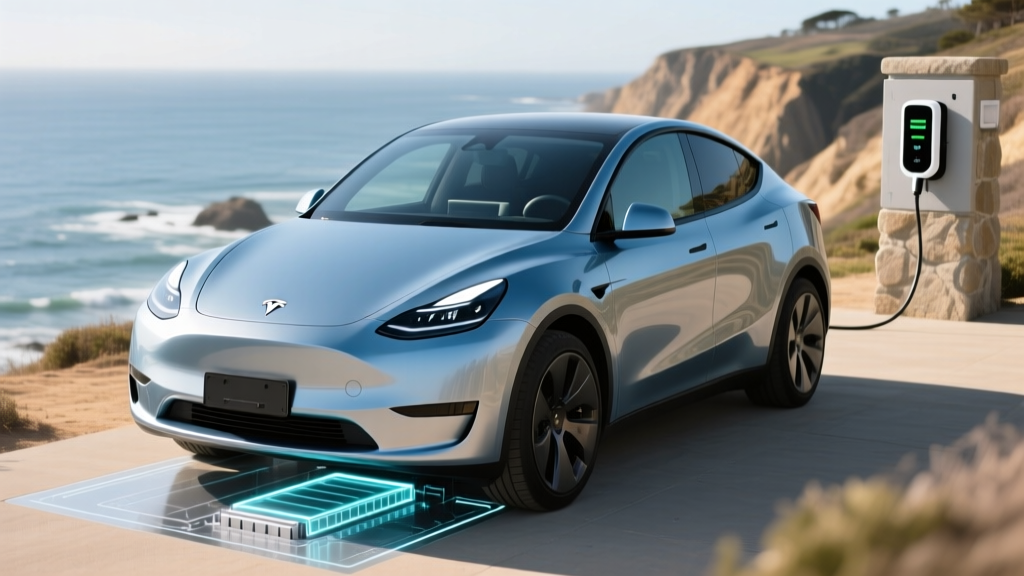
Model Y: This is where Tesla's lineup becomes genuinely pet-friendly. The 34 cu ft cargo area behind the second row (76 cu ft with seats folded) accommodates large wire crates, and the hatchback opening is wide and tall enough for a Labrador to jump in unassisted. The optional third row (reducing cargo to ~12 cu ft) is not pet-practical. For most dog owners, the Model Y in five-seat configuration is the sweet spot of range, price, and cargo space.
Model X: The falcon-wing rear doors are a party trick, but their real pet-owner benefit is the enormous vertical opening they create — a Great Dane can step in at full standing height. With 42 cu ft behind the second row and 88 cu ft folded, the Model X offers minivan-like space. The air suspension can lower the vehicle for easy loading. The trade-off: a starting price near $80K and the highest energy consumption in the lineup (102 MPGe).
Model S: The liftback design provides a generous 28 cu ft trunk with a wide opening, but the low roofline means large dogs must crouch to enter. It's more suited to medium breeds than the Model X or Model Y.
Standout Tech for Pet Owners (and Drawbacks to Know)
Pros for Pet Owners
- Dog Mode with app monitoring: Check cabin temperature and send climate adjustments from your phone anywhere with cell service
- No idle emissions: Unlike gas cars, running HVAC draws only from the battery — zero tailpipe risk in enclosed garages
- Supercharger network access: 20,000+ NACS stalls nationwide; Dog Mode runs while charging
- Over-the-air updates: Tesla regularly adds pet-adjacent features (e.g., improved cabin overheat protection, customizable Dog Mode messages)
- Regenerative braking: One-pedal driving reduces sudden stops that unsettle anxious dogs
- HEPA air filtration (Model S/X): "Bioweapon Defense Mode" provides hospital-grade cabin air — beneficial for pets with respiratory sensitivities
Drawbacks to Consider
- No physical buttons for climate: All climate control runs through the touchscreen — if the screen glitches, you lose HVAC control until reboot
- Glass roof heat: The panoramic glass roofs on all Teslas increase solar heat gain; Dog Mode works harder in direct sun (tint or sunshade recommended)
- Model 3 trunk space: Not suitable for large-breed crates; sedan form factor limits pet practicality
- Supercharger stall design: Most stalls are not designed for you to leave a pet unattended — no shade, no water, and Good Samaritan laws vary by state
- Insurance costs: Tesla insurance premiums run 15–30% higher than comparable non-Tesla EVs, according to industry data
- Repair timelines: Tesla body-shop capacity remains limited in many regions; collision repairs can take weeks
Tesla's Driver Assistance: Autopilot, FSD, and What They Don't Do
SAE Automation Level: Level 2. Tesla's Autopilot and Full Self-Driving (Supervised) are driver-assistance systems, not autonomous driving. The driver must remain attentive, hands on or near the wheel, and ready to take over at any time. This is fundamentally different from Level 4 robotaxi services like Waymo, which operate without a human driver in geofenced areas.
For pet owners, the relevance of Autopilot and FSD (Supervised) is straightforward: these systems reduce driver fatigue on long road trips with your dog. Autopilot (standard on all 2026 Teslas) handles adaptive cruise control and lane centering on highways. FSD (Supervised), a $8,000 add-on or $99/month subscription in 2026, adds navigation-guided lane changes, traffic-light recognition, and city-street steering assistance.
Neither system is a substitute for attention. NHTSA has investigated multiple Tesla crashes involving Autopilot/FSD, and the systems require active supervision. For pet owners specifically: a dog moving around the cabin can trigger the cabin camera's attention-monitoring alerts, and a loose dog near the steering wheel is a safety hazard. Always secure your pet in a crate or with a certified harness.
Who Should Buy a Tesla for Life with a Dog?
Choose the Model Y Long Range if: You own a medium-to-large dog, need hatchback cargo access, want the best balance of range (320 mi EPA), price (~$41,500 after credit), and daily practicality. This is the default recommendation for most dog-owning EV buyers.
Choose the Model 3 Long Range if: You have a small dog or cat, prioritize driving dynamics and efficiency (134 MPGe, 363 mi EPA), and don't need large cargo space. The best value in the lineup at ~$40,200 after credit.
Choose the Model X if: You own giant breeds, need maximum cargo volume (88 cu ft), want air-suspension lowering for easy loading, and budget is not a primary constraint. The falcon-wing doors are genuinely useful for tall dogs.
Choose the Model S if: You want a luxury sedan with strong range (402 mi EPA) and a liftback trunk, your dog is medium-sized, and you accept that the $74,990 price excludes federal tax credit eligibility.
For road-trippers who regularly travel 200+ miles with their dog, any 2026 Tesla benefits from the Supercharger network — still the most reliable DC fast-charging infrastructure in North America, with consistent uptime and seamless plug-and-charge billing. For daily commuters, home Level 2 charging (11.5 kW on a 240V/48A circuit) replenishes a full battery overnight, meaning your dog starts every morning with a climate-controlled cabin.
Frequently Asked Questions
What is the real-world range of a Tesla when using Dog Mode?
Dog Mode consumes roughly 1–3 kW depending on ambient temperature. In a Model Y with a ~75 kWh battery, you could theoretically run Dog Mode for 25+ hours. The real-world range concern is about driving, not Dog Mode: expect 10–15% less than EPA range on the highway and 20–30% less in cold weather. A Model Y rated at 320 mi EPA will deliver approximately 270–290 mi on a 70°F highway trip.
How fast does a Tesla charge at home and on the road?
At home on a Level 2 (240V/48A) charger, all 2026 Teslas charge at up to 11.5 kW, adding 34–44 miles of range per hour. A full overnight charge (8–10 hours) restores a depleted battery. On the road at a Tesla V3 Supercharger, peak rate is 250 kW, with a 10–80% session taking approximately 28–32 minutes. Always navigate to a Supercharger using the car's built-in routing to enable battery preconditioning.
How much does a Tesla cost after the federal tax credit?
The 2026 Model 3 Long Range starts at $47,740 and may qualify for the full $7,500 §30D credit, bringing the effective price to approximately $40,240. The Model Y Long Range starts at $48,990, dropping to ~$41,490 with the credit. Eligibility depends on buyer income (MAGI ≤ $150K single / $300K joint), battery critical-mineral sourcing thresholds, and point-of-sale transfer rules. The Model S ($74,990) exceeds the sedan MSRP cap and does not qualify. Always verify current rules at IRS.gov.
Is a Tesla worth buying vs. competitors for dog owners?
Tesla's Dog Mode is well-executed, but competitors now offer similar features. Hyundai/Kia/Genesis vehicles offer a "pet mode" in their climate systems, and the Ford F-150 Lightning has a comparable cabin-monitoring feature. Tesla's advantages remain the Supercharger network (the most extensive and reliable in North America), over-the-air software updates, and strong resale value. Competitors may offer more physical buttons, traditional dealer service, and lower insurance costs. If charging infrastructure and software polish are priorities, Tesla leads. If cargo versatility and service accessibility matter more, consider the Hyundai Ioniq 5 or Kia EV9.
What are the biggest pros and cons of Tesla Dog Mode?
Pros: Reliable climate control with app-based monitoring, zero emissions while parked, no fuel waste, customizable on-screen message, and seamless integration with Tesla's Supercharger network (Dog Mode runs while charging). Cons: Glass roof increases solar heat gain, all climate controls are touchscreen-only (no physical backup), Supercharger stalls lack shade/water for pets, and state laws on leaving animals in parked vehicles vary — Dog Mode's screen message may not prevent well-meaning bystanders from breaking a window.
Does the Tesla qualify for the federal EV tax credit?
The 2026 Model 3 and Model Y qualify for up to $7,500 under IRS §30D, subject to buyer income caps, battery-sourcing requirements, and MSRP limits ($55K sedan / $80K SUV). The Model X ($79,990) may qualify under the SUV cap. The Model S ($74,990) exceeds the sedan cap and does not qualify. Credit can be transferred at point of sale, reducing your purchase price directly. Rules change annually — verify eligibility with your tax professional and at IRS.gov before purchasing.