The Real Answer to "Cuánto Cuesta el Tesla Model 3" in 2026
Search "cuánto cuesta el tesla" and you'll find a maze of outdated prices, expired incentives, and marketing fluff. The Tesla Model 3 remains the benchmark compact electric sedan, but its true cost of ownership depends heavily on which trim you choose, whether you qualify for federal incentives, and how you charge. This review dissects every 2026 Model 3 variant with the exact numbers buyers need — EPA range, battery chemistry, charging curves, and out-the-door pricing — so you can decide if it's the right EV for your budget.
The Long Range RWD Model 3 posts an EPA-estimated 363 miles. In mixed real-world driving at 70 mph highway speeds, expect 290–320 miles. In freezing temperatures (below 32°F), range can drop to 240–270 miles due to battery heating demands and cabin climate load. The Standard Range RWD achieves EPA 272 miles; plan for 220–245 miles in cold highway conditions.
2026 Tesla Model 3 Trim Pricing & Tax Credit Eligibility
Tesla restructured the Model 3 lineup for the 2025–2026 model years following the Highland refresh. Here's what each trim costs before and after potential federal incentives. Note: the IRS §30D clean vehicle credit has strict income caps ($150K single / $300K joint), MSRP caps ($55K for sedans), and battery-sourcing requirements that change annually. Eligibility is never guaranteed — always verify with a tax professional.
| Trim | Drivetrain | Base MSRP | Est. After §30D Credit* | EPA Range |
|---|---|---|---|---|
| Standard Range RWD | RWD | $38,990 | $31,490 | 272 mi |
| Long Range RWD | RWD | $42,490 | $34,990 | 363 mi |
| Long Range AWD | Dual Motor AWD | $47,490 | $39,990 | 341 mi |
| Performance AWD | Dual Motor AWD | $52,990 | $45,490 | 315 mi |
*Assumes full $7,500 §30D credit eligibility. Battery critical-mineral and component sourcing rules tighten yearly. Point-of-sale transfer available at participating dealers. Verify current-year rules at IRS.gov.
Battery, Range & Efficiency by the Numbers
The Model 3 uses two distinct battery chemistries depending on trim, and this matters for longevity, charging habits, and cold-weather performance.
| Spec | Standard Range RWD | Long Range RWD / AWD | Performance AWD |
|---|---|---|---|
| Battery Capacity (usable) | ~57.5 kWh | ~75 kWh | ~75 kWh |
| Chemistry | LFP (Lithium Iron Phosphate) | NMC (Nickel Manganese Cobalt) | NMC |
| EPA Range | 272 mi | 363 mi / 341 mi | 315 mi |
| MPGe (combined) | 132 MPGe | 134 MPGe | 121 MPGe |
| Efficiency (kWh/100 mi) | 25 kWh | 24 kWh | 28 kWh |
| Recommended Charge Habit | Charge to 100% regularly | 80% daily; 100% for trips | 80% daily; 100% for trips |
Why chemistry matters: LFP batteries (Standard Range) tolerate frequent 100% charging and degrade more slowly over thousands of cycles, but sacrifice energy density — hence the shorter range. They also lose more range in extreme cold. NMC batteries (Long Range, Performance) pack more energy per pound but benefit from staying between 20–80% state of charge for daily use to maximize lifespan. Tesla's battery management system is among the best in the industry, and real-world Tesla impact reports show under 15% degradation at 200,000 miles for NMC packs.
Charging Speed: DC Fast, Level 2 & Home Setup
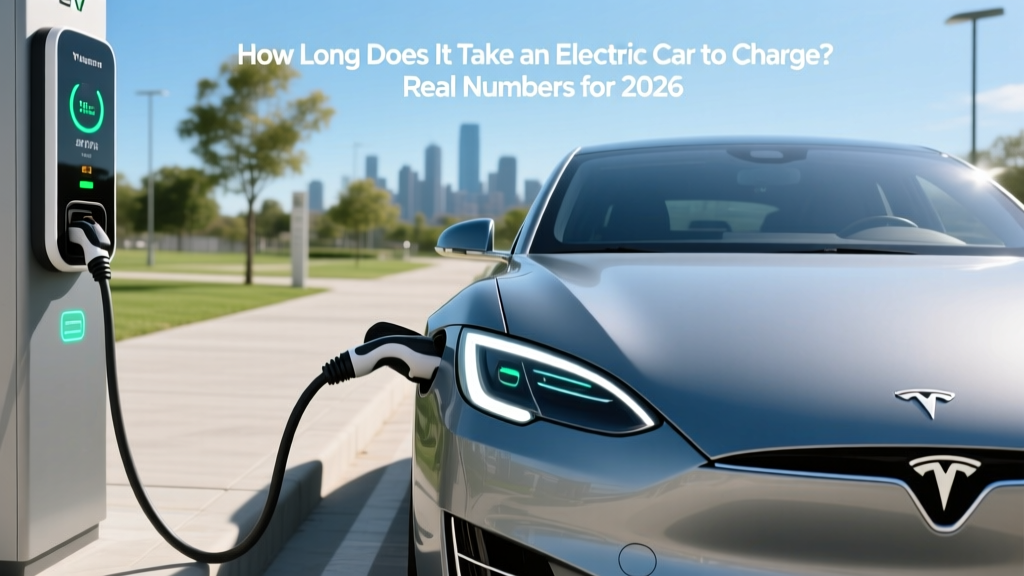
Charging speed is where the refreshed Model 3 made significant gains. The Highland update improved thermal management, enabling faster sustained DC charging curves. Here's what each method delivers:
| Charging Level | Power (kW) | Speed (miles of range per hour) | Notes |
|---|---|---|---|
| Level 1 (120V household) | ~1.4 kW | ~3–5 mi/hr | Emergency/trickle only |
| Level 2 (240V home, 48A) | 11.5 kW | ~44 mi/hr | Full overnight charge in 6–8 hrs |
| DC Fast (V4 Supercharger) | Peak 250 kW | ~200+ mi in 15 min | 10–80% in ~22 min (Long Range) |
| DC Fast (Long Range peak) | Up to 250 kW | N/A | Tapers significantly above 80% SoC |
Charging curve reality check: The Long Range Model 3 peaks at 250 kW only between roughly 10–30% state of charge. By 50% SoC, the rate drops to ~150 kW, and above 80% it falls below 60 kW. A "10–80% in 22 minutes" claim assumes optimal battery preconditioning — always navigate to a Supercharger via the car's built-in nav to trigger automatic thermal preconditioning. Without it, your first several minutes of charging may be 50% slower.
For home charging, a Tesla Wall Connector on a 60A circuit delivers 11.5 kW (48A continuous). Expect a full charge from 10% in about 7 hours for the Long Range. Installation typically runs $800–$2,000 depending on panel proximity and whether your home needs a service upgrade.
Performance, Cargo Space & Daily Practicality
The Model 3 is a driver's car first. Even the base RWD model delivers instant torque and a low center of gravity that makes it feel planted through corners. Here's the performance breakdown:
| Metric | Standard Range RWD | Long Range RWD | Long Range AWD | Performance |
|---|---|---|---|---|
| Horsepower | 271 hp | 346 hp | 440 hp | 510 hp |
| 0–60 mph | 5.8 sec | 4.9 sec | 4.2 sec | 2.9 sec |
| Top Speed | 125 mph | 125 mph | 125 mph | 163 mph |
| Drivetrain | Rear-Wheel Drive | Rear-Wheel Drive | Dual Motor AWD | Dual Motor AWD |
Cargo and passenger dimensions:
- Total cargo volume: 23 cu ft (trunk + frunk)
- Trunk: 19.8 cu ft (power liftgate standard on all trims)
- Frunk (front trunk): 3.1 cu ft
- Rear legroom: 35.2 inches
- Front headroom: 39.6 inches
- Rear headroom: 36.6 inches (slightly tight for 6'2"+ passengers)
The Highland refresh improved ride quality substantially with revised dampers and acoustic glass, making the 2026 Model 3 noticeably quieter at highway speed than pre-2024 models. The ventilated front seats, ambient lighting, and rear-seat touchscreen are now standard on Long Range and above.
Tech, Driver Assistance & Safety
Every Model 3 includes Tesla's 15.4-inch center touchscreen running Tesla OS, which handles navigation, media, climate, and vehicle settings. There is no instrument cluster — speed and drive info appear in the upper-left corner of the main screen. The rear passengers get their own 8-inch screen for climate and entertainment.
Tesla Autopilot and Full Self-Driving (Supervised) are SAE Level 2 driver-assistance systems. The driver must remain fully attentive, keep hands on the wheel (or demonstrate engagement via the camera-based monitoring system), and be prepared to take over instantly. This is not autonomous driving. Only Level 4 services like Waymo operate without a human driver.
Standard driver assists include: adaptive cruise control, lane-keeping, automatic emergency braking, blind-spot monitoring, and dashcam. FSD (Supervised) is a $8,000 add-on (or $99/month) that adds automated lane changes, traffic light/stop sign recognition, and city-street navigation — but it still requires constant supervision and is not available in all jurisdictions.
The refreshed Model 3 earned the IIHS Top Safety Pick+ rating and a 5-star overall NHTSA safety rating, with top marks in every crash-test subcategory.
Warranty Coverage & Long-Term Ownership
| Coverage | Term |
|---|---|
| Basic Vehicle Warranty | 4 years / 50,000 miles |
| Battery & Drive Unit (Standard Range) | 8 years / 100,000 miles (min 70% retention) |
| Battery & Drive Unit (Long Range / Performance) | 8 years / 120,000 miles (min 70% retention) |
Tesla's battery warranty guarantees at least 70% capacity retention over the warranty period. In practice, Tesla's fleet data and third-party tracking show most Model 3 packs retain 88–92% capacity at 100,000 miles. Out-of-warranty battery replacement currently runs $12,000–$16,000 depending on pack size, though failures within the warranty period are covered at no cost.
Pros, Cons & Who Should Buy the Model 3
- Class-leading efficiency (24 kWh/100 mi Long Range)
- Access to Tesla Supercharger network — the most reliable DC fast-charging infrastructure in the U.S.
- Over-the-air updates continuously add features
- Excellent safety ratings (IIHS TSP+, NHTSA 5-star)
- LFP option offers exceptional long-term battery durability for daily charging
- Strong resale value relative to EV competitors
- No physical controls — everything through the touchscreen (turn signals are stalkless on 2025+ models)
- Rear seat headroom tight for tall passengers
- FSD (Supervised) remains Level 2 despite the name and $8K price tag
- No Apple CarPlay or Android Auto integration
- Insurance costs 20–35% higher than comparable gas sedans in most states
- Ride quality improved but still firm on broken pavement vs. Hyundai Ioniq 6
Best for: Solo commuters and couples who prioritize range and charging convenience. The Long Range RWD at $42,490 (potentially $34,990 after credit) is the sweet spot — 363 EPA miles covers nearly any commute with margin, and LFP-free NMC is worth the trade-off for the range gain. The Standard Range RWD suits budget-conscious buyers who can charge at home nightly and don't road-trip frequently.
Consider competitors if: You need more rear-seat space (Hyundai Ioniq 6, BMW i4), want physical buttons, prefer CarPlay, or need hatchback cargo flexibility (Polestar 2, though it's discontinued after 2025).
Frequently Asked Questions
What is the real-world range of the 2026 Tesla Model 3?
The Long Range RWD achieves an EPA-estimated 363 miles, but real-world highway driving at 70 mph yields approximately 290–320 miles. In cold weather below freezing, expect 240–270 miles. The Standard Range RWD delivers about 220–245 real-world miles in similar conditions.
How fast does the Model 3 charge at home and on road trips?
At home on a 240V Level 2 Tesla Wall Connector (48A), the Model 3 charges at 11.5 kW, adding about 44 miles of range per hour — a full charge takes 6–8 hours. On Tesla Superchargers, the Long Range peaks at 250 kW and charges from 10–80% in approximately 22 minutes with proper battery preconditioning.
Does the 2026 Tesla Model 3 qualify for the federal EV tax credit?
All Model 3 trims are currently under the $55,000 MSRP cap for sedans under IRS §30D. However, buyer eligibility also requires adjusted gross income below $150,000 (single) or $300,000 (joint), and the battery must meet critical-mineral and component sourcing thresholds that tighten each year. The credit can be transferred at point of sale as a price reduction. Always verify current-year rules at IRS.gov and consult a tax professional.
How much does it cost to charge a Model 3 vs. buying gas?
At the U.S. average electricity rate of ~$0.17/kWh, fully charging the Long Range's 75 kWh battery costs about $12.75 for 363 miles — roughly $0.035 per mile. A comparable 30 MPG gas sedan at $3.50/gallon costs ~$0.117 per mile. Home charging saves approximately $1,200–$1,500 annually for a 12,000-mile driver. Supercharger rates ($0.25–$0.40/kWh) narrow but don't eliminate the savings.
Is the Tesla Model 3 worth buying over the Hyundai Ioniq 6 or BMW i4?
The Model 3 Long Range wins on range (363 mi vs. Ioniq 6's 361 mi), Supercharger network access, and efficiency. The Ioniq 6 offers more rear-seat space and physical buttons at a lower starting price. The BMW i4 provides a more traditional luxury interior and Apple CarPlay but costs significantly more and delivers less range. For most buyers prioritizing value and charging infrastructure, the Model 3 remains the default recommendation in this segment.