Quick Answer: Which Nissan EV SUV Should You Buy?
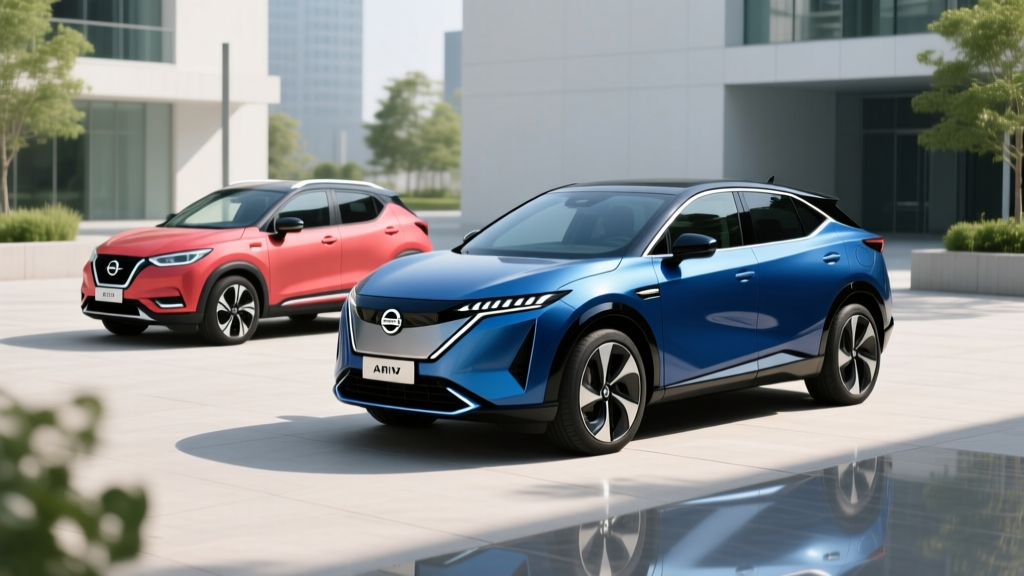
If you need a practical, daily-driver electric crossover with solid range and fast charging, the 2026 Nissan Ariya (EPA range up to 304 miles, starting ~$39,590) is Nissan's flagship EV SUV. If you want a more affordable, city-oriented electric subcompact, the newly redesigned 2026 Nissan Kicks EV (announced for select markets, ~$28,000 estimated) fills the budget gap. For most U.S. buyers, the Ariya remains the primary Nissan EV SUV to evaluate — here's everything you need to know before signing.
The Nissan EV SUV Lineup in 2026
Nissan's electric SUV strategy in the U.S. centers on the Ariya, a compact crossover that competes directly with the Hyundai Ioniq 5, Tesla Model Y, and Ford Mustang Mach-E. The Ariya launched for the 2023 model year and has received incremental updates through 2026, including refined software and expanded NACS adapter compatibility for Tesla Supercharger access.
The Nissan Leaf — historically Nissan's most recognized EV — is a hatchback, not an SUV, and remains in limited production. For buyers specifically searching for a Nissan EV SUV, the Ariya is the answer in the U.S. market.
Nissan has also signaled a next-generation electric subcompact SUV (positioned below the Ariya) for global markets, though U.S. availability and exact specs remain unconfirmed as of early 2026. We'll focus this guide on what you can actually buy and drive today.
2026 Nissan Ariya: Range, Battery, and Charging Specs
The Ariya's defining numbers determine whether it fits your driving life. Here's the full specification breakdown for the current U.S.-market trims:
| Spec | Engage FWD | Empower+ FWD | Evolve+ e-4ORCE AWD | Platinum+ e-4ORCE AWD |
|---|---|---|---|---|
| Base MSRP | ~$39,590 | ~$45,190 | ~$51,590 | ~$57,590 |
| Battery (usable) | 63 kWh (LFP-type) | 87 kWh (NMC) | 87 kWh (NMC) | 87 kWh (NMC) |
| EPA Range | 216 mi | 304 mi | 272 mi | 267 mi |
| Motor Output | 214 hp | 238 hp | 389 hp | 389 hp |
| 0-60 mph | ~7.0 sec | ~5.1 sec | ~5.1 sec | |
| Peak DC Fast Charge | 100 kW | 130 kW | 130 kW | 130 kW |
| 10-80% DCFC Time | ~35 min | ~40 min | ~40 min | ~40 min |
| Level 2 (240V) Rate | 7.2 kW | 7.2 kW | 7.2 kW | 7.2 kW |
| MPGe (combined) | 99 MPGe | 97 MPGe | 95 MPGe | 93 MPGe |
| Battery Warranty | 8 years / 100,000 miles (capacity retention ≥66%) | |||
Source: fueleconomy.gov and Nissan USA specifications. MSRP figures are approximate and exclude destination charges.
Real-World Range vs. EPA Sticker
EPA: 304 miles (Empower+ FWD) — but plan for reality:
- Highway cruising (70-75 mph): Expect ~250-270 miles. The Ariya's aerodynamic profile is less efficient at sustained high speeds than a sedan.
- Cold weather (below 32°F): Range drops 20-30% without preconditioning. A 304-mile sticker becomes ~210-240 miles in freezing temps.
- City/regenerative driving: You may match or slightly exceed EPA in stop-and-go traffic thanks to e-Pedal regen.
The Ariya includes a heat pump on higher trims, which mitigates cold-weather losses compared to resistive heating systems — but physics still applies.
Charging Reality: The 130 kW Ceiling
The Ariya's peak DC fast-charging rate of 130 kW (on 87 kWh trims) is adequate but trails competitors. The Hyundai Ioniq 5 peaks at ~240 kW on an 800V architecture, delivering 10-80% in roughly 18 minutes. The Ariya's 10-80% session takes approximately 40 minutes on a capable charger.
The charge curve matters: the Ariya holds near-peak rates through about 50% SoC, then tapers progressively. Above 80%, charging slows dramatically to protect the NMC battery — typical for the chemistry. On road trips, plan 35-45 minute stops every 200-230 miles for comfort and battery health.
For home Level 2 charging at 7.2 kW, a full 0-100% session on the 87 kWh battery takes roughly 12-13 hours. Most owners charging overnight from 20% will wake up full.
Cost Breakdown: Ariya vs. Gas Compact SUV
The purchase decision hinges on total cost of ownership, not just the sticker price. Here's a 5-year comparison pitting the Ariya Empower+ against a typical gas compact SUV (e.g., Nissan Rogue AWD at ~$32,000 MSRP, 30 MPG combined):
| Cost Category | 2026 Ariya Empower+ FWD | Gas Compact SUV (30 MPG) |
|---|---|---|
| Purchase Price (MSRP) | $45,190 | $32,000 |
| Federal Tax Credit (§30D) | Up to $7,500* | $0 |
| Effective Purchase Price | ~$37,690 | $32,000 |
| Fuel/Energy (5 yrs, 60K mi) | ~$4,200 (home charging avg) | ~$7,000 (gas at $3.50/gal) |
| Maintenance (5 yrs) | ~$1,200 | ~$3,500 |
| Insurance (5 yrs avg) | ~$9,500 | ~$7,800 |
| Estimated Depreciation | ~$18,000 | ~$14,000 |
| 5-Year Total Cost | ~$70,590 | ~$64,300 |
*§30D credit eligibility depends on MSRP caps, buyer income limits, battery sourcing requirements, and point-of-sale transfer availability. Verify at IRS.gov and consult a tax professional.
Key takeaway: The Ariya costs roughly $6,000 more over 5 years in this scenario, primarily due to higher depreciation and insurance premiums. However, the gap narrows significantly with lower electricity rates, available state incentives, higher gas prices, or if you qualify for the full federal credit with point-of-sale transfer reducing your upfront outlay.
Charging Cost Per Mile
At the U.S. average residential electricity rate of ~$0.16/kWh and the Ariya's efficiency of roughly 3.0 miles/kWh (87 kWh battery, ~260 real-world miles per full charge):
- Home charging: ~$0.053/mile
- Public DCFC (avg $0.40/kWh): ~$0.133/mile
- Gas SUV at 30 MPG, $3.50/gal: ~$0.117/mile
Home charging is decisively cheaper. If you rely solely on public fast chargers, your per-mile cost actually exceeds gasoline — a critical consideration for apartment dwellers without home charging access.
EV vs. Gas vs. Hybrid: Where Does the Ariya Fit?
| Factor | Nissan Ariya (EV) | Nissan Rogue (Gas) | Toyota RAV4 Hybrid |
|---|---|---|---|
| Starting Price | ~$39,590 | ~$29,000 | ~$33,000 |
| EPA Range/MPG | 216-304 mi | 30 MPG | 40 MPG |
| Fuel Cost Per Mile | $0.05 (home) | $0.12 | $0.09 |
| Maintenance | Minimal | Moderate | Moderate |
| Refuel/Recharge Time | 12 hrs (L2) / 40 min (DCFC) | 5 min | 5 min |
| Cold Weather Impact | 20-30% range loss | Minor MPG drop | Minor MPG drop |
| Tax Credit Eligible | Up to $7,500 | No | No |
| Home Charging Needed? | Strongly recommended | No | No |
The hybrid middle ground is worth serious consideration. A RAV4 Hybrid delivers excellent efficiency without charging infrastructure dependence, making it the pragmatic choice for buyers who lack reliable home charging or frequently drive in extreme cold. The Ariya's advantages — lower fuel cost, instant torque, minimal maintenance, zero tailpipe emissions — are most fully realized by buyers with home Level 2 charging and moderate climates.
Real-World Ownership: What First-Time EV Buyers Must Know
Home Charging Is the Foundation
Over 80% of EV charging happens at home. Before purchasing any Nissan EV SUV, confirm your charging setup:
- Level 1 (120V outlet): Adds ~3-4 miles/hour. Adequate only if you drive under 30 miles daily and can charge 12+ hours overnight.
- Level 2 (240V, 40A circuit): Adds ~22-25 miles/hour at the Ariya's 7.2 kW rate. A full charge in ~12 hours. This is the standard most EV owners need.
- Installation cost: Expect $800-$2,500 for a Level 2 home charger installation (equipment + licensed electrician + permit), assuming your electrical panel has capacity. A panel upgrade to 200A can add $1,500-$3,000.
If you live in an apartment or condo without charging access, the Ariya becomes significantly less practical unless your workplace offers charging or you have reliable public infrastructure nearby.
Cold Climate Considerations
The Ariya's NMC battery chemistry loses efficiency in cold temperatures. In sustained sub-freezing conditions, expect:
- 20-30% range reduction (preconditioning while plugged in helps)
- Slower DC fast charging until the battery warms (the Ariya lacks active battery preconditioning for DCFC in the way Tesla or Hyundai implement it)
- Increased energy use for cabin heating, even with the available heat pump
If you live in Minnesota, Montana, or upstate New York, size up your range expectations accordingly — or strongly consider a PHEV as a bridge solution.
ProPILOT Assist: SAE Level 2, Not Self-Driving
The Ariya comes equipped with Nissan's ProPILOT Assist 2.0 on higher trims, offering adaptive cruise control with lane centering and, in specific conditions, hands-off driving on pre-mapped highways. This is an SAE Level 2 system — you must remain attentive, eyes on the road, ready to take over instantly. It is not autonomous driving.
SAE Automation Level: ProPILOT Assist is Level 2 (partial automation). The driver must continuously supervise the system and keep hands available. Only Level 4+ systems (like Waymo robotaxis in limited geofenced areas) operate without a human driver.
Tax Credit Eligibility: What You Can Actually Claim
The federal §30D clean vehicle credit offers up to $7,500 for qualifying new EVs, but eligibility is not automatic. Here's the checklist for the 2026 tax year:
- MSRP cap: SUVs must have an MSRP at or below $80,000 (the Ariya qualifies across all trims)
- Buyer income limits: AGI must not exceed $300,000 (joint), $225,000 (head of household), or $150,000 (single)
- Battery sourcing: A percentage of critical minerals and battery components must be sourced from the U.S. or free-trade-agreement countries — this requirement tightens annually
- Point-of-sale transfer: You can transfer the credit to the dealer at purchase, reducing your out-of-pocket cost immediately rather than waiting for tax filing
- Final assembly: Vehicle must undergo final assembly in North America
The Ariya is assembled in Japan, which has historically complicated §30D eligibility. Nissan has worked to meet sourcing requirements, and credit availability varies by model year and trim. Always verify current eligibility on the DOE's fueleconomy.gov tax credit page and confirm with your dealer before relying on the credit in your budget.
Decision Framework: Should You Buy the Nissan Ariya?
Choose the Nissan Ariya If:
- You have home Level 2 charging (or can install it)
- Your daily commute is under 100 miles round-trip
- You value a quiet, smooth, tech-forward cabin over maximum sportiness
- You want a mainstream brand with established dealer service
- You prefer a traditional SUV form factor over the Ioniq 5's retro-futuristic styling
Look Elsewhere If:
- You need the fastest DC charging available (consider Hyundai Ioniq 5 or Kia EV6 at 240+ kW)
- You frequently road-trip in extreme cold without time for longer charge stops
- You lack any reliable home or workplace charging access
- You need maximum cargo space (the Ariya's 22.8 cu ft behind the rear seats trails some competitors)
- You want AWD under $45,000 — the Ariya's e-4ORCE trims start above $50,000
Consider a Hybrid Instead If:
- You live in a charging desert with limited public DCFC infrastructure
- You regularly tow or carry heavy loads in sub-zero weather
- You want EV-like city efficiency without range uncertainty on long rural drives
Common Misconceptions About the Nissan Ariya
| Myth | Fact |
|---|---|
| "The Ariya charges as fast as a Tesla." | The Ariya peaks at 130 kW; the Tesla Model Y on V3 Superchargers sustains ~250 kW. Expect ~40 min vs ~25 min for 10-80%. |
| "EV batteries need replacement every few years." | Nissan warranties the Ariya battery for 8 years/100,000 miles with ≥66% capacity retention. Real-world NMC degradation typically reaches ~10-15% loss over 8 years with normal use. |
| "I'll save $7,500 on every Ariya." | The §30D credit depends on your income, the vehicle's battery sourcing compliance, and current-year rules. Not every buyer or every trim qualifies for the full amount. |
| "The Ariya has a frunk." | It does not. The Ariya's front compartment houses electronics — cargo space is rear-only at 22.8 cu ft (61.6 cu ft with seats folded). |
| "ProPILOT drives itself on the highway." | ProPILOT Assist is SAE Level 2. Even with hands-off capability on mapped roads, you must remain alert and ready to intervene at all times. |
Frequently Asked Questions
Does the Nissan Ariya qualify for the $7,500 federal tax credit?
Eligibility varies by model year, trim, and current battery-sourcing rules under §30D. The Ariya is assembled in Japan, which affects the final-assembly requirement — though commercial vehicle leasing loopholes have sometimes allowed credit pass-through. Verify current status at IRS.gov and with your Nissan dealer before purchase.
How long does it take to charge the Ariya at home?
On a Level 2 home charger (240V, 7.2 kW), the 87 kWh battery charges from empty to full in approximately 12-13 hours. Most owners charge from 20-80% overnight, which takes about 7-8 hours — easily within a standard overnight window.
Can the Nissan Ariya use Tesla Superchargers?
Nissan has been expanding NACS (North American Charging Standard) compatibility. As of 2026, Ariya owners can access Tesla Superchargers using a Nissan-approved NACS adapter. Check with your dealer for the latest adapter availability and firmware requirements, as CCS-to-NACS adapter compatibility has expanded significantly since the industry's connector transition.
What is the real-world highway range of the Ariya?
For the 304-mile EPA-rated Empower+ FWD trim, expect approximately 250-270 miles at sustained 70-75 mph highway speeds in mild weather. In freezing temperatures, that drops to roughly 210-240 miles. Plan road-trip charging stops at the 200-mile mark for comfort.
How does the Ariya compare to the Tesla Model Y?
The Model Y Long Range offers more EPA range (~310+ miles), faster DC charging (~250 kW peak), access to the native Supercharger network, and a more minimalist interior. The Ariya counters with a more conventional SUV cabin layout, physical climate controls, competitive pricing, and Nissan's dealer network. If charging speed and Supercharger convenience are your top priorities, the Model Y wins. If you prefer traditional automotive ergonomics and a mainstream brand experience, the Ariya holds its ground.
Is the Ariya's battery LFP or NMC?
The standard-range 63 kWh battery in the Engage trim uses an LFP-type chemistry (lithium iron phosphate), which offers longer cycle life and can be charged to 100% regularly without degradation concerns. The 87 kWh battery in higher trims uses NMC (nickel manganese cobalt) chemistry, which provides higher energy density but benefits from daily charging limits around 80-90%.
What are the Ariya's annual insurance costs?
EV insurance premiums run 15-25% higher than comparable gas vehicles due to repair costs and battery replacement expense. Expect roughly $1,800-$2,200/year depending on your location, driving record, and coverage level. Get quotes from multiple insurers — some offer EV-specific discounts.
Sources: fueleconomy.gov, Nissan USA, IRS §30D Clean Vehicle Credits. All specifications and pricing are approximate for the 2026 model year and subject to change. Verify with your local Nissan dealer.