The Truth About the Tesla Dirt Bike
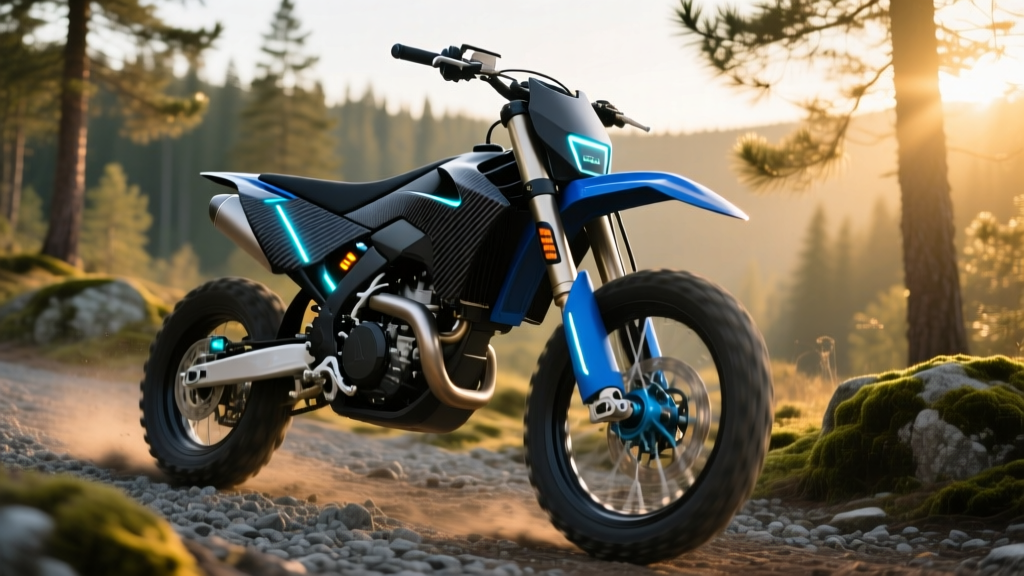
Search forums, Reddit threads, and EV Facebook groups and you'll find the same question resurfacing every few months: Is Tesla building a dirt bike? The short answer, as of early 2026, is no — Tesla does not manufacture, sell, or officially announce an electric dirt bike. What exists instead is a persistent rumor cycle fueled by Elon Musk's occasional social media comments, a growing aftermarket of electric motocross bikes from other brands, and genuine consumer appetite for an electric off-road two-wheeler bearing the Tesla name.
This article separates confirmed facts from speculation, examines what an electric dirt bike from Tesla would realistically require in terms of battery chemistry, range, and charging, and points you toward the electric off-road motorcycles that do exist today if you're ready to ride now.
Where the Tesla Dirt Bike Rumor Started
The rumor has multiple origin points, and none of them constitute an official product announcement:
- Elon Musk's 2019 tweet: When asked on Twitter (now X) about a Tesla motorcycle, Musk responded that Tesla might make an electric motorcycle "at some point" but that it was not a priority. He has since repeated variations of this non-commitment.
- The Cyberquad for Kids: Tesla briefly sold a $1,900 battery-powered ATV designed for children (later recalled by the CPSC in December 2022 for failing to meet federal ATV safety standards). Its angular Cybertruck-inspired design fueled speculation that a full-size off-road vehicle was in development.
- Tesla's patent filings: Over the years, Tesla has filed patents related to two-wheeled vehicle stability and electric motorcycle frames. Patent filings, however, are routine for large engineering companies and do not confirm production intent.
- Third-party renders and concepts: Independent designers regularly publish photorealistic Tesla motorcycle concepts on Instagram and Behance, which are frequently reposted without "concept" labels, creating false impressions of an imminent launch.
As of 2026, Tesla's official product lineup includes the Model S, Model 3, Model X, Model Y, Cybertruck, and the Tesla Semi. No two-wheeled product appears on Tesla's website, investor presentations, or SEC filings.
What an Electric Dirt Bike Actually Requires
If Tesla were to enter the electric dirt bike segment, the engineering challenges are substantial — and they explain why even established motorcycle manufacturers have been slow to electrify off-road bikes. Here's what the physics demand:
| Requirement | Challenge | Tesla's Existing Capability |
|---|---|---|
| Weight under 250 lbs | Dirt bikes must be light enough to maneuver in the air and pick up after a fall. Current NMC battery energy density (~250 Wh/kg at cell level) makes this extremely difficult for any meaningful range. | Tesla optimizes for 4,000+ lb vehicles. Their lightest pack (Model 3 RWD, ~120 lbs) is already half the target bike weight. |
| Suspension travel (12+ inches) | Off-road impacts generate extreme G-forces that battery cells and bus bars must survive repeatedly. | Tesla's structural battery pack is designed for road loads, not 10G+ impact shocks from jumps and whoops. |
| Range: 40-60 miles (motocross) | Hard off-road riding consumes energy 3-5x faster than highway driving. A 5 kWh pack may last only 30-45 minutes at race pace. | Tesla's smallest current pack is ~60 kWh — overkill for a dirt bike, yet still heavy. |
| Fast battery swap or charge | Motocross riders expect to refuel in minutes between motos. No DC fast-charging infrastructure exists at tracks. | Supercharger network is designed for cars. Adapter and connector miniaturization for bikes is unsolved. |
The core tension: Tesla's competitive advantage is scaling large battery packs for large vehicles at low cost per kWh. A dirt bike demands a tiny, ultra-light, vibration-proof pack — a fundamentally different engineering discipline where companies like KTM, Stark Future, and KTM-owned Husqvarna have multi-year head starts.
Electric Dirt Bikes You Can Actually Buy in 2026
If the Tesla dirt bike search brought you here because you want an electric off-road motorcycle, these are the real options available now or taking orders:
| Brand / Model | Battery (kWh) | Peak HP | Weight (lbs) | MSRP | Ride Time (hard) |
|---|---|---|---|---|---|
| KTM SX-E 5 | ~1.9 kWh | ~15 hp | ~105 lbs | ~$5,600 | ~25-40 min |
| Stark Varg MX | 6.0 kWh | 80 hp | ~230 lbs | ~$13,900 | ~30-60 min |
| Husqvarna EE 5 | ~1.9 kWh | ~15 hp | ~105 lbs | ~$5,700 | ~25-40 min |
| Sur-Ron Light Bee X | ~1.9 kWh | ~8 hp | ~110 lbs | ~$4,500 | ~40-60 min (trail) |
| E-Ride Pro SS | ~3.2 kWh | ~22 hp | ~140 lbs | ~$8,500 | ~30-45 min |
Notice the pattern: even the most powerful option (Stark Varg MX at 80 hp) carries only 6 kWh of battery and costs nearly $14,000. Scaling this to Tesla's brand promise — high performance at mass-market pricing — would require a battery chemistry breakthrough that doesn't exist in production today.
Why Tesla's Business Model Doesn't Fit Dirt Bikes
Beyond engineering, there's a strategic reason Tesla is unlikely to enter this market:
- Total addressable market: The global off-road motorcycle market sells roughly 300,000-400,000 units per year at an average price of $8,000-$10,000. That's ~$3-4 billion in revenue — a rounding error compared to Tesla's ~$96 billion in 2024 automotive revenue. Tesla targets markets large enough to move a $700B+ market cap.
- Dealer and service model mismatch: Dirt bikes are sold through specialty powersports dealers and require frequent mechanical service (suspension rebuilds, chain replacement, brake bleeds). Tesla's direct-to-consumer, minimal-service model doesn't translate to high-wear off-road use.
- Regulatory complexity: Off-road vehicles fall under CPSC jurisdiction (not NHTSA), with different safety standards, liability exposure, and recall procedures. The Cyberquad recall demonstrated how unfamiliar Tesla is with this regulatory environment.
- Brand risk: Dirt bike riding carries inherent injury risk. A fatal accident on a Tesla-branded dirt bike would generate negative press disproportionate to the product's revenue contribution.
Tesla's stated priorities for 2025-2027 include scaling Cybertruck production, launching the next-generation compact vehicle platform, expanding the energy storage business (Megapack), and advancing FSD (Supervised). A dirt bike does not appear in any of these roadmaps.
What About a Tesla Electric Mountain Bike?
A related rumor involves a Tesla-branded electric bicycle or e-bike. Musk has occasionally hinted that Tesla "should" make an e-bike, but no product has materialized. The electric bicycle market faces similar challenges to dirt bikes — small battery packs, weight constraints, and a dealer/service ecosystem Tesla doesn't participate in. If Tesla ever enters two-wheeled mobility, a commuter e-bike is marginally more plausible than a dirt bike, but remains firmly in the "not announced" category.
Frequently Asked Questions
Does Tesla make a dirt bike in 2026?
No. Tesla does not manufacture or sell any dirt bike, motorcycle, or two-wheeled vehicle as of 2026. The Cyberquad for Kids (an ATV) was recalled in 2022 and has not been reintroduced.
Has Elon Musk confirmed a Tesla motorcycle is coming?
No. Musk has made casual comments on social media suggesting Tesla might make a motorcycle eventually, but no official announcement, timeline, or prototype has been shared. Tesla's investor presentations and SEC filings contain no motorcycle program.
What is the best electric dirt bike to buy right now?
For serious motocross, the Stark Varg MX (80 hp, ~$13,900) is the performance leader. For youth riders and beginners, the KTM SX-E 5 (~$5,600) and Husqvarna EE 5 (~$5,700) are proven options with dealer support. For trail riding on a budget, the Sur-Ron Light Bee X (~$4,500) offers reasonable range at lower speeds.
Would a Tesla dirt bike qualify for the federal EV tax credit?
No. The IRS §30D New Clean Vehicle Credit applies to four-wheeled motor vehicles primarily designed for use on public streets and highways with a GVWR under 14,000 lbs. Off-road dirt bikes do not meet these criteria. Even electric motorcycles that are street-legal qualify under a separate, smaller credit provision (IRC §30D does not cover two- or three-wheeled vehicles — those were covered under the expired §30D(e) provision which lapsed). Consult a tax professional for current incentive availability. See IRS clean vehicle credit rules for official guidance.
Why don't electric dirt bikes have longer range?
Off-road riding demands extreme power output — a motocross bike at race pace can draw 20-40 kW continuously. A 6 kWh battery (already heavy at ~70 lbs) will deplete in 30 minutes or less under those loads. The only solutions are larger batteries (which add unacceptable weight) or improved cell energy density (which solid-state batteries may eventually provide but are not yet in production at motocross scale).
Could Tesla's battery technology help electric dirt bikes?
Tesla's 4680 cells offer competitive energy density (~260-280 Wh/kg at cell level), but they are optimized for large-format packs in heavy vehicles. Dirt bikes need small, lightweight cells with extreme vibration resistance — a niche better served by pouch-cell manufacturers like Kokam or custom cylindrical cells from suppliers like Molicel. Tesla's cell technology offers no particular advantage in this form factor.
Where can I follow updates on a potential Tesla dirt bike?
Official Tesla product announcements appear on Tesla's blog and in quarterly earnings calls. Rumor sites and render artists frequently publish speculative content — treat anything without an official Tesla press release or SEC filing as unconfirmed.
The Bottom Line
The Tesla dirt bike is a rumor with no official product behind it. Tesla's engineering strengths, business model, and stated priorities all point away from the off-road motorcycle market. If you want an electric dirt bike today, established brands like Stark, KTM, and Husqvarna offer real products with dealer support — they just don't carry the Tesla badge.
If Tesla ever does surprise the market with a two-wheeled product, expect it to be announced through official channels (tesla.com, an earnings call, or an SEC filing), not through social media renders or forum speculation. Until then, the Tesla dirt bike remains one of the EV world's most persistent "what if" stories.