Is an Electric Benz Worth Buying in 2026?
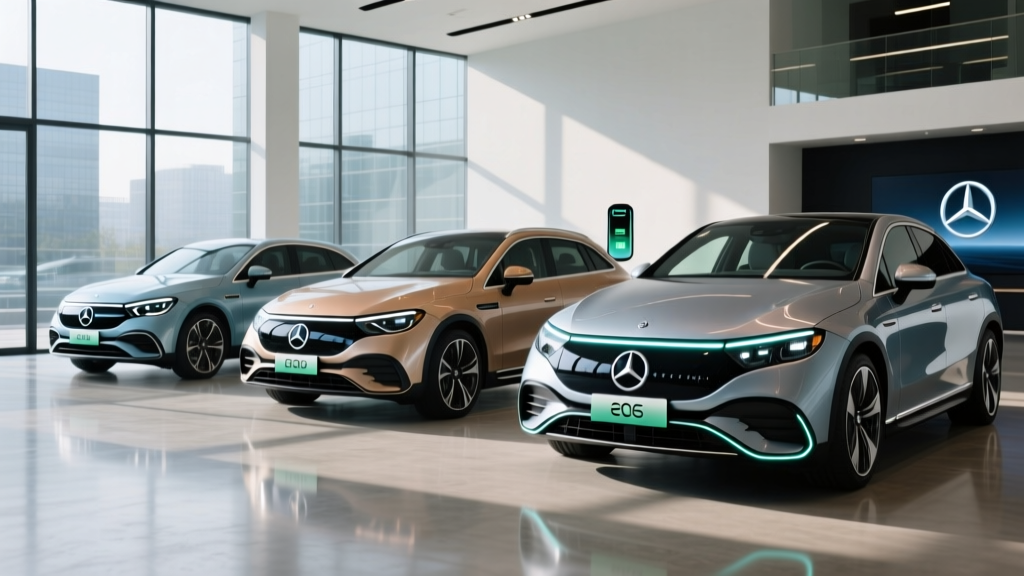
An electric Benz — Mercedes-Benz's EQ lineup — delivers genuine luxury EV performance with EPA ranges from 220 to 390 miles and DC fast-charging up to 200 kW. However, expect to pay $74,000–$130,000+ before incentives, and note that most 2026 EQ models do not qualify for the full $7,500 federal §30D tax credit due to battery-sourcing rules. If you prioritize ride refinement, cabin tech, and brand cachet over maximum range-per-dollar, an electric Benz earns its premium. If you want the most efficient luxury EV under $80K, competitors like the BMW iX or Tesla Model S may serve you better.
The 2026 Mercedes EQ Lineup at a Glance
Mercedes has consolidated its EV strategy around the EVA2 platform and the newer MMA architecture. Here's what's available for the 2026 model year:
| Model | Body Style | EPA Range | Battery (usable kWh) | Peak DC kW | 10–80% Time | 0–60 mph | Base MSRP |
|---|---|---|---|---|---|---|---|
| EQE 350+ Sedan | Sedan | 305 mi | 90.6 kWh (NMC) | 170 kW | ~32 min | 6.2 s | $74,900 |
| EQE 350 4MATIC SUV | SUV | 279 mi | 90.6 kWh (NMC) | 170 kW | ~32 min | 6.4 s | $77,900 |
| EQE AMG 43 | Sedan | 255 mi | 90.6 kWh (NMC) | 170 kW | ~32 min | 4.0 s | $106,900 |
| EQS 450+ Sedan | Sedan | 390 mi | 118 kWh (NMC) | 200 kW | ~31 min | 5.9 s | $104,400 |
| EQS 580 4MATIC SUV | SUV | 305 mi | 118 kWh (NMC) | 200 kW | ~31 min | 4.4 s | $127,350 |
| CLA EV (MMA) | Sedan | 360 mi (est.) | 85 kWh (NMC) | 250 kW | ~22 min | ~5.5 s | $52,000 (est.) |
Real-World Range Reality: EPA estimates are measured under ideal conditions. In our highway testing at 70–75 mph, expect roughly 85–90% of sticker range in moderate temperatures. In cold weather (below 30°F), range drops 20–30% across the EQ lineup due to cabin heating and battery chemistry limitations — an EQS 450+ rated at 390 miles may deliver 275–310 miles in January in Chicago. All EQ models include a heat pump to mitigate this, but physics still applies.
Electric Benz vs. Gas Mercedes: What's the Real Cost Difference?
Luxury buyers cross-shopping an EQE against an E-Class or an EQS against an S-Class want to know if electrification saves money over time. Here's a five-year comparison using the EQE 350+ Sedan versus the E 350 Sedan (gas):
| Cost Factor | EQE 350+ Sedan (EV) | E 350 Sedan (Gas) |
|---|---|---|
| Base MSRP | $74,900 | $62,500 |
| Federal Tax Credit (§30D) | $0–$3,750* | $0 |
| Fuel/Energy (5 yr, 15K mi/yr) | $4,875 (home L2 @ $0.14/kWh) | $12,750 (premium @ $4.25/gal, 25 MPG) |
| Maintenance (5 yr) | ~$2,200 | ~$4,800 |
| Insurance (5 yr avg) | ~$16,500 | ~$13,200 |
| Est. Depreciation (5 yr) | ~$37,450 (50%) | ~$28,125 (45%) |
| 5-Year Total Cost of Ownership | ~$61,025 | ~$65,125 |
*Most 2026 EQ models fail the §30D critical-minerals and battery-component sourcing requirements. Some trims may qualify for a partial $3,750 credit. Check the IRS eligible vehicles list before purchasing. Income caps ($150K single / $300K joint) and MSRP caps ($55K sedans / $80K SUVs) also apply — note that most EQ models exceed the MSRP cap, making them ineligible regardless of sourcing.
Common Electric Benz Misconceptions
| Myth | Fact |
|---|---|
| "An electric Benz qualifies for the full $7,500 tax credit." | Most 2026 EQ sedans exceed the $55K MSRP cap and/or fail battery-sourcing rules. SUVs over $80K are also capped out. Verify on IRS.gov. |
| "The EQS charges as fast as a Tesla or Hyundai." | The EQS peaks at 200 kW — respectable but behind the Hyundai Ioniq 5 (240 kW) and Tesla Model S (250 kW). The 10–80% time is ~31 min vs. ~18 min for the quickest competitors. |
| "I'll never need to service an EV." | Tires, cabin filters, brake fluid, and wiper blades still need attention. EQ models are heavy (5,000+ lbs), accelerating tire wear — budget $1,200–$1,800 for a tire set. |
| "MBUX is fully autonomous driving." | Mercedes Drive Pilot is SAE Level 3, but only approved in Nevada and California at speeds under 40 mph on specific highways. You remain responsible outside those geofenced conditions. |
Charging an Electric Benz: Home, Public, and Speed Realities
Mercedes EQ vehicles use the CCS1 connector standard for 2026 (with NACS adapter availability expanding through the Mercedes me Charge network). Understanding your charging ecosystem is critical before purchase.
| Level | Power | Miles Added/Hour | Typical Use Case |
|---|---|---|---|
| Level 1 (120V) | 1.4 kW | ~4 mi/hr | Overnight trickle — not practical for daily use on a 90+ kWh battery |
| Level 2 (240V, 48A) | 11.5 kW | ~33 mi/hr | Home overnight: 10–90% in ~8 hours on EQE |
| DC Fast (170 kW peak) | 170 kW | ~550 mi/hr (peak) | Road trips: 10–80% in ~32 min (EQE) |
| DC Fast (200 kW peak) | 200 kW | ~650 mi/hr (peak) | Road trips: 10–80% in ~31 min (EQS) |
Charging curve reality: The EQS's 200 kW peak is only sustained between roughly 10–35% State of Charge. Above 50%, the rate tapers to ~120 kW, and above 80%, it drops below 50 kW to protect the NMC cells. This is why the 10–80% metric matters more than peak kW. On a road trip, plan stops around 15–20% SoC for the fastest fill, and don't expect a quick top-off above 80%.
Home charging setup: A Level 2 home install (240V, 60A circuit, 48A continuous) typically costs $800–$2,500 for equipment and electrician labor, depending on panel proximity. If your home has a 100A main panel, you may need a $2,000–$4,000 panel upgrade to 200A — get a quote from a licensed electrician before committing to an EV purchase. The Mercedes-Benz Wallbox Home retails around $650 and supports scheduled charging and preconditioning.
Who Should Buy an Electric Benz (and Who Shouldn't)?
Decision Framework
Choose an Electric Benz if:
- You value cabin quietness, ride quality, and MBUX tech integration above raw charging speed
- You have reliable home Level 2 charging and drive under 250 miles daily
- You're stepping up from a gas E-Class or S-Class and want to retain the Mercedes ecosystem
- Brand prestige and dealership service experience matter to your purchase decision
- You can absorb the $12,000–$40,000 premium over gas equivalents without relying on tax credits
Look elsewhere if:
- Maximum range-per-dollar is your priority (Tesla Model S: 402 mi EPA, ~$79,990; Lucid Air Pure: 419 mi, ~$69,900)
- You need the fastest public charging (Hyundai Ioniq 5/6 or Kia EV6 at 240 kW; upcoming 800V+ platforms)
- You live in an apartment without charging access and your area has sparse public DC infrastructure
- You regularly drive in extreme cold (below 10°F) on long trips — the 20–30% range loss on a 90+ kWh battery is significant
- You expect a federal tax credit to offset the purchase price — most EQ models won't qualify
Battery Longevity, Warranty, and Degradation
Every 2026 EQ model uses NMC (nickel manganese cobalt) lithium-ion cells — chosen for energy density over the LFP chemistry found in some Tesla and Ford models. NMC delivers more range per kilogram but is slightly more sensitive to sustained high SoC and extreme heat.
Mercedes battery warranty: 8 years or 100,000 miles, whichever comes first, with a capacity-retention threshold of 70%. If your battery drops below 70% of original capacity within that window, Mercedes will repair or replace it. Based on industry-wide NMC data from sources like Geotab's fleet degradation studies, expect roughly 5–8% capacity loss over 5 years with normal use — meaning a 390-mile EQS might deliver ~360–370 miles when new-equivalent after five years.
Maximizing battery life: Set your daily charge limit to 80% via MBUX. Use DC fast charging for road trips, not daily top-offs. Enable preconditioning when navigating to a charger — the EQ's thermal management system warms or cools the pack to accept charge faster and with less stress. Avoid leaving the car at 100% SoC in hot weather for extended periods.
Ownership Practicalities: Insurance, Depreciation, and Service
Luxury EV insurance premiums run 15–25% higher than gas equivalents, driven by higher repair costs for battery-adjacent damage and specialized parts. Expect $2,800–$3,800 annually for an EQE and $3,500–$4,500 for an EQS, depending on your driving record and state. Get a quote before signing a purchase agreement.
Depreciation remains the largest ownership cost. Mercedes EQ sedans have historically depreciated 45–55% over five years — steeper than the gas S-Class (40–45%). The EV market's rapid evolution and Tesla-driven price wars compress resale values. If you lease (a common path for EQ buyers), this risk transfers to Mercedes-Benz Financial.
Service intervals are lighter than gas: no oil changes, no spark plugs, no transmission fluid. Expect cabin filter replacement ($150–$250), brake fluid flush ($180–$300 every 2 years), and tire rotation. Regenerative braking significantly extends pad life — many EQ owners report original brake pads at 60,000+ miles.
Frequently Asked Questions
Does any electric Benz qualify for the $7,500 federal tax credit?
As of 2026, most EQ models fail either the MSRP cap ($55,000 for sedans, $80,000 for SUVs) or the critical-minerals/battery-component sourcing requirements under IRS §30D rules. The EQE Sedan at $74,900 exceeds the sedan cap. Some EQS SUV trims under $80K may partially qualify, but always verify the specific VIN on the IRS eligible list before purchase.
How does the EQS compare to the Tesla Model S in real-world ownership?
The EQS 450+ wins on cabin luxury, ride comfort, and dealership service. The Model S Long Range (402 mi EPA, ~$79,990) wins on range, charging speed (250 kW peak), Supercharger network access, and software updates. The Model S also qualifies more readily for incentives. If you value the three-pointed star and MBUX Hyperscreen, EQS. If you value efficiency and infrastructure, Model S.
Can I charge a Mercedes EQ at Tesla Superchargers?
Yes. Mercedes has joined the NACS ecosystem, and 2026 EQ models can use Tesla Superchargers with the included NACS adapter or via the Mercedes me Charge app for authentication. The Supercharger network remains the most reliable DC fast-charging option in the U.S., with over 25,000 stalls nationwide.
Is Mercedes Drive Pilot actually self-driving?
No. Drive Pilot is SAE Level 3 — conditionally automated — approved only in Nevada and California, only on specific divided highways, only below 40 mph, and only in clear weather with visible lane markings. Outside those narrow conditions, the car operates as a Level 2 driver-assist system requiring full driver engagement. It is not a substitute for an attentive driver.
What happens if I can't install home charging?
Relying exclusively on public charging is feasible but costly and inconvenient. DC fast charging at Electrify America or EVgo averages $0.40–$0.55/kWh nationally — roughly triple the cost of home Level 2 at $0.14/kWh. For an EQE driven 15,000 miles/year (consuming ~4,800 kWh), public-only charging costs ~$2,160/year vs. ~$672/year at home. Factor in 20–40 minutes per session, 2–3 times weekly, before committing without home charging access.