2026 Tesla Cybertruck: The Full Spec Breakdown Behind the Photos
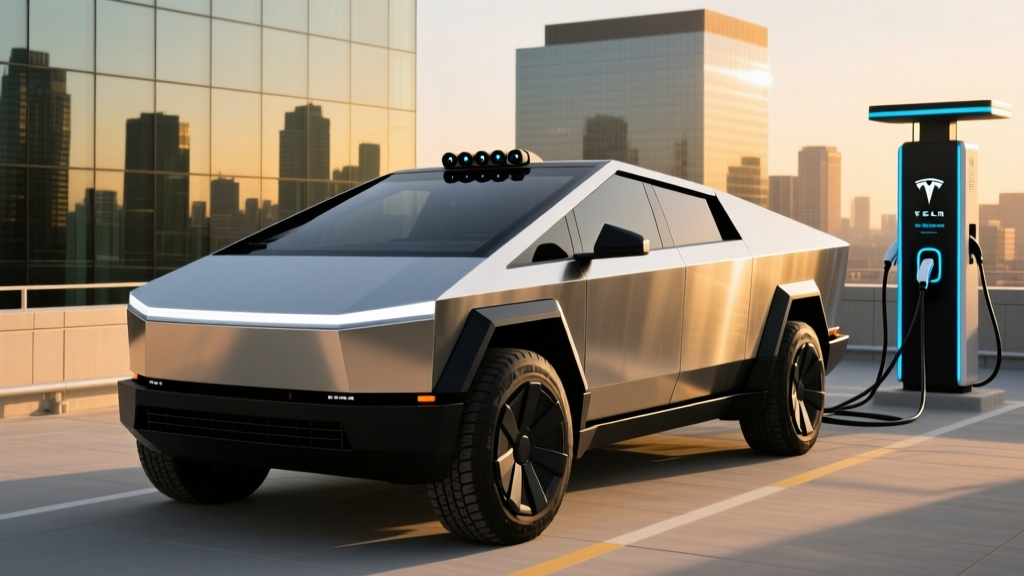
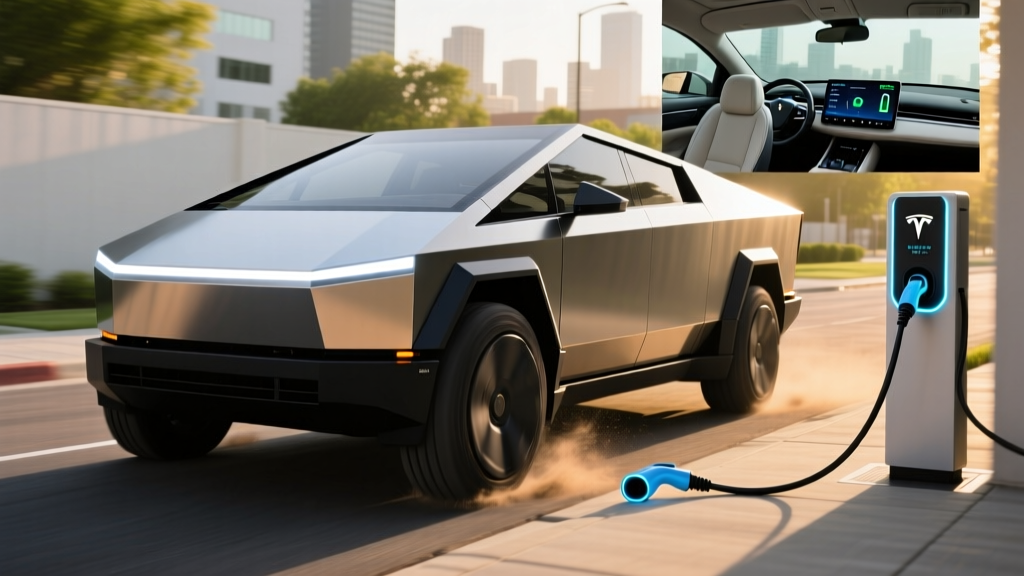
If you've been searching for tesla truck pics, you've likely seen the Cybertruck's angular stainless-steel exoskeleton dominating social media. But beyond the polarizing design and viral drag-race videos, the Cybertruck is a serious electric pickup with legitimate capability — and some real compromises. This review cuts through the hype with exact EPA range figures, charging data, pricing, and ownership realities for the 2026 model year.
Tesla currently offers the Cybertruck in three trims: the dual-motor AWD, the tri-motor Cyberbeast, and the base Rear-Wheel Drive (RWD) model, which Tesla has confirmed for production but remains limited in availability as of early 2026. We'll focus primarily on the AWD and Cyberbeast variants that are actually reaching driveways at scale.
| Spec | AWD | Cyberbeast |
|---|---|---|
| EPA Range | 340 miles | 320 miles |
| Battery (usable) | ~123 kWh, NMC | ~123 kWh, NMC |
| 0–60 mph | 4.1 seconds | 2.6 seconds |
| Horsepower | 600 hp | 845 hp |
| Drivetrain | Dual-Motor AWD | Tri-Motor AWD |
| Max DC Fast Charge | 250 kW | 250 kW |
| 10–80% DC Time | ~28 minutes | ~28 minutes |
| Level 2 Home Charge | 11.5 kW (~44 mi/hr) | 11.5 kW (~44 mi/hr) |
| MPGe (combined) | 67 MPGe | 62 MPGe |
| Towing Capacity | 11,000 lbs | 11,000 lbs |
| Payload | 2,500 lbs | 2,500 lbs |
| Bed Length | 6 ft (72 in) | 6 ft (72 in) |
| Base MSRP | $79,990 | $99,990 |
| Battery Warranty | 8 yr / 120,000 mi | 8 yr / 120,000 mi |
Real-World Range: What the EPA Number Doesn't Tell You
Real-World Expectation: ~270–300 miles highway at 70 mph; ~220–250 miles in cold weather (below 32°F); ~200–230 miles while towing a 7,000+ lb trailer.
The Cybertruck's EPA numbers look competitive on paper, but the truck's brick-like aerodynamics (despite the angular design, the drag coefficient is roughly 0.34 Cd — better than some pickups but worse than a sedan) mean highway efficiency suffers. In independent testing by fueleconomy.gov, the AWD model achieves 67 MPGe combined, which translates to roughly 2.0 kWh/mile — thirsty by EV standards.
Cold weather compounds the issue. The Cybertruck's large battery pack and stainless-steel body (which conducts heat differently than aluminum or stamped steel) mean thermal management is critical. Expect 20–30% range loss in sustained sub-freezing temperatures, even with Tesla's heat pump and battery preconditioning. If you live in the northern tier of the U.S. and commute long distances, plan for roughly 230–260 miles of usable winter range before needing to charge.
For context, the Ford F-150 Lightning Extended Range achieves 70 MPGe combined with 320 miles EPA — slightly better efficiency with a comparable battery. The Rivian R1T Dual-Motor Max Pack delivers 352 miles EPA but at a higher price point.
Charging Speed: 250 kW Peak, but Watch the Curve
The Cybertruck supports up to 250 kW DC fast charging on Tesla's V3 and V4 Superchargers using the NACS connector (native — no adapter required). Tesla claims a 10–80% charge in roughly 28 minutes, but real-world charging curves tell a more nuanced story.
| Charging Level | Power | Speed | Notes |
|---|---|---|---|
| Level 1 (120V) | ~1.4 kW | ~5–6 mi/hr | Emergency/trickle only |
| Level 2 (240V, 48A) | 11.5 kW | ~44 mi/hr | Full overnight charge in ~8 hrs |
| DC Fast (V3 Supercharger) | Peak 250 kW | ~150 mi in 15 min | Sustains ~200 kW to ~50% SoC |
| DC Fast (above 80%) | ~50–70 kW | Varies | Significant taper — plan extra time |
The critical detail: the Cybertruck's ~123 kWh battery can accept peak 250 kW only at low state of charge (roughly 5–30% SoC). By 50% SoC, the rate tapers to around 175–200 kW, and above 80%, it drops sharply to 50–70 kW. This is standard lithium-ion behavior, but it means a 10–90% charge takes closer to 45 minutes, not the 28-minute headline figure. Always precondition the battery via the Tesla app or navigation routing before arriving at a Supercharger — skipping preconditioning can reduce peak charge rates by 30–50%.
At home on a Wall Connector (Level 2, 240V/48A), you'll add roughly 44 miles of range per hour, meaning a full 10–100% charge takes approximately 8 hours. This is adequate for overnight charging but slower than some competitors; the F-150 Lightning with the 80A onboard charger option can accept up to 19.2 kW on Level 2.
Performance: Cyberbeast Is Absurd, AWD Is Enough
The Cyberbeast's tri-motor setup produces 845 horsepower and rockets to 60 mph in 2.6 seconds — supercar territory in a 6,800-pound stainless-steel truck. It's a party trick, but one that genuinely demonstrates the torque-vectoring capability of three independent motors.
The dual-motor AWD, at 600 hp and 4.1 seconds to 60 mph, is more than sufficient for any real-world scenario, including highway merging, passing, and towing. Both models feature adaptive air suspension with up to 16 inches of ground clearance (in Extract mode for off-road use), and the steer-by-wire system provides variable-ratio steering that feels quick at low speeds and stable at highway velocity.
Towing capacity is rated at 11,000 pounds for both trims — competitive with heavy-duty gas trucks. However, towing at or near max capacity will slash range to roughly 150–200 miles depending on trailer aerodynamics and terrain. Plan charging stops accordingly.
Pricing, Trims, and Federal Tax Credit Eligibility
| Trim | Base MSRP | §30D Credit Eligible? | Effective Price (est.) |
|---|---|---|---|
| RWD (limited availability) | $60,990 | Unlikely — MSRP under cap but battery sourcing unclear | $60,990 |
| AWD | $79,990 | No — exceeds $80,000 truck MSRP cap | $79,990 |
| Cyberbeast | $99,990 | No — exceeds $80,000 truck MSRP cap | $99,990 |
Here's the hard truth: the Cybertruck AWD and Cyberbeast do not qualify for the $7,500 federal EV tax credit under IRS §30D. The reason is straightforward — the credit caps eligible trucks, vans, and SUVs at an $80,000 MSRP. Both the AWD ($79,990) and Cyberbeast ($99,990) either sit right at or far above that threshold, and any destination fees or mandatory options push the AWD over. Additionally, buyer income caps apply ($300,000 joint / $225,000 head of household / $150,000 individual AGI), and battery critical-mineral and component sourcing requirements must be met. Always verify current rules at irs.gov or consult a tax professional before assuming eligibility.
The base RWD model, once broadly available at $60,990, would theoretically fall under the MSRP cap, but its battery sourcing compliance with §30D critical-mineral requirements remains uncertain. Tesla has not publicly confirmed §30D eligibility for this trim.
Interior, Cargo, and Daily Livability
The Cybertruck seats five (a front bench option replaces the traditional two-bucket layout with a three-across bench). Rear legroom measures approximately 38.2 inches — adequate for adults on longer trips, though the sloping roofline limits headroom for passengers over 6 feet.
The 6-foot bed (officially called the "vault") offers 67 cubic feet of lockable storage with the powered tonneau cover closed. The bed is 4-foot wide between the wheel wells, narrow enough to fit standard plywood sheets flat only if you angle them or use the bed extender. A front trunk (frunk) adds roughly 7 cubic feet of additional lockable storage — useful for charging cables, groceries, or tools.
Interior materials are minimalist: vegan leather seats, a single 18.5-inch center touchscreen, and a rear 9.4-inch touchscreen for back-seat passengers. There are no physical buttons for climate or media — everything routes through the screen, which remains a divisive choice. Build quality has improved significantly since the early 2024 deliveries, with tighter panel gaps and fewer reported stainless-steel finish defects on 2025–2026 models.
Driver Assistance, Tech, and the FSD Reality
The Cybertruck ships with Tesla's basic Autopilot (adaptive cruise control + lane centering). Full Self-Driving (Supervised) is available as a $8,000 one-time purchase or $99/month subscription. FSD Supervised handles city streets, stop signs, and traffic lights with increasing competence, but it still makes errors — phantom braking, missed turns in construction zones, and overcautious merging remain documented issues. Treat it as an advanced cruise-control system, not a chauffeur.
The Cybertruck also features Tesla's new steer-by-wire system, which eliminates the mechanical connection between the steering wheel and the wheels. This allows for variable steering ratios (fewer turns lock-to-lock at low speed, more stability at highway speed) and enables the yoke steering wheel option. Some drivers adapt quickly; others find the lack of physical feedback disconcerting. Test-drive before committing.
Pros, Cons, and Who Should Buy
Pros
- Class-leading 0–60 performance (2.6s Cyberbeast)
- 11,000-lb towing capacity
- Stainless-steel exoskeleton is dent- and corrosion-resistant
- Native NACS — full Supercharger network access
- Bioweapon Defense Mode (HEPA filtration)
- Lockable vault bed with powered tonneau
- Air suspension with up to 16" ground clearance
Cons
- No federal tax credit for AWD or Cyberbeast trims
- Mediocre efficiency (67 MPGe / 2.0 kWh/mi)
- Highway range drops significantly at speed and in cold
- Steer-by-wire and yoke are not for everyone
- Bed is narrower than full-size truck competitors
- No Apple CarPlay or Android Auto
- Insurance premiums are significantly above average
Who Is the Cybertruck For?
Choose the Cybertruck AWD if: You want a fast, capable electric truck for daily driving, light-to-moderate towing, and weekend adventures — and you can stomach the ~$80K price without a tax credit. Best for tech-forward buyers who want Supercharger access and don't need a full 8-foot bed.
Choose the Cyberbeast if: Performance is a priority and budget is flexible. The tri-motor setup is genuinely impressive, but the $100K price and zero federal incentive make it a luxury purchase.
Look at the F-150 Lightning or Rivian R1T instead if: You need maximum bed space, better efficiency, a more traditional driving feel, or federal tax credit eligibility. The Lightning Lariat ($65K–$75K) may still qualify for partial credits, and the R1T offers superior off-road capability with a more refined interior.
Frequently Asked Questions
What is the real-world range of the Tesla Cybertruck?
The EPA rates the AWD at 340 miles and the Cyberbeast at 320 miles. In real-world highway driving at 70 mph, expect 270–300 miles. In cold weather (below 32°F), plan for 220–250 miles. While towing near max capacity, range can drop below 200 miles.
How fast does the Cybertruck charge at home and on the road?
On a Tesla V3/V4 Supercharger, it peaks at 250 kW and reaches 10–80% in approximately 28 minutes (though 10–90% takes closer to 45 minutes due to taper). At home on a Level 2 Wall Connector (240V/48A), it charges at 11.5 kW, adding about 44 miles of range per hour — a full charge takes roughly 8 hours.
Does the Tesla Cybertruck qualify for the $7,500 federal EV tax credit?
The AWD ($79,990) and Cyberbeast ($99,990) do not qualify because they meet or exceed the $80,000 MSRP cap for trucks under IRS §30D rules. The base RWD ($60,990) may qualify once available, but battery sourcing compliance is unconfirmed. Always check current rules at irs.gov. Buyer income limits and point-of-sale transfer options also apply.
Is the Cybertruck worth buying over the F-150 Lightning or Rivian R1T?
It depends on your priorities. The Cybertruck wins on acceleration, Supercharger network access, and stainless-steel durability. The F-150 Lightning wins on bed size, efficiency, price, and potential tax credit eligibility. The Rivian R1T wins on off-road capability, interior refinement, and adventure-oriented design. Test-drive all three before deciding.
What is the Cybertruck's battery chemistry and warranty?
The Cybertruck uses an NMC (nickel manganese cobalt) lithium-ion battery pack with approximately 123 kWh of usable capacity. Tesla warranties the battery and drive unit for 8 years or 120,000 miles, whichever comes first, with a minimum 70% capacity retention threshold over the warranty period.
How much does insurance cost for the Cybertruck?
Cybertruck insurance premiums are significantly above the industry average — typically $2,800–$4,500 per year depending on trim, location, and driving record. The high repair costs for stainless-steel body panels and steer-by-wire components drive premiums up. Get quotes from multiple insurers before purchasing.
Sources: EPA fueleconomy.gov, Tesla official specifications, IRS §30D Clean Vehicle Credit guidelines. Pricing and credit eligibility reflect 2026 model year data and are subject to change. Always verify current incentives with a tax professional.