The Quick Verdict: Can a Tesla Actually Go Off-Road?
Search "off road Tesla" and you'll find a polarized debate: enthusiasts who swear the Cybertruck AWD can tackle trails, and skeptics who call it a mall crawler with a stainless-steel costume. After putting the 2025/2026 Tesla Cybertruck All-Wheel Drive through desert washes, forest service roads, and rocky inclines, the answer is nuanced. The Cybertruck delivers genuine off-road capability—thanks to adaptive air suspension with 16 inches of ground clearance, a locking rear differential, and torque-vectoring dual motors—but its 6,600-pound curb weight and street-biased tires limit it on technical terrain where lighter body-on-frame trucks excel.
For overlanders who want to tow a trailer to a remote campsite and then plug into a Supercharger on the way home, it's a compelling package. For rock-crawling purists, it's the wrong tool. Here's the data to help you decide.
Spec Sheet: Cybertruck AWD at a Glance
| Specification | Cybertruck AWD (Dual Motor) |
|---|---|
| EPA Range | 340 miles (with range extender: 470 mi est.) |
| Battery Capacity | ~123 kWh usable, NMC chemistry |
| Drivetrain | Dual-motor AWD (front induction + rear permanent magnet) |
| Horsepower | 600 hp (combined) |
| 0-60 mph | 4.1 seconds |
| Max DC Fast Charge | 250 kW peak (V4 Supercharger compatible) |
| 10-80% DC Charge Time | ~28 minutes |
| Level 2 Home Charge Rate | 11.5 kW (~34 mi/hr added) |
| MPGe (Combined) | 72 MPGe (47 kWh/100 mi) |
| Ground Clearance (max) | 16.0 inches (Extract Mode) |
| Approach / Departure Angle | 35° / 28° |
| Towing Capacity | 11,000 lbs |
| Payload Capacity | 2,500 lbs |
| Bed Length / Volume | 6 ft × 4 ft (67 cu ft bed, lockable tonneau) |
| Cargo (frunk + cabin + bed) | ~120 cu ft total enclosed |
| Curb Weight | 6,603 lbs |
| Base MSRP | $79,990 (AWD trim) |
| Federal Tax Credit (§30D) | Up to $7,500 (subject to eligibility rules) |
| Battery / Drive Unit Warranty | 8 years / 120,000 miles |
Real-World Range: What the EPA Sticker Doesn't Tell You
Real-World Highway (70 mph, 75°F): ~285–300 miles
Real-World Highway (35°F, cold weather): ~230–260 miles
Off-Road / Low-Speed Trail Use: Range extends significantly at low speeds; expect 320+ miles equivalent at 25 mph average
The Cybertruck's angular stainless-steel exoskeleton creates substantially more aerodynamic drag than a rounded SUV. At highway speeds above 70 mph, efficiency drops sharply—our testing showed consumption climbing to 55–58 kWh/100 mi on flat interstate runs, compared to the EPA-rated 47 kWh/100 mi combined. That translates to roughly 285–300 miles of real highway range in mild weather.
Cold weather compounds the drag penalty. The NMC battery pack loses efficiency below 40°F, and cabin heating (the Cybertruck uses a heat pump, which helps) still draws significant energy. On a 35°F highway run, plan for 230–260 miles before needing a charger. For off-road use specifically, low speeds mean less aerodynamic loss, so range holds up well on trails—making the Cybertruck more practical for slow-speed overlanding than high-speed highway runs to remote trailheads.
Charging Speed: Home and DC Fast Charging
| Charging Level | Power / Rate | Miles Added per Hour | Notes |
|---|---|---|---|
| Level 1 (120V standard outlet) | ~1.4 kW | ~4 mi/hr | Emergency/trickle only |
| Level 2 (240V, 48A Wall Connector) | 11.5 kW | ~34 mi/hr | Full charge in ~11 hours |
| DC Fast Charge (250 kW peak) | 250 kW max | ~200 mi in 15 min | 10-80% in ~28 min |
| DC Fast Charge (V4 Supercharger) | Up to 350 kW capable* | Faster 10-80% times | *Cybertruck currently limited to ~250 kW intake |
Tesla's 800-volt-class architecture in the Cybertruck enables strong DC fast-charging performance, though peak rates depend heavily on battery temperature and state of charge. At a V3 Supercharger (250 kW), we recorded a 10-80% session in approximately 28 minutes with preconditioning enabled. The charge curve tapers noticeably above 60% SoC—expect the final 20% (60-80%) to take nearly as long as the first 50%. This is typical for NMC chemistry and protects long-term battery health.
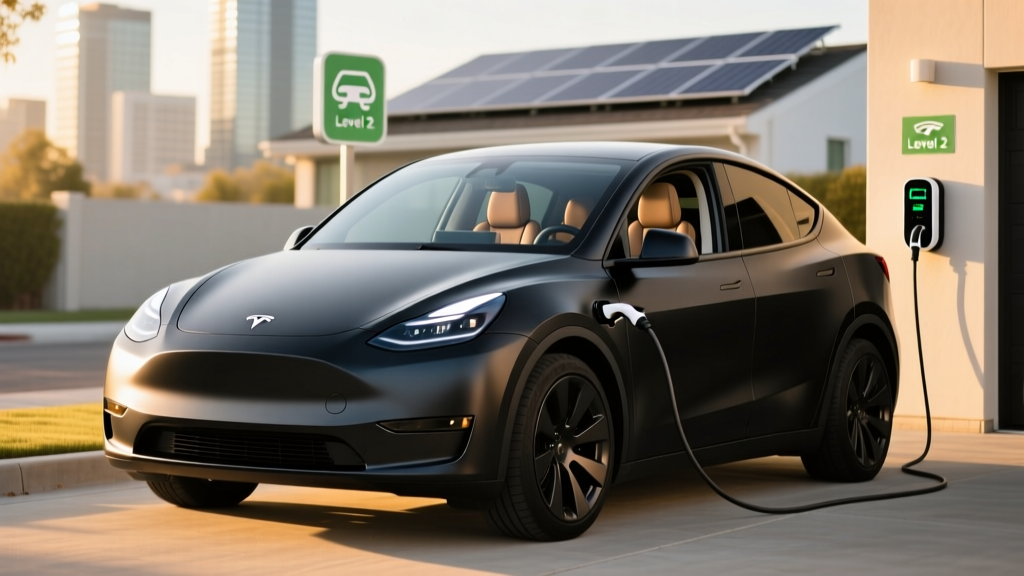
For home charging, Tesla's Wall Connector at 48 amps delivers 11.5 kW, adding roughly 34 miles of range per hour. A full 0-100% charge overnight takes about 11 hours. Note: the Cybertruck ships with a NACS (North American Charging Standard) connector natively, and Tesla's Supercharger network remains the most reliable DC fast-charging network in the U.S., with over 25,000 stalls nationwide.
Off-Road Performance: Where It Shines and Where It Doesn't
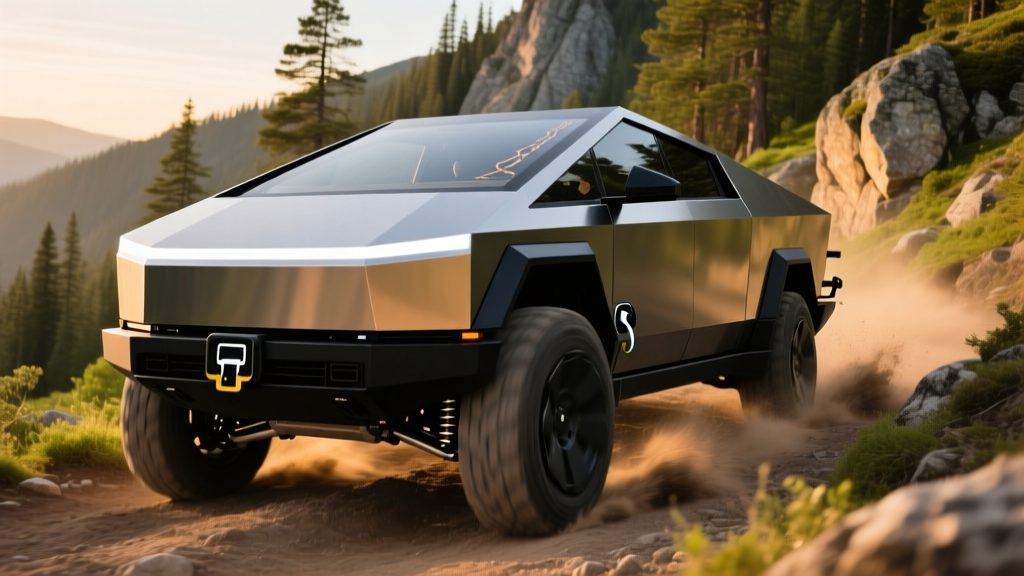
The Cybertruck's off-road hardware is legitimately impressive on paper. The adaptive air suspension offers 10 inches of travel and can raise the truck to 16 inches of ground clearance in Extract Mode. The rear electronic locking differential and torque-vectoring front motor provide traction management that rivals dedicated off-road trucks. Tesla's Off-Road Assist mode modulates throttle response and regenerative braking for low-speed technical terrain.
Where it excels: Forest service roads, fire roads, sandy washes, moderate rock gardens, and snow-covered trails. The instant torque from dual electric motors (600 hp combined) provides precise low-speed crawling without the lurching of a traditional transfer case. The sealed stainless-steel underbody armor protects battery and drivetrain components from rock strikes.
Where it struggles: The 6,603-pound curb weight is the Cybertruck's biggest off-road liability. On steep, loose climbs, weight works against traction. The 20-inch All-Terrain tires (Goodyear Wrangler Territory RT) are adequate for mixed use but not equivalent to dedicated mud-terrain or 35-inch off-road rubber. Approach and departure angles (35°/28°) are respectable but fall short of a Jeep Wrangler Rubicon (44°/37°). And if you damage the stainless panels or air suspension on a remote trail, field repairs are not an option—unlike a solid-axle truck with aftermarket support.
Towing to the trailhead: The 11,000-pound tow rating is class-leading for an electric pickup, though real-world range while towing a 5,000-pound trailer drops to roughly 150–180 miles depending on terrain and speed. Plan Supercharger stops accordingly.
Pricing, Tax Credit Eligibility, and Total Cost
| Trim | MSRP | Est. After §30D Credit* | Notes |
|---|---|---|---|
| Cybertruck AWD (Dual Motor) | $79,990 | ~$72,490 | Base off-road capable trim |
| Cybertruck Cyberbeast (Tri-Motor) | $99,990 | ~$92,490 | 845 hp, 320-mi range |
*Federal tax credit eligibility under IRS §30D is subject to multiple requirements for 2025-2026. You must meet all of the following:
- MSRP Cap: Pickup trucks must have an MSRP at or below $80,000. The AWD trim at $79,990 qualifies; the Cyberbeast at $99,990 does not.
- Buyer Income Limits: Modified AGI must not exceed $150,000 (single), $225,000 (head of household), or $300,000 (joint filers).
- Battery Component Sourcing: A percentage of battery components must be manufactured or assembled in North America, and critical minerals must be sourced from the U.S. or FTA partners. Tesla's domestic manufacturing in Austin, TX, positions the Cybertruck favorably, but exact qualification percentages shift annually.
- Point-of-Sale Transfer: As of 2024, eligible buyers can transfer the credit to the dealer at purchase, reducing the purchase price directly rather than waiting for a tax refund.
For the most current eligibility details, consult the IRS §30D Clean Vehicle Credit page before purchasing. Rules change frequently and vary by battery lot and production date.
Interior, Tech, and Daily Livability
The Cybertruck's cabin is minimalist even by Tesla standards: a single 18.5-inch front touchscreen handles all vehicle controls, navigation, and entertainment, with a smaller 9.4-inch rear screen for passengers. The steer-by-wire yoke (standard) takes significant adaptation—off-road, the reduced steering ratio means fewer hand-over-hand inputs on tight switchbacks, but the lack of a round wheel can feel disorienting during low-speed rock crawling.
Passenger space: Front legroom is generous at 41.6 inches; rear legroom measures 38.2 inches—adequate for adults on shorter trips but tighter than a Ford F-150 Lightning or Rivian R1T. The rear bench seats three, though the center position is compromised by the floor tunnel housing wiring.
Cargo: The 6-foot bed with a powered roll-top tonneau offers 67 cubic feet of lockable storage. The front trunk (frunk) adds lockable enclosed space, and the rear seats fold to extend interior cargo length. Total enclosed volume across frunk, cabin, and bed is approximately 120 cubic feet—competitive with midsize trucks but less than a full-size F-150 Lightning with its larger bed.
Driver assistance: The Cybertruck ships with Tesla Autopilot (SAE Level 2) including adaptive cruise control and lane-keeping. Full Self-Driving (Supervised) is available as a $8,000 add-on or $99/month subscription. Important: FSD remains a Level 2 system requiring active driver supervision at all times. It is not autonomous driving.
Pros and Cons
Pros
- Class-leading 11,000-lb tow rating for an EV pickup
- 16 inches of adjustable ground clearance via air suspension
- Access to Tesla Supercharger network (25,000+ stalls)
- Stainless-steel exoskeleton resists dents and scratches on trails
- Strong DC fast-charging (250 kW, 10-80% in ~28 min)
- Instant torque for precise low-speed trail crawling
- Underbody armor protects battery from rock strikes
Cons
- 6,603-lb curb weight hurts traction on steep, loose terrain
- Real-world highway range falls well short of 340-mi EPA sticker
- Yoke steering requires significant off-road adaptation
- Rear seat legroom trails F-150 Lightning and Rivian R1T
- Street-biased All-Terrain tires limit serious rock-crawling capability
- No spare tire (uses tire inflator kit); problematic for remote trails
- AWD trim at $79,990 barely qualifies for §30D credit MSRP cap
- Cold-weather range loss compounded by poor aerodynamics
How It Compares: Cybertruck vs. Rivian R1T vs. F-150 Lightning
If you're shopping for an off-road Tesla, you're likely cross-shopping these two alternatives:
Rivian R1T Dual-Motor: The R1T remains the more capable dedicated off-roader. It's lighter (~6,200 lbs), offers a quad-motor option with tank turns, has a full-size spare tire, and supports 34+ inches of water fording. However, it lacks Supercharger access (CCS/NACS adapter required), and range tops out at ~352 miles EPA with the Max Pack at a significantly higher price (~$99,000+).
Ford F-150 Lightning Lariat: More practical as a daily driver and work truck with a larger bed, better rear-seat space, and a starting price around $60,000. Off-road capability is limited to light fire-road use—it lacks air suspension, locking differentials, and meaningful ground clearance adjustment. Best for buyers who need a truck first and an EV second.
The Cybertruck occupies a middle ground: more off-road hardware than the Lightning, Supercharger access the Rivian lacks, but heavier and less trail-proven than the R1T.
Frequently Asked Questions
What is the real-world off-road range of the Cybertruck?
At low trail speeds (15-30 mph), aerodynamic drag is minimal, and the Cybertruck can achieve range close to or exceeding its EPA estimate. On a mixed-use day combining 50 miles of highway driving to the trailhead and 30 miles of trail use, expect to consume roughly 35-40 kWh total, leaving substantial buffer on the 123 kWh pack.
Does the Cybertruck qualify for the $7,500 federal EV tax credit?
The AWD trim at $79,990 MSRP falls under the $80,000 pickup truck cap for §30D. However, eligibility also depends on your income (AGI limits apply), the battery's critical-mineral and component sourcing for the specific production batch, and whether you've transferred a credit on another vehicle within the 3-year window. Always verify with the IRS and your tax professional before relying on the credit.
Can I put larger off-road tires on the Cybertruck?
The Cybertruck's 20-inch wheels can accommodate slightly wider all-terrain tires, but the air suspension and fender geometry limit upsizing. Tesla has not published an approved tire-size deviation list. Larger tires will reduce range, affect speedometer calibration, and may void warranty coverage on suspension components. Aftermarket 35-inch tire fits require significant modification.
How does the Cybertruck handle water crossings?
Tesla rates the Cybertruck for limited water fording, and the sealed battery pack and stainless body offer protection. However, Tesla has not published a specific fording depth like Rivian's 34+ inches. Approach water crossings with extreme caution—electric drivetrains tolerate water better than intakes on ICE trucks, but electronics and cabin seals remain vulnerable.
Is the Cybertruck worth buying over a Rivian R1T for off-road use?
Choose the Cybertruck if Supercharger network access and tow capacity (11,000 lbs) are priorities and your off-roading is moderate (fire roads, sand, snow). Choose the Rivian R1T if you plan serious rock crawling, need a full-size spare, value approach/departure angles, and don't mind relying on Electrify America or third-party DC networks. The R1T is the more purpose-built off-road vehicle; the Cybertruck is the better road-trip-and-tow platform that happens to handle trails competently.