The Rivian EDV: Amazon's Fleet and the Platform Behind It
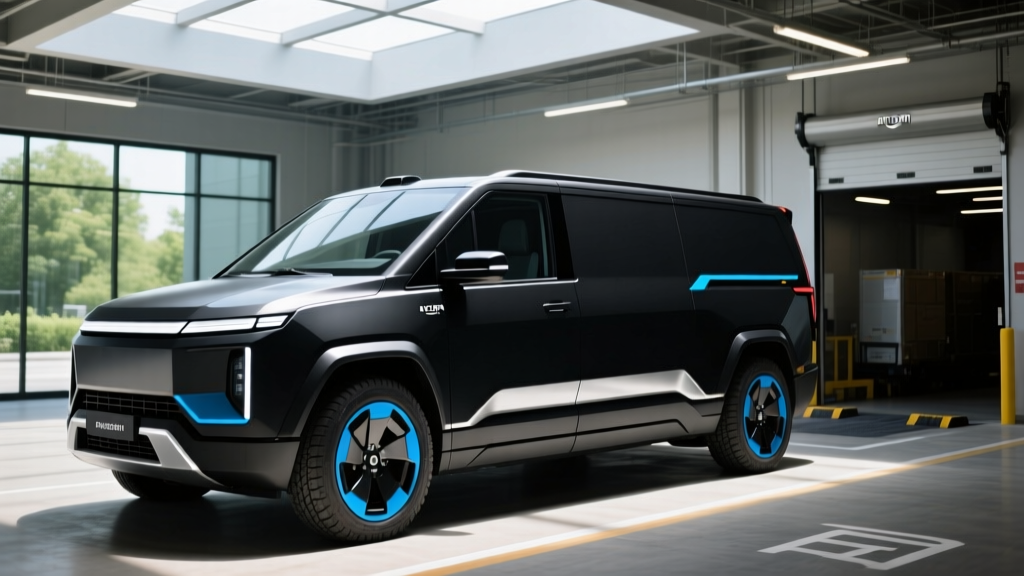
When shoppers search for the Rivian Origin, they're often looking for information on Rivian's next-generation vehicle architecture — the skateboard platform and software stack that underpins both its consumer vehicles (R1T, R1S) and its commercial fleet. The most visible expression of Rivian's commercial platform is the Rivian EDV (Electric Delivery Van), built exclusively for Amazon and now rolling across U.S. delivery routes in the thousands.
The EDV isn't a consumer vehicle you can buy. But understanding its specs, capabilities, and the platform engineering behind it provides critical insight into where Rivian's technology is headed — including the upcoming R2 and R3 consumer models. Here's a comprehensive look at the Rivian EDV, the commercial platform it rides on, and what it tells us about Rivian's engineering philosophy.
Rivian EDV Specifications at a Glance
| Specification | EDV-700 (Medium) | EDV-900 (Large) |
|---|---|---|
| Cargo Volume | ~500 cu ft | ~660 cu ft |
| Payload Capacity | ~2,500 lbs | ~3,300 lbs |
| Battery Capacity (est.) | ~105 kWh usable | ~135 kWh usable |
| EPA Range (est.) | ~150 miles | ~120–150 miles |
| Drivetrain | Single-motor FWD | Single-motor FWD |
| Horsepower | ~250 hp | ~250 hp |
| DC Fast Charge (peak) | ~125 kW | ~125 kW |
| Level 2 Charge Rate | ~11.5 kW | ~11.5 kW |
| Buyer Availability | Amazon exclusive (through 2030) | Amazon exclusive (through 2030) |
Note: Rivian has not published full EPA-certified specs for the EDV. The figures above reflect industry estimates based on fleet operator reports, patent filings, and Rivian's public disclosures. Amazon holds exclusive rights to the EDV through at least 2030.
Battery, Range, and Real-World Efficiency
Real-World Reality: The EDV is engineered for last-mile delivery routes averaging 70–120 miles per day. In cold climates (below 32°F), expect 15–25% range reduction due to cabin heating and battery thermal losses — consistent with NMC lithium-ion behavior. Amazon's route-optimization software accounts for this, ensuring vans return to depot with a 20–30% state-of-charge buffer.
The EDV uses a battery pack built on Rivian's proprietary skateboard architecture. While Rivian hasn't disclosed the exact cell chemistry for the commercial van, the consumer R1 vehicles use a mix of NMC (nickel manganese cobalt) cells from Samsung SDI. The EDV likely uses a similar NMC formulation optimized for cycle life over energy density — these vans are designed for 200,000+ miles of daily stop-and-go driving over a 10-year fleet lifespan.
Efficiency in a delivery van context is measured differently than in a passenger car. The EDV averages roughly 2.0–2.5 kWh/mile in mixed urban delivery driving — far less efficient than a consumer EV like the R1S, but competitive with the diesel step-vans it replaces. For context, a typical diesel delivery van achieves 8–10 mpg, making the EDV roughly 60–70% cheaper to "fuel" per mile on a national-average electricity vs. diesel basis.
Charging Speed and Depot Infrastructure
| Charging Level | Power (kW) | Typical Use Case | Time (10–80%) |
|---|---|---|---|
| Level 1 (120V) | ~1.4 kW | Not practical for fleet ops | N/A |
| Level 2 (240V depot) | ~11.5 kW | Overnight depot charging (primary) | ~8–10 hours |
| DC Fast Charge | ~125 kW peak | Mid-day top-up if needed | ~45 minutes |
The EDV's charging profile is depot-centric. Amazon has invested heavily in depot-level Level 2 infrastructure, installing thousands of ChargePoint and custom Rivian charging stations across its delivery stations nationwide. Most EDVs plug in at the end of a shift and charge overnight — there's rarely a need for DC fast charging in normal operations.
When DC fast charging is used, the EDV peaks around 125 kW. The charge curve is relatively flat compared to consumer EVs — fleet batteries are managed conservatively to maximize longevity, so you won't see the aggressive 200+ kW peaks that Rivian's R1 vehicles can achieve. A 10–80% session takes roughly 45 minutes, which is adequate for a mid-route top-up but not designed for the rapid turnaround that consumer road-trippers expect.
For fleet managers, the key metric isn't charge speed — it's total cost per charge cycle. Depot Level 2 charging at commercial electricity rates ($0.08–$0.15/kWh in most markets) costs roughly $10–$18 per full charge, compared to $50–$80 in diesel fuel for an equivalent route.
Platform Technology and Driver-Assist Systems
The EDV shares Rivian's core skateboard architecture with its consumer vehicles: a flat battery pack integrated into the chassis, independent suspension, and a modular body-on-frame design. But the commercial van diverges in important ways:
- Drivetrain: The EDV uses a single front-mounted motor (FWD), unlike the dual- and quad-motor AWD configurations in the R1T and R1S. This simplifies maintenance and reduces cost for a vehicle that never needs off-road capability.
- Software stack: The EDV runs Rivian's proprietary vehicle OS with deep integration into Amazon's delivery management software. Route optimization, package scanning, and driver telematics are built directly into the dash.
- Driver assist: The van includes a comprehensive ADAS suite — automatic emergency braking, lane-keeping assist, blind-spot monitoring with trailer-length coverage, and a 360-degree camera system. This is SAE Level 1–2 driver assistance, not autonomous driving. The driver must remain fully engaged at all times.
- Unique features: The EDV includes a powered curbside sliding door (reducing driver fatigue over 150+ stops per day), an integrated dolly system, and a "delivery mode" that keeps the cargo area climate-controlled while the cabin is unoccupied.
What the EDV Platform Tells Us About Rivian's Consumer Future
The search interest in "Rivian Origin" often reflects curiosity about Rivian's foundational technology and where it's going next. The EDV program has been a massive engineering and manufacturing learning experience for Rivian — and those lessons are directly feeding into the upcoming consumer vehicles:
- R2 (expected 2026): The midsize SUV will ride on a next-generation skateboard platform, likely with LFP battery options for lower-cost trims. Manufacturing lessons from the EDV's high-volume production (10,000+ units/year) are informing Rivian's new Georgia plant strategy.
- R3 (expected 2027+): The compact crossover is expected to use a further-optimized platform with potential 800V architecture for faster charging.
- Battery sourcing: The EDV program has pushed Rivian to diversify its cell supply chain beyond Samsung SDI, which bodes well for consumer vehicle availability and pricing.
Rivian's commercial success with Amazon also provides financial stability that benefits consumer buyers — the company has a steady revenue stream from fleet sales while scaling consumer production.
Tax Credit and Purchase Considerations
Because the EDV is an Amazon-exclusive commercial vehicle, it is not eligible for the IRS §30D federal EV tax credit that applies to personal-use vehicles. However, Rivian's consumer vehicles (R1T, R1S, and the upcoming R2) are subject to standard §30D rules:
- MSRP cap: Vans/SUVs/pickups must be priced at or below $80,000 (R1S and R1T trims vary — some exceed this threshold)
- Income cap: Adjusted gross income must not exceed $150,000 (single), $225,000 (head of household), or $300,000 (joint filing)
- Battery sourcing: Increasingly strict critical-mineral and battery-component sourcing requirements apply (phased annually through 2030)
- Point-of-sale transfer: Eligible buyers can transfer the credit to the dealer for an immediate price reduction at purchase
For current §30D eligibility details, consult IRS.gov's clean vehicle credits page and verify with a tax professional before purchasing.
Rivian EDV vs. Competitors in Commercial EV Delivery
| Vehicle | Range (est.) | Cargo Volume | Status (2026) |
|---|---|---|---|
| Rivian EDV | 120–150 mi | 500–660 cu ft | In production (Amazon exclusive) |
| BrightDrop Zevo 600 | ~150–250 mi | ~600 cu ft | In production (GM/FedEx/others) |
| Ford E-Transit | ~126 mi (EPA) | ~487 cu ft | In production (broadly available) |
| Canoo Lifestyle Delivery Vehicle | ~130 mi (est.) | ~450 cu ft | Limited production / financial uncertainty |
The EDV's primary advantage is its deep software integration with Amazon's logistics network — no competitor can match this. For non-Amazon fleet operators, the Ford E-Transit and GM's BrightDrop Zevo are the primary alternatives, with broader availability and competitive (if less optimized) specs.
Who Should Care About the Rivian EDV Platform?
You should follow Rivian's commercial platform if:
- You're a prospective R2 or R3 buyer wanting to understand Rivian's manufacturing maturity before committing
- You're a fleet manager evaluating whether Rivian might eventually open the EDV to non-Amazon buyers (post-2030 exclusivity)
- You're an EV investor tracking Rivian's revenue diversification beyond consumer vehicles
- You're simply curious about how commercial EV engineering differs from consumer EV design
Look elsewhere if:
- You're shopping for a personal EV today — the EDV isn't available to individual buyers
- You need a delivery van now — check the Ford E-Transit or BrightDrop Zevo instead
Frequently Asked Questions
Can I buy a Rivian EDV delivery van for personal use?
No. Amazon holds exclusive rights to the Rivian EDV through at least 2030. Rivian has not announced any plans to sell the EDV to individual consumers or non-Amazon fleet operators during this exclusivity period.
What is the real-world range of the Rivian EDV?
Estimated at 120–150 miles depending on the variant (EDV-700 vs. EDV-900), route profile, and weather. In cold climates, expect 15–25% range reduction. Amazon's route software ensures vans operate well within their range envelope.
How fast does the Rivian EDV charge?
At depot Level 2 stations (~11.5 kW), a full charge takes 8–10 hours overnight. On DC fast chargers, it peaks around 125 kW with a 10–80% time of roughly 45 minutes. Fleet operations rarely require DC fast charging.
Does the Rivian EDV qualify for the federal EV tax credit?
No. The §30D credit applies to personal-use vehicles. The EDV is a commercial fleet vehicle owned and operated by Amazon. Rivian's consumer vehicles (R1T, R1S, upcoming R2) are subject to standard §30D eligibility rules including MSRP caps, income limits, and battery-sourcing requirements.
What battery chemistry does the Rivian EDV use?
Rivian has not publicly confirmed the EDV's cell chemistry. Based on the company's supply chain and the durability requirements of fleet use, it likely uses NMC (nickel manganese cobalt) cells optimized for cycle life. LFP chemistry may appear in future Rivian platforms targeting lower-cost applications.
Is the Rivian EDV self-driving?
No. The EDV features SAE Level 1–2 driver-assist systems (AEB, lane-keeping, blind-spot monitoring) that require a fully engaged, licensed driver at all times. Amazon has not deployed autonomous delivery with the EDV.
What does the EDV tell us about the upcoming Rivian R2?
The EDV program has given Rivian high-volume manufacturing experience, battery supply-chain diversification, and software maturity that directly benefit the R2 program. Expect the R2 (anticipated 2026) to reflect lessons learned from producing and supporting thousands of EDVs in the field.
Sources: Rivian Commercial Van page, IRS Clean Vehicle Credits, fleet operator disclosures and industry reporting.