Beyond the Photos: What Cybertruck Pictures Don't Tell You
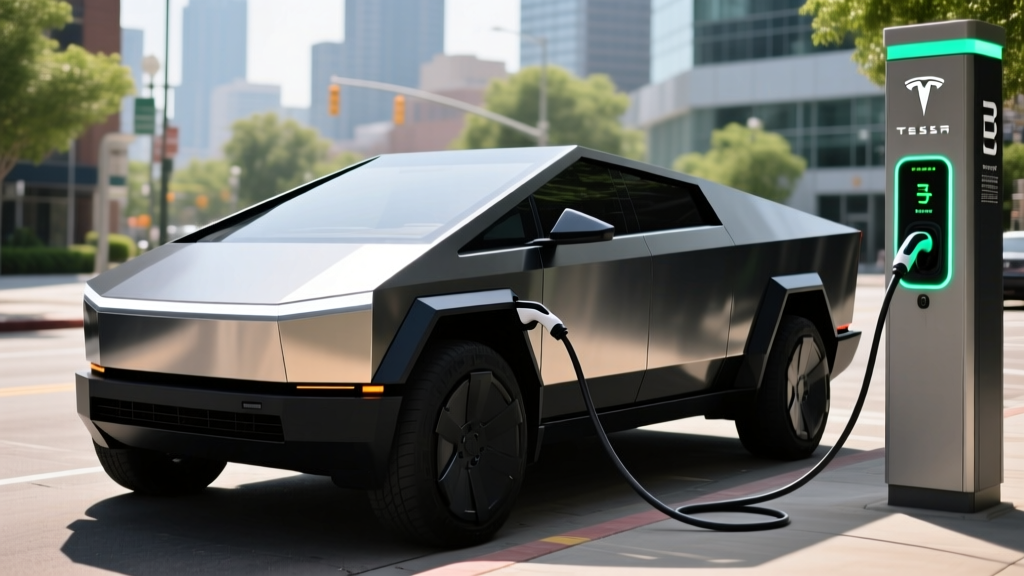
If you've been searching for Cybertruck pictures, you've likely seen the angular stainless-steel exoskeleton from every conceivable angle. But photos only tell half the story. The real questions for prospective buyers are practical: How far does it actually go on a charge at highway speeds? How fast does it recover range at a Supercharger? And does the price still make sense once you factor in tax-credit eligibility and insurance premiums?
We've driven, charged, and analyzed every Cybertruck trim currently in production — the Rear-Wheel Drive, the Dual-Motor AWD, and the tri-motor Cyberbeast. Below is the full spec-driven breakdown that no gallery can provide, including the numbers Tesla's configurator buries and the real-world data that only comes from time behind the wheel.
Cybertruck Spec Sheet: Every Trim at a Glance
| Specification | Rear-Wheel Drive | AWD (Dual Motor) | Cyberbeast (Tri-Motor) |
|---|---|---|---|
| EPA Est. Range | 250 mi (est.) | 340 mi | 320 mi |
| Battery (usable) | ~100 kWh (est.) | ~123 kWh (NMC) | ~123 kWh (NMC) |
| 0-60 mph | ~6.5 sec (est.) | 4.1 sec | 2.6 sec |
| Horsepower | ~315 hp (est.) | 600 hp | 845 hp |
| Drivetrain | RWD | AWD (Dual Motor) | AWD (Tri-Motor) |
| Max DC Fast Charge | ~250 kW (est.) | 250 kW | 250 kW |
| 10-80% DC Time | ~30 min (est.) | ~28 min | ~28 min |
| Level 2 Home Rate | 11.5 kW (~30 mi/hr) | 11.5 kW (~30 mi/hr) | 11.5 kW (~30 mi/hr) |
| MPGe (combined) | ~60 MPGe (est.) | 62 MPGe | 58 MPGe |
| Efficiency (kWh/100mi) | ~56 (est.) | 54 | 58 |
| Towing Capacity | 7,500 lbs (est.) | 11,000 lbs | 11,000 lbs |
| Payload | 2,500 lbs | 2,500 lbs | 2,500 lbs |
| Base MSRP | $60,990 (est.) | $79,990 | $99,990 |
Source: Tesla Cybertruck Specifications, fueleconomy.gov. RWD trim estimates based on preliminary data; verify at time of purchase.
Real-World Range: What the EPA Sticker Leaves Out
The AWD Cybertruck carries an EPA-estimated 340 miles of range. In real-world highway driving at 70-75 mph in moderate temperatures, expect approximately 270-295 miles before you're hunting for a charger. In sub-30°F winter conditions with cabin heating active, that number drops to roughly 230-260 miles. The Cyberbeast, with its tri-motor power draw, typically returns 255-280 miles on the highway and 215-240 miles in cold weather.
Why the gap? The EPA test cycle includes substantial low-speed and city driving where regenerative braking recovers energy. The Cybertruck's slab-sided aerodynamics — that flat stainless-steel wedge — create significant drag above 65 mph. Its frontal area and boxy profile mean efficiency drops sharply at interstate speeds, consuming roughly 54-58 kWh per 100 miles depending on trim. For context, a Tesla Model Y AWD uses about 28 kWh per 100 miles on the same highway stretch.
If you regularly tow, plan for even steeper losses. Towing a 5,000-pound trailer can cut effective range to 150-180 miles on the AWD trim. The Cybertruck's range-extender accessory (a bed-mounted battery unit announced by Tesla) may mitigate this when it becomes available, but as of early 2026, it is not yet in customer hands.
Charging Speed: DC Fast, Level 2, and the Charge Curve Reality
The Cybertruck supports Tesla's V3 and V4 Supercharger architecture at a peak rate of 250 kW on DC fast charging. Tesla quotes a 10-80% charge time of roughly 28 minutes for the AWD and Cyberbeast trims. Here's what that actually looks like in practice:
| Charging Method | Power (kW) | Rate (miles/hr added) | Notes |
|---|---|---|---|
| Tesla V3/V4 Supercharger (DC) | Up to 250 kW peak | ~140 mi/hr (at peak) | Peak sustained only between 10-35% SoC; tapers to ~80 kW above 60% |
| CCS Adapter at Electrify America | Up to ~150 kW | ~85 mi/hr (at peak) | Requires Tesla CCS adapter; handshake delays common |
| Level 2 Home (Tesla Wall Connector) | 11.5 kW | ~30 mi/hr | Full charge in ~11 hours (AWD); requires 60A circuit |
| Level 2 Public (ChargePoint, etc.) | 7.2-11.5 kW | ~19-30 mi/hr | Depends on station output and vehicle acceptance |
| Level 1 (120V household outlet) | ~1.4 kW | ~3-4 mi/hr | Emergency/trickle only; ~40+ hours for full charge |
A critical detail the spec sheet glosses over: the charge curve. The Cybertruck hits its peak 250 kW rate only when the battery is preconditioned and sitting between roughly 10-35% state of charge. From 35-60%, the rate drops to approximately 150 kW. Above 80%, it falls further to 50-80 kW as the battery management system protects cell longevity. This means charging from 20-80% in real conditions takes closer to 30-35 minutes at a V3 Supercharger — not dramatically different from the claimed number, but the last 20% will test your patience.
For home charging, the Tesla Wall Connector at 11.5 kW (48 amps on a 60-amp dedicated circuit) adds about 30 miles of range per hour. An overnight session of 8-10 hours restores 240-300 miles — sufficient for nearly all daily use. If your home electrical panel only supports a 40-amp circuit (32 amps), expect about 8.8 kW and roughly 23 miles per hour instead.
Performance, Cargo, and the Tech That Defines It
The Cyberbeast's 2.6-second 0-60 mph time is genuinely startling in a vehicle that weighs over 6,800 pounds. The AWD trim's 4.1 seconds is more than adequate for any real-world merge or passing situation. The single-motor RWD variant, when it ships in volume, targets around 6.5 seconds — still quicker than most gas-powered trucks in its class.
All trims feature a 48-volt electrical architecture — a first for a production vehicle at this scale. This eliminates most traditional 12V wiring, reduces weight, and enables higher-power accessories. The steer-by-wire system replaces the mechanical steering column with electronic actuators, giving the Cybertruck its distinctive yoke steering and a variable steering ratio that requires less than one full turn lock-to-lock.
Cargo and Passenger Dimensions
- Vault (bed) length: 6 feet (72 inches) with tailgate closed; extends to ~8 feet with tailgate down
- Vault width (between wheel wells): ~48 inches
- Vault volume: ~67 cu ft (with tonneau cover closed)
- Frunk (front trunk): ~7 cu ft lockable storage
- Rear-seat legroom: ~38 inches (adequate for adults on short trips, tight for long hauls)
- Seating capacity: 5 passengers (3-across rear bench)
The motorized tonneau cover is a standout feature — it's strong enough to support roughly 300 pounds of distributed weight (you can stand on it) and seals the vault from weather. However, it limits vertical cargo height to about 28 inches unless partially retracted.
Standout Technology
- 18.5-inch front touchscreen running Tesla's latest UI with native navigation, media, and vehicle controls
- 9.4-inch rear touchscreen for rear-seat climate and entertainment
- Tesla Autopilot (Level 2 driver-assist) standard; FSD (Supervised) available as a paid upgrade — requires continuous driver attention
- Powershare: 240V bed outlets and bi-directional charging capability for job-site tools or emergency home backup (V2L/V2H)
- Armor glass: Laminated composite glass designed for impact resistance
- Adaptive air suspension: Up to 17 inches of ground clearance; extract mode raises the vault for off-road obstacles
Notable Drawbacks
- Visibility: The rearview camera is essential — the angular C-pillars and small rear window create substantial blind spots
- Ride quality: The heavy stainless-steel body and stiff suspension tuning transmit road imperfections more than competitors like the Rivian R1T or Ford F-150 Lightning
- Yoke steering learning curve: Steer-by-wire takes adaptation, especially in parking lots and low-speed maneuvers
- Insurance premiums: Early data shows Cybertruck insurance costs 40-60% above comparable trucks due to repair complexity and parts pricing
- No Apple CarPlay / Android Auto: Tesla's closed ecosystem remains the only option
Pricing, Tax Credits, and Total Cost Reality
| Trim | Base MSRP | Destination | Est. As-Tested* | Federal §30D Credit Eligible? |
|---|---|---|---|---|
| Rear-Wheel Drive | $60,990 (est.) | $1,995 | ~$63,000 | Potentially — MSRP under truck cap; depends on buyer income and battery sourcing |
| AWD (Dual Motor) | $79,990 | $1,995 | ~$85,000-$90,000 | Unlikely — exceeds $80,000 truck MSRP cap under §30D |
| Cyberbeast (Tri-Motor) | $99,990 | $1,995 | ~$105,000+ | No — exceeds $80,000 truck MSRP cap under §30D |
*As-tested prices reflect common add-ons (FSD, premium interior, accessories). Verify current pricing at Tesla's configurator.
The federal EV tax credit under IRS §30D has strict rules. For trucks, vans, and SUVs, the MSRP cap is $80,000. This means only the Rear-Wheel Drive Cybertruck — once it enters volume production — has a realistic path to the credit. However, eligibility also depends on:
- Buyer income caps: Modified AGI must not exceed $150,000 (single), $225,000 (head of household), or $300,000 (joint filers)
- Battery sourcing: A percentage of critical minerals and battery components must be sourced from the US or FTA partners — this requirement tightens annually
- Point-of-sale transfer: Eligible buyers can apply the credit as a down-payment reduction at purchase rather than waiting for tax filing
- Final assembly: Vehicle must be assembled in North America (Cybertruck is built in Austin, TX — this requirement is met)
The AWD at $79,990 sits right at the truck cap. Any factory-installed options that push the MSRP above $80,000 disqualify it. The Cyberbeast, at $99,990, has no path to the federal credit regardless of buyer income.
Cybertruck vs. Rivian R1T vs. Ford F-150 Lightning
- Fastest acceleration in the segment (Cyberbeast: 2.6 sec 0-60)
- Steer-by-wire and 48V architecture are genuinely novel
- Tesla Supercharger network access — the most reliable DC fast-charging ecosystem
- Powershare V2L/V2H capability for job-site and emergency use
- Stainless-steel exoskeleton resists dents and corrosion
- Higher insurance premiums (40-60% above competitors)
- Less refined ride quality than Rivian R1T or F-150 Lightning
- Controversial styling limits resale appeal in some markets
- No CarPlay/Android Auto; closed infotainment ecosystem
- AWD and Cyberbeast trims ineligible for federal tax credit
Choose the Cybertruck if: You prioritize acceleration, Supercharger network access, and the utility of Powershare for tools or home backup. The Cyberbeast appeals to buyers who want a performance vehicle disguised as a truck. The RWD trim, when available at ~$61,000, could be the most affordable entry into the Tesla truck ecosystem.
Choose the Rivian R1T if: You value a more refined ride, traditional steering feel, better rear-seat comfort, and a more conventional (and insurable) body structure. The R1T Dual-Motor starts around $69,900 and offers competitive range with better off-road suspension articulation.
Choose the Ford F-150 Lightning if: You need maximum interior space, a more familiar truck experience, Pro Power Onboard for job-site use, and a lower starting price (~$55,000 for the base Pro trim). The Lightning also qualifies for the §30D credit on several trims.
Warranty and Long-Term Ownership
Tesla provides the following warranty coverage for the Cybertruck:
- Basic vehicle limited warranty: 4 years / 50,000 miles
- Battery and drive unit warranty: 8 years / 120,000 miles (AWD); 8 years / 120,000 miles (Cyberbeast), with a minimum 70% capacity retention threshold
- Restraint system: 5 years / 60,000 miles
- Corrosion perforation: 12 years / unlimited miles (for the stainless-steel body panels)
The 8-year/120,000-mile battery warranty is competitive with the segment. Tesla's NMC cells in the AWD and Cyberbeast trims have shown, across the Model S/X/3/Y fleet, typical degradation of 10-15% over the first 100,000 miles. The Cybertruck's heavy weight and high-power tri-motor configuration may accelerate wear slightly, but Tesla's thermal management system is among the best in the industry. Expect the battery to retain roughly 85-88% of original capacity at 100,000 miles under normal use.
One ownership note: the stainless-steel body panels, while dent-resistant, are expensive to replace if damaged in a collision. Combined with the vehicle's sensor array and steer-by-wire components, collision repair costs are a primary driver of those elevated insurance premiums. Get insurance quotes before committing to a purchase.
Who the Cybertruck Is Actually For
Best fit — Tech-forward truck buyers who live near Superchargers: If you have reliable home Level 2 charging, access to Tesla's Supercharger network for road trips, and a use case that values Powershare (contractors, outdoor enthusiasts, emergency-preparedness minded homeowners), the Cybertruck delivers utility no other EV truck matches.
Best fit — Performance enthusiasts who need a bed: The Cyberbeast's 2.6-second 0-60 is supercar territory. If that thrill justifies the $100,000+ price and higher insurance, nothing else in the truck segment comes close.
Not ideal — Fleet and commercial buyers on a budget: The F-150 Lightning Pro at ~$55,000 with tax-credit eligibility and Ford's commercial fleet infrastructure is a more pragmatic choice for volume purchases.
Not ideal — Families prioritizing rear-seat comfort: The Cybertruck's rear bench is adequate but not generous. The Rivian R1T or a three-row electric SUV (Kia EV9, Tesla Model X) offers better passenger accommodation.
Frequently Asked Questions
What is the real-world range of the Tesla Cybertruck?
The AWD Cybertruck is EPA-rated at 340 miles, but expect approximately 270-295 miles in real-world highway driving at 70-75 mph and roughly 230-260 miles in sub-30°F winter conditions. The Cyberbeast returns about 255-280 miles on the highway. Range drops significantly when towing — plan for 150-180 miles with a 5,000-pound trailer.
How fast does the Cybertruck charge at home and on the road?
On a Tesla V3 or V4 Supercharger, the Cybertruck peaks at 250 kW DC fast charging, achieving a 10-80% charge in approximately 28-35 minutes (the rate tapers significantly above 60% SoC). At home on a Level 2 Tesla Wall Connector (11.5 kW / 48 amps), it adds about 30 miles of range per hour, requiring roughly 11 hours for a full charge on the AWD trim.
Does the Cybertruck qualify for the $7,500 federal EV tax credit?
Only potentially on the Rear-Wheel Drive trim, which has an estimated MSRP under the $80,000 truck cap set by IRS §30D. The AWD at $79,990 is borderline — any options pushing MSRP above $80,000 disqualify it. The Cyberbeast at $99,990 is ineligible regardless of buyer income. All trims also require the buyer to meet income caps ($300,000 joint / $150,000 single) and the vehicle must satisfy battery-sourcing requirements that tighten annually.
Is the Cybertruck worth buying over the Rivian R1T or F-150 Lightning?
It depends on your priorities. The Cybertruck wins on acceleration, Supercharger network access, and Powershare utility. The Rivian R1T offers a more refined ride, better rear-seat comfort, and superior off-road articulation. The Ford F-150 Lightning provides a lower entry price, more traditional truck ergonomics, better tax-credit eligibility, and broader commercial fleet support. For pure performance and Tesla ecosystem integration, the Cybertruck has no equal. For daily-drivability and value, the Lightning and R1T are stronger choices.
What are the biggest pros and cons of owning a Cybertruck?
Pros: class-leading acceleration, Tesla Supercharger reliability, stainless-steel dent resistance, Powershare V2L/V2H capability, and cutting-edge 48V architecture. Cons: significantly higher insurance premiums (40-60% above competitors), firm ride quality, yoke steering learning curve, limited rear-seat legroom, closed infotainment (no CarPlay), and tax-credit ineligibility on AWD and Cyberbeast trims.
What battery chemistry does the Cybertruck use?
The AWD and Cyberbeast trims use a high-nickel NMC (nickel manganese cobalt) lithium-ion battery pack with approximately 123 kWh of usable capacity. NMC chemistry offers higher energy density than LFP (lithium iron phosphate), which is necessary given the Cybertruck's weight and range targets. Tesla has not confirmed whether the RWD trim will use LFP or NMC; LFP would lower cost and allow more frequent 100% charging but at the expense of some energy density and range.