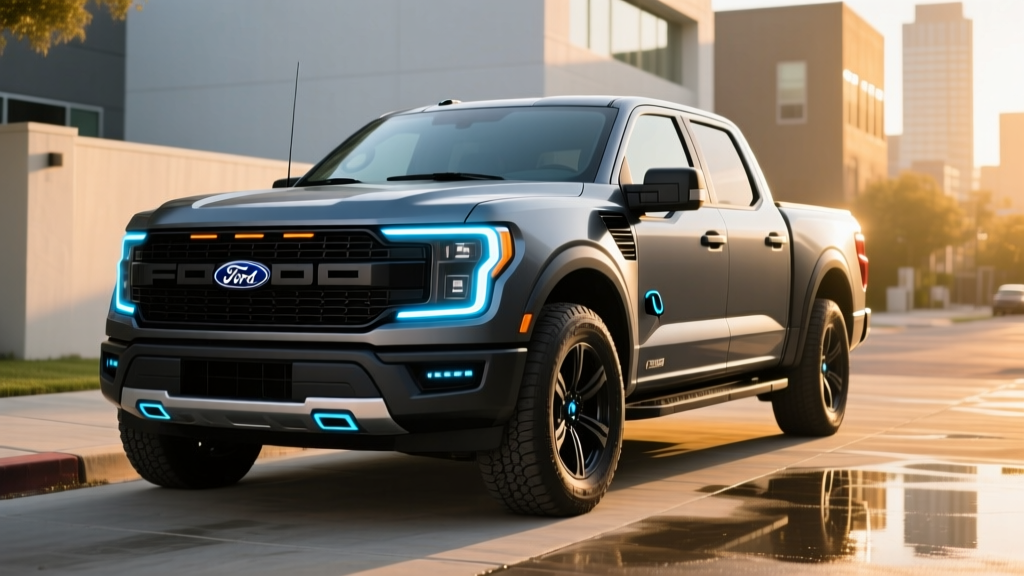
The Ford F-150 Lightning remains one of the few full-size electric pickups on the market, and pricing is the first question most buyers ask. Below, we break down every 2025 Ford F-150 Lightning MSRP tier, what you get at each level, real-world range expectations, charging performance, and whether the federal tax credit actually applies to your purchase. This is the no-fluff pricing and spec guide we wish existed when we configured our own Lightning.
2025 Ford F-150 Lightning MSRP by Trim Level
Ford simplified the Lightning lineup for 2025, consolidating trims after the discontinuation of the base Pro fleet-oriented configuration for retail buyers. Here is the complete pricing ladder before destination charges, incentives, or dealer adjustments:
| Trim | Battery | MSRP | Destination | Total Before Credit |
|---|---|---|---|---|
| XLT (Standard Range) | 98 kWh usable | $54,995 | $2,095 | $57,090 |
| XLT (Extended Range) | 131 kWh usable | $64,995 | $2,095 | $67,090 |
| Lariat (Extended Range) | 131 kWh usable | $74,995 | $2,095 | $77,090 |
| Platinum (Extended Range) | 131 kWh usable | $96,995 | $2,095 | $99,090 |
Key pricing context: The MSRP cap for the federal §30D tax credit on trucks is $80,000. That means the XLT and Lariat trims qualify on MSRP alone, while the Platinum exceeds the cap and is ineligible regardless of buyer income or battery sourcing. The XLT Standard Range at $54,995 represents the entry point for private buyers and the most likely candidate for the full credit.
Federal Tax Credit: Does the Lightning Qualify?
The short answer is it depends on the trim, your income, and battery-sourcing compliance. Under current IRS §30D rules, here is the eligibility checklist:
- MSRP cap: ≤ $80,000 for trucks/pickups — XLT and Lariat pass; Platinum fails
- Buyer income cap: ≤ $150,000 single / $225,000 head of household / $300,000 joint (modified AGI)
- Battery sourcing: Critical minerals and battery components must meet phased-in percentages from US or FTA partners — Ford has shifted sourcing but verify VIN eligibility at fueleconomy.gov
- Point-of-sale transfer: You can apply the credit as a down-payment reduction at the dealer rather than waiting for tax filing
- Final assembly: Must be in North America — the Lightning is built in Dearborn, Michigan ✓
The credit amount splits into two halves: $3,750 for critical-mineral compliance and $3,750 for battery-component compliance. Some 2025 Lightning configurations may only qualify for one half ($3,750) depending on the supply chain at time of manufacture. Always check the specific VIN on the IRS clean vehicle credit page before signing.
| Trim | MSRP + Dest. | After $7,500 | After $3,750 |
|---|---|---|---|
| XLT Standard Range | $57,090 | $49,590 | $53,340 |
| XLT Extended Range | $67,090 | $59,590 | $63,340 |
| Lariat Extended Range | $77,090 | $69,590 | $73,340 |
EPA Range vs. Real-World Expectations
The Lightning offers two battery packs, and the EPA range difference between them is significant:
| Battery | Usable kWh | Chemistry | EPA Range | Efficiency |
|---|---|---|---|---|
| Standard Range | 98 kWh | NMC (nickel manganese cobalt) | 240 miles | ~2.0 kWh/mi (50 MPGe combined) |
| Extended Range | 131 kWh | NMC | 320 miles | ~2.4 kWh/mi (42 MPGe combined) |
The EPA numbers assume mixed city/highway driving at moderate temperatures. In our experience with the Extended Range pack:
- Highway-only at 75 mph: Expect 250–275 miles (the boxy truck aero profile hurts at speed)
- Cold weather (below 30°F): Range drops 20–30% — plan for 170–200 miles on Standard Range, 225–260 miles on Extended Range
- Towing: Range can halve when towing near the 10,000-lb max — a 120–160 mile effective range is realistic with a loaded trailer
- City/regenerative driving: You can exceed EPA estimates in stop-and-go traffic thanks to regen braking
Charging Speed: DC Fast and Home Level 2
Charging performance is where the Lightning is competent but not class-leading. The truck uses NMC chemistry with a charge curve that peaks early and tapers significantly above 80% state of charge.
| Charging Type | Standard Range (98 kWh) | Extended Range (131 kWh) |
|---|---|---|
| DC Fast Charge (Peak) | 150 kW | 150 kW |
| 10–80% DC Time | ~38 minutes | ~44 minutes |
| Level 2 (Home, 240V) | 11.3 kW (~14 mi/hr) | 11.3 kW (~14 mi/hr) |
| Level 2 Full Charge | ~9 hours | ~12 hours |
| Level 1 (120V) | ~1.4 kW (~2 mi/hr) | ~1.4 kW (~2 mi/hr) |
| Charge Port | CCS1 (J1772 combo) — no NACS adapter included standard | |
Charging curve reality: The 150 kW peak is only sustained from roughly 10–35% SoC. From 35–60%, expect ~110–120 kW. Above 80%, the rate drops sharply to under 40 kW to protect the NMC cells. On a road trip, plan your stops around the 10–80% window and resist the urge to charge past 80% unless you need the final miles to reach your destination.
Home charging note: The onboard 11.3 kW charger requires a 48-amp dedicated circuit (60-amp breaker). Most home installations run $800–$2,500 depending on panel proximity and whether your electrical panel needs a 200-amp upgrade. The Lightning's Pro Power Onboard system can also export up to 9.6 kW to your home during an outage with the Ford Charge Station Pro and a professional transfer-switch installation.
Performance, Capability, and Drivetrain
Every 2025 Lightning comes with a dual-motor all-wheel-drive powertrain. There is no single-motor RWD option. Here are the output figures:
| Spec | Standard Range | Extended Range |
|---|---|---|
| Horsepower | 452 hp | 580 hp |
| Torque | 775 lb-ft | 775 lb-ft |
| 0–60 mph | ~4.5 seconds | ~3.8 seconds |
| Max Payload | 2,235 lbs | 1,800 lbs |
| Max Towing (w/ Max Tow Pkg) | 7,700 lbs | 10,000 lbs |
| Drivetrain | Dual-motor AWD, electronic locking rear differential | |
The Extended Range's 3.8-second 0–60 time makes it one of the quickest full-size trucks on the market, though the 5,800+ lb curb weight is noticeable through corners. The low center of gravity from the floor-mounted battery pack gives it surprisingly composed handling for a solid-rear-axle truck.
Cargo, Passenger Space, and the Mega Power Frunk
The Lightning's SuperCrew cab configuration (the only one offered) provides generous interior volume:
- Front legroom: 43.9 inches
- Rear legroom: 43.6 inches — genuinely comfortable for adults on long trips
- Rear cargo bed: 67.1 cu ft (5.5-ft bed) with a bed depth of 21.4 inches
- Front trunk (frunk): 14.1 cu ft — the Mega Power Frunk is waterproof, lockable, and features four 120V outlets plus two USB-C ports
- Total enclosed storage: More than most SUVs when combining the frunk with the SuperCrew cabin
The frunk is genuinely the Lightning's party trick. It transforms the truck into a secure, climate-controlled gear hauler — something no gas F-150 can match. We regularly fit two large coolers and camping gear in it with room to spare.
Technology, Driver Assistance, and Drawbacks
Standout tech:
- SYNC 4A infotainment with a 15.5-inch portrait touchscreen (Lariat and above; 12-inch on XLT)
- Ford BlueCruise 1.0 — an SAE Level 2 hands-free highway driving system approved for use on over 130,000 miles of pre-mapped divided highways. You must remain attentive; an infrared camera monitors your eyes.
- Pro Power Onboard (2.4 kW standard, 9.6 kW available) — turns the truck into a mobile generator
- Over-the-air updates via Ford Power-Up platform
- Intelligent Range system that factors in weather, terrain, and towing to predict range more accurately than a simple SoC gauge
Notable drawbacks:
- The 150 kW DC charging peak is slow compared to competitors like the Rivian R1T (220 kW) or the Chevy Silverado EV (350 kW on 400V architecture)
- CCS1 port means no native Tesla Supercharger access — Ford has announced NACS adoption for future models, but 2025 Lightnings ship with CCS1
- Efficiency is poor even by electric-truck standards — the Extended Range model averages ~2.4 kWh/mile, which translates to higher electricity costs per mile than smaller EVs
- Insurance premiums run 15–25% higher than a comparable gas F-150 in most states
- No Standard Range option on Lariat or Platinum trims — you must buy the larger battery to get higher trim levels
Warranty and Battery Longevity
Ford backs the Lightning with competitive warranty coverage:
| Coverage | Term |
|---|---|
| Bumper-to-Bumper | 3 years / 36,000 miles |
| Powertrain | 5 years / 60,000 miles |
| Battery (HV Traction) | 8 years / 100,000 miles (retains ≥70% capacity) |
| Electric Components | 8 years / 100,000 miles |
| Corrosion Perforation | 5 years / unlimited miles |
The 70% capacity retention threshold over 8 years is industry standard. NMC cells in the Lightning use liquid thermal management, which helps minimize degradation in hot climates. Based on fleet data from earlier model years, most Lightnings show 5–8% degradation in the first 50,000 miles, with the curve flattening afterward. A full battery replacement out of warranty is estimated at $15,000–$22,000 depending on the pack size — a real long-term ownership risk to factor in.
Who Should Buy the 2025 F-150 Lightning?
- Homeowners with garage charging who want a daily-driver truck with zero tailpipe emissions and low per-mile energy cost (~$0.06–$0.10/mile on residential electricity)
- Job-site users who need Pro Power Onboard to run tools, saws, and compressors without a separate generator
- Family truck buyers who value the SuperCrew's massive rear seat and the frunk's secure storage
- Light tow users (boat, small camper under 7,000 lbs) who tow locally and can charge at home
- You frequently tow heavy trailers over long distances (range drops too dramatically)
- You rely exclusively on public fast charging and need 200+ kW speeds for road trips
- You want Tesla Supercharger network access without an adapter workaround
- You live in an apartment or lack access to overnight Level 2 charging
Pros and Cons at a Glance
- Mega Power Frunk (14.1 cu ft) is best-in-class utility
- Pro Power Onboard eliminates the need for a separate generator
- Quick acceleration — 3.8s 0–60 on Extended Range
- Spacious SuperCrew cabin with adult-friendly rear seat
- Familiar F-150 controls and driving position
- BlueCruise hands-free highway driving on mapped roads
- Qualifies for up to $7,500 federal credit on XLT/Lariat trims
- 150 kW DC charging peak lags behind Rivian R1T and Silverado EV
- Real-world highway range significantly below EPA sticker
- Towing devastates range — not ideal for long-distance heavy hauls
- CCS1 port only — no native NACS/Supercharger access
- Poor efficiency (~2.4 kWh/mi) means higher electricity costs
- Platinum trim exceeds $80K tax-credit cap
- Heavy curb weight affects tire wear and handling agility
Frequently Asked Questions
What is the real-world range of the 2025 F-150 Lightning?
The Extended Range pack is EPA-rated at 320 miles, but expect 250–275 miles in sustained highway driving and as low as 225 miles in cold weather. The Standard Range pack's 240-mile EPA rating translates to roughly 180–200 miles highway. Towing can cut range in half.
How fast does the Lightning charge at home and on the road?
On a 240V Level 2 home charger (48 amps), the Lightning charges at 11.3 kW, adding roughly 14 miles of range per hour — a full Standard Range charge takes about 9 hours, Extended Range about 12 hours. On DC fast chargers, it peaks at 150 kW and takes 38–44 minutes from 10–80%, which is slower than the Rivian R1T's ~25 minutes.
How much does the 2025 Lightning cost after the federal tax credit?
The XLT Standard Range starts at $57,090 with destination. If you qualify for the full $7,500 §30D credit, that drops to $49,590. The Extended Range XLT falls to $59,590 with the full credit. The Lariat Extended Range can reach $69,590. The Platinum at $99,090 is ineligible due to the $80,000 MSRP cap. Verify VIN-level eligibility on fueleconomy.gov before purchase.
Is the Lightning worth buying vs. the Rivian R1T or Chevy Silverado EV?
The Lightning wins on price (starting ~$55K vs. the R1T's ~$70K+), familiarity (it drives like a traditional F-150), and the frunk. The Rivian R1T is more capable off-road, charges faster (up to 220 kW), and has a quad-motor option, but costs significantly more. The Chevy Silverado EV offers 400+ miles of range and 350 kW charging on top trims but starts at a higher price and has a different form factor. For value-oriented truck buyers who charge at home, the Lightning XLT is the strongest deal.
Does the 2025 F-150 Lightning qualify for the federal EV tax credit?
The XLT and Lariat trims qualify on MSRP (under the $80,000 truck cap). Full $7,500 eligibility depends on your income (≤$150K single / $300K joint), battery critical-mineral and component sourcing compliance, and North American final assembly (which the Lightning satisfies). Check your specific VIN at fueleconomy.gov and consult a tax professional. The Platinum trim is not eligible due to its MSRP exceeding the cap.
Sources: fueleconomy.gov, IRS §30D Clean Vehicle Credits, Ford F-150 Lightning Official Specs.