The 2017 Tesla Model 3 in 2026: Still a Smart Used EV Buy?
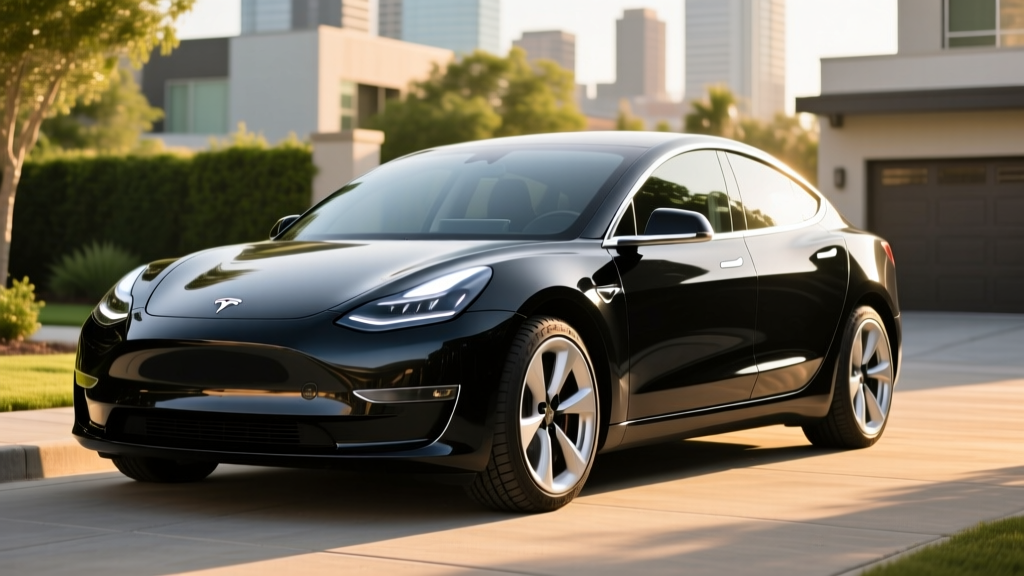
The 2017 Tesla Model 3 was the vehicle that promised to bring electric mobility to the masses — and in many ways, it delivered. As the first production year of Tesla's affordable sedan, early Long Range units shipped in late 2017 with an EPA-estimated 310 miles of range, a number that still holds up against many 2026 EVs. But buying a nearly decade-old EV requires a clear-eyed look at battery health, charging capability, and what ownership actually costs today.
This review examines the 2017 Model 3 through a 2026 ownership lens: real-world range you can expect, battery degradation realities, charging speeds on today's networks, and whether this first-year car qualifies for any federal tax incentives on the used market.
Spec Sheet: 2017 Tesla Model 3 Long Range RWD
| Specification | 2017 Model 3 Long Range RWD |
|---|---|
| EPA Range | 310 miles |
| Battery Capacity (Usable) | ~75 kWh (NMC) |
| Drivetrain | Rear-Wheel Drive (single motor) |
| Horsepower | 271 hp |
| 0–60 mph | 5.1 seconds |
| EPA Efficiency | 130 MPGe (combined) / 26 kWh/100 mi |
| Max DC Fast Charge | ~145 kW peak |
| 10–80% DC Charge Time | ~30–35 minutes |
| Level 2 Home Charging | 11.5 kW (48A) / ~37 mi/hr |
| Cargo Volume | 15 cu ft (trunk) + 4.2 cu ft (frunk) |
| Rear Legroom | 35.2 inches |
| Battery Warranty (Original) | 8 yr / 120,000 mi (Long Range) |
| Original Base MSRP | $49,000 |
| Avg. Used Price (2026) | $14,000–$19,000 |
Sources: EPA fueleconomy.gov, Tesla historical spec sheets.
Real-World Range: What 310 EPA Miles Means Today
EPA Sticker: 310 miles
Real-World Expectation (2026, Used Unit): 230–270 miles depending on battery health, temperature, and driving style.
The 310-mile EPA figure was measured on a brand-new battery in controlled conditions. In 2026, a 2017 Model 3 with 80,000–100,000 miles will have experienced some battery degradation. Tesla's NMC (nickel-manganese-cobalt) chemistry in this era typically shows 8–12% capacity loss at this mileage, meaning usable capacity may be closer to 66–69 kWh rather than the original 75 kWh.
Highway driving at 70+ mph reduces range further. Expect 220–250 miles on a full charge during sustained interstate travel, where aerodynamic drag dominates. City driving with regenerative braking is more favorable — 260–280 miles is achievable in mild weather stop-and-go traffic.
Cold-weather impact is significant. In sub-30°F conditions, NMC batteries in the 2017 Model 3 (which lacks a heat pump — Tesla added those starting with the 2021 refresh) can lose 25–35% of range. A 270-mile day in July becomes a 180–200-mile day in January in the upper Midwest. Cabin heating relies on a resistive PTC heater in the 2017 model, which draws substantial power from the pack.
Before purchasing any used 2017 Model 3, pull up the vehicle's battery health screen (Settings → Service → Battery Health in newer firmware, or check via the Tesla app on linked vehicles). Look for State of Health (SoH) above 85% for a solid commuter vehicle.
Charging Speed: 145 kW Peak on Today's DC Networks
| Charging Level | Power / Rate | Miles Added per Hour | Notes |
|---|---|---|---|
| Level 1 (120V household) | ~1.4 kW | ~5 mi/hr | Emergency/trickle only |
| Level 2 (240V home, 48A) | 11.5 kW | ~37 mi/hr | Full charge overnight (~8 hrs) |
| Level 2 (public, 40A) | 9.6 kW | ~31 mi/hr | Common at workplaces/malls |
| DC Fast Charge (Tesla Supercharger V2) | Up to 145 kW peak | ~170 mi in 30 min | Peak only; tapers above 60% |
| DC Fast Charge (Supercharger V3/V4) | Limited to ~145 kW | Same as V2 for this car | Car is the bottleneck, not the stall |
| CCS Adapter (non-Tesla DCFC) | Up to ~145 kW peak | Varies | Requires Tesla CCS adapter (sold separately) |
The 2017 Model 3 charges at a peak of roughly 145 kW on DC fast chargers. This was competitive in 2017, but many 2026 EVs charge at 250–350 kW. On a V3 or V4 Supercharger stall rated at 250+ kW, the 2017 Model 3 will still max out at its hardware limit of ~145 kW.
The charging curve matters more than peak kW. The 2017 Model 3 sustains its highest charge rates between 10–40% State of Charge (SoC), then progressively tapers. From 60–80%, expect rates to drop to 40–60 kW. The real-world 10–80% time is approximately 30–35 minutes — adequate for a meal stop but noticeably slower than a 2025 Model 3 Highland (~18 minutes on V3).
For home charging, a Level 2 wall connector at 48 amps adds roughly 37 miles of range per hour. An overnight session (8 hours) restores a full battery. Installation costs typically range from $800–$2,000 depending on panel proximity and whether a 200A panel upgrade is needed — factor this into your purchase budget.
The 2017 Model 3 shipped with a Tesla proprietary connector (now called NACS). In 2026, Tesla has opened its Supercharger network to non-Tesla EVs, and Tesla vehicles can access CCS stations using an official adapter (~$175). This expands your public charging options significantly compared to 2017.
Performance and Driving Dynamics
The 2017 Model 3 Long Range RWD delivers 271 horsepower from a single rear-mounted permanent-magnet synchronous motor. The 0–60 mph time of 5.1 seconds remains genuinely quick for daily driving, and instant torque makes merging and passing effortless. The low center of gravity (battery pack under the floor) gives it confident cornering for a sedan.
Ride quality is the 2017 car's most common criticism. Tesla's early Model 3 suspension tuning was firm — some owners call it harsh — especially over expansion joints and rough pavement. The 2021 refresh improved this substantially. If test-driving a 2017 unit, pay attention to how the ride feels on roads you'll travel daily.
Autopilot hardware: All 2017 Model 3s shipped with HW2.5 (Hardware 2.5), which supports Tesla's basic Autopilot (adaptive cruise, lane centering) and Enhanced Autopilot features. Some 2017 units received HW3.0 upgrades through Tesla's service program. Full Self-Driving (FSD Supervised) is available as a subscription ($99/month in 2026) or purchase, but it remains a SAE Level 2 system — the driver must remain fully engaged, hands on or near the wheel, eyes on the road at all times. It is not autonomous driving.
SAE Automation Level: Tesla Autopilot and FSD Supervised are Level 2 driver-assistance systems. The driver is responsible for all vehicle operation. Only Level 4 services (e.g., Waymo in designated zones) operate without a human driver.
Interior, Tech, and Practicality
The 2017 Model 3 interior is minimalist by design — a 15-inch center touchscreen handles virtually all vehicle controls, including climate, mirrors, and glovebox. There is no instrument cluster; speed and navigation appear on the left side of the main screen. This was polarizing in 2017 and remains so today.
Infotainment: Over-the-air (OTA) updates have kept the software current through 2026, including streaming services (Netflix, YouTube while parked), improved navigation, and updated Autopilot visualizations. However, the 2017 hardware has less processing headroom than newer Teslas, and some owners report slower UI responsiveness.
Cargo: 15 cubic feet in the trunk plus a 4.2 cu ft frunk totals ~19.2 cu ft — competitive with a Honda Accord. The 60/40 split-folding rear seat expands utility for longer items. Rear legroom at 35.2 inches is adequate for average adults but tighter than a Toyota Camry.
Notable drawbacks of the 2017 model year:
- No heat pump (resistive heating drains range in cold weather)
- Firm ride quality with limited sound insulation
- No heads-up display or traditional gauge cluster
- Early build-quality inconsistencies (panel gaps, trim rattle) — inspect carefully on used units
- Rear visibility is limited; rely on the backup camera
Pricing, Tax Credits, and Ownership Costs
The 2017 Model 3 Long Range originally started at $49,000 MSRP. In 2026, used examples typically sell for $14,000–$19,000 depending on mileage, condition, and battery health. This positions it as one of the most affordable long-range EVs on the used market.
| Cost Factor | Amount |
|---|---|
| Used Vehicle Price (avg.) | $14,000–$19,000 |
| Used EV Federal Tax Credit (§25E) | Up to $4,000 (30% of sale price, max $4,000) |
| Effective Price After Credit | $10,000–$15,000 |
| Home Level 2 Charger Install | $800–$2,000 |
| Annual Insurance (avg.) | $1,800–$2,400 |
| Annual Electricity Cost (12,000 mi @ $0.14/kWh) | ~$435 |
| Annual Maintenance | $200–$400 (tires, cabin filter, wiper fluid) |
Federal tax credit for used EVs (§25E): Unlike the new-vehicle §30D credit, the used-EV credit provides 30% of the sale price, up to $4,000, for vehicles sold for $25,000 or less through a licensed dealer. Income limits apply: modified adjusted gross income (MAGI) must not exceed $75,000 (single), $112,500 (head of household), or $150,000 (joint). The vehicle must be at least two model years old, and the credit can only be claimed once per vehicle. See IRS §25E guidelines for full eligibility rules. This credit is available at point of sale as of 2024 onward.
Battery warranty status: The 2017 Model 3 Long Range originally carried an 8-year/120,000-mile battery and drive unit warranty (70% minimum capacity retention). As of 2026, most 2017 units are past the 8-year time limit (which began from the vehicle's in-service date). Some low-mileage examples may still have remaining mileage coverage. Confirm warranty status via Tesla's VIN lookup or service center before purchase — out-of-warranty battery replacement costs $12,000–$16,000.
Pros and Cons: The Honest Assessment
✅ Pros
- 310-mile EPA range still competitive in 2026
- Access to Tesla Supercharger network (most reliable DC network in the US)
- OTA updates keep software current
- Low running costs (~$435/yr electricity vs. ~$1,500+ gas)
- Strong safety ratings (IIHS Top Safety Pick+, 5-star NHTSA)
- Up to $4,000 used EV tax credit
- Quick 5.1-sec 0–60 and confident handling
❌ Cons
- Battery warranty likely expired (8-year window closed)
- 145 kW peak DC charging is slow vs. 2026 competitors
- No heat pump — severe cold-weather range loss
- Firm ride and early build-quality issues
- Out-of-warranty battery replacement: $12,000–$16,000
- HW2.5 Autopilot hardware is dated
- No Apple CarPlay / Android Auto
Who Should Buy a 2017 Model 3 in 2026?
Choose the 2017 Model 3 Long Range if:
- You need an affordable commuter EV with 200+ real-world miles of range
- You have access to home Level 2 charging
- You value Supercharger network access for road trips
- You live in a mild-to-moderate climate (less cold-weather range penalty)
- You're comfortable with a minimalist, screen-centric interior
Look elsewhere if:
- You regularly drive in sub-20°F winters (no heat pump is a real limitation)
- You need a warranty-backed battery for peace of mind
- You want the latest driver-assistance hardware
- You need rear-seat space for tall adults or car seats
Compared to used alternatives in the $14,000–$20,000 range, the 2017 Model 3 offers more range than a used Chevrolet Bolt EV (238 mi EPA) and better charging infrastructure than a used Nissan Leaf. The 2018–2019 Hyundai Kona Electric (258 mi EPA) is a viable competitor with a more conventional interior, but lacks Supercharger access.
Frequently Asked Questions
What is the real-world range of a 2017 Tesla Model 3 today?
Expect 230–270 miles on a full charge for a typical used unit with moderate degradation. Highway driving at 75 mph drops this to 220–250 miles. In cold weather below 30°F, range can fall to 180–200 miles due to the resistive heating system and lack of a heat pump.
How fast does the 2017 Model 3 charge?
DC fast charging peaks at ~145 kW, with a 10–80% session taking 30–35 minutes on a Supercharger or CCS station. Home Level 2 charging at 48A (11.5 kW) adds about 37 miles per hour, fully recharging overnight in roughly 8 hours. Level 1 (120V) adds only ~5 miles per hour and is suitable only for emergencies or very low-mileage drivers.
Does the 2017 Tesla Model 3 qualify for a federal tax credit?
Not the new-vehicle §30D credit, but it may qualify for the used clean vehicle credit (§25E): up to $4,000 (30% of sale price) if purchased from a licensed dealer for $25,000 or less, and if the buyer meets income limits ($75K single / $150K joint). Verify eligibility at IRS.gov or with a tax professional.
Is the battery warranty still valid on a 2017 Model 3?
Most 2017 Model 3 Long Range units have exceeded the 8-year battery warranty window (which runs from the original in-service date). Some low-mileage examples delivered in late 2017/early 2018 may retain mileage-based coverage (up to 120,000 miles). Always verify via Tesla service before purchase.
Is the 2017 Model 3 worth buying vs. newer used EVs?
At $14,000–$19,000 (potentially $10,000–$15,000 after the used EV credit), it offers exceptional range-per-dollar. The trade-offs are an expired battery warranty, slower charging, no heat pump, and dated Autopilot hardware. If those limitations fit your situation, it remains one of the best values in used EVs. If battery warranty is a priority, look at certified pre-owned 2021+ Model 3s or a used Hyundai Ioniq 5 with remaining factory coverage.
Can I charge a 2017 Model 3 at non-Tesla charging stations?
Yes. Tesla sells an official CCS adapter (~$175) that allows 2017 Model 3s to use Electrify America, EVgo, and other CCS-equipped networks. You can also use the Tesla app to find and initiate sessions at select non-Tesla chargers that support NACS.
Safety ratings: 5-star overall from NHTSA; IIHS Top Safety Pick+. For current used pricing, check Tesla's certified pre-owned inventory and third-party marketplaces.