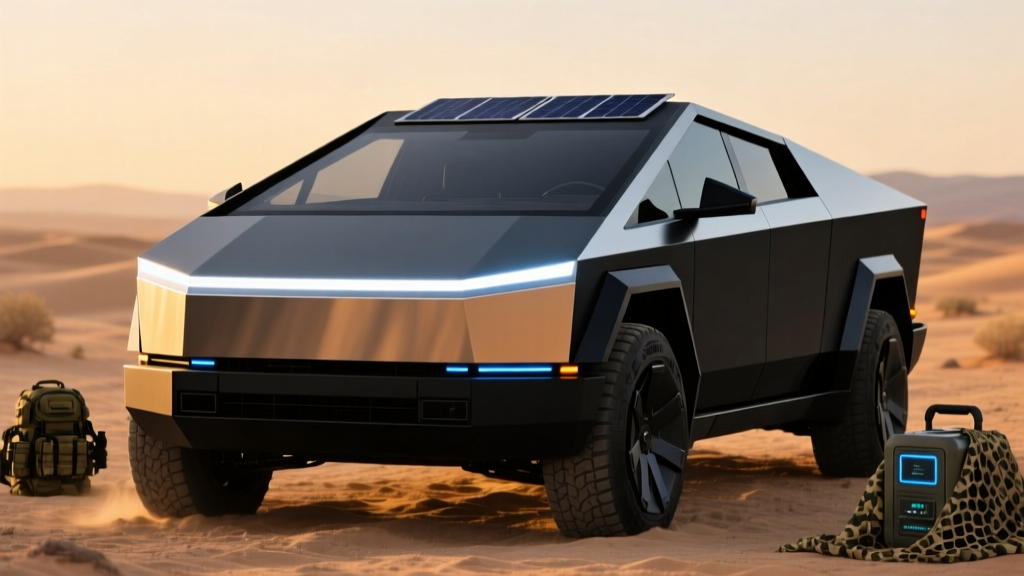
The phrase "military Cybertruck" has circulated since Tesla CEO Elon Musk floated the idea of an armored, defense-spec variant of the Cybertruck pickup. While no official military-grade Cybertruck is available for civilian purchase, the conversation sits at the intersection of Tesla's government contracts, the Cybertruck's stainless-steel exoskeleton, and a growing aftermarket for tactical upfits. This review covers what a defense-oriented Cybertruck could mean, what the civilian 2026 Cybertruck actually delivers, and whether the platform is worth your money today.
What Is the Military Cybertruck?
Tesla has not released a production "military Cybertruck." What does exist are three threads fueling the concept:
- Tesla's defense and government fleet interest: The Cybertruck's stainless-steel body, high tow rating, and off-road capability have drawn attention from defense contractors exploring electrified tactical vehicles.
- Aftermarket armor and upfit kits: Companies like AddArmor and Texas-based outfitters offer ballistic glass, underbody plating, and run-flat systems for the civilian Cybertruck.
- Speculative renders and concepts: Social media and defense blogs have circulated "Cybertruck APC" renders, but none are in production.
For buyers researching the keyword, the practical question is: does the stock Cybertruck platform have the bones for tactical, overland, or fleet use? The answer is yes — with caveats on serviceability, charging infrastructure in remote areas, and Tesla's government-fleet support.
2026 Cybertruck Specs: Range, Battery, and Chemistry
| Spec | AWD | Cyberbeast |
|---|---|---|
| EPA Range | 340 mi | 320 mi |
| Battery (usable) | ~123 kWh, NMC | ~123 kWh, NMC |
| 0-60 mph | 4.1 sec | 2.6 sec |
| Horsepower | 600 HP | 845 HP |
| Tow Rating | 11,000 lb | 11,000 lb |
| MPGe (combined) | 79 MPGe | 76 MPGe |
| Efficiency | 48 kWh/100mi | 50 kWh/100mi |
Charging Speed: DC Fast, Level 2, and the 800V Architecture
The Cybertruck uses Tesla's 800-volt architecture, enabling some of the fastest charging in the full-size truck segment.
| Level | Power | Delivery |
|---|---|---|
| DC Fast (Supercharger V4) | Peak 250 kW | 10–80% in ~28 min |
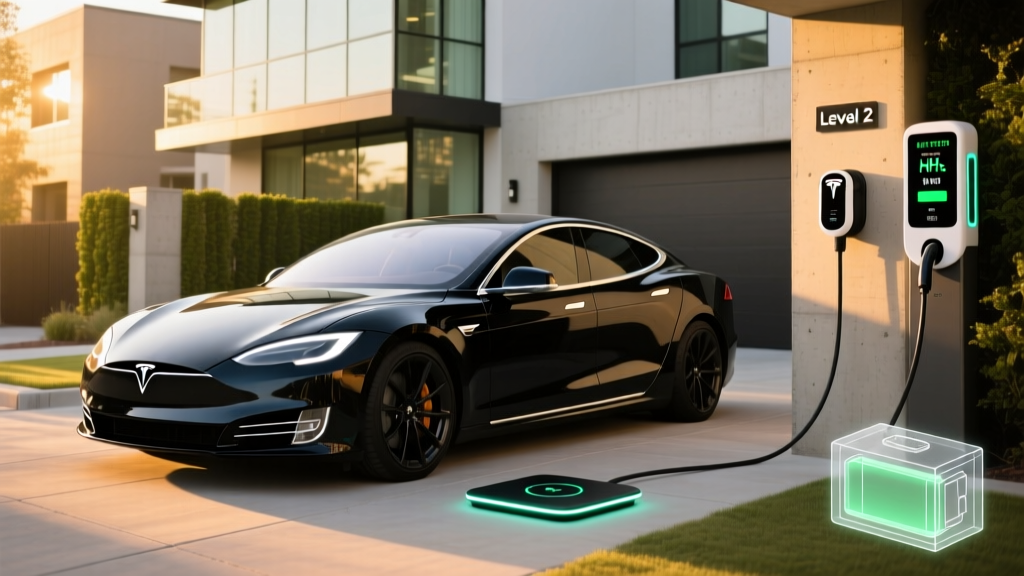
| Level 2 (Tesla Wall Connector) | 11.5 kW / 48A | ~34 miles per hour |
| Level 1 (120V household) | 1.4 kW | ~4 miles per hour |
Charging-curve reality: the Cybertruck peaks near 250 kW only between roughly 10–35% state of charge, then tapers. A 10–80% session typically averages ~170 kW. Preconditioning the battery via the in-car navigation routing to a Supercharger is essential for hitting peak rates — cold-soaked packs without preconditioning can be capped below 100 kW.
Per Tesla's charging documentation, NACS is the native connector, and the included adapter opens access to CCS networks like Electrify America.
Pricing, Trims, and Federal Tax Credit Eligibility
| Trim | Base MSRP | §30D Credit Eligibility |
|---|---|---|
| AWD (Foundation Series ending, standard AWD rolling out) | $79,990 (est. post-Foundation) | Eligible up to $7,500 if buyer income & sourcing rules met |
| Cyberbeast | $99,990 | Eligible up to $7,500 (under $80k cap for trucks — Cyberbeast may exceed; verify) |
Federal §30D credit rules, per the IRS, require:
- MSRP cap: Vans, SUVs, and pickups capped at $80,000. The Cybertruck qualifies as a pickup.
- Buyer income cap: $150k single / $300k joint MAGI.
- Battery sourcing: Critical-mineral and battery-component percentages must meet annual thresholds; Tesla sources partly from North America but rules tighten yearly.
- Point-of-sale transfer: Eligible buyers can apply the credit at the dealer to reduce out-of-pocket.
Always verify current-year eligibility on fueleconomy.gov before purchasing — sourcing rules change annually and can disqualify a previously eligible trim.
Interior, Cargo, and Tech Features
The Cybertruck seats five with a 6.5-foot bed and a front trunk (frunk). Rear legroom measures ~38.4 inches, competitive with the F-150 Lightning and Rivian R1T. Cargo volume in the bed is approximately 74 cubic feet under the powered tonneau, plus ~7 cu ft in the frunk.
Standout tech:
- 18.5-inch center touchscreen with Tesla's latest UI
- Steer-by-wire with rear-wheel steering (tight 35-foot turning circle)
- Adaptive air suspension with 16 inches of travel and 17-inch ground clearance in Extract Mode
- Tesla Autopilot standard; FSD (Supervised) available as a $8,000 option or $99/month subscription
- Powershare vehicle-to-load (V2L): up to 11.5 kW of 120V/240V output for tools, camp gear, or emergency home backup
Warranty and Long-Term Ownership
Tesla covers the Cybertruck with:
- Basic vehicle: 4 years / 50,000 miles
- Battery and drive units: 8 years / 120,000 miles (with minimum 70% capacity retention)
The 123 kWh NMC pack is large and liquid-cooled, but NMC chemistry degrades faster than LFP if routinely charged to 100% — Tesla recommends daily charging to 80–90% for longevity. Replacement cost for a pack of this size is estimated at $18,000–$25,000 out of warranty, though full replacements are rare under normal use.
Cybertruck vs. F-150 Lightning vs. Rivian R1T
For buyers cross-shopping the "tactical truck" space:
- Ford F-150 Lightning: 320-mi Extended Range, lower starting MSRP (~$55k), proven fleet support, Pro Power Onboard. Better for traditional fleet buyers.
- Rivian R1T: 420-mi Max Pack option, quad-motor, more refined interior, higher price. Better for adventure/overland buyers.
- Cybertruck: Best tow rating (11,000 lb), stainless exoskeleton (corrosion-resistant), V2L output, and steer-by-wire. Best for buyers who want the most distinctive platform with strong utility.
Who Should Buy the Cybertruck — and Who Shouldn't
- You need 11,000-lb towing and high V2L output for job sites or off-grid use
- You want a corrosion-resistant stainless body for coastal or harsh-climate duty
- You're a Tesla-ecosystem buyer who values Supercharger access
- You need a traditional fleet-support network (Ford's advantage)
- You prefer a conventional steering wheel and proven service-center density
- You want maximum range per dollar (Rivian Max Pack or Silverado EV 4WT offer more)
Pros and Cons
Pros
- Class-leading 11,000-lb tow rating
- Stainless-steel exoskeleton resists dents and corrosion
- 250 kW DC fast charging, 10–80% in ~28 min
- 11.5 kW V2L (Powershare) for job-site or backup use
- Rear-wheel steering yields a compact turning radius
Cons
- Steer-by-wire learning curve; no mechanical backup
- Real-world highway range drops sharply when towing
- Cyberbeast MSRP may exceed §30D $80k cap
- Limited service-center density vs. legacy OEMs
- Sharp bed edges and panel gaps draw quality complaints
Frequently Asked Questions
Is there an actual military-spec Cybertruck?
No. Tesla has not released a production military Cybertruck. The term refers to speculative defense concepts and aftermarket armored upfits on the civilian truck.
What is the real-world range of the Cybertruck?
EPA 340 mi (AWD) / 320 mi (Cyberbeast). Expect 260–290 mi at highway speeds, ~240 mi in cold weather, and roughly half that when towing at max capacity.
Does the Cybertruck qualify for the $7,500 federal tax credit?
The AWD trim under the $80,000 MSRP pickup cap can qualify, subject to buyer income limits and battery-sourcing rules. Verify current-year status on the IRS and fueleconomy.gov before purchase.
How fast does the Cybertruck charge at home?
On a Tesla Wall Connector at 11.5 kW (48A), expect ~34 miles of range per hour — a full overnight session replenishes most daily driving.
Is the Cybertruck good for off-road or overland use?
Yes. Adaptive air suspension, 17-inch ground clearance in Extract Mode, and stainless underbody armor make it highly capable, though service support in remote areas remains a consideration.