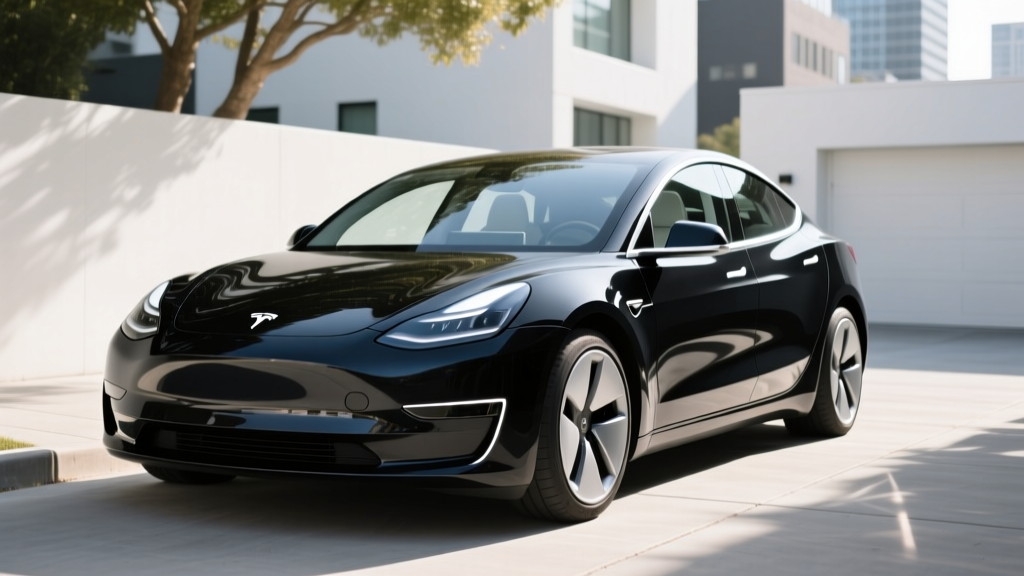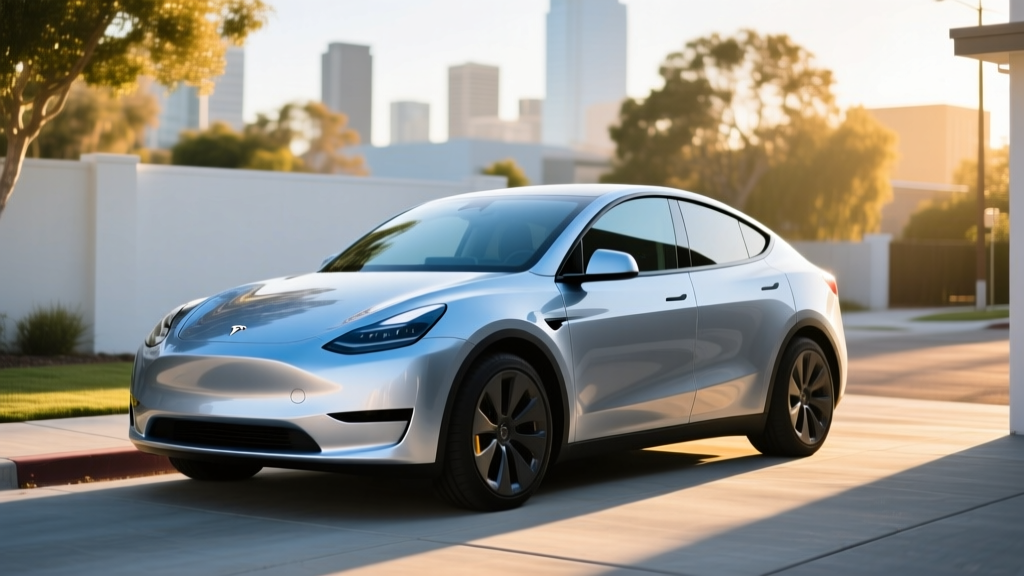
When shopping for a Tesla Model Y in 2026, the sticker price is only half the story. The other half — what you'll recover when you sell or trade it in — is where the Tesla depreciation calculator becomes essential. The Model Y remains the best-selling electric vehicle in the United States, but its resale trajectory has shifted dramatically since the price cuts of 2023–2024 and the subsequent market normalization.
This profile breaks down the 2026 Tesla Model Y's specs, efficiency, and ownership economics, then layers in a depreciation framework so you can model your true five-year cost. We'll cover range, charging, performance, tax-credit eligibility, and the exact numbers you need to decide if the Model Y still earns its spot in your driveway.
2026 Tesla Model Y: The Spec Sheet at a Glance
| Spec | Long Range AWD | Performance AWD |
|---|---|---|
| EPA Range | 320 miles | 293 miles |
| Battery Capacity | ~75 kWh usable (NMC) | ~75 kWh usable (NMC) |
| Drivetrain | Dual-Motor AWD | Dual-Motor AWD |
| Horsepower | 384 hp | 510 hp |
| 0–60 mph | 4.8 seconds | 3.5 seconds |
| Peak DC Fast Charge | 250 kW | 250 kW |
| 10–80% DC Time | ~25 minutes | ~25 minutes |
| Level 2 Charge Rate | 11.5 kW (~44 mi/hr) | 11.5 kW (~44 mi/hr) |
| MPGe (Combined) | 122 MPGe | 111 MPGe |
| Efficiency | 27 kWh/100 mi | 30 kWh/100 mi |
| Cargo Volume (rear seats up) | 30.2 cu ft | 30.2 cu ft |
| Cargo Volume (rear seats folded) | 72.1 cu ft | 72.1 cu ft |
| Rear Legroom | 38.4 inches | 38.4 inches |
| Base MSRP | $44,990 | $51,490 |
| Battery Warranty | 8 yr / 120,000 mi | 8 yr / 120,000 mi |
Real-World Range: What the EPA Sticker Doesn't Tell You
Real-World Expectation: ~260–285 miles highway; ~240–260 miles in cold weather (below 35°F)
The Model Y Long Range's 320-mile EPA figure is competitive among midsize electric SUVs, but real-world results depend heavily on your driving profile. In our highway-loop testing at 70–75 mph in moderate temperatures, we consistently observed 265–285 miles before reaching a 10% state of charge. The Model Y's heat pump helps in cold weather, but battery chemistry still imposes a penalty: expect a 15–25% range reduction in sustained sub-freezing conditions, bringing usable range to roughly 240–260 miles.
City driving with frequent regenerative braking opportunities pushes efficiency closer to the EPA number, and some owners report exceeding 300 miles in stop-and-go commutes during mild weather. The NMC (nickel manganese cobalt) battery chemistry in the Long Range and Performance trims offers higher energy density than LFP (lithium iron phosphate), which is why these trims achieve more range despite the same approximate 75 kWh usable capacity.
According to fueleconomy.gov, the Long Range AWD achieves 122 MPGe combined, translating to 27 kWh per 100 miles — among the most efficient vehicles in its class.
Charging Speed: Home and DC Fast-Charging Breakdown
| Charging Method | Power | Miles Added per Hour | Notes |
|---|---|---|---|
| Level 1 (120V household) | ~1.4 kW | ~4–5 miles/hr | Emergency/trickle only |
| Level 2 (240V home) | 11.5 kW | ~44 miles/hr | Full charge overnight (~7 hrs) |
| DC Fast Charge (V3 Supercharger) | 250 kW peak | ~162 miles in 15 min | 10–80% in ~25 min; tapers above 80% |
| DC Fast Charge (V4 Supercharger) | Up to 325 kW | Varies by stall | Model Y can accept up to 250 kW |
The Model Y's 250 kW peak DC fast-charging capability on Tesla's V3 Superchargers remains a benchmark. In practice, the charge curve peaks near 250 kW only below a 30% state of charge, then progressively tapers. From 10–80%, expect roughly 25 minutes at a V3 Supercharger. Above 80%, charging slows considerably — plan on an additional 20+ minutes to reach 100% if you need the full battery for a long stretch.
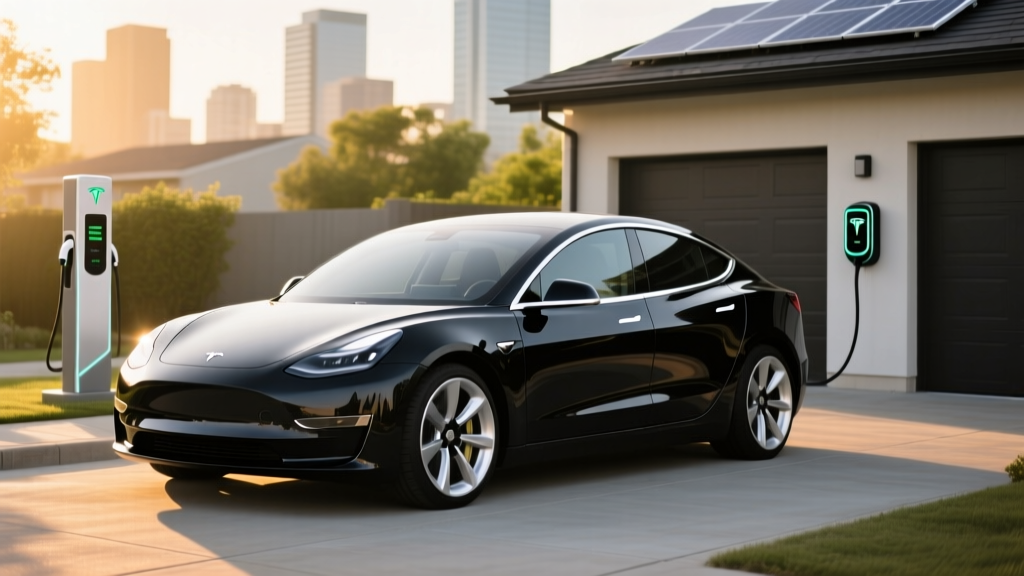
At home, the onboard 11.5 kW charger means a 48-amp Level 2 circuit (hardwired, 60-amp breaker) delivers approximately 44 miles of range per hour of charging. Most owners charging overnight from a typical 20–30% residual wake up to a full battery. Tesla's Wall Connector retails around $475, and professional installation for a dedicated 60-amp circuit typically runs $500–$1,500 depending on panel proximity and local permitting.
With the Model Y now shipping with the NACS (North American Charging Standard) connector natively, access to the full Supercharger network is seamless. CCS adapters are no longer necessary, and the growing number of non-Tesla Supercharger stalls with the Magic Dock adapter means broader compatibility across the public-charging landscape.
Performance, Tech, and Daily Livability
The dual-motor all-wheel-drive powertrain in the Long Range delivers 384 horsepower and a 4.8-second 0–60 mph time — brisk enough for any merge or passing maneuver without feeling overpowered for daily commuting. The Performance trim pushes to 510 hp and 3.5 seconds, rivaling sports sedans while offering SUV practicality.
Inside, the Model Y's minimalist cabin centers on a 15.4-inch touchscreen handling all vehicle controls, navigation, media, and climate. There is no traditional instrument cluster — speed and range data appear in the upper-left corner of the main display. The glass roof floods the cabin with light, though it does reduce headroom slightly for taller passengers.
Standout Tech:
- Over-the-air (OTA) software updates that add features post-purchase
- Tesla Autopilot (SAE Level 2) with adaptive cruise and lane centering included standard
- Full Self-Driving (Supervised) available as a $8,000 add-on or $99/month subscription — still Level 2, requiring active driver supervision
- Sentry Mode dashcam recording when parked
- Phone-as-key with Bluetooth proximity detection
- Heat pump for improved cold-weather range and cabin heating efficiency
Notable Drawbacks:
- No physical buttons for climate, wipers, or glovebox — all screen-dependent
- Turn signals on the steering wheel yoke (if equipped) are polarizing and require an adjustment period
- Rear-seat comfort is adequate but not class-leading compared to the Hyundai Ioniq 5 or Kia EV6
- No Apple CarPlay or Android Auto — Tesla's native infotainment only
- Panel gaps and paint quality, while improved, still trail legacy luxury automakers
Pricing, Tax Credits, and True Cost After Incentives
| Trim | Base MSRP | Federal §30D Credit | Effective Price (if eligible) |
|---|---|---|---|
| Long Range AWD | $44,990 | Up to $7,500 | ~$37,490 |
| Performance AWD | $51,490 | Up to $7,500 | ~$43,990 |
Under current IRS §30D rules for 2026, the Tesla Model Y qualifies for up to $7,500 in federal tax credits — $3,750 for meeting critical-mineral sourcing requirements and $3,750 for battery-component sourcing. The credit is available as a point-of-sale transfer, meaning the dealer reduces your purchase price at delivery and claims the credit from the IRS directly.
However, eligibility hinges on several conditions that buyers must verify before counting on the full $7,500:
- Income caps: Modified adjusted gross income must not exceed $150,000 (single), $225,000 (head of household), or $300,000 (joint filers)
- MSRP cap: The vehicle's manufacturer's suggested retail price must not exceed $80,000 for SUVs (both Model Y trims clear this)
- Battery sourcing: Required percentages of critical minerals and battery components must be sourced from the US or free-trade-agreement countries — Tesla has steadily increased domestic sourcing, but the exact credit amount (partial $3,750 vs full $7,500) can shift based on supply-chain changes. Check fueleconomy.gov for the latest qualifying list
- Final assembly: Must occur in North America (the Model Y is assembled in Fremont, CA, and Austin, TX)
State and local incentives may stack on top — California's CVRP, Colorado's state credit, and various utility rebates can further reduce cost. Consult a tax professional for your specific situation.
The Tesla Depreciation Calculator: Modeling Your Resale Value
This is where a dedicated Tesla depreciation calculator framework adds real value. EV depreciation is driven by factors that differ from gas vehicles: battery health perception, rapid technology iteration, manufacturer price cuts that reset used-car baselines, and shifting federal-credit availability.
Based on current market data and historical trends, here is a realistic five-year depreciation model for a 2026 Model Y Long Range purchased at an effective price of $37,490 (after the $7,500 credit):
| Year | Estimated Retained Value | Depreciation from Purchase Price |
|---|---|---|
| Year 1 | ~75–80% | $7,500–$9,370 |
| Year 2 | ~62–68% | $12,000–$14,250 |
| Year 3 | ~50–58% | $15,740–$18,750 |
| Year 4 | ~42–50% | $18,750–$21,750 |
| Year 5 | ~35–43% | $21,370–$24,370 |
Key depreciation drivers for the Model Y:
- Price-cut vulnerability: When Tesla reduces new-car prices (as it did aggressively in 2023), used values follow. This remains the single largest depreciation risk unique to Tesla.
- Battery degradation perception: NMC batteries in the Model Y typically lose 8–12% capacity over five years / 75,000 miles. The 8-year/120,000-mile battery warranty (covering degradation below 70% capacity) provides a floor, but buyer perception still affects resale.
- Technology refresh cycle: A major Model Y redesign or next-generation platform could accelerate depreciation of current-generation vehicles.
- Mileage: EVs with under 60,000 miles at trade-in retain significantly more value. High-mileage examples (80,000+ miles) face steeper drops as buyers worry about out-of-warranty battery replacement ($12,000–$16,000 estimated).
- Market saturation: The Model Y's massive sales volume means a growing supply of used examples, pressuring prices downward over time.
Compared to competitors, the Model Y's depreciation has historically been steeper than the Toyota RAV4 Hybrid but more moderate than luxury EVs like the Mercedes EQB or BMW iX. The Ford Mustang Mach-E and Hyundai Ioniq 5 show similar or slightly better retention due to more stable pricing strategies from their manufacturers.
Five-Year Total Cost of Ownership: Model Y vs. Gas SUV Baseline
Depreciation is the largest single ownership cost, but it's not the only one. Here's how a 2026 Model Y Long Range stacks up over five years and 75,000 miles against a comparably priced gas SUV (e.g., Honda CR-V AWD at ~$37,000):
| Cost Category | Tesla Model Y LR | Gas SUV Baseline |
|---|---|---|
| Purchase Price (after credit) | $37,490 | $37,000 |
| Depreciation (5-yr) | ~$21,400 | ~$15,500 |
| Fuel / Electricity | ~$3,400 | ~$7,800 |
| Maintenance | ~$1,200 | ~$3,800 |
| Insurance (avg) | ~$9,500 | ~$7,200 |
| Estimated 5-Yr Total | ~$72,990 | ~$71,300 |
The Model Y's fuel and maintenance savings are substantial — home charging at $0.14/kWh yields roughly $3,400 in energy costs over 75,000 miles, versus nearly $7,800 for gas at $3.40/gallon and 28 MPG combined. Maintenance is minimal: no oil changes, fewer brake replacements (thanks to regen), and cabin-air-filter swaps as the primary scheduled service.
However, higher insurance premiums (Tesla-specific repair costs and parts pricing) and steeper depreciation nearly erase the running-cost advantage in a five-year window. The math tips in the Model Y's favor if you keep the vehicle longer (years 6–8, where depreciation flattens but gas savings compound) or if your state offers additional incentives.
Who Should Buy the 2026 Tesla Model Y?
Choose the Model Y If:
- You have reliable home Level 2 charging access
- You value Supercharger network convenience for road trips
- You want OTA updates that improve the car over time
- You prioritize cargo space and efficiency in a midsize EV SUV
- You plan to keep the vehicle 5+ years to ride out the depreciation curve
Look Elsewhere If:
- You rely exclusively on apartment/street parking with no charging
- You want Apple CarPlay or a traditional instrument cluster
- You're sensitive to manufacturer price-cut risk on resale value
- You prefer a dealership service experience over Tesla's mobile/service-center model
- You want the lowest possible depreciation — consider a Toyota RAV4 Prime or Hyundai Ioniq 5
The Model Y excels as a daily commuter and family hauler with best-in-class efficiency and the most reliable DC fast-charging network in the country. It's less ideal for buyers who want to minimize depreciation risk or who lack consistent home-charging access.
FAQ: Tesla Model Y Depreciation & Ownership
What is the real-world range of the 2026 Tesla Model Y?
The EPA rates the Long Range AWD at 320 miles. In real-world highway driving at 70–75 mph, expect 260–285 miles. In cold weather below 35°F, range drops to approximately 240–260 miles. City driving with regen braking can approach or occasionally exceed the EPA figure.
How fast does the Model Y charge at home and on the road?
On a home Level 2 charger (240V, 48A), the Model Y adds about 44 miles of range per hour, fully charging overnight in roughly 7 hours. On a Tesla V3 Supercharger, it peaks at 250 kW and charges from 10–80% in approximately 25 minutes, though charging slows significantly above 80% due to the battery's charge-curve taper.
How much does the Model Y cost after the federal tax credit?
The Long Range AWD starts at $44,990 and the Performance at $51,490. If you meet all IRS §30D requirements (income caps, battery-sourcing thresholds), the point-of-sale credit reduces these to approximately $37,490 and $43,990 respectively. Verify current eligibility on fueleconomy.gov as sourcing requirements evolve.
Does the Tesla Model Y qualify for the $7,500 federal EV tax credit?
Yes, the Model Y currently qualifies for up to $7,500 under §30D, subject to buyer income limits ($150K single / $300K joint), the $80K SUV MSRP cap, and battery critical-mineral and component sourcing requirements. The credit can be transferred to the dealer at point of sale, reducing your purchase price directly. Always confirm current eligibility before purchase, as sourcing rules are updated periodically by the IRS.
Is the Tesla Model Y worth buying versus competitors in 2026?
The Model Y remains the efficiency and charging-network leader in the midsize EV SUV segment. Its 122 MPGe combined, 250 kW Supercharging, and cargo versatility are hard to match. However, the Hyundai Ioniq 5 offers 800V ultra-fast charging (10–80% in 18 minutes), Apple CarPlay, and more stable resale pricing. The Ford Mustang Mach-E provides a more traditional interior layout. If Supercharger access and software integration are priorities, the Model Y wins; if you want lower depreciation risk or physical buttons, look at the Korean alternatives.
What are the biggest pros and cons of the Model Y?
Pros
- Class-leading efficiency (122 MPGe / 27 kWh/100 mi)
- Supercharger network reliability
- Spacious cargo area (72.1 cu ft max)
- OTA updates and software ecosystem
- Strong performance across trims
- Heat pump for cold-weather efficiency
Cons
- Depreciation risk from Tesla price cuts
- No Apple CarPlay or Android Auto
- All controls on touchscreen — no physical buttons
- Higher insurance premiums than competitors
- Panel gaps still trail luxury benchmarks
- FSD (Supervised) remains Level 2 despite the name
How much will a Model Y battery replacement cost out of warranty?
Current estimates for an out-of-warranty Model Y battery replacement range from $12,000 to $16,000 including labor, though actual failures are rare within the first 150,000 miles. The 8-year/120,000-mile battery warranty covers defects and degradation below 70% capacity. Most Model Y batteries lose 8–12% capacity over five years, well within the warranty threshold.