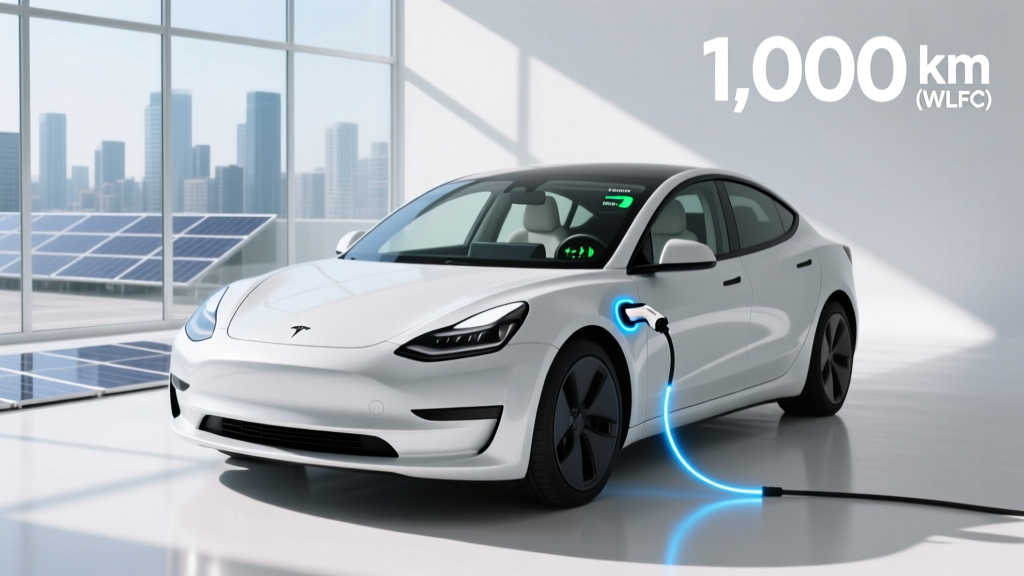
The Tesla Model 3 remains the default answer for buyers entering the EV market in 2026. After the Highlandland refresh settled into production and Tesla stabilized its Highland-derived lineup, the Model 3 offers a compelling mix of range, charging infrastructure access, and software refinement that competitors still chase. But with the Hyundai Ioniq 6, BMW i4, and refreshed Polestar 2 all pressing hard, the question isn't whether the Model 3 is good — it's whether it's still the smartest buy in its class, and whether stacking incentives like a referral discount tips the scales.
This review breaks down the 2026 Tesla Model 3's real-world range, charging performance, ownership costs, and tax credit eligibility. We'll also cover how to get a Tesla referral code and what it actually gets you in the current purchase ecosystem.
2026 Tesla Model 3: Core Specs at a Glance
| Specification | Model 3 RWD (Base) | Model 3 Long Range AWD | Model 3 Performance |
|---|---|---|---|
| EPA Range | 272 miles | 363 miles | 315 miles |
| Battery (usable) | ~57.5 kWh (LFP) | ~75 kWh (NMC) | ~75 kWh (NMC) |
| Drivetrain | Rear-Wheel Drive | Dual-Motor AWD | Dual-Motor AWD |
| Horsepower | 271 hp | 346 hp | 510 hp |
| 0–60 mph | 5.8 sec | 4.2 sec | 2.9 sec |
| Peak DC Fast Charge | 170 kW | 250 kW | 250 kW |
| 10–80% DCFC Time | ~25 min | ~22 min | ~22 min |
| Level 2 Home Charge | 11.5 kW (~44 mi/hr) | 11.5 kW (~44 mi/hr) | 11.5 kW (~44 mi/hr) |
| MPGe (combined) | 132 MPGe | 130 MPGe | 119 MPGe |
| Cargo Volume | 23 cu ft (trunk + frunk combined) | ||
| Base MSRP (2026) | $38,990 | $45,990 | $53,990 |
| Battery Warranty | 8 years / 100,000 miles (70% capacity retention) | ||
Source: fueleconomy.gov and Tesla's official 2026 specifications. Pricing reflects MSRP before destination fees and incentives.
Real-World Range: What the EPA Number Doesn't Tell You
EPA Sticker: 363 miles (Long Range AWD)
Real-World Expectation: 290–320 miles highway at 70 mph in moderate temps; 240–270 miles in sustained sub-30°F winter driving with cabin heat.
Tesla's EPA range estimates are among the most optimistic in the industry relative to real-world highway consumption. The Long Range AWD's 363-mile sticker is genuinely achievable in city and mixed suburban driving where regenerative braking recaptures energy constantly. But sustained highway travel at 70–80 mph — the scenario that causes range anxiety on road trips — typically yields 80–88% of the EPA figure in our experience and in third-party testing.
The base RWD trim's LFP (lithium iron phosphate) battery behaves differently from the NMC packs in the Long Range and Performance models. LFP chemistry tolerates regular 100% charging without the degradation concerns that plague NMC, meaning you can charge to full every night and actually access all 272 EPA miles daily. With NMC, Tesla recommends an 80% daily charge limit, effectively giving you ~290 usable miles on the Long Range for routine commuting unless you time a full charge for a road trip departure.
Cold weather hits all EVs, but the Model 3's heat pump (standard since the 2022 refresh) mitigates winter losses better than most competitors. Expect 15–25% range reduction in sustained freezing temperatures — less than the 30–40% some rivals suffer, but still a meaningful hit if your commute is already range-tight.
Charging Speed and Infrastructure: Tesla's Enduring Advantage
Charging is where the Model 3 still outclasses most of the EV market, not because of peak kW numbers alone, but because of the Supercharger network's reliability and the vehicle's thermal management during DC fast charging.
| Charging Level | Power / Rate | Miles Added per Hour |
|---|---|---|
| Level 1 (120V household) | ~1.4 kW | ~4–5 miles/hr |
| Level 2 (240V home, 48A) | 11.5 kW | ~44 miles/hr |
| DC Fast Charge (RWD) | Peak 170 kW | ~150 miles in 15 min |
| DC Fast Charge (LR/Perf) | Peak 250 kW | ~200 miles in 15 min |
The Long Range and Performance trims peak at 250 kW on V3 Superchargers, but — as with all EVs — that peak is not sustained across the full charge session. The Model 3's charge curve is aggressive from 10–40% SoC, then tapers progressively. A realistic 10–80% session takes about 22 minutes at a V3 stall, but if you arrive at a V4 Supercharger (increasingly common in 2026), you may see marginally faster mid-session throughput.
Home charging on a Level 2 Wall Connector at 48 amps delivers roughly 44 miles of range per hour, meaning an overnight 8-hour session replenishes ~350 miles — more than enough for any daily use case. Installation typically costs $800–$2,000 depending on your electrical panel's capacity and the run length from panel to garage. A 200-amp panel is usually sufficient; older homes with 100-amp service may need an upgrade ($1,500–$3,000 additional).
One critical note: Tesla now uses the NACS (North American Charging Standard) connector natively, and as of 2026, most major automakers have adopted NACS for their EVs. This means Supercharger access — once a Tesla-exclusive moat — is now shared with Ford, GM, Rivian, and others. The network is still excellent, but peak-hour congestion at popular corridor stations is increasing.
Performance and Driving Dynamics
The Model 3 Performance (2.9 seconds to 60 mph, 510 hp) remains one of the quickest sedans under $60,000, gas or electric. But even the base RWD at 5.8 seconds is quicker than most buyers will ever need, with instant torque delivery that makes highway merging effortless.
The Highland refresh brought meaningful suspension improvements: the 2026 Model 3 rides more compliantly over broken pavement than pre-2024 models, with reduced road noise thanks to acoustic glass and better isolation. The steering remains precise but artificially weighted — some drivers love the video-game immediacy, others find it numb compared to a BMW i4's helm.
Regenerative braking is strong and consistent, enabling genuine one-pedal driving in most conditions. Tesla removed the user-adjustable regen setting years ago, so you get Tesla's chosen deceleration curve or nothing — a minor irritant for drivers transitioning from other EVs with adjustable regen.
Pricing, Tax Credits, and How to Get a Tesla Referral Code
The 2026 Model 3 lineup starts at $38,990 for the RWD base trim, with the Long Range AWD at $45,990 and the Performance at $53,990. Add $1,390 for destination. Full Self-Driving (Supervised) remains a $8,000 add-on or $99/month subscription.
| Trim | MSRP (incl. dest.) | Est. Federal Credit (§30D) | Effective Price |
|---|---|---|---|
| RWD (Base) | $40,380 | Up to $7,500* | ~$32,880* |
| Long Range AWD | $47,380 | Up to $7,500* | ~$39,880* |
| Performance | $55,380 | Up to $7,500* | ~$47,880* |
*Federal tax credit eligibility under IRS §30D depends on your taxable income (caps: $150K single / $300K joint), vehicle MSRP (sedan cap: $55,000 — the Performance trim exceeds this), and battery component/critical mineral sourcing requirements that shift annually. The point-of-sale transfer option allows you to apply the credit as a down payment reduction at purchase. Verify current eligibility at IRS.gov or with a tax professional.
How to Get a Tesla Referral Code
Tesla's referral program has evolved significantly over the years and, as of 2026, operates on a rotating basis — sometimes active, sometimes paused. Here's how to secure one when the program is live:
- Ask an existing Tesla owner. Every Tesla owner with an active Tesla account has a unique referral link accessible via the Tesla app (Account → Referrals). This is the most reliable method.
- Check Tesla's website directly. When the program is active, Tesla sometimes displays referral links on the vehicle order page or in promotional banners.
- EV community forums. Sites like Reddit's r/TeslaMotors and Tesla Motors Club frequently have owners sharing referral links. Verify that the link resolves to Tesla's official domain before clicking.
- Avoid third-party "referral code" sites that ask for personal information — legitimate Tesla referrals are applied at the point of order through Tesla's own checkout flow.
What you get: Tesla's referral benefits change quarterly. Recent programs have offered $500–$1,000 off the purchase price, free Supercharging credits (typically 10,000 miles), or accelerated delivery windows. The referring owner typically receives credits toward their own Supercharging, accessories, or future vehicle purchases. Always confirm the current benefit structure on Tesla's site before ordering, as terms are non-negotiable and time-limited.
Interior, Tech, and Daily Livability
The Model 3's interior is a study in minimalism — some call it elegant, others call it sparse. A single 15.4-inch center touchscreen controls everything: climate, media, navigation, vehicle settings, and the glovebox release. There is no instrument cluster; speed and navigation instructions appear in the upper-left corner of the main screen. The 2026 refresh added ventilated front seats, ambient lighting, and rear-seat ventilation controls — addressing longstanding complaints about rear passenger comfort.
Cargo space totals 23 cubic feet (trunk + front trunk/frunk), competitive with the segment. Rear legroom is 35.2 inches — adequate for adults on shorter trips but tighter than a Hyundai Ioniq 6 or the Model Y crossover. The glass roof creates an airy cabin but contributes to cabin heat in summer; the 2026 model's improved UV/IR coating helps, but a sunshade remains a worthwhile $50 aftermarket addition in hot climates.
On the tech front, Tesla's infotainment remains the industry benchmark for responsiveness and over-the-air update cadence. Navigation with real-time Supercharger routing is excellent. The Premium Connectivity subscription ($9.99/month) adds satellite maps, streaming, and live traffic visualization.
Driver Assistance: Autopilot and FSD Supervised
SAE Level 2 — Driver Supervision Required. Tesla's Autopilot (standard) and Full Self-Driving Supervised ($8,000 or $99/mo) are Level 2 driver-assist systems. They do not make the car self-driving. You must keep your hands on the wheel and eyes on the road at all times. Tesla's cabin camera monitors attentiveness, and repeated warnings result in temporary FSD suspension.
Autopilot handles highway lane centering and adaptive cruise competently. FSD Supervised adds city-street navigation, traffic light/stop sign recognition, and automatic turns — impressive in controlled demonstrations but inconsistent in real-world complexity. Expect occasional disengagements on construction zones, unprotected left turns, and poorly marked roads. For 2026, FSD has improved markedly in suburban environments but remains a convenience feature, not a replacement for an attentive driver.
Ownership Costs, Warranty, and Longevity
Tesla's new-vehicle limited warranty covers 4 years / 50,000 miles. The battery and drive unit warranty is 8 years / 100,000 miles (RWD) or 8 years / 120,000 miles (Long Range and Performance), with a guaranteed minimum 70% capacity retention over that period.
Real-world degradation data from fleet aggregators like Recurrent and Tessalytics shows the average Model 3 retaining 88–92% battery capacity at 100,000 miles — well above the warranty floor. LFP packs in the RWD model degrade more slowly but start with less total capacity; NMC packs lose capacity faster early on but stabilize after ~30,000 miles.
Insurance costs remain a sore point. The Model 3 averages $2,200–$2,800/year for a 35-year-old driver with a clean record, roughly 20–35% more than a comparably priced gas sedan. Tesla's own insurance product (available in most states) uses real-time driving behavior and can be 10–20% cheaper for safe drivers.
Pros, Cons, and Who Should Buy the Model 3
Pros
- Best-in-class Supercharger network access (even as it opens to competitors)
- Class-leading efficiency: 132 MPGe combined (RWD)
- Strong real-world fast-charging speed and thermal management
- Over-the-air updates that add features post-purchase
- LFP battery option allows daily 100% charging without degradation worry
- Excellent safety ratings (NHTSA 5-star, IIHS Top Safety Pick+)
Cons
- Minimalist interior not for everyone; no physical controls
- Rear seat space tighter than some competitors
- FSD Supervised remains expensive and inconsistent
- Insurance costs above segment average
- Performance trim exceeds $55K MSRP cap for federal tax credit
- Increasing Supercharger congestion as non-Teslas gain access
Choose the Model 3 RWD if: You want the lowest entry price, commute under 100 miles round-trip, and can charge at home. The LFP battery's 100% daily charging tolerance makes it the most practical daily driver.
Choose the Model 3 Long Range AWD if: You take regular road trips, live in a cold climate, or need all-wheel drive. The 363-mile EPA range provides genuine corridor flexibility.
Choose the Model 3 Performance if: You want supercar acceleration in a daily sedan and don't mind forgoing the federal tax credit due to the $55K MSRP cap.
Consider competitors if: You want a traditional instrument cluster, more rear-seat room (Ioniq 6), or a more engaging chassis (BMW i4).
Frequently Asked Questions
What is the real-world range of the 2026 Tesla Model 3?
The EPA rates the Long Range AWD at 363 miles, but expect 290–320 miles in real-world highway driving at moderate temperatures, and 240–270 miles in sustained freezing weather. The base RWD's 272 EPA miles translate to roughly 220–245 highway miles. City and suburban driving with regenerative braking recaptures more energy and gets you closer to the sticker number.
How fast does the Model 3 charge at home and on the road?
On a Level 2 home charger (11.5 kW / 48A), the Model 3 adds approximately 44 miles of range per hour — a full overnight session covers virtually any daily need. On DC fast charging, the Long Range and Performance trims peak at 250 kW, achieving a 10–80% charge in roughly 22 minutes at a V3 Supercharger. The RWD peaks at 170 kW with a ~25-minute 10–80% session.
How much does the Model 3 cost after federal tax credits?
The base RWD at ~$40,380 (with destination) can drop to approximately $32,880 if you qualify for the full $7,500 §30D credit. The Long Range AWD similarly drops from ~$47,380 to ~$39,880. However, the Performance trim's ~$55,380 MSRP exceeds the $55,000 sedan cap, making it ineligible for the federal credit. Income limits ($150K single / $300K joint) and battery sourcing requirements further restrict eligibility — confirm at IRS.gov before committing.
Does the 2026 Tesla Model 3 qualify for the federal EV tax credit?
The RWD and Long Range AWD trims qualify for up to $7,500 under §30D, provided you meet income thresholds and the vehicle's battery components satisfy critical mineral and manufacturing sourcing rules (which tighten annually). The Performance trim is disqualified by its MSRP exceeding the $55,000 sedan cap. The point-of-sale transfer option lets you apply the credit directly at purchase rather than waiting for tax filing. Always verify current eligibility with the IRS or a tax professional.
Is the Model 3 worth buying over the Hyundai Ioniq 6 or BMW i4?
The Model 3 wins on charging infrastructure access, software sophistication, and overall efficiency. The Ioniq 6 offers more rear-seat room, a traditional gauge cluster, and competitive range (361 miles on the SEL trim) at a slightly lower price. The BMW i4 delivers superior ride quality and steering feel but sacrifices range (~300 miles) and charges slower. If Supercharger reliability and software are your priorities, the Model 3 still leads. If interior comfort and driving refinement matter more, test-drive all three.
How do I use a Tesla referral code when ordering?
When the referral program is active, you'll see a field to enter a referral link or code during the online order process on Tesla's website. The discount or benefit (typically $500–$1,000 off, free Supercharging miles, or priority delivery) is applied automatically before you submit your order deposit. Referral benefits cannot be added retroactively after the order is placed.
For the latest federal incentive rules, consult IRS.gov's qualified vehicles list. For safety ratings, see NHTSA.gov.