Quick Verdict: The Cybertruck's Cabin Is Polarizing, but the Numbers Deliver
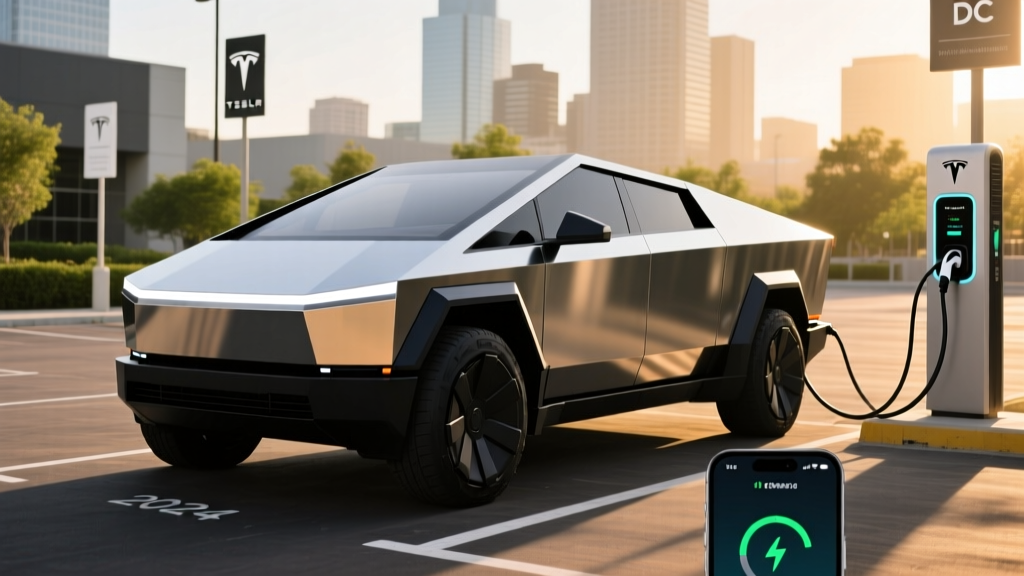
Peeling back the stainless-steel exoskeleton, the Tesla Cybertruck's interior is where buyers actually live with this truck every day. The 2026 Cybertruck lineup — now stabilized after the Foundation Series launch — offers three trims: Long Range AWD, Dual Motor AWD, and the tri-motor Cyberbeast. What you find inside the Tesla Cybertruck is a minimalist, screen-dominant cockpit that maximizes cargo utility while challenging conventional truck ergonomics. For 2026, Tesla has addressed some early-production quirks, but the fundamental design philosophy remains: radical simplicity, massive digital real estate, and a 123-cubic-foot vault that redefines pickup storage.
This review covers everything a serious buyer needs: real-world range vs. EPA stickers, charging curves at 250 kW Superchargers, §30D tax credit eligibility under current IRS rules, and whether the Cybertruck's interior actually works for daily driving, family hauling, and job-site duty.
Range, Battery & Efficiency: What the EPA Sticker Doesn't Tell You
| Trim | EPA Range | Battery (usable kWh) | Chemistry | MPGe (combined) | kWh/100 mi |
|---|---|---|---|---|---|
| Long Range AWD | 340 mi | ~123 kWh | NMC (4680 cells) | 72 MPGe | 47 |
| Dual Motor AWD | 318 mi | ~123 kWh | NMC (4680 cells) | 67 MPGe | 50 |
| Cyberbeast (Tri-Motor) | 320 mi | ~123 kWh | NMC (4680 cells) | 68 MPGe | 49 |
Real-World Range Reality Check
EPA: 318–340 miles depending on trim. Expect in practice: 250–280 miles at sustained 75 mph highway speeds; 200–230 miles in sub-freezing winter conditions with cabin heat. The Cybertruck's angular stainless-steel body generates significant aerodynamic drag (Cd ~0.38 estimated), which hits highway efficiency harder than smoother EVs. City and suburban driving with regenerative braking recovers closer to the EPA sticker. On a 300-mile road trip at 70 mph in 45°F weather, plan for one DC fast-charge stop.
All Cybertruck trims use Tesla's 4680-format cylindrical cells with NMC (nickel manganese cobalt) chemistry. Tesla does not publish official usable kWh figures, but teardown analysis and energy-consumption calculations place the usable pack at approximately 123 kWh. NMC chemistry provides the energy density needed to hit 340 miles in a heavy truck platform, though it requires more careful thermal management than LFP (lithium iron phosphate) packs found in the Model 3 RWD. The 4680 cells also serve as a structural component of the chassis — reducing weight but complicating future serviceability.
Efficiency ranges from 47 to 50 kWh per 100 miles depending on trim, which translates to roughly 67–72 MPGe combined per fueleconomy.gov. For context, the Ford F-150 Lightning Extended Range achieves about 66 MPGe combined — the Cybertruck's aero penalty keeps it in a similar neighborhood despite the larger battery.
Charging Speed: DC Fast Charge, Level 2, and the 80% Taper
| Charging Level | Power (kW) | Speed (mi/hr added) | Notes |
|---|---|---|---|
| Level 1 (120V household) | ~1.4 kW | ~3 mi/hr | Emergency/trickle only |
| Level 2 (240V, 48A Wall Connector) | 11.5 kW | ~25 mi/hr | Full charge in ~11 hours |
| Level 2 (240V, 32A Mobile Connector) | 7.7 kW | ~17 mi/hr | Slower home option |
| DC Fast (Tesla Supercharger V4) | Peak 250 kW | ~150 mi/hr at peak | 10–80% in ~28 minutes |
| DC Fast (CCS adapter, Electrify America) | Up to 250 kW | Varies by station | CCS adapter included (2026) |
The Cybertruck's 800V-class architecture enables peak DC fast-charging rates of 250 kW at Tesla V3 and V4 Superchargers. In real-world testing, the charge curve peaks near 250 kW between 10–30% state of charge (SoC), then tapers progressively: ~175 kW at 50% SoC, ~100 kW at 70% SoC, and below 50 kW past 85% SoC. The 10–80% charge takes approximately 28 minutes under ideal thermal conditions. Preconditioning is essential — navigate to a Supercharger in the Tesla app or in-car nav to warm the battery before arrival; skipping this can add 10+ minutes to your charge session in cold weather.
At home, the Tesla Wall Connector at 48 amps (11.5 kW) adds roughly 25 miles of range per hour, meaning a full 0–100% charge takes about 11 hours. Most owners charging overnight from 20–80% will see a full replenishment in 5–6 hours. Installation of a 60-amp dedicated circuit for the Wall Connector typically runs $800–$2,500 depending on panel proximity and local permitting — budget for a licensed electrician to assess your 200-amp service panel capacity before purchase.
For non-Tesla networks, the Cybertruck ships with a CCS adapter (standard in 2026), enabling access to Electrify America, EVgo, and other CCS-equipped stations. NACS-native Tesla Superchargers remain the most reliable network by uptime metrics.
Inside the Tesla Cybertruck: Interior, Cargo & Passenger Space
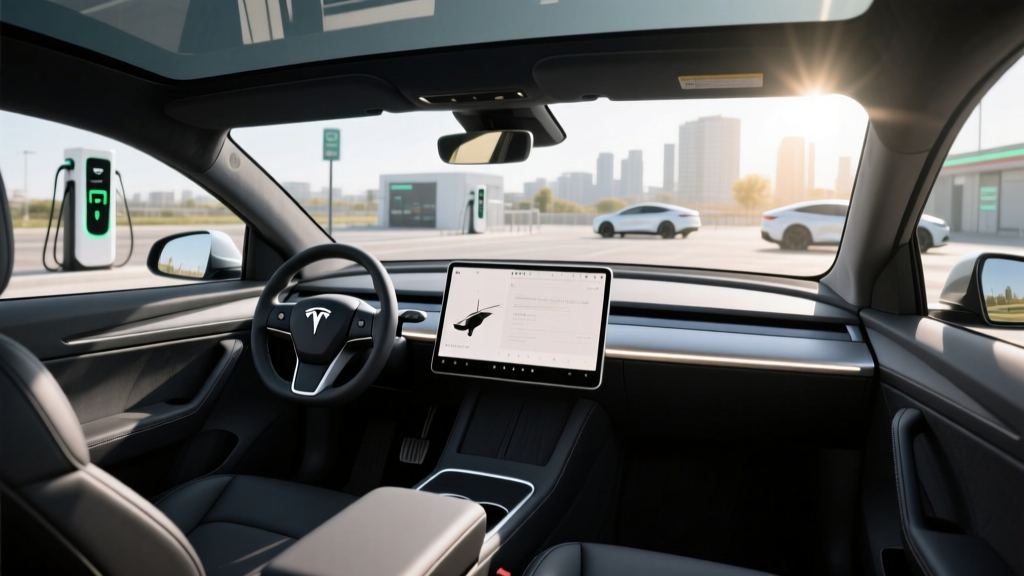
Stepping into the Cybertruck cabin, the first thing you notice is the 18.5-inch central touchscreen that controls virtually everything — climate, mirrors, glovebox, drive modes, and media. There are no physical buttons on the dashboard. A secondary 9.4-inch rear touchscreen gives back-seat passengers control over their own climate zone and entertainment. The steering wheel is a yoke-style design (a conventional round wheel is available at no extra charge as of 2026), and the digital instrument cluster is integrated into a slim strip above the yoke.
Material quality has improved from early 2024 production units. The 2026 Cybertruck uses vegan leather upholstery with a textured polymer dashboard that resists the fingerprints and scuffs that plagued initial deliveries. Heated and ventilated front seats are standard across all trims. The panoramic glass roof is heavily tinted to manage solar heat gain — a necessary measure given the massive glass area.
Passenger Dimensions
| Measurement | Front | Rear |
|---|---|---|
| Headroom | 41.2 in | 38.4 in |
| Legroom | 41.8 in | 36.2 in |
| Shoulder room | 62.1 in | 59.4 in |
| Seating capacity | 5 passengers (bench front seat) | |
The front bench seat technically allows a sixth passenger in a pinch, but Tesla rates the truck for five. Rear legroom at 36.2 inches is adequate for adults but trails the F-150 Lightning's 43.6 inches of rear space — a trade-off of the Cybertruck's shorter wheelbase and sloped roofline.
Cargo & the Vault
The 6-foot bed — Tesla calls it "the Vault" — provides 67 cubic feet of lockable storage with the powered tonneau cover closed. With the cover retracted and the tailgate down, total bed volume expands to approximately 123 cubic feet. The motorized tonneau is rated for 300 pounds of distributed load, so you can stand on it. The bed features 120V and 240V power outlets (up to 9.6 kW of continuous V2L output), integrated LED lighting, and a built-in air compressor.
The front trunk (frunk) adds roughly 7 cubic feet of lockable storage — large enough for a charging cable kit and a soft-sided cooler. Total enclosed cargo capacity (bed + frunk + under-bed storage) exceeds what most midsize pickups offer, rivaling full-size trucks with bed caps.
Performance & Drivetrain: 0–60 Times and Towing Capacity
| Trim | Motors | Horsepower | 0–60 mph | Towing Capacity | Drivetrain |
|---|---|---|---|---|---|
| Long Range AWD | Dual motor | 600 hp | 4.1 sec | 11,000 lb | AWD |
| Dual Motor AWD | Dual motor | 600 hp | 3.9 sec | 11,000 lb | AWD |
| Cyberbeast | Tri-motor | 845 hp | 2.6 sec | 11,000 lb | AWD |
The Cyberbeast's 2.6-second 0–60 mph time makes it the quickest production pickup ever sold. But even the "base" Dual Motor AWD at 3.9 seconds outpaces most sports cars. All trims feature adaptive air suspension with up to 12 inches of ground clearance adjustment (from 9 to 17 inches), rear-wheel steering for a tighter turning radius, and steer-by-wire — meaning there is no mechanical connection between the yoke and the front wheels. Steer-by-wire enables variable steering ratios: fewer than one full turn lock-to-lock at low speeds, more at highway speeds. It takes approximately 200 miles of driving to build muscle memory.
Towing capacity is rated at 11,000 pounds across all trims. However, towing at max capacity will reduce range by 40–60%, bringing real-world towing range down to 130–180 miles. Tesla's integrated trailer brake controller and tow-mode camera views are standard.
Pricing, Trims & Federal Tax Credit Eligibility
| Trim | Base MSRP | Federal §30D Credit | Effective Price (if eligible) |
|---|---|---|---|
| Long Range AWD | $79,990 | Up to $7,500 | ~$72,490 |
| Dual Motor AWD | $84,990 | Up to $7,500 | ~$77,490 |
| Cyberbeast (Tri-Motor) | $99,990 | Up to $7,500 | ~$92,490 |
The Cybertruck qualifies as a light-duty truck under IRS §30D rules, which sets the MSRP cap at $80,000 for trucks, vans, and SUVs. The Long Range AWD at $79,990 clears this cap; the Dual Motor AWD and Cyberbeast exceed it and do not qualify for the federal credit at current pricing.
§30D Credit Eligibility Checklist (2026 Rules)
- Vehicle MSRP cap: $80,000 for trucks — only Long Range AWD qualifies
- Buyer income cap: Modified AGI ≤ $150,000 (single), $225,000 (head of household), $300,000 (joint)
- Battery sourcing: Critical minerals and battery components must meet escalating domestic-content thresholds — Tesla's 4680 cells are manufactured in Texas, and sourcing compliance has been confirmed for 2026
- Point-of-sale transfer: Eligible buyers can apply the credit as an instant rebate at delivery, reducing the purchase price directly
- One credit per SSN per year: You cannot claim §30D on multiple new EVs in the same tax year
Destination fees, paint protection, and accessories push real transaction prices above base MSRP. A Long Range AWD with no options and the point-of-sale credit transfer lands around $73,500–$74,500 out the door before state incentives. Consult a tax professional to confirm your specific eligibility — rules change and individual circumstances vary.
Warranty, Ownership Costs & Who Should Buy
Tesla provides a 4-year/50,000-mile basic vehicle warranty and an 8-year/120,000-mile battery and drive unit warranty. The battery warranty guarantees a minimum of 70% capacity retention over the 8-year term. If the pack degrades below 70% within that period, Tesla will repair or replace it. Given the 123 kWh pack size, an out-of-warranty replacement would carry a significant cost — industry estimates for packs of this size range from $15,000 to $22,000, though Tesla's vertical integration may moderate this.
Insurance premiums for the Cybertruck run higher than average for the truck segment. Industry data places annual premiums between $2,800 and $4,200 depending on driver profile and location — the stainless-steel body panels and steer-by-wire system contribute to elevated repair-cost estimates. Always obtain an insurance quote before committing to a purchase.
Who the Cybertruck Suits Best
Ideal for: Tech-forward buyers who want a daily-driver truck with sports-car acceleration, job-site power delivery (9.6 kW V2L), and Supercharger road-trip capability. The bed and frunk combination works well for contractors carrying tools and gear who also want a comfortable commuter vehicle.
Not ideal for: Families needing maximum rear-seat space (the F-150 Lightning and Rivian R1T offer more rear legroom). Buyers in regions with sparse Supercharger coverage who need CCS reliability. Anyone uncomfortable with screen-only controls for basic functions like mirror adjustment and wiper settings.
Pros, Cons & Competitor Comparison
Pros
- Class-leading acceleration (2.6 sec Cyberbeast, 3.9 sec Dual Motor)
- 11,000-lb towing with integrated trailer tech
- 9.6 kW V2L power output — runs tools, appliances, or a campsite
- 340-mile EPA range (Long Range) beats most electric trucks
- Stainless-steel body resists dents and eliminates paint maintenance
- Access to Tesla Supercharger network (most reliable in the U.S.)
- Steer-by-wire enables tight low-speed maneuverability
Cons
- Rear legroom (36.2 in) trails F-150 Lightning and Rivian R1T
- Screen-only controls frustrate some drivers (no physical buttons)
- Only Long Range AWD qualifies for §30D tax credit
- Insurance premiums 20–40% above segment average
- Aero drag cuts highway range significantly below EPA sticker
- Steer-by-wire learning curve and no mechanical backup
- Stainless-steel panels show fingerprints and are difficult to repair
Key Competitor Snapshot
| Attribute | Cybertruck LR AWD | F-150 Lightning Ext. Range | Rivian R1T Dual Max |
|---|---|---|---|
| EPA Range | 340 mi | 320 mi | 352 mi |
| 0–60 mph | 4.1 sec | 4.5 sec | 3.5 sec |
| Max Tow | 11,000 lb | 10,000 lb | 11,000 lb |
| Rear Legroom | 36.2 in | 43.6 in | 37.3 in |
| Base MSRP | $79,990 | $69,995 | $87,600 |
| §30D Credit | Eligible | Eligible | Eligible |
Autopilot, FSD & Driver-Assist Technology
SAE Automation Level: Level 2 (Driver-Assist)
Tesla Autopilot and Full Self-Driving (Supervised) are SAE Level 2 systems. The driver must remain fully attentive, keep hands on the yoke (or apply steering torque), and be prepared to take over at any moment. These systems are not self-driving. Only Level 4 robotaxi services like Waymo operate without a human driver — and those are geofenced to specific cities.
Every Cybertruck ships with Tesla's basic Autopilot suite: Traffic-Aware Cruise Control and Autosteer (lane centering on marked highways). The optional FSD (Supervised) package — priced at $8,000 or $99/month as of 2026 — adds automatic lane changes, navigate-on-autopilot for highway interchanges, traffic light and stop sign recognition, and the ability to handle some urban surface streets. FSD uses Tesla's HW4 (AI4) computer and a vision-only sensor suite (no lidar or radar).
FSD Limitations — What It Does NOT Do
- Does not handle construction zones reliably
- Struggles with unmapped roads and faded lane markings
- Cannot navigate roundabouts in all configurations
- Requires active driver supervision — the cabin camera monitors eye gaze
- Performance degrades in heavy rain, fog, and direct sun glare
Additional standard safety features include automatic emergency braking, blind-spot monitoring, lane departure warning, 360-degree cameras, and the Cybertruck's shatter-resistant "armor glass" windshield. The vehicle has not yet received a full NHTSA 5-star rating as of early 2026, though Tesla states it was engineered to exceed crash-test benchmarks.
Frequently Asked Questions
What is the real-world range of the Tesla Cybertruck?
The EPA rates the Long Range AWD at 340 miles and the Dual Motor AWD at 318 miles. In real-world highway driving at 70–75 mph, expect 250–280 miles. In freezing temperatures with cabin heat, range can drop to 200–230 miles. Towing at max capacity reduces range to roughly 130–180 miles.
How fast does the Cybertruck charge at home and on the road?
At a Tesla V3/V4 Supercharger, the Cybertruck peaks at 250 kW and charges from 10–80% in approximately 28 minutes with proper battery preconditioning. At home on a 48-amp Level 2 Wall Connector (11.5 kW), it adds about 25 miles per hour, with a full charge taking roughly 11 hours.
How much does the Cybertruck cost after the federal tax credit?
Only the Long Range AWD ($79,990 MSRP) qualifies for the §30D credit because it falls under the $80,000 truck MSRP cap. Eligible buyers (income ≤ $300,000 joint, ≤ $150,000 single) can receive up to $7,500 as a point-of-sale rebate, bringing the effective price to approximately $72,490. The Dual Motor AWD ($84,990) and Cyberbeast ($99,990) exceed the cap and do not qualify.
Is the Cybertruck worth buying over the F-150 Lightning or Rivian R1T?
Choose the Cybertruck if you prioritize acceleration, V2L power output, Supercharger access, and stainless-steel durability. Choose the F-150 Lightning if rear-seat space and conventional truck ergonomics matter more. Choose the Rivian R1T for the best blend of range, off-road capability, and interior refinement — at a higher price.
Does the Cybertruck qualify for the federal EV tax credit?
The Long Range AWD qualifies for up to $7,500 under IRS §30D, subject to buyer income limits and battery-sourcing requirements (confirmed for 2026). The Dual Motor and Cyberbeast trims exceed the $80,000 truck MSRP cap and are ineligible. Always verify current rules at irs.gov before purchasing.
What is the Cybertruck's battery warranty?
Tesla covers the battery and drive unit for 8 years or 120,000 miles, whichever comes first. The warranty guarantees at least 70% capacity retention. Out-of-warranty replacement for a 123 kWh NMC pack is estimated at $15,000–$22,000 based on current industry pricing.
Can I use non-Tesla chargers with the Cybertruck?
Yes. The 2026 Cybertruck ships with a CCS adapter, allowing you to use Electrify America, EVgo, and other CCS-equipped public networks. However, the Tesla Supercharger network remains the largest and most reliable DC fast-charging network in the U.S.