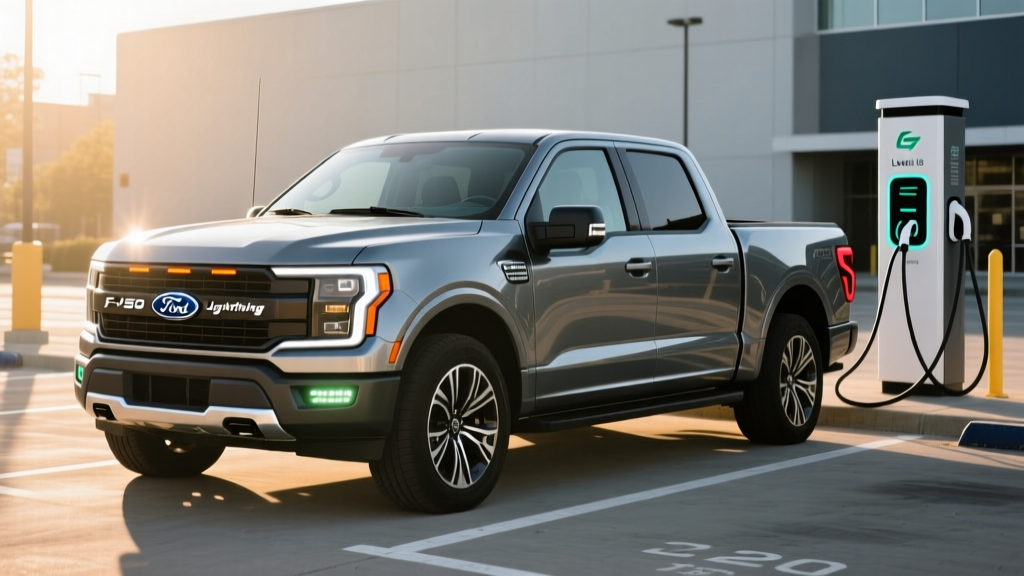
The Ford F-150 Lightning Lariat occupies a narrow but critical position in the electric truck market: it's the first trim where the Lightning stops being a work fleet novelty and starts being a daily-drivable, tech-forward pickup. For 2026, the Lariat pairs the Extended Range battery with a dual-motor AWD powertrain, a 15.5-inch portrait touchscreen, and enough towing capability to make traditional truck buyers reconsider their fuel bills. But with an MSRP north of $71,000 and real-world range that shifts dramatically with towing or cold weather, the Lariat demands a hard look at the numbers before you sign.
I've spent time with the Lightning platform across multiple trims and model years. What follows is a data-driven breakdown of the 2026 Lariat — EPA figures, real-world range reconciliation, charging-curve behavior, tax credit math, and the ownership realities that spec sheets leave out.
Range, Battery, and Real-World Efficiency
The 2026 F-150 Lightning Lariat comes standard with the Extended Range battery: a 131 kWh usable lithium-ion pack using NMC (nickel manganese cobalt) chemistry. Ford does not offer the smaller 98 kWh Standard Range battery on the Lariat trim — that's reserved for the Pro and XLT.
Real-World Expectation: Plan for 260–290 miles in mixed highway driving (70+ mph). In cold weather (below 32°F), expect 200–240 miles due to cabin heating demands and reduced battery chemistry efficiency. Towing a 5,000-lb trailer cuts range roughly in half — to 140–170 miles — making long-distance towing impractical without frequent charging stops.
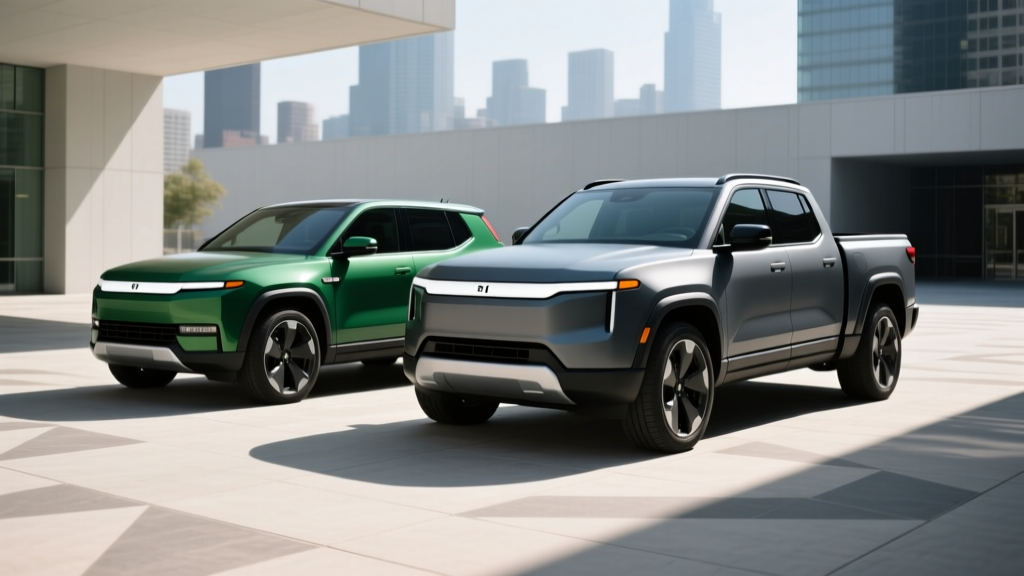
The EPA rates the Lightning Lariat Extended Range at 78 MPGe combined (city/highway), which translates to roughly 49 kWh per 100 miles driven. That's thirsty by EV standards — a consequence of the truck's 6,500+ lb curb weight and brick-like aerodynamics. For comparison, the Rivian R1T Dual-Motor achieves 73 MPGe combined with a smaller battery, while the Chevrolet Silverado EV 4WT posts similar efficiency figures in a larger package.
| Attribute | Value |
|---|---|
| EPA Range (Extended Range) | 320 miles |
| Battery Capacity (usable) | 131 kWh, NMC chemistry |
| Drivetrain | Dual-motor AWD |
| Horsepower | 580 hp |
| Torque | 775 lb-ft |
| 0–60 mph | ~4.0 seconds |
| Max Tow Capacity | 10,000 lbs (with Max Trailer Tow Pkg) |
| Payload Capacity | ~1,800 lbs |
| MPGe (Combined) | 78 MPGe |
| Efficiency | 49 kWh/100 mi |
| Base MSRP (Lariat Ext. Range) | $71,490 |
| Battery/Powertrain Warranty | 8 years / 100,000 miles |
Source: EPA Fuel Economy Guide, Ford F-150 Lightning Specifications.
Charging Speed: DC Fast, Level 2, and the Curve Reality
Charging is where Lightning owners spend the most time adjusting expectations. The truck's peak DC fast-charging rate is 155 kW on Extended Range models — respectable but not class-leading. More importantly, the charging curve tells the real story.
| Charging Level | Power | Miles Added per Hour | Notes |
|---|---|---|---|
| Level 1 (120V household) | ~1.4 kW | ~3 mi/hr | Emergency/trickle only; full charge takes 90+ hours |
| Level 2 (240V, 48A mobile charger) | 11.5 kW | ~23 mi/hr | Standard mobile cord; ~14 hours for 10–100% |
| Level 2 (240V, 80A Ford Charge Station Pro) | 19.2 kW | ~38 mi/hr | Requires hardwired install + panel capacity; ~8 hours 10–100% |
| DC Fast Charge (peak) | 155 kW | — | 10–80% in ~41 minutes (Ford estimate) |
| DC Fast Charge (sustained avg) | ~100–120 kW | — | Average rate across 10–80% session; peak only holds briefly |
The 155 kW peak is achievable at chargers rated 150 kW or higher (Electrify America, EVgo, Tesla Superchargers with NACS adapter), but only between roughly 15–40% State of Charge. Above 60%, the rate tapers significantly — by 80% SoC, you're looking at roughly 50–60 kW. This is normal for large NMC packs managing thermal loads, but it means a "quick" 10–80% session on a road trip takes closer to 41 minutes, not the 20-minute fantasy some marketing implies.
For home charging, the 80A Ford Charge Station Pro is the clear recommendation if your electrical panel supports it. Many homes with 200A service will need a panel upgrade ($1,500–$3,000) or a load-management device to safely support an 80A continuous circuit. The 48A mobile charger that ships with the truck works on a standard NEMA 14-50 outlet and delivers a practical overnight charge — just plan for 14 hours from near-empty, which is fine for daily driving but tight if you arrive home depleted before a long trip.
Performance, Towing, and Drivetrain
The Lariat's dual-motor all-wheel-drive powertrain produces 580 horsepower and 775 lb-ft of torque — figures that make the Lightning one of the quickest trucks Ford has ever built. The 0–60 mph sprint lands around 4.0 seconds, which is genuinely startling in a vehicle weighing over three tons. Instant torque delivery means highway merging and passing require zero planning; you simply press and go.
Towing is where physics reasserts itself. The Lariat with the optional Max Trailer Tow Package is rated for 10,000 lbs — competitive with mid-spec gas F-150s. But range loss while towing is severe and unavoidable. Pulling a 6,000-lb enclosed trailer at highway speeds on a flat route, expect range to drop to roughly 150–170 miles. Add hills, headwinds, or cold temperatures, and 120 miles becomes a realistic floor. If your towing needs involve 200+ mile trips without reliable DC fast-charging infrastructure at your destination, a diesel or hybrid F-150 remains the more pragmatic choice.
The Lightning uses an independent rear suspension (a first for the F-150), which noticeably improves ride quality when the bed is empty. Unloaded, the Lightning rides more like a large crossover than a traditional truck — compliant, quiet, and free of the leaf-spring hop you feel in gas F-150s over expansion joints.
Interior, Cargo, and Technology
The Lariat interior represents a meaningful step up from the XLT: leather-trimmed seats, a 15.5-inch portrait touchscreen running SYNC 4A, a 12-inch digital instrument cluster, and a B&O 18-speaker audio system. The vertical screen dominates the dash and handles climate controls, navigation, and Ford's BlueCruise hands-free driving interface.
Cargo versatility is a Lightning hallmark. The front trunk ("frunk") provides 14.1 cubic feet of lockable, weather-sealed storage — large enough for two carry-on bags and a laptop bag, or a full set of power tools. It also houses four 120V outlets and one 240V outlet, enabling the Pro Power Onboard system to run job-site equipment or tailgate appliances.
The 5.5-foot bed offers 52.8 cubic feet of volume. Rear-seat legroom measures 43.6 inches — generous for adult passengers on longer drives. The cabin seats five, though the rear middle position is best suited for children due to the driveshaft-hump-free but still-narrow floor tunnel area.
| Measurement | Value |
|---|---|
| Front Headroom | 40.8 in |
| Front Legroom | 43.9 in |
| Rear Legroom | 43.6 in |
| Frunk Volume | 14.1 cu ft |
| Bed Volume | 52.8 cu ft |
| Bed Length | 67.1 in (5.5 ft) |
| Pro Power Onboard | 9.6 kW (standard on Lariat) |
Pricing, Tax Credit, and Total Cost
The 2026 F-150 Lightning Lariat Extended Range starts at an MSRP of $71,490, including destination charge. Add the Max Trailer Tow Package (~$1,300), BlueCruise subscription prep, and a few other options, and a typical as-tested price lands between $74,000 and $78,000.
| Item | Amount |
|---|---|
| Base MSRP (Lariat Extended Range) | $71,490 |
| Typical As-Tested (with popular options) | $74,000–$78,000 |
| Federal §30D Tax Credit (maximum) | Up to $7,500 |
| Point-of-Sale Transfer | Available — reduces purchase price at dealer |
| Effective Price After Max Credit | ~$63,990 (base, if eligible) |
Federal tax credit eligibility under IRS §30D requires meeting several conditions simultaneously:
- MSRP Cap: The truck must have an MSRP at or below $80,000 for pickup trucks — the Lariat Extended Range qualifies at $71,490 base, but heavily optioned builds approaching $80K may exceed the cap.
- Buyer Income Limits: Modified adjusted gross income must not exceed $150,000 (single), $225,000 (head of household), or $300,000 (joint filers).
- Battery Component Sourcing: The vehicle must meet progressively stricter critical-mineral and battery-component sourcing requirements. Ford has confirmed Lightning eligibility for the full $7,500 credit for qualifying buyers as of the 2026 model year, but always verify on the IRS clean vehicle credit page before purchasing.
- Point-of-Sale Transfer: Since 2024, buyers can transfer the credit to the dealer at purchase, reducing the sale price directly rather than waiting to claim it on their tax return.
Consult a tax professional for your specific situation. State and utility incentives vary by jurisdiction and can stack on top of the federal credit — check AFDC's state incentive database for local programs.
Pros, Cons, and the Competition
Pros
- 320-mile EPA range is practical for daily driving and moderate road trips
- Massive frunk (14.1 cu ft) with Pro Power Onboard — best-in-class utility
- 580 hp / 4.0-sec 0–60 makes it the quickest F-150 Ford sells
- Independent rear suspension delivers car-like ride quality unloaded
- BlueCruise hands-free highway driving reduces fatigue on long trips
- Quiet cabin with strong B&O audio — luxury-adjacent experience
- Qualifies for full $7,500 federal tax credit (if buyer meets income/sourcing rules)
Cons
- 155 kW peak DC charge rate trails the 200–350 kW rates of newer EV platforms
- Towing slashes range by 50%+ — not viable for long-distance heavy towing
- $71K+ base price puts it in competition with well-equipped gas F-150 King Ranch
- 5.5-foot bed is short for traditional truck users; no 6.5- or 8-foot option
- Heavy (6,500+ lbs) — eats through tires and reduces efficiency vs lighter EVs
- SYNC 4A interface can be laggy; climate controls buried in touchscreen menus
Against the Rivian R1T (starting ~$73,000 for the Dual-Motor Standard pack), the Lightning Lariat offers more frunk space, a lower starting price, and Ford dealer-network serviceability — but the R1T charges faster on compatible DC infrastructure and offers a more adventurous off-road platform. The Chevrolet Silverado EV undercuts on price in work-truck trims but climbs quickly to match the Lightning in premium configurations, and its availability remains limited. For buyers cross-shopping within Ford's own showroom, the F-150 PowerBoost hybrid ($60K–$68K well-equipped) offers 500+ miles of range, zero charging anxiety, and strong towing — making it the rational choice for buyers who tow frequently or lack home charging.
Who Should Buy the Lightning Lariat?
Buy the F-150 Lightning Lariat if:
- You commute 40–100 miles daily and can charge at home overnight
- You value a quiet, quick, tech-forward truck for family and daily use
- Your towing needs are local (under 100 miles round-trip) or infrequent
- You want Pro Power Onboard for job-site or tailgate use
- You qualify for the $7,500 federal credit, bringing effective price below $65K
Look elsewhere if:
- You regularly tow heavy trailers over 150+ miles (consider PowerBoost hybrid or diesel)
- You lack access to home or workplace Level 2 charging
- You need an 8-foot bed or heavy-duty payload capacity
- DC fast-charging speed is a priority — the 155 kW peak is mid-pack for 2026
Warranty and Long-Term Ownership
Ford covers the Lightning's battery pack and electric powertrain components for 8 years or 100,000 miles, whichever comes first. The battery warranty guarantees retention of at least 70% of original capacity during that period — a standard threshold for the industry. The bumper-to-bumper warranty runs 3 years / 36,000 miles.
NMC batteries in large-format packs like the Lightning's typically show 10–15% capacity loss over 150,000–200,000 miles based on current degradation data from similar platforms. For an owner driving 15,000 miles annually, that means the 320-mile range may settle around 275–290 miles after five years — still practical, but worth factoring into long-term ownership plans.
Insurance costs run 15–25% higher than a comparably equipped gas F-150 Lariat, driven by repair costs for the battery enclosure and aluminum body panels. Get quotes from your insurer before committing — the annual premium difference ($400–$800 depending on your profile) partially offsets the fuel savings.
Frequently Asked Questions
What is the real-world range of the F-150 Lightning Lariat?
The EPA rates it at 320 miles. In real-world mixed driving at highway speeds, expect 260–290 miles. Cold weather (below freezing) reduces this to 200–240 miles. Towing a moderate trailer drops range to 140–170 miles.
How fast does the Lightning Lariat charge at home and on the road?
On a DC fast charger, it peaks at 155 kW, reaching 10–80% in approximately 41 minutes. At home on a 240V/80A Ford Charge Station Pro, it adds about 38 miles per hour (full charge in ~8 hours). On a standard 240V/48A outlet, expect ~23 miles per hour.
Does the 2026 F-150 Lightning Lariat qualify for the $7,500 federal tax credit?
Yes — the Lariat Extended Range qualifies for the full $7,500 under IRS §30D, provided the buyer meets income limits ($150K single / $300K joint), the MSRP stays under $80,000, and battery sourcing requirements are met. The credit can be transferred to the dealer at point of sale. Always verify current eligibility on the IRS website before purchasing.
Is the Lightning Lariat worth it vs the Rivian R1T or gas F-150?
For daily commuting with home charging and occasional light towing, the Lightning Lariat offers lower running costs, a massive frunk, and a smoother ride than any gas F-150. If you tow long distances frequently, the F-150 PowerBoost hybrid is more practical. The Rivian R1T charges faster and offers better off-road capability but at a higher starting price and with a smaller dealer network.
What is the biggest drawback of the F-150 Lightning Lariat?
The 155 kW peak DC charging speed is the most significant limitation for road-trip-heavy owners. While adequate, it means 41-minute charging stops where competitors with 200+ kW architectures finish in 20–25 minutes. The second major drawback is the 50%+ range loss when towing, which makes the Lightning impractical for frequent long-distance heavy towing.
Can I use Tesla Superchargers with the F-150 Lightning?
Yes. Ford provides an NACS adapter that enables Lightning owners to charge at Tesla Supercharger stations (V3 and V4). The adapter is included with new 2026 models. Charging speeds are limited by the Lightning's 155 kW peak, not the Supercharger's capacity.