Quick Verdict: Tesla's Unorthodox Entry Into Autonomous Rides
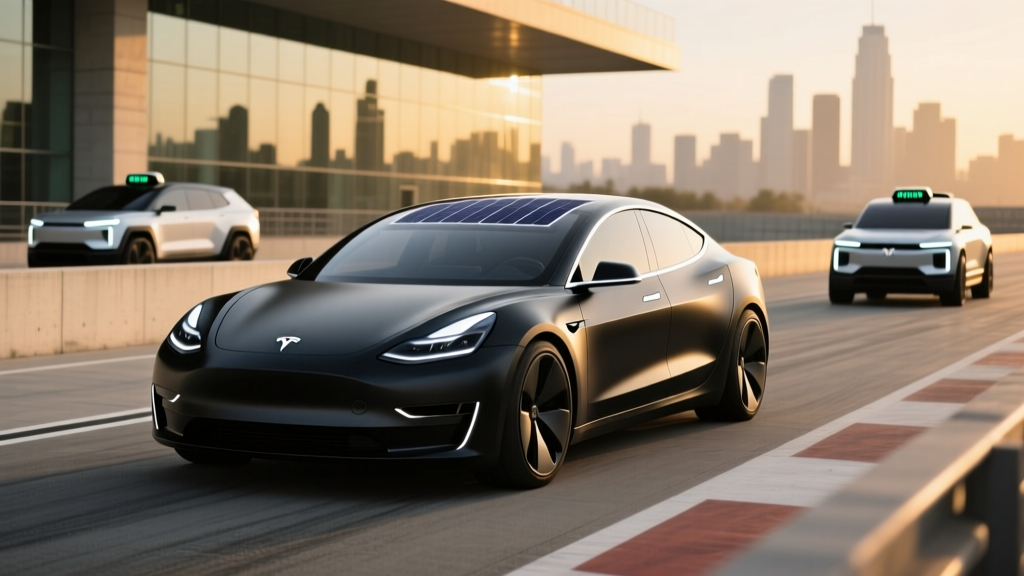
The Tesla Cybercab represents the automaker's long-awaited pivot from selling cars to consumers toward operating a driverless ride-hailing network. Announced in late 2024 and entering limited production in mid-2026, the two-seat, steering-wheel-free vehicle targets a market currently dominated by Alphabet's Waymo One service. But the tesla robo-taxi market competition landscape is far from a guaranteed win — Waymo has logged over 30 million paid autonomous miles, while Tesla's Full Self-Driving system has never operated without a human supervisor at Level 2 on the SAE scale.
This profile examines what we know about the Cybercab's confirmed and estimated specifications, its path to regulatory approval, and whether Tesla's vision-based approach can compete against lidar-equipped incumbents already serving paying customers in Phoenix, San Francisco, and Los Angeles.
The Cybercab is designed to operate at SAE Level 4 (high automation, no driver needed in its operational design domain). However, Tesla's current consumer vehicles with FSD (Supervised) operate at SAE Level 2 — the driver must remain fully engaged. The leap from Level 2 to Level 4 is not incremental; it requires fundamentally different validation, redundancy, and regulatory approval. As of early 2026, Tesla has not received approval to operate a driverless commercial service in any U.S. jurisdiction.
Projected Specifications: What We Know About the Cybercab
Tesla has released preliminary specifications for the Cybercab, though final EPA certification figures remain pending as production ramps. The figures below combine Tesla's official announcements with industry estimates based on the vehicle's platform and battery configuration.
| Specification | Tesla Cybercab (Announced/Estimated) |
|---|---|
| EPA Range (est.) | ~250 miles (preliminary, not yet EPA-certified) |
| Battery Capacity | ~50-60 kWh usable (estimated, LFP chemistry expected) |
| Drivetrain | Rear-wheel drive, single motor |
| 0-60 mph | Not disclosed (estimated <6.0 sec based on platform weight) |
| Horsepower | ~200-250 hp (estimated, single motor) |
| Peak DC Fast Charge | ~170 kW (estimated, NACS connector) |
| 10-80% DC Charge Time | ~25-30 minutes (estimated) |
| Seats | 2 passengers |
| Cargo Volume | Minimal — no traditional trunk; under-seat storage only |
| Steering Wheel / Pedals | None (Level 4 design) |
| Sensors | Vision-only (cameras), no lidar or radar |
| Base MSRP | Not sold to consumers — fleet/owner-operator model TBD |
| Projected Manufacturing Cost | <$30,000 (Tesla target, unconfirmed) |
| Battery/Powertrain Warranty | TBD — expected 8 yr / 100,000 mi minimum for fleet use |
Tesla targets approximately 250 miles of range for the Cybercab. In real-world robotaxi operations, expect 180-210 usable miles between charges. Highway-speed efficiency drops significantly in EVs, but urban stop-and-go driving with regenerative braking is more favorable. In cold weather (below 32°F), LFP batteries can lose 20-30% of their capacity, reducing usable range to roughly 140-170 miles. For a city-based ride-hailing vehicle operating 12-16 hours daily, this means at least one mid-shift fast-charge session will be necessary in most climates.
Charging Profile: Built for Fleet Turnaround Speed
The Cybercab's charging architecture is designed around one priority: minimize downtime. Tesla has indicated the vehicle will support wireless inductive charging at dedicated Cybercab hubs, supplementing traditional NACS plug-in charging. Here's what the charging profile looks like for fleet operators:
| Charging Level | Power (kW) | Miles Added/Hour | Use Case |
|---|---|---|---|
| Level 2 (AC, depot charging) | ~11.5 kW | ~35-40 mi/hr | Overnight fleet charging |
| DC Fast Charge (NACS) | ~170 kW peak | ~500+ mi/hr (peak) | Mid-shift top-ups, 10-80% in ~25-30 min |
| Wireless Inductive (planned) | ~25-50 kW (est.) | ~80-160 mi/hr | Autonomous docking at Cybercab hubs |
The charge curve matters significantly for fleet economics. Peak 170 kW rates apply only between approximately 10-50% State of Charge (SoC). Above 60%, charging speed tapers to protect the LFP battery cells, dropping to roughly 80 kW by 70% and below 40 kW past 85%. Fleet operators will optimize for 20-80% cycles rather than full charges, which also extends long-term battery health.
The Competition: Waymo, Zoox, and the Lidar Divide
The tesla robo-taxi market competition is defined by a fundamental technology split: Tesla's vision-only approach versus the lidar-camera-radar fusion stacks used by virtually every other player. Here's how the major competitors compare as of early 2026:
| Feature | Tesla Cybercab | Waymo (6th-Gen) | Amazon Zoox |
|---|---|---|---|
| SAE Level | Level 4 (targeted) | Level 4 (active) | Level 4 (active) |
| Sensor Suite | Cameras only | Lidar + cameras + radar | Lidar + cameras + radar |
| Commercial Service | Not yet launched | Active in Phoenix, SF, LA, Austin | Limited service in Las Vegas, SF |
| Paid Miles Driven | 0 | 30M+ (as of late 2025) | <1M (early stage) |
| Vehicle Cost (est.) | <$30,000 | ~$100,000-$150,000 | ~$100,000+ (purpose-built) |
| Passenger Capacity | 2 | 3-4 | 4 (facing seats) |
| Regulatory Approval | None yet | CPUC + NHTSA approved | Nevada + California permits |
Waymo's advantage is operational: over 30 million paid autonomous trips with a safety record documented through NHTSA standing orders. Each Waymo vehicle carries approximately $100,000+ in sensor hardware, making fleet scaling capital-intensive. Tesla's core bet is that a sub-$30,000 vehicle with camera-only perception can match or exceed lidar-based safety at a fraction of the per-unit cost — a claim that remains unproven in driverless commercial operation.
Amazon's Zoox takes a middle path with its purpose-built bidirectional vehicle, but production volumes remain low. Cruise (GM), once a strong competitor, suspended operations in late 2023 after a serious incident in San Francisco and has only begun limited re-entry as of 2026.
Regulatory Hurdles: The Real Bottleneck
Technology is only half the battle. The Cybercab cannot legally operate without a steering wheel or driver on public roads in most U.S. states without specific regulatory approval. Key regulatory considerations include:
- Federal Motor Vehicle Safety Standards (FMVSS): Current standards require steering wheels, mirrors, and pedals in passenger vehicles. Tesla would need an FMVSS exemption from NHTSA, similar to what NHTSA granted to Nuro's low-speed delivery vehicle — but the Cybercab operates at highway-capable speeds.
- State-Level Deployment Permits: California's CPUC, Arizona's ADOT, and Nevada's DMV each have separate autonomous vehicle testing and deployment frameworks. Waymo spent years progressing through these tiers.
- Insurance and Liability: Without a human driver, liability shifts entirely to the manufacturer/operator. Tesla has not publicly detailed its insurance framework for driverless fleet operations.
- Vision-Only Validation: No camera-only system has received Level 4 deployment approval from any U.S. regulator. Tesla must demonstrate equivalent or superior safety to lidar-equipped competitors to earn permits.
Business Model: Who Owns the Cybercab?
Tesla has floated a hybrid ownership model where individuals could purchase a Cybercab and add it to Tesla's ride-hailing network — similar to how Airbnb hosts list properties. However, significant questions remain unresolved:
- Consumer purchase price: Not announced. Tesla has targeted a manufacturing cost under $30,000, but consumer pricing and financing terms are TBD.
- Revenue split: Tesla has suggested owners could earn $30,000+ annually, but no contractual terms have been published.
- Federal tax credit (§30D): The IRS §30D clean vehicle credit requires the vehicle to be "placed in service" for personal use. Fleet and commercial vehicles typically qualify under §45W (commercial clean vehicle credit) instead, with different caps and rules. Individual owners adding vehicles to a ride-hailing fleet would face complex tax treatment — consult a tax professional.
- Depreciation risk: High-mileage fleet vehicles depreciate rapidly. A Cybercab driving 50,000+ miles annually could see battery degradation and interior wear far exceeding personal-use vehicles.
- It is NOT available for consumer purchase or pre-order with a confirmed delivery date.
- Tesla's FSD (Supervised) on consumer vehicles remains SAE Level 2 — the driver must stay engaged at all times.
- No U.S. jurisdiction has approved Tesla to operate a driverless commercial ride-hailing service.
- The vision-only system has not been validated for Level 4 operation by any independent safety body.
- Projected cost, range, and charging figures are preliminary and subject to change before production.
Ownership Economics: Robotaxi vs. Personal EV
For consumers weighing whether to buy into Tesla's robotaxi vision versus purchasing a conventional Tesla model for personal use, the economics diverge sharply:
| Factor | Cybercab (Fleet/Owner-Operator) | Tesla Model Y (Personal Use) |
|---|---|---|
| Upfront Cost | TBD (est. $25,000-$35,000) | $44,990 (2026 Long Range AWD) |
| Annual Mileage | 50,000-80,000 mi | 12,000-15,000 mi |
| Battery Degradation (5yr) | 20-35% (high-cycle use) | 8-12% (typical) |
| Revenue Potential | $20,000-$35,000/yr (unverified) | $0 |
| Insurance | Commercial fleet rates (TBD, likely high) | $1,800-$2,500/yr avg. |
| §30D Tax Credit | Likely ineligible (commercial use) | Up to $7,500 if eligible (see IRS rules) |
Pros and Cons: Honest Assessment
- Potentially the lowest-cost robotaxi platform at under $30,000 per vehicle
- Leverages Tesla's massive Supercharger network (60,000+ connectors globally)
- LFP battery chemistry offers longer cycle life (3,000+ cycles) for fleet duty
- Tesla's neural network trained on billions of real-world driving miles from FSD fleet data
- Wireless charging capability could enable fully autonomous turnaround without human plug-in
- Two-seat design optimizes for the ~70% of ride-hail trips that carry 1-2 passengers
- Zero commercial driverless miles — entirely unproven at Level 4 in revenue service
- No lidar or radar redundancy; camera-only systems struggle in heavy rain, fog, and direct sun glare
- No regulatory approval in any U.S. state or federal jurisdiction for driverless operation
- Tesla has a history of aggressive timeline promises that slip by years (FSD "next year" since 2016)
- Two-seat configuration excludes group rides, airport runs with luggage, and accessibility use cases
- Owner-operator revenue projections are unverified and carry significant financial risk
- No confirmed consumer purchase pathway or finalized pricing as of early 2026
Frequently Asked Questions
What is the real-world range of the Tesla Cybercab?
Tesla targets approximately 250 miles (preliminary, not EPA-certified). In real-world urban ride-hailing use, expect 180-210 usable miles per charge. Cold weather (below 32°F) with an LFP battery could reduce this to 140-170 miles. For a vehicle operating 12+ hours daily, mid-shift DC fast charging will be necessary in most markets.
How fast does the Cybercab charge?
Estimated peak DC fast charging at ~170 kW via NACS connector, with a 10-80% charge time of approximately 25-30 minutes. At Tesla's Level 2 depot chargers (~11.5 kW), a full overnight charge adds roughly 35-40 miles per hour of charging. Planned wireless inductive charging at Cybercab hubs would operate at an estimated 25-50 kW, enabling autonomous docking without human intervention.
How much does the Cybercab cost, and can I buy one?
The Cybercab is not available for consumer purchase as of early 2026. Tesla has stated a target manufacturing cost below $30,000, but no consumer MSRP, financing terms, or delivery timeline has been confirmed. Tesla has described a potential owner-operator model where individuals purchase vehicles and add them to the Tesla ride-hailing network, but contractual and financial details remain unpublished.
Does the Cybercab qualify for the federal EV tax credit?
Almost certainly not under the §30D clean vehicle credit, which requires personal use. Fleet and commercial vehicles may qualify under §45W commercial clean vehicle credit, which has different eligibility rules and credit amounts (up to $7,500 for vehicles under 14,000 lbs GVWR). Individual buyers planning to add a Cybercab to a revenue-generating fleet face complex tax treatment — consult a licensed tax professional. All credit eligibility depends on MSRP caps, buyer income limits, and battery-sourcing requirements that are subject to change.
Is the Cybercab worth waiting for vs. buying a Tesla Model Y or using Waymo?
These serve fundamentally different purposes. If you need a personal vehicle today, the Model Y (EPA 320+ miles, $44,990, available now) is a proven product. If you're interested in autonomous ride-hailing as a service, Waymo One is operational today in multiple U.S. cities with a validated Level 4 safety record. The Cybercab represents a speculative future investment — compelling if Tesla achieves its cost and safety targets, but carrying significant technology, regulatory, and timeline risk. Waiting for the Cybercab means waiting for a vehicle that has not yet received any regulatory approval for driverless operation.
How does Tesla's vision-only approach compare to Waymo's lidar?
Tesla relies entirely on cameras and neural network processing, arguing that human-like vision is sufficient for autonomous driving. Waymo uses a fusion stack of lidar, cameras, and radar, providing redundant depth perception and object detection in adverse conditions (heavy rain, fog, direct glare). No camera-only system has received Level 4 approval from any U.S. regulator. Tesla's advantage is lower per-vehicle hardware cost; Waymo's advantage is proven operational safety across 30M+ paid miles. The Cybercab must demonstrate equivalent safety to earn deployment permits.
Sources: NHTSA Automated Vehicle Safety, IRS §30D Clean Vehicle Credit, IRS §45W Commercial Credit, Tesla Q4 2025 Investor Presentation, Waymo Safety Report 2025.
Note: All Cybercab specifications cited are preliminary/estimated based on Tesla announcements and industry analysis. Final EPA-certified range, pricing, and regulatory status may differ. This article reflects information available as of early 2026.