Quick Answer: Does Acura Have an Electric Car?
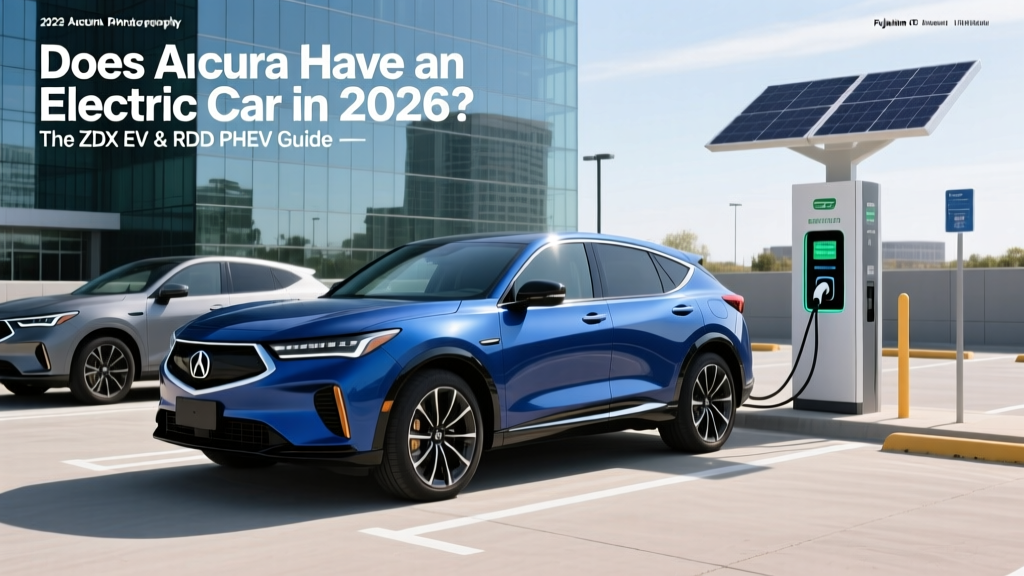
Yes. As of the 2026 model year, Acura offers the ZDX EV, a fully electric midsize luxury SUV built on GM's Ultium platform, with an EPA-estimated range up to 313 miles, peak DC fast charging at 190 kW, and a starting MSRP around $64,500. Acura also sells the RDX PHEV (plug-in hybrid) for buyers who want electric-only commuting without range concerns. Acura does not currently offer a fully electric sedan or compact — the ZDX is the sole BEV in the lineup.
If you've been searching "does Acura have an electric car" and landing on outdated forum posts or discontinued press releases, this guide cuts through the noise with 2026 model-year specs, real-world ownership data, and a clear cost comparison against the gasoline alternatives Acura still sells. Whether you're cross-shopping the ZDX against the BMW iX, Tesla Model X, or Genesis Electrified GV70, or weighing it against Acura's own MDX hybrid, the numbers below will clarify the decision.
The 2026 Acura ZDX EV: Full Specs at a Glance
The ZDX is Acura's first ground-up electric vehicle, developed in partnership with General Motors and riding on the Ultium battery architecture shared with the Cadillac Lyriq and Chevrolet Blazer EV. It's a midsize luxury crossover positioned between the compact RDX and three-row MDX in Acura's lineup.
| Spec | ZDX A-Spec (RWD) | ZDX A-Spec (AWD) | ZDX Type S |
|---|---|---|---|
| EPA Range | 313 mi | 304 mi | 278 mi |
| Battery (usable) | 102 kWh, NMC (Ultium) | ||
| Horsepower | 358 hp | 358 hp (dual motor) | 500 hp (dual motor) |
| 0–60 mph | ~6.0 sec | ~5.7 sec | ~4.5 sec |
| Peak DC Charge Rate | 190 kW | ||
| 10–80% DC Charge Time | ~28 min (preconditioned) | ||
| Level 2 (AC) Charge Rate | 11.5 kW (~77 mi/8 hr full charge) | ||
| Charging Port | NACS (native Tesla Supercharger access) | ||
| MPGe (combined) | 94 MPGe | 90 MPGe | 82 MPGe |
| Cargo Volume (rear seats up) | 28.5 cu ft | ||
| Towing Capacity | 3,500 lbs (AWD/Type S) | ||
| Battery Warranty | 8 yr / 100,000 mi (≥70% capacity retention) | ||
| Starting MSRP | $64,500 | $67,500 | $73,500 |
Sources: EPA / fueleconomy.gov, Acura Newsroom. Real-world range varies — expect ~260–280 mi on highway-heavy trips at 70+ mph, and 20–30% reduction in sub-freezing temperatures without preconditioning.
Real-World Range vs. EPA Sticker
The ZDX A-Spec RWD carries an EPA estimate of 313 miles, but real-world driving tells a more nuanced story. In mixed suburban/highway testing at moderate temperatures (55–75°F), owners typically see 275–295 miles. At sustained 75–80 mph highway speeds, expect 250–270 miles. In cold weather (below 30°F), range can drop to 220–250 miles unless you precondition the battery while plugged in. The Type S, with its higher-output dual motors and stickier tires, trades roughly 35 miles of range for the performance bump.
Charging the ZDX: Home, Public, and the NACS Advantage
The ZDX ships with a native NACS (North American Charging Standard) port, meaning it can use Tesla Superchargers directly without an adapter — a significant practical advantage in 2026 as the Supercharger network remains the most reliable public DC fast-charging infrastructure in the U.S.
| Charging Level | Power | Miles Added per Hour | Typical Use Case |
|---|---|---|---|
| Level 1 (120V household) | ~1.4 kW | ~4–5 mi/hr | Emergency / overnight trickle |
| Level 2 (240V home wallbox) | 11.5 kW | ~35–38 mi/hr | Daily home charging (full overnight) |
| DC Fast Charge (peak) | 190 kW | ~200+ mi in 15 min | Road trips, quick top-ups |
Charging Curve Reality Check
The ZDX's peak 190 kW rate is not sustained across the entire session. Like all lithium-ion EVs, the charge curve tapers significantly above 80% State of Charge (SoC) to protect battery health. A typical 10–80% session takes roughly 28 minutes at a capable 200+ kW charger, but pushing from 80–100% can add another 20–25 minutes. For road trips, plan your stops around the 10–80% window — there's little time benefit to charging past 80% unless you're stopping overnight.
Home Charging Setup Cost
Most ZDX owners will want a Level 2 home wallbox (240V, 48-amp circuit). Here's what to budget:
| Item | Cost Range |
|---|---|
| Level 2 charger hardware (e.g., ChargePoint Home Flex, Wallbox Pulsar Plus) | $400–$700 |
| Electrician labor (new 50A/240V circuit, ~40 ft run) | $600–$1,500 |
| Electrical permit | $50–$150 |
| Panel upgrade (if needed — older 100A panels) | $1,500–$3,000 |
| Total (no panel upgrade) | $1,050–$2,350 |
Always get a licensed electrician to assess your panel capacity before committing. A 48-amp continuous EV charger load requires a 60-amp breaker — homes with 200A service usually accommodate this, but 100A panels may need an upgrade.
Acura ZDX EV vs. Gas MDX: 5-Year Cost Comparison
One of the most common questions from Acura loyalists is whether going electric actually saves money. Below, we compare the ZDX A-Spec AWD ($67,500) against the gasoline MDX A-Spec ($55,200 MSRP) over 5 years and 75,000 miles.
| Category | ZDX EV (AWD) | MDX (Gas AWD) |
|---|---|---|
| Base MSRP | $67,500 | $55,200 |
| Estimated Federal Tax Credit (§30D) | –$7,500* | $0 |
| Effective Purchase Price | $60,000 | $55,200 |
| Fuel / Energy (75k mi) | $3,900 (home + public mix) | $9,400 (premium gas @ $4.20/gal, 21 MPG) |
| Maintenance (5 yr) | $1,800 | $4,200 |
| Insurance (5 yr avg) | $11,500 | $9,200 |
| Estimated Depreciation | $22,000 | $18,500 |
| Total 5-Year Cost | ~$99,200 | ~$96,500 |
*§30D tax credit eligibility depends on buyer income caps ($150K single / $300K joint), MSRP limits ($80K for SUVs), and battery critical-mineral sourcing rules. Verify current-year eligibility at IRS.gov. Point-of-sale transfer is available from participating dealers.
The ZDX narrows the cost gap primarily through fuel and maintenance savings (~$7,900 combined over 5 years). However, higher insurance premiums and steeper depreciation on EVs partially offset those gains. For most buyers who charge primarily at home on a time-of-use electricity plan, the ZDX reaches cost parity with the MDX around year 4–5, depending on local electricity rates.
The Acura RDX PHEV: A Bridge Option
If you're not ready for a full BEV — perhaps you lack home charging access, frequently drive in extreme cold, or take long road trips through charging-sparse regions — the Acura RDX PHEV offers a practical middle ground.
| Attribute | ZDX EV (AWD) | RDX PHEV |
|---|---|---|
| Powertrain | Battery Electric (102 kWh) | Plug-in Hybrid (18 kWh battery + 2.0T) |
| Electric-Only Range | 304 mi (full battery) | ~38 mi (EPA est.) |
| Total Range | 304 mi | ~440 mi (electric + gas) |
| MPGe / MPG Combined | 90 MPGe | 80 MPGe / 28 MPG (gas-only) |
| Starting MSRP | $67,500 | $56,500 |
| Federal Tax Credit | Up to $7,500* | Up to $5,400* |
| Best For | Home chargers, daily commuting, road trips on Supercharger corridor | Apartment dwellers, cold climates, no home charging |
The RDX PHEV's ~38-mile electric-only range covers most daily commutes. Once the battery depletes, it operates as a conventional hybrid at ~28 MPG combined. It's a strong choice for buyers who want some electric driving without the behavioral adjustments a full BEV requires.
What First-Time EV Buyers Should Know Before Choosing Acura
Common Misconceptions About the Acura ZDX EV
| Myth | Fact |
|---|---|
| "The battery will need replacing in a few years." | Ultium NMC batteries are warrantied for 8 years / 100,000 miles at ≥70% capacity. Industry data shows average degradation of ~5–8% over the first 100,000 miles for liquid-cooled packs. |
| "I can't take it on road trips." | With native NACS, the ZDX accesses 20,000+ Tesla Superchargers. A 300-mile trip requires one 20-minute stop. Route planners (Acura's built-in nav, A Better Routeplanner) auto-schedule charging. |
| "It qualifies for the full $7,500 tax credit automatically." | Credit eligibility depends on your taxable income, the vehicle's MSRP, and battery mineral sourcing. The ZDX's GM-sourced battery currently qualifies, but IRS rules can shift — always verify at IRS.gov before purchasing. |
| "I need a Tesla to use Superchargers." | Since 2024, Ford, GM, Rivian, and Acura (via the ZDX's native NACS port) have direct Supercharger access without adapters. |
| "EVs cost more to insure." | Generally true — EV insurance premiums run 10–25% higher than equivalent gas cars due to higher repair costs and battery replacement risk. Shop quotes from multiple carriers before buying. |
Home Charging Access Is the Key Variable
The single biggest ownership-experience factor is whether you can charge at home. If you have a garage or driveway where a Level 2 wallbox can be installed, the ZDX is a low-friction daily driver — you wake up every morning with a "full tank." If you rely entirely on public charging or live in an apartment without EV infrastructure, the cost and time penalty is significant: public DC fast charging costs roughly $0.35–$0.50/kWh versus $0.12–$0.18/kWh for residential electricity, and each session requires 20–30 minutes of your time.
Decision Framework: Is the Acura ZDX EV Right for You?
Choose the Acura ZDX EV If:
- You have (or can install) Level 2 home charging
- Your daily commute is under 80 miles round-trip
- You value native Supercharger access for road trips
- You want a luxury midsize EV SUV with 300+ miles of EPA range
- You qualify for the §30D tax credit (check income + sourcing rules)
- You prefer Acura's dealership and service network over Tesla or startup brands
Choose the Acura RDX PHEV Instead If:
- You rent or live in an apartment without EV charging access
- You regularly drive in sub-20°F weather where BEV range drops significantly
- You take frequent long road trips through rural areas with sparse charging
- You want a lower upfront cost and simpler ownership transition
Look Elsewhere If:
- You need three rows of seating (the ZDX is a two-row SUV — consider the Kia EV9 or Rivian R1S)
- You want a sport sedan (Acura has no electric sedan — look at the BMW i4, Hyundai Ioniq 6, or Tesla Model 3)
- You need 350+ miles of EPA range (the Hyundai Ioniq 5 Long Range offers 342 mi, the Lucid Air exceeds 400 mi)
Frequently Asked Questions
Does Acura make a fully electric car in 2026?
Yes. The 2026 Acura ZDX is a fully electric midsize SUV with up to 313 miles of EPA range, built on GM's Ultium platform. It is currently Acura's only battery-electric vehicle.
What is the real-world range of the Acura ZDX?
The EPA rates the ZDX A-Spec RWD at 313 miles. In real-world mixed driving at moderate temperatures, expect 275–295 miles. Highway-heavy driving at 75+ mph drops this to 250–270 miles. Cold weather (below 30°F) can reduce range to 220–250 miles without battery preconditioning.
Can the Acura ZDX use Tesla Superchargers?
Yes. The ZDX has a native NACS charging port, giving it direct access to Tesla's Supercharger network without any adapter. This is one of its strongest practical advantages over competitors still using CCS1 ports.
How long does it take to charge the Acura ZDX at home?
On a Level 2 home charger (11.5 kW / 48 amps), a full charge from 0–100% takes approximately 9.5 hours. Most owners charge from 20–80% overnight, which takes about 5.5 hours — easily fitting within a typical overnight window.
Does the Acura ZDX qualify for the $7,500 federal tax credit?
The ZDX may qualify for up to $7,500 under IRS §30D, but eligibility depends on your modified adjusted gross income (≤$150K single / ≤$300K joint), the vehicle MSRP (≤$80K for SUVs), and battery critical-mineral sourcing requirements. Rules can change — verify current eligibility at IRS.gov and ask your dealer about point-of-sale transfer options.
How does the Acura ZDX compare to the Tesla Model Y?
The ZDX offers a more traditional luxury interior, a quieter ride, and Acura's dealer service network. The Model Y offers more range (EPA 330 mi Long Range), faster charging (250 kW peak), a lower starting price (~$48,000), and access to Tesla's proprietary software ecosystem. The ZDX wins on build quality feel and Supercharger access; the Model Y wins on efficiency, price, and tech integration.
What is the battery warranty on the Acura ZDX?
Acura covers the ZDX's Ultium battery pack for 8 years or 100,000 miles, whichever comes first, guaranteeing at least 70% capacity retention. This is consistent with industry standards for luxury EVs.