The Truth About the Tesla Cargo Van
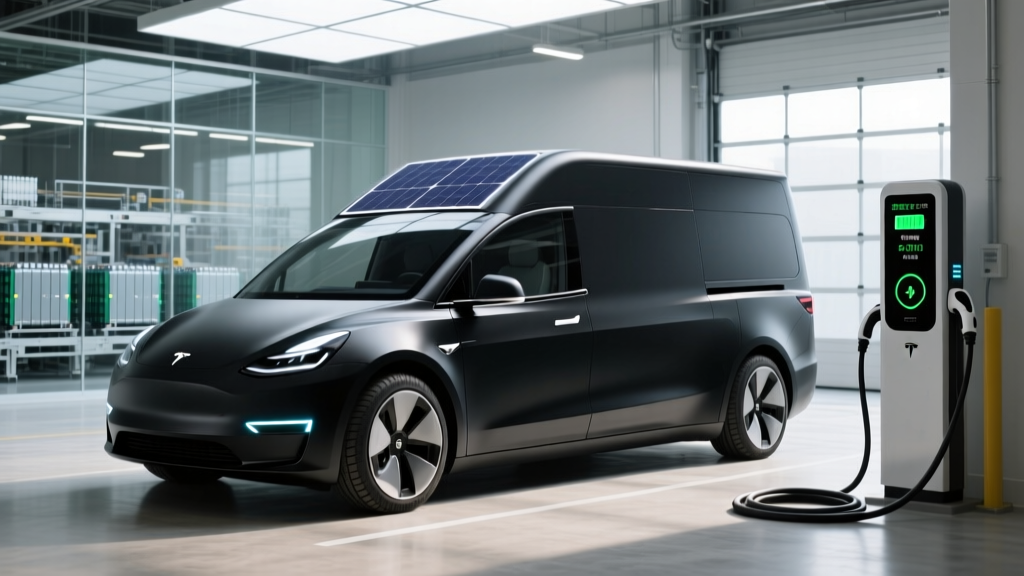
Every few months, search interest spikes for a "Tesla cargo van" — and it's easy to see why. Tesla's brand dominance, Supercharger network, and industry-leading efficiency make the idea of a Tesla-branded commercial cargo van deeply appealing to fleet operators and small business owners alike. But here's the honest answer that no amount of concept-render clicking will give you: Tesla does not currently manufacture or sell a cargo van.
As of the 2026 model year, Tesla's production lineup consists of the Model 3 sedan, Model Y crossover, Model S sedan, Model X SUV, Cybertruck pickup, and the Class 8 Tesla Semi. There is no Tesla Sprinter competitor, no Tesla Transit, and no Tesla electric delivery van available for purchase. Rumors of a smaller commercial van have circulated since roughly 2020, but Tesla has made no official announcement of a production cargo van, and none appears on Tesla's public product roadmap.
That doesn't mean Tesla has zero relevance to your cargo-hauling needs. The Tesla Semi exists (in limited production for fleet customers), and Tesla's current consumer vehicles offer surprising cargo utility. More importantly, several strong electric cargo vans from other manufacturers are available now. This article covers what Tesla actually offers for commercial use, real specs on the closest alternatives, and a framework for deciding what to buy.
What Tesla Actually Sells for Commercial and Cargo Use
While there's no Tesla cargo van, Tesla does offer vehicles that serve cargo and commercial roles — with very different capabilities and price points.
| Model | Body Style | Max Cargo Volume | EPA Range | Starting MSRP | Commercial Suitability |
|---|---|---|---|---|---|
| Model Y (Long Range) | Crossover SUV | 72.1 cu ft (seats folded) | 320 mi | $44,990 | Light cargo, last-mile deliveries |
| Model X | SUV | 88.1 cu ft (seats folded) | 311 mi | $79,990 | Light cargo, premium fleet |
| Cybertruck | Pickup | 65 cu ft bed + 6.5 cu ft frunk | 318 mi (est.) | $79,990 | Open-bed hauling, job site |
| Tesla Semi | Class 8 tractor | N/A (tractor only) | 500 mi (mfr est.) | $250,000 (est.) | Heavy freight, long-haul fleet |
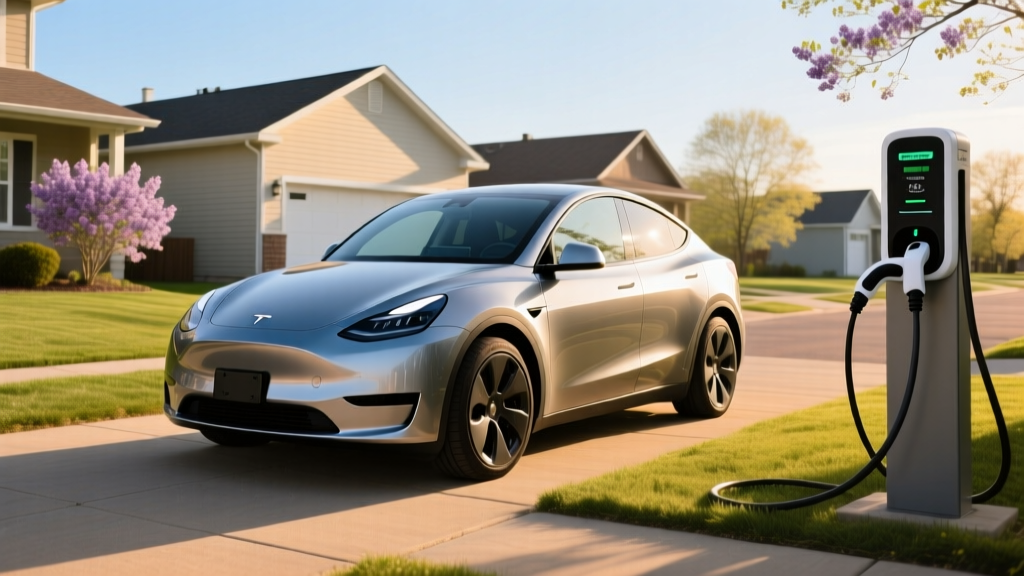
The Model Y is the closest thing to a Tesla cargo van for small business owners. With the rear seats folded, its 72.1 cubic feet of cargo space rivals many compact cargo vans, and its 320-mile EPA range and Supercharger access make it viable for regional delivery routes. Tesla has offered a "Model Y Commercial" variant in some international markets, though US availability remains limited.
The Tesla Semi is a Class 8 electric truck, not a van. It entered limited production in late 2022 with PepsiCo as the launch customer. As of 2026, Tesla continues to produce the Semi in low volumes, primarily for large fleet operators. It's not a vehicle you can walk into a Tesla store and buy for a small delivery business.
The Electric Cargo Vans You Can Actually Buy in 2026
The good news: the electric cargo van segment has matured significantly. Several production models are available now with real-world-proven capability, DC fast charging, and fleet-ready telematics. Here's how the top contenders stack up against what a hypothetical Tesla cargo van might offer.
| Spec | Ford E-Transit (2026) | Mercedes-Benz eSprinter (2026) | Rivian EDV (Amazon/Fleet) | BrightDrop Zevo 600 |
|---|---|---|---|---|
| Battery Capacity | 89 kWh (NMC) | 113 kWh (NMC) | ~120 kWh (NMC est.) | 165 kWh (NMC) |
| EPA Range | 126 mi | ~200 mi (mfr est.) | ~150 mi (mfr est.) | ~250 mi (mfr est.) |
| Cargo Volume | 246.7 cu ft (extended) | 533 cu ft (extended) | ~660 cu ft (large variant) | 615 cu ft |
| Max DC Fast Charge | 115 kW | 115 kW | ~150 kW (est.) | ~120 kW |
| 10–80% Charge Time | ~45 min | ~42 min | ~40 min (est.) | ~55 min (est.) |
| Level 2 Charge Rate | 11.3 kW (~30 mi/hr) | 11 kW (~28 mi/hr) | 11.5 kW (~30 mi/hr) | 11.5 kW (~30 mi/hr) |
| Horsepower | 266 hp | 201 hp | ~300 hp (est.) | ~300 hp (est.) |
| Payload Capacity | 3,360 lbs | 2,624 lbs | ~2,500 lbs (est.) | ~2,500 lbs |
| Starting MSRP | ~$51,000 | ~$74,000 | Fleet only (not retail) | ~$90,000 (est.) |
The Ford E-Transit remains the most accessible and practical electric cargo van for small to mid-size businesses. Its 126-mile EPA range is modest, but for urban delivery routes averaging 60–80 miles per day with overnight Level 2 depot charging, it's a proven workhorse. Ford's Pro telematics integration and dealer service network give it a practical edge that a startup-built van can't match.
The Mercedes-Benz eSprinter trades payload capacity for significantly more range (~200 miles) and a familiar Sprinter chassis that upfitters already know. It's the premium choice, with a price to match.
The Rivian EDV (Electric Delivery Van) was built exclusively for Amazon's fleet and is not available for retail purchase. However, Rivian has signaled interest in offering fleet variants to other commercial buyers. If that materializes, the EDV's purpose-built design — low step-in height, massive curb-side door, integrated shelving — would set a new benchmark.
Why Tesla Hasn't Built a Cargo Van (Yet)
Tesla's product strategy has consistently prioritized high-volume consumer vehicles and high-margin products. A cargo van is a low-margin, fleet-dependent, upfit-intensive product category that requires a different sales and service model than Tesla's direct-to-consumer approach.
Several factors explain the gap:
- Production bandwidth: Tesla has been scaling Model Y, Cybertruck, and Semi production simultaneously. Adding an entirely new vehicle architecture — a van requires a unique platform — would strain engineering resources.
- Fleet sales complexity: Commercial van buyers require upfit partnerships, bulk pricing, dedicated fleet service agreements, and long lead-time ordering. Tesla's retail-focused model isn't optimized for this.
- Market size: The US commercial van market, while large (~400,000 units/year), is dwarfed by the consumer crossover and sedan markets Tesla targets.
- Regulatory hurdles: Commercial vehicles face different crash-test standards, upfitting certifications, and fleet compliance requirements than consumer vehicles.
That said, Tesla's entry into commercial trucking with the Semi demonstrates the company's interest in the commercial space. A smaller Tesla cargo van — perhaps built on a simplified, shortened Cybertruck or next-gen platform — remains plausible for the late 2020s, but nothing has been confirmed.
Using a Tesla Model Y as a Cargo Vehicle: Real-World Assessment
For solopreneurs, florists, photographers, and small e-commerce operators, the Model Y is the most practical Tesla for cargo duty today. Here's what ownership actually looks like for cargo use.
| Specification | Value |
|---|---|
| Battery Capacity | 78.1 kWh usable (NMC chemistry) |
| EPA Range | 320 miles |
| Real-World Range (loaded, mixed) | ~250–275 miles |
| Real-World Range (cold weather) | ~200–230 miles |
| Efficiency | 122 MPGe combined / 28 kWh/100mi |
| Max DC Fast Charge | 250 kW (peak) |
| 10–80% DC Charge Time | ~25 minutes |
| Level 2 Home Charging | 11.5 kW (~44 mi/hr) |
| Cargo Volume (rear seats folded) | 72.1 cu ft |
| Cargo Floor Length (seats folded) | ~69 inches |
| Frunk Volume | 4.1 cu ft |
| 0–60 mph | 4.8 seconds |
| Horsepower | 384 hp (dual motor AWD) |
| Towing Capacity | 3,500 lbs |
| Battery/Drive Unit Warranty | 8 years / 120,000 miles |
| Base MSRP | $44,990 |
Charging reality for commercial use: The Model Y's 250 kW peak DC fast-charge rate is class-leading, but sustained speed matters more than peak. On a V3 Supercharger, the Model Y sustains approximately 150–180 kW from 10–50% SoC, then tapers progressively. A 10–80% charge takes roughly 25 minutes — enough for a lunch-break top-up on a longer delivery route. For daily depot charging, an 11.5 kW Level 2 wall connector adds approximately 44 miles of range per hour, fully replenishing the battery in about 7–8 hours.
Cargo limitations to know: The Model Y's cargo area, while generous for a crossover, has a sloping roofline that limits standing-height loading. Maximum interior cargo height is approximately 27–30 inches at the rear — fine for boxes and equipment cases, but not for pallets or standing shelving. The liftgate opening is narrower than a commercial van's rear barn doors, and there's no sliding side door.
Pricing, Tax Credits, and Total Cost of Ownership
Understanding the real cost of an electric cargo solution requires looking beyond sticker price to federal incentives, fuel savings, and maintenance.
- MSRP caps: Vans/SUVs/pickups: $80,000; Sedans: $55,000
- Buyer income caps: $150K single / $225K head of household / $300K joint (modified AGI)
- Battery sourcing: Critical minerals and battery components must meet escalating domestic-content thresholds
- Point-of-sale transfer: Eligible buyers can transfer the credit to the dealer at purchase, reducing the upfront price
| Cost Factor | Tesla Model Y LR | Ford E-Transit (T-250, 148" WB) |
|---|---|---|
| Base MSRP | $44,990 | ~$51,000 |
| Est. Federal Tax Credit | Up to $7,500* | Up to $7,500* |
| Effective Price After Credit | ~$37,490* | ~$43,500* |
| Est. Annual Electricity Cost (15K mi) | ~$600 | ~$950 |
| Est. Annual Maintenance | ~$300 | ~$500 |
| 5-Year Fuel + Maintenance | ~$4,500 | ~$7,250 |
| 5-Year Total Cost (purchase + energy + maint.) | ~$42,000 | ~$50,750 |
*Tax credit eligibility varies. Confirm on IRS.gov. The Model Y's credit eligibility has fluctuated as Tesla adjusts battery sourcing.
For a small business owner choosing between a Model Y and an E-Transit, the decision comes down to cargo needs. The Model Y wins on efficiency, range, and total cost — but it's a crossover, not a van. The E-Transit costs more but offers genuine van utility: a 246.7 cu ft load area, upfit compatibility, and fleet management tools.
Driver Assistance and Technology
Tesla's Autopilot and Full Self-Driving (Supervised) software are among the most advanced consumer driver-assistance systems available — but they remain SAE Level 2 systems requiring continuous driver supervision.
For commercial use, Tesla's driver-assist features can reduce fatigue on highway delivery routes. However, fleet managers should note that Tesla's insurance and liability framework around Autopilot/FSD use in commercial settings is still evolving. Ford's Pro telematics and BlueCruise (also Level 2) are more explicitly designed for fleet monitoring and driver compliance tracking.
On the technology front, the Model Y offers:
- 15.4-inch center touchscreen with integrated navigation and Supercharger routing
- Over-the-air software updates (including efficiency and feature improvements)
- Tesla mobile app with remote climate preconditioning (valuable for battery conditioning before fast charging)
- Dashcam and Sentry Mode (useful for cargo security)
- No Apple CarPlay or Android Auto — Tesla's proprietary interface only
Pros, Cons, and Who Should Buy What
✅ Tesla Model Y as Cargo Vehicle — Pros
- Best-in-class efficiency (122 MPGe)
- 320-mile EPA range; 250 kW Supercharger access
- Low total cost of ownership
- Strong resale value
- Extensive Supercharger network for regional routes
- Dual-motor AWD for all-weather reliability
❌ Tesla Model Y as Cargo Vehicle — Cons
- Not a true cargo van — limited cargo height, no side door
- 72.1 cu ft max cargo (small vs. 246+ cu ft in real vans)
- No commercial fleet telematics or upfit ecosystem
- No Apple CarPlay/Android Auto
- Service center wait times can be long in some regions
- Insurance premiums above segment average
Decision Framework: What Should You Buy?
Choose the Tesla Model Y if: You're a solopreneur or small business hauling light cargo (boxes, equipment, small furniture) under ~1,000 lbs, you value low operating costs and long range, and your routes don't require standing-height loading or palletized freight.
Choose the Ford E-Transit if: You need genuine van cargo volume (200+ cu ft), standing-height load area, sliding side door, upfit compatibility (shelving, refrigeration), fleet telematics, and your routes are urban/regional with predictable daily mileage under 100 miles.
Choose the Mercedes-Benz eSprinter if: You need maximum cargo volume (500+ cu ft), longer range (~200 mi), and are willing to pay a premium for the Sprinter platform and dealer network.
Wait for a Tesla cargo van if: You specifically want Tesla's Supercharger network, efficiency, and software in a van form factor — but understand that no such vehicle exists, no announcement has been made, and waiting could mean years with no resolution.
Frequently Asked Questions
Does Tesla make a cargo van?
No. As of 2026, Tesla does not manufacture or sell a cargo van. Tesla's lineup includes the Model 3, Model Y, Model S, Model X, Cybertruck, and the Class 8 Semi. Rumors of a smaller Tesla commercial van have circulated for years, but no official product has been announced.
What is the closest Tesla to a cargo van?
The Tesla Model Y, with 72.1 cubic feet of cargo space (rear seats folded), is the most cargo-capable Tesla available to consumers. It's suitable for light commercial use but is a crossover SUV, not a true cargo van.
What is the real-world range of the Tesla Model Y when loaded with cargo?
The EPA rates the 2026 Model Y Long Range at 320 miles. With a full cargo load, mixed driving, and climate control, expect approximately 250–275 miles. In cold weather (below freezing), range drops further to roughly 200–230 miles.
How fast does the Model Y charge for commercial use?
On a V3 Supercharger (250 kW peak), the Model Y charges from 10–80% in approximately 25 minutes. Sustained charge rate averages 150–180 kW in the 10–50% range before tapering. At an 11.5 kW Level 2 home or depot charger, expect about 44 miles of range per hour, or a full charge in 7–8 hours.
Does the Tesla Model Y qualify for the federal EV tax credit?
The Model Y may qualify for up to $7,500 under IRS §30D, but eligibility depends on the buyer's modified adjusted gross income (under $150K single/$300K joint), the vehicle's MSRP (under $80,000 for SUVs), and battery component/critical mineral sourcing requirements that change periodically. The credit can be transferred to the dealer at point of sale. Always verify current eligibility at IRS.gov.
What electric cargo van has the best range in 2026?
The Mercedes-Benz eSprinter offers approximately 200 miles of estimated range, the highest among currently available electric cargo vans. The BrightDrop Zevo 600 targets roughly 250 miles but is primarily fleet-only. The Ford E-Transit offers 126 miles EPA — adequate for urban routes but limiting for longer runs.
Will Tesla ever make a cargo van?
Tesla has not announced a cargo van, and the company's public roadmap does not include one. While a Tesla van remains a frequent subject of speculation, Tesla's production priorities (next-gen compact vehicle, Semi ramp-up, Robotaxi) suggest a cargo van is not imminent. Business buyers should evaluate currently available electric vans rather than wait for an unannounced product.
Is the Tesla Semi a cargo van?
No. The Tesla Semi is a Class 8 electric tractor designed for pulling freight trailers in long-haul and regional trucking. It is not a van, has no enclosed cargo area of its own, and is priced at approximately $250,000 — targeting large fleet operators, not small businesses. Production remains limited as of 2026.