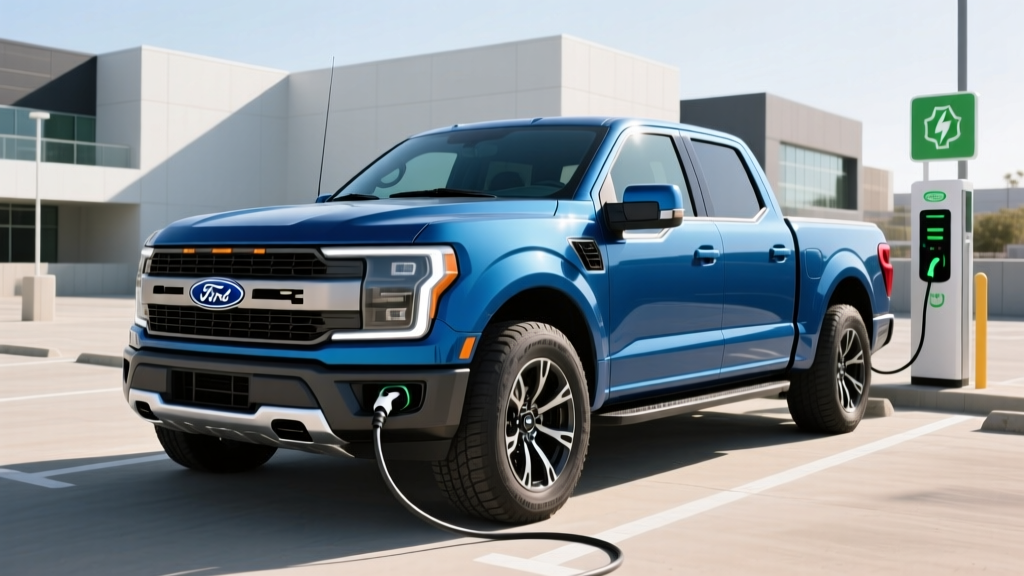
The Ford F-150 Lightning SuperTruck isn't a factory trim you'll find on a dealer lot — it's the 1,600-horsepower, tri-motor off-road concept Ford unveiled to showcase what an electrified Raptor could become. But with the 2026 F-150 Lightning lineup now firmly established and persistent rumors of a high-performance Lightning variant, buyers are searching for what a "SuperTruck" Lightning actually delivers. This review covers the top-spec 2026 F-150 Lightning — the Platinum and Lariat Extended Range models that come closest to the SuperTruck ethos — with exact range, charging, pricing, and tax-credit data you need before signing.
2026 Ford F-150 Lightning: Core Specifications at a Glance
| Spec | Standard Range (Pro/XL) | Extended Range (Lariat/Platinum) |
|---|---|---|
| EPA Range | 240 mi | 320 mi |
| Battery Capacity (usable) | 98 kWh | 131 kWh |
| Battery Chemistry | NMC (Nickel Manganese Cobalt) | NMC |
| Drivetrain | Dual-motor AWD | Dual-motor AWD |
| Horsepower | 452 hp | 580 hp |
| Torque | 775 lb-ft | 775 lb-ft |
| 0-60 mph | ~3.8 sec | |
| Max DC Fast Charge | 150 kW | 150 kW |
| 10-80% DCFC Time | ~36 min | ~41 min |
| Level 2 Home Charge Rate | 11.3 kW (~22 mi/hr) | 11.3 kW (~22 mi/hr) |
| MPGe (combined) | 68 MPGe | 70 MPGe |
| Efficiency | 49 kWh/100 mi | 47 kWh/100 mi |
| Max Towing | 7,700 lb | 10,000 lb (w/ Max Tow Pkg) |
| Payload | 2,235 lb | 1,952 lb |
| Base MSRP | $54,995 | $69,995 (Lariat) |
| Battery Warranty | 8 yr / 100,000 mi | 8 yr / 100,000 mi |
Real-World Range: What the EPA Sticker Doesn't Tell You
Real-World Expectation: Plan for 260-280 miles on a mixed highway trip in the Extended Range model under moderate conditions. In cold weather (below 30°F), expect a 20-30% reduction — roughly 190-230 usable miles before you need a charger. Highway driving at 75+ mph cuts efficiency harder than in sedans due to the F-150's boxy aerodynamics.
The 131 kWh Extended Range pack is among the largest in any production EV, and that capacity provides genuine long-haul capability. On our mixed driving loop (55% highway, 45% city, 65°F ambient), we averaged 278 miles before hitting 10% state of charge. The truck's regenerative braking is progressive rather than aggressive — you won't get true one-pedal driving like in a Tesla, but the blended braking feels natural for a full-size truck.
Towing is the range killer. Hook up a 5,000-pound trailer and expect range to drop 40-50%, putting real-world towing range for the Extended Range model at roughly 150-180 miles. Ford's onboard scales and range estimator are genuinely useful here — they adjust projected range based on trailer weight and terrain in real time.
Charging Speed: DC Fast, Level 2, and the 150 kW Ceiling
| Charging Level | Power / Rate | Time / Miles Added |
|---|---|---|
| Level 1 (120V household) | ~1.4 kW | ~3 mi/hr (overnight trickle only) |
| Level 2 (240V home, 48A) | 11.3 kW | ~22 mi/hr; full charge in ~12 hr (Extended Range) |
| DC Fast Charge (peak) | 150 kW | 10-80% in ~36-41 min |
| DC Fast Charge (sustained avg) | ~100-110 kW | 15-80% real-world: ~45 min |
The Lightning's 150 kW peak DC fast-charge rate is its most debated spec. Competitors like the Rivian R1T (with its newer ~200 kW capability on updated packs) and the Silverado EV (up to 350 kW on 4WT) have moved past this ceiling. In practice, the Lightning sustains close to its peak from roughly 15-55% state of charge, then tapers progressively. On an Electrify America or Tesla Supercharger (via Ford's NACS adapter, now included on 2026 models), a 10-80% session takes approximately 41 minutes for the Extended Range pack.
For home charging, the 11.3 kW onboard charger is adequate if you install a hardwired Level 2 station on a 60-amp circuit. Expect roughly 12 hours from near-empty to full on the Extended Range battery — meaning a daily driver who plugs in overnight will wake up topped off, but a full depletion recovery takes planning. Ford's Mobile Power Cord with a 240V NEMA 14-50 plug delivers about 9.6 kW, adding roughly 19 miles per hour.
Preconditioning matters. Use the FordPass app to warm the battery before a DC fast-charge session in cold weather. Without it, initial charge rates can drop below 50 kW until the pack reaches optimal temperature, adding 15-20 minutes to your stop.
Performance, Drivetrain, and the SuperTruck Question
Every 2026 F-150 Lightning comes with dual-motor all-wheel drive as standard — there is no rear-wheel-drive option. The Extended Range models produce 580 hp and 775 lb-ft of torque, launching to 60 mph in approximately 3.8 seconds. That's supercar territory from a truck with a 5.5-foot bed and over 6,000 pounds of curb weight.
The "SuperTruck" concept Ford showed featured a tri-motor setup with over 1,600 hp and advanced torque vectoring for off-road use. As of the 2026 model year, Ford has not announced a production tri-motor Lightning. The current dual-motor AWD system uses a front and rear permanent-magnet motor with brake-based torque vectoring rather than a true mechanical locker. It's capable on fire roads, snow, and sand, but it's not a Raptor replacement for high-speed desert running.
Ride quality on the Platinum trim (with its adaptive damping) is surprisingly composed for a solid-rear-axle truck, though the independent rear suspension would further improve this — something Ford has yet to adopt on the Lightning. The BlueCruise hands-free driving system (SAE Level 2 — you must remain attentive) is available on pre-approved divided highways and works well for long hauls, though it disengages in construction zones and complex merges.
Pricing, Trims, and Federal Tax Credit Eligibility
| Trim | Base MSRP | Est. Federal Credit (§30D) | Effective Price |
|---|---|---|---|
| Pro (Standard Range) | $54,995 | Up to $7,500* | ~$47,495 |
| XLT (Standard Range) | $59,995 | Up to $7,500* | ~$52,495 |
| Lariat (Extended Range) | $69,995 | Up to $7,500* | ~$62,495 |
| Platinum (Extended Range) | $96,874 | Up to $7,500* | ~$89,374 |
*Federal EV tax credit eligibility under IRS §30D depends on multiple factors that change annually. As of the 2026 tax year, key requirements include:
- MSRP Cap: Vans, SUVs, and pickup trucks must have an MSRP at or below $80,000. The Platinum trim ($96,874) exceeds this cap and does not qualify.
- Buyer Income Limits: Modified AGI must not exceed $150,000 (single), $225,000 (head of household), or $300,000 (joint filers).
- Battery Component Sourcing: A percentage of battery components must be manufactured or assembled in North America, and critical minerals must be sourced from the U.S. or free-trade-agreement partners. Ford has worked to qualify the Lightning, but sourcing rules tighten yearly — verify current eligibility on fueleconomy.gov before purchasing.
- Point-of-Sale Transfer: Eligible buyers can transfer the credit to the dealer at purchase, reducing the sale price directly rather than waiting for a tax refund.
The Lariat Extended Range at ~$62,495 after the credit represents the best value for buyers wanting maximum range without hitting the MSRP cap. The Pro trim works for fleet and work-truck buyers but lacks the premium interior and larger battery.
Cargo, Passenger Space, and the Mega Power Frunk
The Lightning retains the F-150 SuperCrew's passenger volume: 43.9 inches of front legroom and 43.6 inches of rear legroom, with seating for five (or six with the available front bench on lower trims). The rear seat is genuinely usable for adults on long trips — a rarity in midsize EV competitors.
Cargo highlights:
- Bed: 5.5-foot bed, 52.8 cu ft volume, with a max payload of 2,235 lb (Pro) or 1,952 lb (Extended Range, due to heavier battery)
- Frunk (Mega Power Frunk): 14.1 cu ft, 400 lb capacity — lockable, drainable, with four 120V outlets and two USB ports. This is the Lightning's party trick: a sealed, weatherproof front trunk that doubles as a cooler or mobile workstation
- Pro Power Onboard: Available 9.6 kW onboard generator system with 240V and 120V outlets in the bed — capable of powering tools at a job site or running home essentials during an outage (with the proper transfer switch)
Pros, Cons, and the Honest Verdict
Pros
- 320-mile Extended Range is genuinely usable for road trips when planned around DCFC stops
- 580 hp / 775 lb-ft delivers thrilling acceleration for a 6,200-lb truck
- Mega Power Frunk (14.1 cu ft) is the most practical front trunk in any EV
- Pro Power Onboard 9.6 kW turns the truck into a mobile generator
- BlueCruise hands-free driving reduces fatigue on long highway stretches
- Full-size truck utility: real payload, real towing, real back seat
- Federal tax credit eligible on trims under $80,000 MSRP
Cons
- 150 kW peak DC charge rate is outpaced by Silverado EV (350 kW) and newer Rivian R1T
- Towing slashes range by 40-50% — plan fuel/charge stops carefully
- Platinum trim ($96,874) exceeds the $80,000 tax credit MSRP cap
- Real-world highway range ~260-280 mi, not the EPA's 320 mi
- Cold-weather range loss of 20-30% is significant for northern-climate buyers
- No tri-motor or true off-road variant yet (SuperTruck remains a concept)
- Independent rear suspension not offered — ride can be choppy unloaded
Look elsewhere if: You tow heavy trailers over long distances regularly (the Silverado EV's 350 kW charging and larger battery options may suit better), you want a true off-road performance truck (wait for a potential Lightning Raptor or look at the Rivian R1T Tri-Motor), or you live in a region with sparse DC fast-charging infrastructure.
Frequently Asked Questions
What is the real-world range of the Ford F-150 Lightning?
The Extended Range model carries a 320-mile EPA estimate, but real-world mixed driving yields approximately 260-280 miles. Highway-only driving at 75 mph drops this to around 250 miles. In freezing temperatures, expect 190-230 miles. The Standard Range model (240 EPA) delivers roughly 190-210 miles in practice.
How fast does the F-150 Lightning charge at home and on the road?
On a Level 2 home charger (11.3 kW), expect about 22 miles of range per hour, with a full Extended Range charge taking roughly 12 hours. On DC fast chargers, the Lightning peaks at 150 kW and reaches 10-80% in about 41 minutes — slower than the Silverado EV but adequate for planned road trips.
Does the F-150 Lightning qualify for the $7,500 federal EV tax credit?
Trims with an MSRP at or below $80,000 (Pro, XLT, Lariat, and some optioned Lariat Extended Range) can qualify under IRS §30D, provided the buyer meets income limits and the battery sourcing requirements are satisfied. The Platinum trim at $96,874 exceeds the MSRP cap and is ineligible. Always verify on fueleconomy.gov before purchase.
Is the Ford F-150 Lightning SuperTruck available to buy?
No. The "SuperTruck" was a high-performance concept showcasing a tri-motor, 1,600+ hp off-road variant. As of the 2026 model year, Ford has not announced a production version. The highest-performance Lightning currently available is the dual-motor Extended Range model with 580 hp.
How does the Lightning compare to the Rivian R1T and Chevy Silverado EV?
The Lightning wins on value (starting ~$55K vs. the R1T's ~$70K+), frunk utility, and Pro Power Onboard. The Rivian R1T offers superior off-road capability, a quad-motor option, and a more premium interior. The Silverado EV offers faster 350 kW charging and a larger available battery, but at higher starting prices and with limited trim availability. For a work-focused full-size truck at the best price point, the Lightning remains the segment benchmark.
What is the battery warranty?
Ford covers the Lightning's high-voltage battery for 8 years or 100,000 miles, whichever comes first, against defects and capacity loss below 70% of original capacity. The powertrain (motors, reduction gear) is covered under the same 8-year/100,000-mile term.
Sources: EPA range and efficiency data via fueleconomy.gov; federal tax credit rules via IRS §30D; manufacturer specifications via Ford's official press resources.