What We Know About the 2027 Mercedes C-Class EV
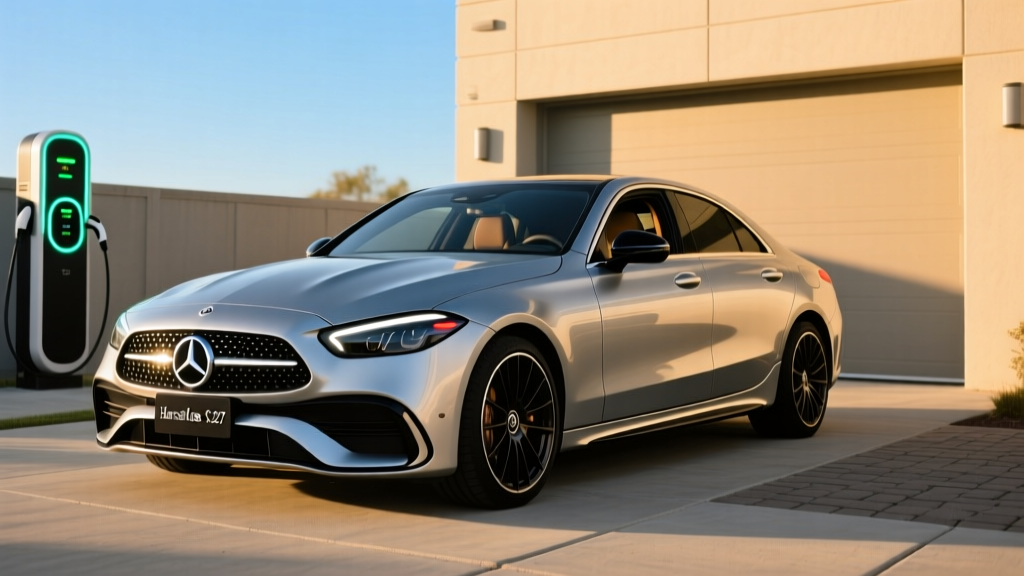
The 2027 Mercedes-Benz C-Class EV (internally tied to the next-generation CLA/CTA electric sedan platform, expected to slot into the C-Class segment) is an announced, not-yet-on-sale luxury electric sedan. Based on Mercedes' MMA (Mercedes Modular Architecture) platform and confirmed powertrain teasers, expect an EPA-estimated range near 350–400 miles, an 800-volt architecture capable of ~250 kW peak DC fast charging, and a starting MSRP likely between $52,000 and $58,000. Deliveries are anticipated in late 2026 or early 2027. All specs below are preliminary and subject to change before production.
Preliminary Specs: What the MMA Platform Promises
Mercedes has been transparent about the MMA platform's engineering targets since its 2023 Technology Day and subsequent concept reveals. The C-Class EV will be one of the first sedans built on this architecture, sharing DNA with the production CLA EV. Here is what the manufacturer has confirmed or strongly signaled:
| Attribute | Estimated Figure | Source / Basis |
|---|---|---|
| Platform | MMA (Mercedes Modular Architecture) | Mercedes-Benz official |
| Battery Chemistry | NMC (high-silicon anode) + LFP option for base trim | Mercedes Technology Day 2023 |
| Usable Battery Capacity | ~85 kWh (NMC) / ~65 kWh (LFP base) | Concept data, CATL partnership |
| System Voltage | 800V nominal | Mercedes-Benz official |
| EPA Range (est.) | 350–400 mi (NMC) / 280–320 mi (LFP) | WLTP-to-EPA conversion from concept claims |
| Peak DC Fast Charge Rate | ~250 kW | Mercedes-Benz official (800V architecture) |
| 10–80% DC Charge Time (est.) | ~18–22 minutes | Platform target, comparable to Hyundai E-GMP |
| Level 2 AC Charge Rate | 11 kW (standard) / 22 kW (optional) | Mercedes EQ lineage |
| Drivetrain | RWD standard; AWD (4MATIC) available | MMA platform design |
| Horsepower (est.) | 268 hp (base RWD) / 380+ hp (AWD) | Comparable MMA powertrain targets |
| 0–60 mph (est.) | ~6.2 sec (RWD) / ~4.5 sec (AWD) | Segment estimates |
| ADAS | SAE Level 2 (Drive Pilot optional on highway) | Mercedes-Benz |
| Battery Warranty (est.) | 8 years / 100,000 miles | Current Mercedes EQ standard |
A note on WLTP vs. EPA: Mercedes has cited WLTP range figures exceeding 750 km (~466 miles) for MMA-based sedans. WLTP is a European testing cycle that typically overstates range by 10–20% compared to the US EPA cycle. Expect the EPA sticker to land closer to 350–400 miles for the long-range NMC variant. On real-world highway drives at 70–75 mph, plan for roughly 290–340 miles of usable range, dropping further in cold weather (below 32°F), where lithium-ion internal resistance increases and cabin heating draws significant energy.
How the C-Class EV Stacks Up Against Gas and Hybrid Alternatives
Buyers cross-shopping the 2027 C-Class EV are likely comparing it to the current C300 sedan (gas), the C300e plug-in hybrid (where available), and competitors like the BMW i4 and Tesla Model 3. Here is how the numbers compare:
| Metric | 2027 C-Class EV (est.) | 2025 C300 Sedan (gas) | 2025 BMW i4 eDrive40 |
|---|---|---|---|
| Powertrain | BEV (800V) | 2.0L Turbo I4 + 48V mild hybrid | BEV (400V) |
| Range / Tank | ~370 mi (EPA est.) | ~430 mi (15.4 gal tank, 28 MPG combined) | 307 mi (EPA) |
| MPGe / MPG | ~110 MPGe (est.) | 28 MPG combined | 109 MPGe (EPA) |
| 0–60 mph | ~6.2 sec (RWD) | 5.9 sec | 5.5 sec |
| Peak DC Charge | ~250 kW | N/A | 205 kW |
| Starting MSRP (est.) | $52,000–$58,000 | $46,550 | $57,900 |
| Federal Tax Credit (§30D) | Up to $7,500 (if eligible) | $0 | Up to $7,500 (if eligible) |
The gas C300 still wins on total range per fill-up and upfront price. But the C-Class EV's estimated $52K–$58K base, potentially reduced by a $7,500 point-of-sale federal tax credit (bringing it to ~$44,500–$50,500), narrows the gap substantially. The BMW i4 is the closest EV rival, but its 400V architecture means slower peak charging (~205 kW vs. the C-Class EV's estimated 250 kW), and its EPA range trails at 307 miles.
Real Ownership Costs: Charging, Fuel, Insurance, and Maintenance
Purchase price is only one variable. Here is a 5-year total cost of ownership (TCO) comparison, assuming 12,000 miles/year, $0.14/kWh home electricity (national average per the U.S. EIA), $3.50/gallon gasoline, and typical luxury-segment insurance rates.
| Cost Category | 2027 C-Class EV (est.) | 2025 C300 Gas |
|---|---|---|
| Purchase Price (after §30D credit) | $47,500 (est.) | $46,550 |
| Fuel/Energy (5 yr, 60K mi) | $3,800 (home charging) | $9,000 |
| Maintenance (5 yr) | $1,800 (no oil, fewer wear items) | $4,200 |
| Insurance (5 yr avg.) | $12,500 (EV premium ~15%) | $10,800 |
| Estimated Depreciation (5 yr) | $18,000 (luxury EV depreciation still elevated) | $16,500 |
| Total 5-Year Cost | $83,600 | $87,050 |
Key takeaway: The C-Class EV saves roughly $3,400 over five years in this scenario, driven almost entirely by fuel and maintenance savings. However, two caveats matter: (1) If you rely exclusively on public DC fast charging at $0.35–$0.50/kWh, your energy costs nearly triple to ~$9,500–$13,500 over five years, erasing the advantage. (2) Luxury EV depreciation remains less predictable than gas sedans, and resale values for the EQ line have been soft — Mercedes' shift to the MMA platform may reset buyer confidence, but it is too early to confirm.
Charging Reality: Home Setup, Public Networks, and the 800V Advantage
The 800-volt architecture is the C-Class EV's most consequential engineering decision. Here is what it means in practice:
| Level | Power (kW) | Miles Added per Hour | Typical Use Case |
|---|---|---|---|
| Level 1 (120V household) | 1.4 kW | ~4–5 mi/hr | Emergency / overnight trickle |
| Level 2 (240V home, 48A) | 11.5 kW | ~35–40 mi/hr | Daily home charging (8-hr full charge) |
| Level 2 (240V, Wallbox Pro optional) | 22 kW | ~70–80 mi/hr | Fast home top-off (requires 100A circuit) |
| DC Fast (350 kW station) | ~250 kW peak | ~180 mi in 15 min | Road trips, 10–80% in ~18–22 min |
Charging curve reality: The ~250 kW peak rate applies only between roughly 10–40% state of charge (SoC). Above 60%, the rate tapers to ~120 kW, and above 80% it drops to ~50 kW. This is physics — lithium-ion cells accept charge more slowly at higher SoC to prevent lithium plating and thermal stress. On a road trip, plan your stops around 10–80% windows for the fastest sessions.
Home charging installation: A Level 2 home charger (48-amp, hardwired) typically costs $1,200–$3,500 installed, assuming your electrical panel has capacity. Homes with older 100-amp panels may need a $2,000–$5,000 panel upgrade. Always get a quote from a licensed electrician before purchasing equipment. The federal Residential Clean Energy Credit (IRC §25D) covers 30% of charger installation costs, up to $1,000, through 2032.
Federal Tax Credit Eligibility: What the §30D Rules Require
The IRS §30D New Clean Vehicle Credit offers up to $7,500, but eligibility depends on multiple factors that change annually. For the 2027 C-Class EV, here is what to verify before purchase:
- MSRP cap: Sedans must have an MSRP at or below $55,000. If the C-Class EV base trim starts at $52,000–$55,000, it may qualify — but higher trims will exceed the cap.
- Buyer income cap: Modified adjusted gross income (MAGI) must not exceed $150,000 (single), $225,000 (head of household), or $300,000 (married filing jointly).
- Battery sourcing: At least a specified percentage of critical minerals and battery components must be sourced from the US or FTA partners. Mercedes' partnership with CATL (China) for LFP cells may complicate eligibility for the base LFP trim; the NMC variant with a different supply chain may fare better.
- Point-of-sale transfer: As of 2024, the credit can be transferred to the dealer at purchase, reducing your out-of-pocket cost immediately — but you must still meet income requirements at tax filing time, or you will owe it back.
- Final assembly: Vehicle must undergo final assembly in North America. Mercedes produces vehicles in Tuscaloosa, Alabama, but confirm the specific C-Class EV production site before purchase.
⚠ Tax credit uncertainty: As an unreleased 2027 model, the C-Class EV's exact §30D eligibility cannot be confirmed today. Battery sourcing requirements tighten each year, and Mercedes has not published full supply-chain details for this specific model. Consult a tax professional and check the fueleconomy.gov tax credit lookup once the vehicle is officially listed before counting on the credit in your budget.
Common Misconceptions — Myth vs. Fact
| Myth | Fact |
|---|---|
| "The battery will need replacing in 5 years." | Mercedes warranties its EV batteries for 8 years/100,000 miles with a minimum 70% capacity retention. Real-world data from older EQ models shows ~5–8% degradation at 100K miles. Full replacement, if ever needed, runs $12,000–$18,000 out of warranty. |
| "EVs don't work in cold weather." | Range drops 20–35% below freezing due to battery chemistry and cabin heating demand. A C-Class EV rated at 370 mi EPA may deliver ~250–290 mi in 20°F weather. Preconditioning the battery while plugged in recovers some loss. Heat pumps (expected standard on MMA) reduce cabin heating energy by ~40%. |
| "I can charge on any public charger." | Connector compatibility matters. Mercedes has committed to adopting the NACS (Tesla-style) connector for North American models starting in 2025. The 2027 C-Class EV should ship with NACS natively, granting access to Tesla Superchargers. CCS-only stations will require an adapter. |
| "Level 2 driver-assist means self-driving." | Mercedes' Drive Pilot and Distronic systems are SAE Level 2 — the driver must remain attentive and hands must be available. Mercedes has received limited Level 3 approval in Nevada and California for Drive Pilot at speeds up to 40 mph in traffic, but this is conditional and geofenced. You are always legally responsible. |
| "EVs cost more to insure." | Generally true: EV insurance premiums run 10–20% higher than comparable gas cars due to higher repair costs (battery pack, aluminum body panels) and parts pricing. Shop quotes from multiple carriers before purchase. |
Decision Framework: Should You Wait for the 2027 C-Class EV?
Wait for the 2027 C-Class EV if:
- You want a luxury compact EV sedan with 350+ miles of range and 800V fast charging — a combination no current Mercedes EQ sedan offers.
- You have reliable home charging access (Level 2) and drive under 60 miles daily, meaning home charging covers 95%+ of your needs.
- You can wait 12–18 months for delivery and tolerate first-model-year pricing (limited negotiation, potential waitlists).
- The §30D tax credit is important to your budget, and you meet income and MSRP requirements.
Buy now (BMW i4, Tesla Model 3, or C300 gas) if:
- You need a vehicle within 30–60 days and cannot wait for an unreleased model.
- You live in an apartment or lack home charging access — public-only charging erases most of the cost advantage and adds daily friction.
- You frequently drive in extreme cold (below 10°F) for long distances — range loss on any EV is significant, and a gas or PHEV eliminates the variable.
- You want proven resale value data — the C-Class EV has no track record yet.
Frequently Asked Questions
When will the 2027 Mercedes C-Class EV be available to order?
Mercedes has not published an exact on-sale date. Based on the MMA platform rollout timeline (production CLA EV first, followed by sedan variants), expect order books to open in late 2026 with first deliveries in early-to-mid 2027. This timeline is preliminary.
Will the C-Class EV replace the gas C-Class?
No. Mercedes has stated it will offer electrified and combustion options in parallel through the late 2020s. The gas C-Class is expected to continue alongside the EV variant, though trim availability may shift by market.
What is the estimated real-world highway range?
For the long-range NMC variant (estimated 370 mi EPA), expect approximately 290–330 miles at 70 mph in moderate temperatures. Highway driving at sustained speed is the least efficient EV use case due to aerodynamic drag scaling with the square of velocity. Add cold weather (below 32°F) and expect 250–280 miles.
Does the C-Class EV support vehicle-to-home (V2H) or bidirectional charging?
Mercedes has not confirmed V2H or V2L (vehicle-to-load) for the C-Class EV specifically. The MMA platform is technically capable, but Mercedes has prioritized V2H only on select future models. Do not purchase expecting bidirectional capability until officially confirmed.
How does the C-Class EV compare to the Tesla Model 3?
The Model 3 Long Range starts at ~$47,740 (2025) with 341 miles EPA and access to the Supercharger network natively. The C-Class EV will likely cost more but offer a more traditional luxury interior, Mercedes' MBUX infotainment, and available Level 3 Drive Pilot in limited conditions. If interior quality and brand cachet matter, the Mercedes wins. If value and charging network maturity matter, the Model 3 still leads.
What should a first-time EV buyer know before ordering?
Three things: (1) Get a Level 2 home charger installed before delivery — it is the single biggest quality-of-life factor in EV ownership. (2) Understand that DC fast charging is for road trips, not daily use; frequent 100% charges and repeated DC sessions accelerate battery degradation. (3) Download the Mercedes me app and familiarize yourself with preconditioning, scheduled charging, and charge-limit settings (80% daily max is ideal for NMC battery longevity).