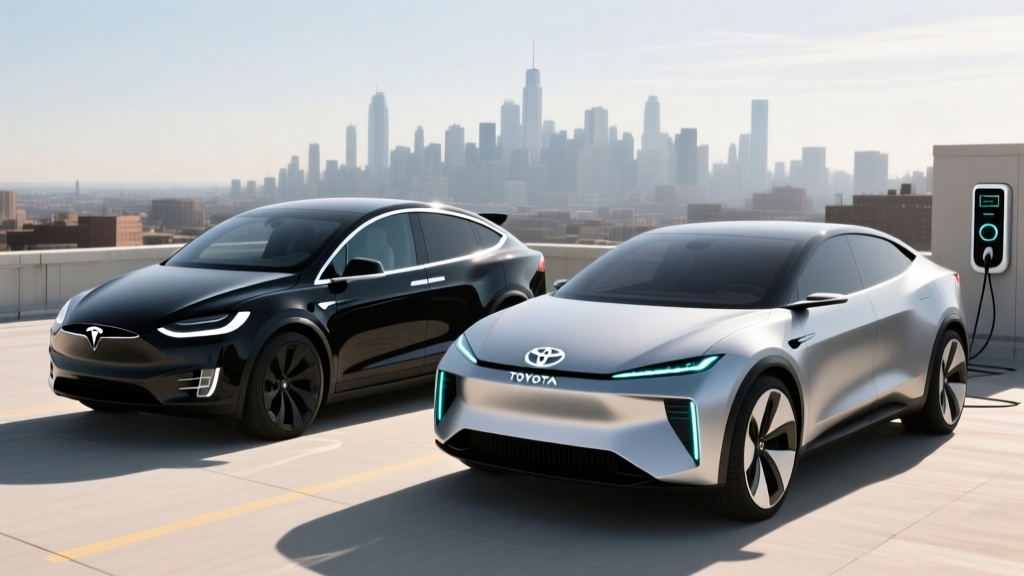
If you've searched "did Tesla buy Toyota" or "Tesla bought Toyota," you're not alone. The rumor surfaces regularly on forums and social media, usually triggered by a viral headline or a resurfaced piece of history. Let's clear this up immediately: Tesla has never bought Toyota, and Toyota has never bought Tesla. The two companies are entirely independent competitors in 2026.
However, the confusion has roots in a genuine, fascinating partnership that produced one of the earliest mainstream electric vehicles: the Toyota RAV4 EV. That collaboration, which ran from 2012 to 2014, still influences how both companies approach electrification today. Below, we unpack the real history, what happened to the RAV4 EV, and what Toyota and Tesla each offer EV buyers right now — with the exact specs, pricing, and charging data you need to decide between them.
The Real Tesla-Toyota Partnership: The RAV4 EV Story
In 2010, Toyota and Tesla announced a partnership to develop an electric version of the popular RAV4 compact SUV. Tesla supplied the powertrain — a derivative of the Roadster's drivetrain — while Toyota handled the vehicle integration, body, and interior. The result was the 2012–2014 Toyota RAV4 EV, sold exclusively in California.
Toyota also invested approximately $50 million in Tesla stock around the time of Tesla's 2010 IPO. Toyota later sold its Tesla shares, and the two companies parted ways as their strategic visions diverged: Toyota pursued hydrogen fuel cells and hybrids, while Tesla scaled battery-electric production globally.
By 2017, Toyota had largely pivoted away from the Tesla partnership and began developing its own dedicated EV platform, which eventually became the e-TNGA architecture underpinning today's bZ4X and related models. The RAV4 EV remains a collector's curiosity and a cautionary tale about early EV compliance efforts.
2026 Toyota bZ4X: Toyota's Current EV Flagship
The closest modern equivalent to what the RAV4 EV represented is the 2026 Toyota bZ4X, Toyota's dedicated battery-electric SUV built on the e-TNGA platform. After a rough launch in 2023, the bZ4X has received meaningful battery and efficiency updates for the 2025 and 2026 model years.
| Spec | FWD XLE | AWD Limited |
|---|---|---|
| EPA Range | 252 miles | 228 miles |
| Battery Capacity | 71.4 kWh (NMC) | 71.4 kWh (NMC) |
| Max DC Fast Charge | 150 kW | 150 kW |
| 10–80% DC Charge Time | ~30 minutes | ~30 minutes |
| Level 2 Home Charge Rate | 7.2 kW (~25 mi/hr) | 7.2 kW (~25 mi/hr) |
| 0–60 mph | 7.1 seconds | 5.8 seconds |
| Horsepower | 201 hp | 214 hp |
| MPGe (combined) | 119 MPGe | 104 MPGe |
| Base MSRP | $38,465 | $44,165 |
| Battery Warranty | 8 years / 100,000 miles | |
Sources: fueleconomy.gov, Toyota bZ4X official page.
Charging the bZ4X: Speeds, Connectors, and Real Expectations
The bZ4X uses the CCS1 connector for DC fast charging and J1772 for Level 2 AC charging. Toyota has not yet adopted the NACS (Tesla-style) connector on the bZ4X, though future models may transition.
| Charging Level | Power | Miles Added per Hour | Notes |
|---|---|---|---|
| Level 1 (120V) | ~1.4 kW | ~4–5 mi/hr | Emergency/trickle only |
| Level 2 (240V) | 7.2 kW | ~25 mi/hr | Full charge in ~10 hours |
| DC Fast Charge | Peak 150 kW | ~150 mi in 30 min | Tapers significantly above 80% |
The 150 kW peak rate is respectable but trails competitors like the Hyundai Ioniq 5 (peak 240 kW) and Tesla Model Y (peak 250 kW). More importantly, the bZ4X's charge curve tapers earlier than some rivals — you'll see sustained rates around 100–120 kW through the 20–60% SoC window, then a pronounced slowdown past 80%. Plan your road trips accordingly: a 10–80% session takes roughly 30 minutes at a capable 150+ kW station.
2026 Tesla Model Y: What Toyota's Former Partner Offers Today
The 2026 Tesla Model Y (refreshed "Juniper" generation) is the vehicle most bZ4X shoppers cross-shop. It offers more range, faster charging, access to the Supercharger network, and a more mature software ecosystem.
| Spec | Value |
|---|---|
| EPA Range | 320 miles |
| Battery Capacity | ~78 kWh (NMC, structural pack) |
| Max DC Fast Charge | 250 kW (Supercharger V3/V4) |
| 10–80% DC Charge Time | ~22 minutes |
| Level 2 Home Charge Rate | 11.5 kW (~44 mi/hr) |
| 0–60 mph | 4.8 seconds |
| Horsepower | 384 hp (dual motor) |
| MPGe (combined) | 122 MPGe |
| Base MSRP (Long Range AWD) | $46,630 |
| Battery Warranty | 8 years / 120,000 miles |
Source: Tesla Model Y specs, fueleconomy.gov.
Tax Credit Eligibility: bZ4X vs. Model Y Under IRS §30D
Federal EV tax credit eligibility under IRS §30D is one of the most decisive factors for buyers. Rules for 2026 include MSRP caps, buyer income limits, and battery-component/critical-mineral sourcing requirements. Credits can now be transferred to the dealer at point of sale, reducing your purchase price directly.
| Factor | Toyota bZ4X | Tesla Model Y |
|---|---|---|
| MSRP Cap (SUV: $80,000) | Passes ($38k–$47k range) | Passes ($46k–$55k range) |
| Buyer Income Cap (MFJ: $300k AGI) | Applies equally | Applies equally |
| Battery Sourcing / Critical Minerals | Partial credit likely ($3,750) | Partial credit likely ($3,750) |
| Estimated Max Credit (2026) | $3,750 | $3,750 |
| Effective Price After Credit (base) | ~$34,715 | ~$42,880 |
Important caveat: Both vehicles' credit amounts depend on current battery-sourcing compliance, which shifts as supply chains evolve. Always verify eligibility using the IRS's official list at fueleconomy.gov before purchasing, and consult a tax professional for your specific situation. The credit is non-refundable, meaning you need sufficient tax liability to claim it (unless you elect the point-of-sale transfer).
Driving, Tech, and Daily Ownership
Toyota bZ4X: Strengths and Drawbacks
The bZ4X rides on a conventional crossover architecture and drives like a well-sorted Toyota — composed, comfortable, and unremarkable. The 12.3-inch infotainment screen runs Toyota's latest interface with wireless Apple CarPlay and Android Auto. Standard Toyota Safety Sense 3.0 includes adaptive cruise, lane-keeping, and automatic emergency braking.
Drawbacks: The bZ4X lacks a front trunk (frunk). Rear legroom is tight at 35.7 inches — noticeably less than the Model Y. Cabin materials are plasticky for the price. The most significant criticism remains its charging speed relative to competitors and its range shortfall versus the Model Y.
Tesla Model Y: Strengths and Drawbacks
The refreshed Model Y (Juniper) features a quieter cabin, improved suspension tuning, ventilated front seats, a rear passenger screen, and ambient lighting. Tesla's 15.4-inch center display runs a proprietary OS with built-in navigation, streaming, and over-the-air updates. Autopilot is standard; FSD (Supervised) remains a $8,000 option — and is SAE Level 2, meaning you must remain fully engaged as the driver at all times.
Drawbacks: Tesla's panel-gap consistency remains a common complaint. The minimalist interior isn't for everyone — no physical buttons, no traditional instrument cluster. Insurance premiums for Teslas tend to run 20–40% higher than comparable Toyotas. Service center wait times can stretch weeks in some markets.
Cargo, Space, and Practicality
| Dimension | Toyota bZ4X | Tesla Model Y |
|---|---|---|
| Cargo (behind rear seats) | 27.7 cu ft | 30.2 cu ft |
| Cargo (rear seats folded) | 56.9 cu ft | 72.0 cu ft |
| Frunk | None | 4.1 cu ft |
| Rear Legroom | 35.7 in | 41.6 in |
| Front Legroom | 42.0 in | 41.8 in |
The Model Y wins on nearly every practicality metric. Its hatchback design, available third-row seat (for small children), and frunk give it versatility the bZ4X cannot match. If you regularly carry rear passengers or bulky cargo, the Model Y is the more functional vehicle.
Who Should Buy Which?
- You prioritize Toyota's dealer network, service accessibility, and brand familiarity
- Your daily commute is under 50 miles round-trip and you can charge at home
- You prefer physical buttons and a traditional infotainment layout
- You want a lower base price and don't need 300+ miles of range
- You road-trip frequently and need Supercharger network access (250 kW, reliable uptime)
- You need maximum cargo space and rear-seat room for family use
- You value OTA updates, integrated navigation, and a maturing software ecosystem
- Range is a priority — 320 EPA miles covers most trips without mid-route charging
Pros and Cons at a Glance
- Lower starting MSRP (~$38,465)
- Toyota Safety Sense 3.0 standard
- Comfortable, car-like ride quality
- Wireless CarPlay/Android Auto
- Strong dealer/service network
- 252-mile EPA range trails class leaders
- 150 kW DC peak charge rate is below average
- No frunk; limited cargo versatility
- Tight rear legroom (35.7 in)
- CCS-only — no native NACS/Supercharger access
- 320-mile EPA range (Long Range AWD)
- 250 kW Supercharger access, ~22 min 10–80%
- Class-leading cargo and rear-seat space
- Heat pump improves cold-weather efficiency
- Continuous OTA feature improvements
- Higher base price (~$46,630)
- Insurance premiums 20–40% above average
- Minimalist interior polarizes buyers
- Service center availability varies by region
- FSD (Supervised) is expensive and still Level 2
FAQ
Did Tesla ever buy Toyota?
No. Tesla and Toyota partnered from 2010–2014 to produce the RAV4 EV, and Toyota invested in Tesla stock, but neither company acquired the other. They are fully independent competitors in 2026.
What was the Toyota RAV4 EV?
The RAV4 EV was a battery-electric version of the RAV4 sold in California from 2012–2014. It used a Tesla-supplied powertrain with a 41.8 kWh battery and an EPA range of approximately 103 miles. About 2,600 units were sold before the program was discontinued.
Does the 2026 Toyota bZ4X qualify for the federal EV tax credit?
The bZ4X likely qualifies for a partial $3,750 credit under IRS §30D, depending on current battery-sourcing compliance. Eligibility also depends on your AGI (must be under $300,000 for married filing jointly) and the vehicle's MSRP (must be under $80,000 for SUVs). Verify at fueleconomy.gov before purchasing.
Does the 2026 Tesla Model Y qualify for the federal EV tax credit?
The Model Y also likely qualifies for a partial $3,750 credit under the same §30D rules. Its MSRP falls under the $80,000 SUV cap. Income limits and battery-sourcing rules apply identically. The credit can be transferred at point of sale to reduce your purchase price.
What is the real-world range of the Toyota bZ4X?
The FWD bZ4X is EPA-rated at 252 miles. Expect roughly 210–230 miles on the highway and 170–195 miles in freezing weather. The AWD Limited (228 EPA miles) delivers approximately 190–210 highway miles.
How fast does the bZ4X charge at home and on the road?
At home on a Level 2 (240V, 32A) charger, the bZ4X adds about 25 miles per hour and fully charges in roughly 10 hours. On DC fast chargers, it peaks at 150 kW and reaches 10–80% in about 30 minutes, with significant tapering above 80% SoC.
Is the Tesla Model Y worth the premium over the bZ4X?
For road-trippers, families needing rear-seat space, and buyers who prioritize charging speed and network reliability, the Model Y justifies its ~$8,000 higher base price through 68 additional miles of EPA range, 100 kW faster peak charging, and Supercharger access. For budget-focused commuters who charge at home and drive under 50 miles daily, the bZ4X is the more cost-effective choice.
Will Toyota switch to the Tesla NACS charging connector?
Toyota has announced that future EV models sold in North America will adopt the NACS connector, enabling native Supercharger access. However, the current 2026 bZ4X still uses CCS1. Toyota owners can use a CCS-to-NACS adapter at Superchargers where supported.