In mid-2025, Tesla quietly powered down its Dojo supercomputer — the custom-built AI training cluster that CEO Elon Musk once touted as the key to solving full self-driving. By early 2026, the shutdown was confirmed: Tesla had pivoted away from its proprietary D1 chip architecture in favor of scaling up clusters built on NVIDIA H100 and next-generation GPUs. For current Tesla owners and prospective buyers, the headline question is practical: does the Dojo shutdown affect the Autopilot and FSD (Supervised) experience in vehicles on the road today?
The short answer is no — not directly. Tesla's driver-assistance systems remain SAE Level 2 features that require full driver engagement regardless of the backend training infrastructure. But the Dojo pivot reshapes Tesla's AI roadmap, its competitive position in autonomous development, and the long-term value proposition of the FSD package. Here's what you need to know as a buyer or owner in 2026.
What Was Tesla Dojo and Why Did It Shut Down?
Dojo was Tesla's in-house supercomputer, purpose-built to train neural networks on the massive video dataset collected from its fleet of millions of vehicles. The system used Tesla's custom D1 chip and was designed to process exabytes of driving data more efficiently than off-the-shelf GPU clusters.
The project consumed an estimated $2+ billion in capital expenditure. By 2025, however, internal benchmarks reportedly showed that NVIDIA's latest H100 and B200 GPU clusters delivered superior training throughput per dollar. Tesla's decision to sunset Dojo in favor of a 50,000+ GPU NVIDIA cluster reflects a pragmatic engineering calculation: custom silicon only wins if it outperforms the rapidly iterating commercial market, and NVIDIA's pace proved too fast to match internally.
For FSD development, this means training continues — just on different hardware. The neural network models that power vision-based Autopilot and FSD (Supervised) are still being refined with fleet data; the compute substrate has simply changed.
What This Means for Tesla Owners Today
Every Tesla feature available to consumers today — Basic Autopilot, Enhanced Autopilot, and FSD (Supervised) — operates at SAE Level 2. This means the system can manage steering, acceleration, and braking under certain conditions, but the driver must remain fully attentive, keep hands on or near the wheel, and be prepared to take over instantly. No Tesla sold to consumers is a self-driving vehicle. Only Level 4 robotaxi services like Waymo operate without a human driver in defined geofenced areas.
The Dojo shutdown has no immediate impact on the software running in your Tesla. FSD (Supervised) updates continue to roll out over-the-air, trained on NVIDIA GPU clusters. If you're evaluating a Tesla purchase in 2026, the driver-assist experience is unchanged by the infrastructure shift behind the scenes.
What could change over the next 12–24 months is the pace of FSD improvement. Tesla betting on NVIDIA hardware suggests confidence that third-party compute can deliver the training throughput needed — but it also means Tesla no longer controls its entire AI stack vertically. Whether this accelerates or slows FSD progress relative to competitors like Waymo (which uses its own custom compute and has logged millions of driverless miles) remains to be seen.
Current Tesla Lineup: 2026 Specs at a Glance
Since the Dojo conversation ultimately circles back to "should I buy a Tesla?" here's a spec snapshot of the core consumer models as of the 2026 model year. All figures reflect EPA estimates and manufacturer data; always cross-check with fueleconomy.gov for the latest ratings.
| Spec | Model 3 Long Range AWD | Model Y Long Range AWD | Cybertruck AWD |
|---|---|---|---|
| EPA Range | 363 mi | 320 mi | 340 mi |
| Battery (usable) | ~75 kWh (NMC) | ~75 kWh (NMC) | ~123 kWh (NMC) |
| Max DC Fast Charge | 250 kW | 250 kW | 350 kW |
| 10–80% DC Time | ~25 min | ~27 min | ~20 min |
| Level 2 Home Rate | 11.5 kW (~44 mi/hr) | 11.5 kW (~44 mi/hr) | 11.5 kW (~37 mi/hr) |
| 0–60 mph | 4.2 sec | 4.8 sec | 3.9 sec |
| Horsepower | 346 hp | 384 hp | 600 hp |
| Drivetrain | Dual-motor AWD | Dual-motor AWD | Tri-motor AWD |
| Efficiency (MPGe) | 132 MPGe | 117 MPGe | ~95 MPGe |
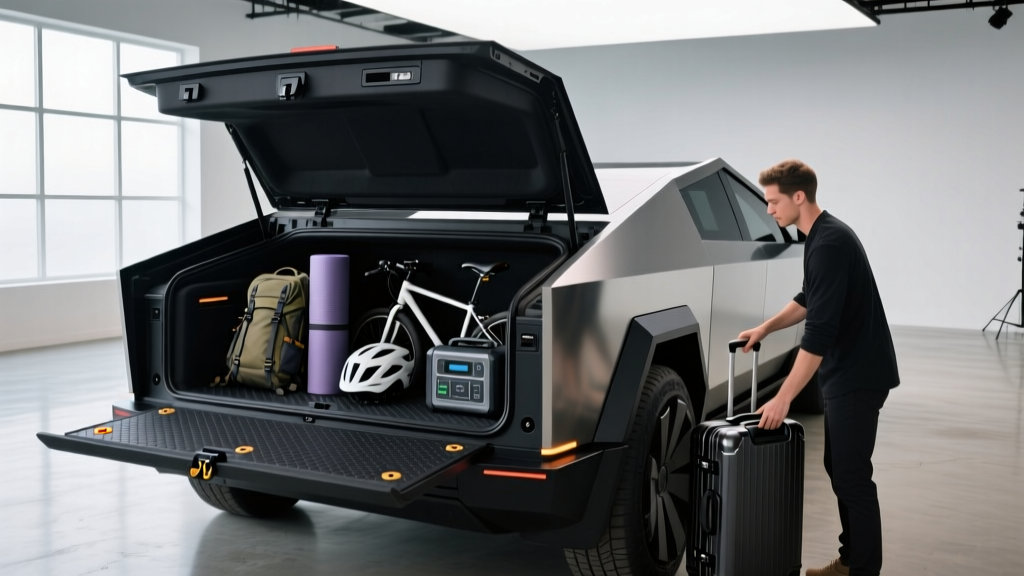
| Cargo Volume | 23 cu ft (trunk) | 76 cu ft (rear seats folded) | 67 cu ft (bed + vault) |
| Base MSRP | $47,740 | $48,990 | $79,990 |
| Battery Warranty | 8 yr / 120,000 mi | 8 yr / 120,000 mi | 8 yr / 150,000 mi |
Real-World Range: What the EPA Sticker Doesn't Tell You
Model 3 LR AWD: EPA 363 mi. Expect ~290–310 mi on sustained highway driving at 70+ mph; ~240–270 mi in freezing temperatures with cabin heat. City/regenerative driving can approach or slightly exceed EPA.
Model Y LR AWD: EPA 320 mi. Expect ~255–280 mi highway; ~215–245 mi in cold weather. The crossover's larger frontal area and weight reduce real-world efficiency vs. the Model 3 sedan.
Cybertruck AWD: EPA 340 mi. Expect ~260–290 mi highway at speed; the truck's aerodynamic profile and 6,600+ lb curb weight hit efficiency hard above 65 mph. Cold-weather range may drop to ~220–250 mi.
Tesla's thermal management system — which includes a heat pump on all current models — helps mitigate cold-weather losses compared to older EVs, but physics is physics: lithium-ion cells lose capacity and increase internal resistance below freezing, and cabin heating draws significant energy. If you live in a cold climate and commute more than 80 miles round-trip, the Model 3 LR's buffer is more forgiving than the Model Y or Cybertruck.
Charging Speed: Supercharger Network Advantage
| Charging Level | Power | Miles Added/Hour | Notes |
|---|---|---|---|
| Level 1 (120V) | 1.4 kW | ~3–5 mi/hr | Emergency/trickle only |
| Level 2 (240V, 48A) | 11.5 kW | ~37–44 mi/hr | Home Wall Connector; full charge overnight |
| DC Fast (V3 Supercharger) | 250 kW peak | ~1,000 mi/hr (peak) | 10–80% in ~25 min; tapers sharply above 80% |
| DC Fast (V4 / Cybertruck) | 350 kW peak | ~1,200 mi/hr (peak) | 800V architecture; limited V4 station availability |
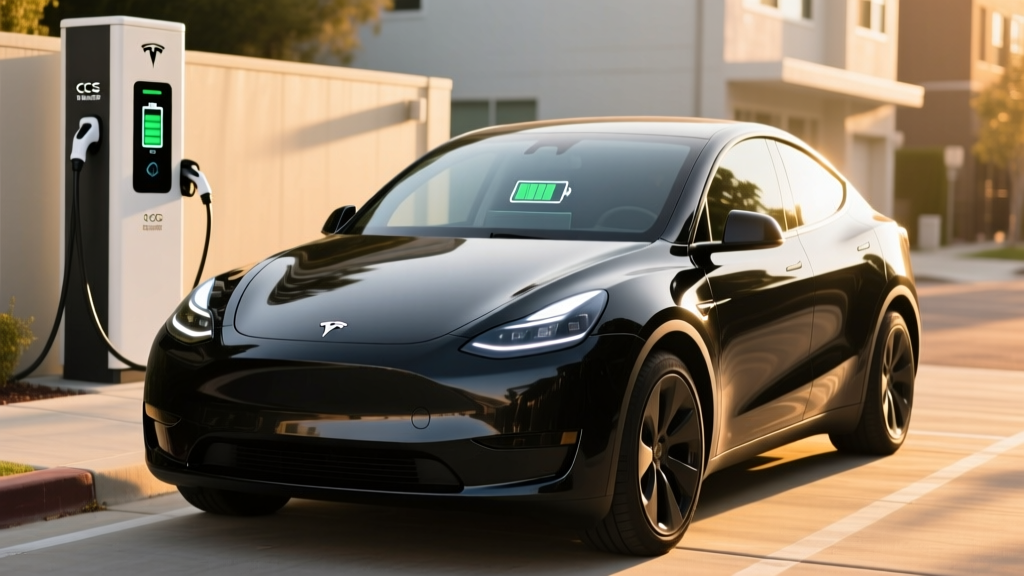
A critical nuance often missed: peak charge rate (kW) is not sustained rate. A Model 3 at a V3 Supercharger may hit 250 kW briefly between 10–20% state of charge, but the charge curve tapers progressively — dropping to ~100 kW by 60% SoC and ~40 kW by 85%. The 10–80% time of ~25 minutes reflects this curve, not a sustained 250 kW pull. Always precondition your battery (navigate to a Supercharger in the Tesla app or nav) to reach peak rates; arriving with a cold battery can double your charge time.
Tesla's Supercharger network, now increasingly open to NACS-equipped vehicles from Ford, GM, Rivian, and others, remains the most reliable DC fast-charging ecosystem in North America — a significant ownership advantage that partially offsets the Dojo-related uncertainty about Tesla's long-term AI ambitions.
Pricing, Tax Credits, and the $8,000 FSD Question
| Model | Base MSRP | Est. Federal Credit (§30D) | Effective Price |
|---|---|---|---|
| Model 3 LR AWD | $47,740 | Up to $7,500* | ~$40,240 |
| Model Y LR AWD | $48,990 | Up to $7,500* | ~$41,490 |
| Cybertruck AWD | $79,990 | Up to $7,500* | ~$72,490 |
*Under IRS §30D rules, the full $7,500 credit requires meeting both critical-mineral and battery-component sourcing thresholds, which shift annually. Buyer income caps apply ($150K single / $300K joint modified AGI). The MSRP cap for sedans is $55,000; for SUVs/pickups, $80,000. The Cybertruck at $79,990 squeaks under the truck cap. Credits can now be transferred to the dealer at point of sale as an instant discount. Always verify eligibility with a tax professional and the IRS source-of-origin requirements for the current tax year.
The FSD (Supervised) package adds $8,000 to any Tesla purchase (or $99/month subscription). Given that FSD remains a Level 2 system requiring constant driver supervision, the value proposition is debatable. The Dojo shutdown doesn't invalidate FSD's current capabilities, but it does raise questions about whether Tesla's AI development velocity will match the trajectory Musk has historically promised. If you primarily need highway lane-keeping and adaptive cruise, Basic Autopilot (included) or Enhanced Autopilot ($6,000) may be sufficient without the FSD premium.
Pros and Cons: The Honest Assessment
- Supercharger network access — the most reliable DC fast-charging ecosystem in North America
- Class-leading efficiency: Model 3 achieves 132 MPGe combined, among the highest of any EV sedan
- Over-the-air updates continuously improve vehicle functionality post-purchase
- Strong resale value relative to most EV competitors
- Minimalist interior maximizes cargo space (Model Y: 76 cu ft with seats folded)
- Heat pump standard on all trims — better cold-weather range retention
- FSD (Supervised) remains Level 2 at $8,000 — no hands-off driving capability
- Dojo shutdown signals AI strategy uncertainty; long-term FSD timeline unclear
- No Apple CarPlay / Android Auto — Tesla's closed infotainment ecosystem frustrates some buyers
- Panel gaps and build-quality inconsistency persist on some deliveries
- Insurance premiums 20–40% higher than comparable ICE vehicles in many states
- Touchscreen-only controls for mirrors, glovebox, and wipers can be distracting while driving
Is a Tesla Still Worth Buying vs. Competitors?
The Dojo shutdown doesn't change Tesla's core strengths: efficiency, charging infrastructure, and software. But it does remove one pillar of the "Tesla as AI company" narrative that justified premium valuations and FSD pricing.
Choose Tesla Model 3/Y if: You prioritize charging-network reliability, want best-in-class efficiency, and value OTA software updates. The Supercharger advantage is tangible for road-trippers and apartment dwellers who rely on public DC charging.
Look at the Hyundai Ioniq 5 or Kia EV6 if: You want 800V ultra-fast charging (10–80% in ~18 min on 350 kW chargers), prefer physical buttons, or need Apple CarPlay. Both offer competitive range and strong build quality, though public charging is less seamless without NACS access (now resolving as Hyundai/Kia adopt NACS in 2025–2026).
Consider the Ford Mustang Mach-E if: You want a more traditional crossover driving feel, BlueCruise hands-off highway driving on approved roads (still Level 2, eyes-monitored), and dealer service infrastructure.
Wait on the autonomous promise if: Your purchase decision hinges on eventual self-driving capability. Tesla's compute pivot, combined with IIHS safety ratings that haven't consistently awarded Tesla top marks, suggests the robotaxi future remains further away than marketing implies. Waymo's Level 4 service is operational in select cities but isn't a personal-vehicle product.
Frequently Asked Questions
Does the Tesla Dojo shutdown affect my car's Autopilot or FSD?
No. Dojo was a backend training supercomputer, not an in-vehicle system. Your Tesla's Autopilot and FSD (Supervised) software continues to receive over-the-air updates trained on Tesla's NVIDIA GPU clusters. Day-to-day driving functionality is unchanged.
What is the real-world range of the Tesla Model 3 Long Range?
The EPA rates the 2026 Model 3 LR AWD at 363 miles. In real-world highway driving at 70–75 mph, expect 290–310 miles. In freezing temperatures with cabin heating, range can drop to 240–270 miles. City driving with regenerative braking may approach or slightly exceed the EPA figure.
How fast does a Tesla charge at home and on the road?
At home on a Level 2 Tesla Wall Connector (11.5 kW / 48A), a Model 3 or Y gains ~44 miles of range per hour — a full charge in roughly 8–9 hours. On a V3 Supercharger (250 kW peak), 10–80% takes approximately 25 minutes, though actual time depends on battery temperature and state of charge. Always precondition by navigating to the charger.
Does the Tesla Model Y qualify for the federal EV tax credit?
The Model Y Long Range ($48,990 MSRP) is under the $80,000 SUV/truck MSRP cap and has historically qualified for up to $7,500 under IRS §30D, subject to battery-sourcing requirements and buyer income limits ($300K joint / $150K single MAGI). The credit can be applied at point of sale. Verify current-year sourcing compliance on the IRS clean vehicle credit page and consult a tax professional.
Is FSD (Supervised) worth $8,000?
For most buyers, no — not at the current Level 2 capability. FSD (Supervised) handles city streets, stoplights, and highway lane changes, but requires constant driver attention. If you mainly drive highways, Basic Autopilot (included) or the $99/month FSD subscription lets you test the feature without the upfront commitment. The Dojo shutdown adds uncertainty about how quickly FSD will advance toward any higher automation level.
How does Tesla's battery warranty compare?
Tesla covers the Model 3 and Model Y battery and drive unit for 8 years or 120,000 miles (whichever comes first), with a minimum 70% capacity retention threshold. The Cybertruck is covered for 8 years / 150,000 miles. This is competitive with Hyundai's 10-year/100,000-mile battery warranty and aligns with the industry standard of 8 years. Real-world degradation data from Tesla's fleet suggests most packs retain 85–90% capacity at 100,000 miles.