Why a Volkswagen Electric Vehicle Lease Deserves a Second Look in 2026
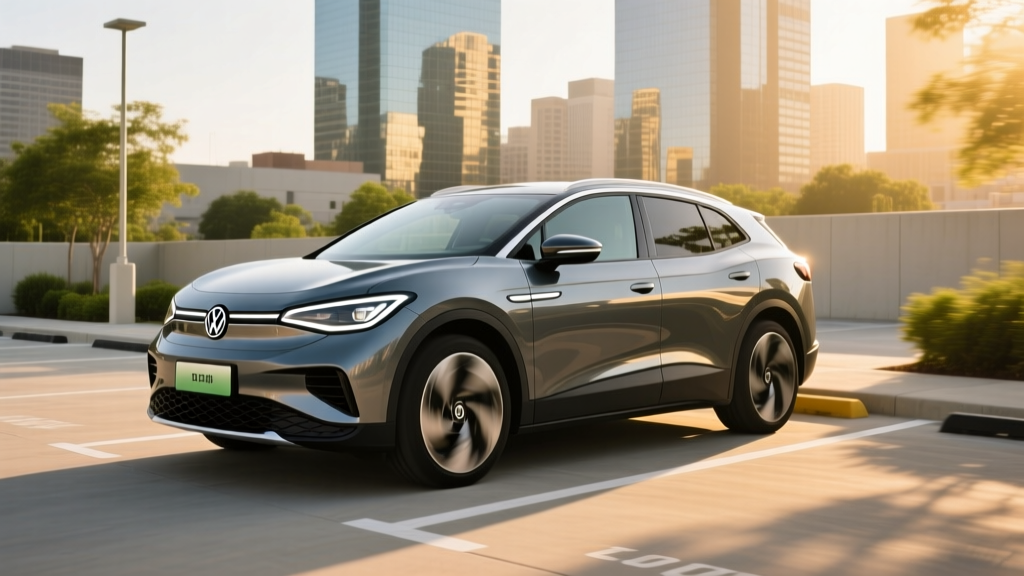
Volkswagen's electric lineup has matured past the early-adopter phase. The ID.4 compact SUV and the newer ID.7 sedan now offer competitive EPA range, DC fast-charging speeds that actually hold their curve, and pricing that undercuts many rivals. But the real story for buyers in 2026 is the lease-versus-buy math — specifically how the federal EV tax credit, state incentives, and lower running costs stack up against monthly payments, insurance premiums, and depreciation.
This guide dissects the total cost of leasing a Volkswagen EV over five years (roughly two consecutive 36-month leases), factoring in every dollar you'll spend and every incentive you can capture. We'll use the 2026 Volkswagen ID.4 Pro S as our primary benchmark, with ID.7 comparisons where relevant.
- EPA Range: 275 miles (RWD); expect ~230–250 mi highway, ~200 mi in sub-30°F cold
- Battery: 82 kWh usable, NMC chemistry
- DC Fast Charge: Peak 175 kW (10–80% in ~30 min), tapering significantly above 80%
- Level 2 Charge: 11 kW onboard (≈37 mi/hr at 240V/48A)
- Power: 282 hp (RWD) / 335 hp (AWD); 0–60 in 7.2s / 5.4s
- Efficiency: 104 MPGe combined (33 kWh/100 mi)
- Base MSRP: ~$44,870 (Pro S RWD, before incentives)
- Battery Warranty: 8 years / 100,000 miles (≥70% capacity retention)
The 5-Year Total Cost of Ownership: VW ID.4 Lease vs. Buy
Most cost analyses stop at the monthly payment. That's a mistake. A true five-year comparison must include energy, insurance, maintenance, and what the car is worth (or what you owe) at the end. Below is a realistic TCO model for the ID.4 Pro S, comparing a purchase (financed at 6.5% APR, 60 months, 10% down) against two consecutive 36-month leases. All figures assume 12,000 miles/year and a national-average electricity rate of $0.16/kWh.
| Cost Category | Purchase (Finance) | Lease (2× 36-mo) | Notes |
|---|---|---|---|
| Vehicle Acquisition | $44,870 | $0 (monthly payments below) | MSRP before incentives |
| Federal Tax Credit (§30D) | −$3,750 to −$7,500 | Passed through as lease cap-cost reduction* | See eligibility checklist below |
| Monthly Payments (60 mo / 72 mo total) | $710/mo ($42,600) | $479/mo ($34,488) | Lease: $3,500 due at signing × 2 |
| Charging (60k mi @ 33 kWh/100mi) | $3,168 | $3,168 | Home L2 @ $0.16/kWh; DCFC adds ~$600 |
| Insurance (5 years) | $9,600 | $9,600 | ~$160/mo avg; EV surcharge vs gas SUV |
| Maintenance | $1,200 | $900 | Tire rotations, cabin filter, wipers; lease covers some under warranty |
| Depreciation / Residual | −$17,950 (resale at 60% retained) | $0 (walk away or buy at residual) | Lease residual ~$22,435 (50% of MSRP) |
| Total 5-Year Net Cost | ~$38,788 – $42,538 | ~$41,856 – $45,606 | Purchase wins long-term if you keep the car past year 5 |
*Under IRS rules, when you lease an EV, the leasing company (the legal owner) claims the §30D credit. Most captive lenders — including Volkswagen Credit, Inc. — pass this through as a capitalized-cost reduction, effectively lowering your monthly payment. Confirm this with your dealer before signing.
Federal Tax Credit Eligibility: The §30D Rules That Actually Matter
The federal EV tax credit remains the single largest incentive available, but qualifying is not automatic. For 2026, the IRS §30D rules impose three hard gates: buyer income, vehicle MSRP, and battery-component/critical-mineral sourcing. Miss any one, and the credit drops from $7,500 to $3,750 — or to zero.
- Maximum credit: $7,500 ($3,750 for battery components + $3,750 for critical minerals)
- Buyer AGI caps: $150,000 single / $225,000 head of household / $300,000 joint
- Vehicle MSRP cap: $80,000 for SUVs, vans, pickups (ID.4 qualifies); $55,000 for sedans (ID.7 qualifies)
- Battery component sourcing: Increasing % must be manufactured/assembled in North America (phased thresholds by year)
- Critical mineral sourcing: Increasing % must be extracted/processed in the US or an FTA partner country
- Point-of-sale transfer: You may transfer the credit to the dealer at purchase for an immediate price reduction — or claim it on your tax return
- Lease loophole: In a lease, the lessor claims the credit under §45W (commercial clean vehicle). Most pass savings to the lessee, but this is not legally required — get it in writing
As of early 2026, the ID.4 (built in Chattanooga, TN) qualifies for at least $3,750 and potentially the full $7,500 depending on the specific battery pack's mineral sourcing for that production batch. Always verify the exact VIN's eligibility on fueleconomy.gov before committing. The ID.7, sourced from the Emden, Germany plant, faces tighter critical-mineral scrutiny and may only qualify for $3,750.
Charging vs. Gasoline: The Per-Mile Math
This is where EV ownership earns its keep — but only if you charge primarily at home. Public DC fast charging at $0.40–$0.55/kWh narrows the gap considerably.
| Scenario | ID.4 (33 kWh/100mi) | Tiguan (26 MPG) | Savings per 1,000 mi |
|---|---|---|---|
| Home Level 2 @ $0.16/kWh | $0.053/mi | $0.131/mi (gas @ $3.40/gal) | $78 |
| Home + 20% DCFC @ $0.48/kWh | $0.072/mi | $0.131/mi | $59 |
| 100% DCFC (road-trip lifestyle) | $0.158/mi | $0.131/mi | −$27 (EV costs more) |
Annual fuel savings (12,000 mi, mostly home charging): ~$936. Over five years, that's roughly $4,680 back in your pocket — but only if you have reliable home Level 2 access. If you're entirely dependent on public DC fast charging, the ID.4 actually costs more per mile than a Tiguan at current gas prices.
Maintenance Savings: Fewer Parts, Less Wear, Real Dollars
EVs eliminate oil changes, spark plugs, timing belts, exhaust systems, and multi-speed transmissions. Regenerative braking dramatically extends pad and rotor life — many EV owners report original brake pads at 80,000+ miles.
| Service Item | ID.4 EV | Tiguan (Gas) |
|---|---|---|
| Oil Changes | $0 | $600 (6× @ $100) |
| Brake Pads/Rotors | $0 (regen preserves) | $800 |
| Engine Air Filter | $0 | $150 |
| Cabin Air Filter | $200 | $200 |
| Tire Rotation/Replacement | $1,000 (EVs wear tires ~15% faster due to weight/torque) | $850 |
| Coolant/Transmission Fluid | $0 (sealed) | $250 |
| Total | ~$1,200 | ~$2,850 |
Net maintenance savings over 5 years: ~$1,650. The tire-cost premium is real — the ID.4 weighs roughly 4,680 lbs and delivers instant torque, which accelerates tread wear. Budget for a set of EV-optimized touring tires (e.g., Michelin e.Primacy or Hankook iON evo) around 40,000 miles.
Insurance Cost Reality: The Uncomfortable Truth
EVs cost more to insure than their gas counterparts — typically 15–25% more for the same vehicle class. The reasons are structural:
- Higher repair costs: Battery packs are expensive to diagnose and replace after even minor collision damage.
- Specialized labor: High-voltage system repairs require certified technicians, and fewer shops are qualified.
- Parts scarcity: EV-specific body panels and sensor arrays can have longer lead times.
- Total-loss thresholds: Insurers may declare a total loss sooner if battery integrity is in question post-collision.
For the ID.4 Pro S, expect national-average premiums of $150–$180/month for a clean-record driver in their 40s with full coverage. That's roughly $25–$40/month more than a comparably equipped Tiguan. Shop quotes from insurers with dedicated EV programs (Geico, Progressive, and Liberty Mutual have competitive EV rates in most states).
Depreciation and Resale: What Your VW EV Will Be Worth
EV depreciation has been volatile. The 2023–2024 price wars (led by Tesla) hammered used EV values across the board. By 2026, the market has stabilized somewhat, but EVs still lose value faster than Toyota or Honda gas vehicles over the same period.
Current projections for the ID.4:
- 3-year retained value: ~50–55% of MSRP (competitive for the EV segment)
- 5-year retained value: ~40–45% of MSRP
- Lease residual (36 months): Typically set at 50–52% by VW Credit, which is favorable for lessees
This is the strongest argument for leasing over buying: if battery technology leapfrogs (solid-state, faster charging) or if used-EV values soften further, you simply return the car at lease-end with no depreciation risk. If the residual is set conservatively and used values hold, you can buy the car at the residual price and capture the equity.
Federal credit is only part of the picture. Depending on your ZIP code, you may also qualify for:
- State rebates: California (CVRP, up to $7,000 for income-qualified buyers), Colorado (up to $5,000 tax credit), New York (Drive Clean, up to $2,000), Massachusetts (MOR-EV, up to $3,500)
- Utility rebates: Many utilities offer $500–$1,500 for home Level 2 charger installation, plus off-peak charging rates as low as $0.06–$0.09/kWh (e.g., PG&E EV2-A, Con Edison SmartCharge, Xcel Energy EV rate)
- HOV lane access: Available in CA, CO, FL, GA, MD, NJ, NY, VA, and others — often worth $1,000+ in annual time savings for commuters
- Property/sales tax exemptions: Several states exempt EVs from ad valorem or sales tax on the first $25,000–$45,000 of purchase price
Check your state energy office and utility provider for current programs. These change annually and often have funding caps.
Lease vs. Buy Decision Framework: Which Path Wins?
- You want the lowest monthly payment with the §30D credit applied as cap-cost reduction
- You drive 10,000–15,000 miles/year (within standard lease limits)
- You want to avoid depreciation risk as battery tech evolves
- You plan to upgrade every 3 years to access newer charging speeds or ADAS features
- Your AGI exceeds §30D income limits (the lessor claims the credit, bypassing your personal cap)
- You plan to keep the vehicle 5+ years (the purchase TCO advantage compounds)
- You drive more than 15,000 miles/year (lease overage penalties are $0.20–$0.30/mi)
- You qualify for the full $7,500 §30D credit and can use it against your tax liability
- You want to modify the vehicle (wraps, wheels, suspension — all prohibited under lease)
- You have home charging and will capture maximum fuel savings over a long hold period
Frequently Asked Questions
How much does it really cost to own a Volkswagen EV over 5 years?
For a 2026 ID.4 Pro S driven 12,000 miles/year, expect a 5-year net cost of roughly $38,800–$42,500 if purchased (after federal credit and resale value) or $41,900–$45,600 across two consecutive leases. Charging, insurance, and maintenance are included in these figures. Your actual cost depends on local electricity rates, insurance premiums, and whether you qualify for the full $7,500 federal credit.
Do I qualify for the $7,500 federal EV tax credit on a VW ID.4?
Possibly. You must meet all three requirements: (1) modified AGI under $150K single / $300K joint, (2) the vehicle MSRP is under $80,000 (the ID.4 qualifies), and (3) the specific battery meets 2026 battery-component and critical-mineral sourcing thresholds. The ID.4, assembled in Tennessee, typically qualifies for $3,750–$7,500 depending on the production batch. Verify your exact VIN on fueleconomy.gov. In a lease, the leasing company claims the credit and usually passes it through as a cap-cost reduction.
How much do I save on fuel and maintenance with a VW ID.4 vs. a gas SUV?
With mostly home charging at $0.16/kWh, the ID.4 costs about $0.053/mile in electricity versus $0.131/mile for a 26-MPG gas SUV at $3.40/gallon — saving roughly $936/year or $4,680 over five years. Maintenance savings add another ~$1,650 over 60,000 miles (no oil changes, minimal brake wear). Combined savings: approximately $6,300 over five years.
Are Volkswagen EVs more expensive to insure?
Yes, typically 15–25% more than a comparable gas SUV. For the ID.4, expect $150–$180/month for full coverage depending on your state, driving record, and deductible. Higher repair costs, specialized high-voltage labor, and battery-replacement expense after collisions drive the premium. Compare quotes from at least three insurers — some offer dedicated EV discounts.
How well do VW electric vehicles hold their value?
The ID.4 retains roughly 50–55% of MSRP after 3 years and 40–45% after 5 years, which is mid-pack for the EV segment. This is below Toyota/Honda gas vehicles but competitive with other mainstream EVs. Leasing transfers depreciation risk to the lessor. If you buy, plan to hold the vehicle at least 5 years to amortize the steeper initial depreciation curve.
Can I transfer the federal tax credit to the dealer at point of sale?
Yes. Since 2024, the IRS allows you to transfer the §30D credit to the dealer as an immediate down-payment reduction rather than waiting to claim it on your tax return. This works for purchases. For leases, the lessor claims the credit under §45W and typically applies it as a capitalized-cost reduction — confirm this in your lease agreement before signing.