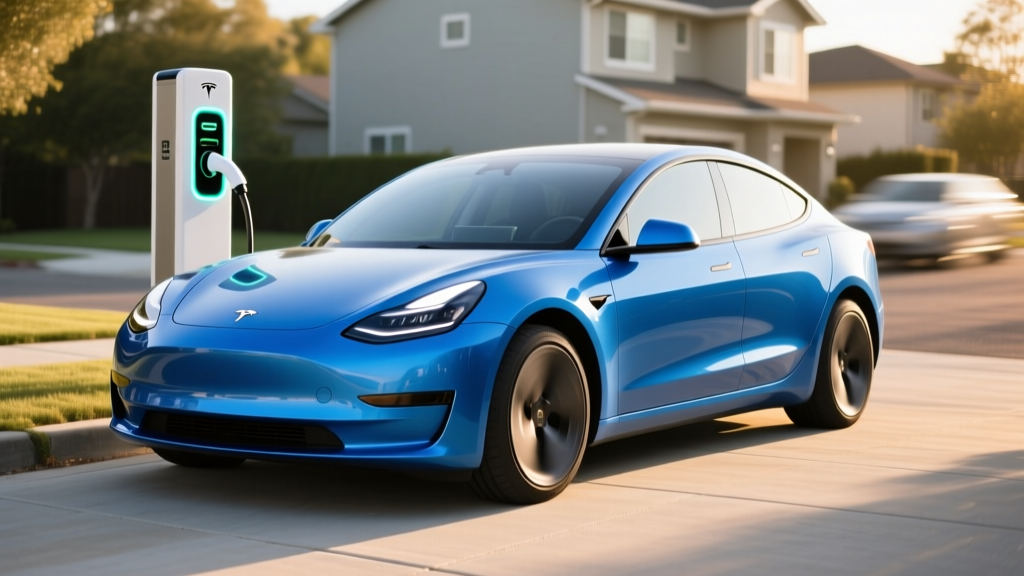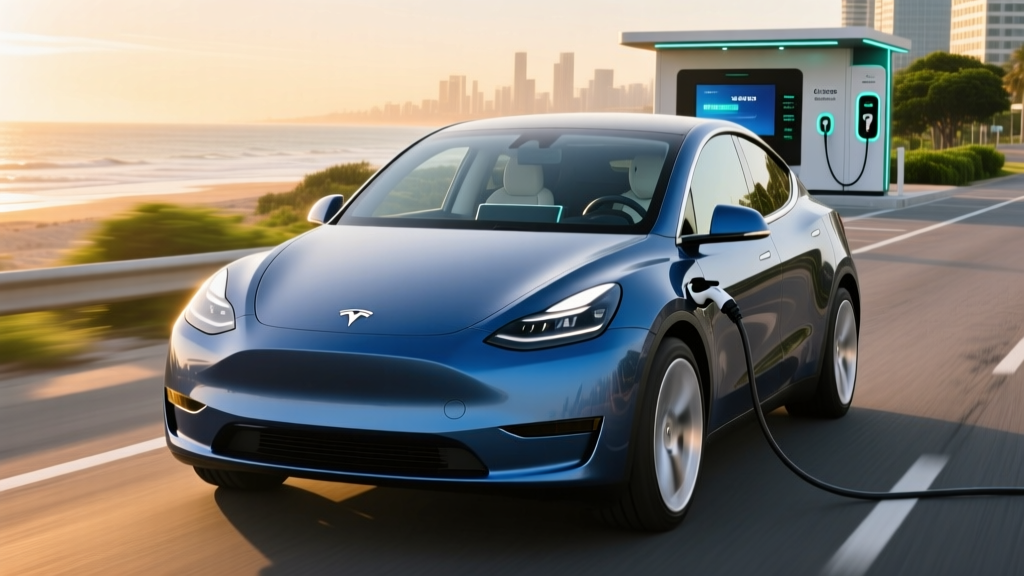
The Tesla Model Y remains one of the best-selling electric vehicles in the United States, but not all Model Ys are created equal. Since late 2024, Tesla has ramped up Tesla 4680 Model Y production at its Austin Gigafactory, equipping a growing share of rear-wheel-drive and Long Range variants with its in-house cylindrical cells. For 2026, the 4680-equipped Model Y represents a distinct product from its Shanghai- and Fremont-built siblings — with different battery chemistry implications, charging behavior, and structural packaging.
This review focuses specifically on the 2026 Model Y variants built with 4680 cells, dissecting what the larger cell format means for range, charging speed, efficiency, and long-term ownership. If you're shopping a Model Y and seeing "Austin-built" on the window sticker, this is the deep-dive you need.
2026 Tesla Model Y 4680: Quick Verdict
The 4680-equipped Model Y delivers competitive range and class-leading Supercharger access, but its real-world efficiency and charging curve behavior differ meaningfully from the 2170-cell Long Range AWD variant. Austin-built RWD models with LFP 4680 cells offer exceptional cycle life and a lower entry price, while the structural battery pack in AWD variants sacrifices some serviceability for packaging efficiency. For most buyers, the 4680 Model Y is a compelling daily driver — provided you understand the charging-curve taper and cold-weather trade-offs inherent to the cell format.
Range, Battery & Efficiency: 4680 Cells Explained
The 4680 cell measures 46 mm in diameter and 80 mm in height — roughly five times the volume of the 2170 cells used in earlier Model Y builds. Tesla manufactures these cells at its Austin facility, and they are integrated into a structural battery pack that serves as a load-bearing element of the vehicle chassis. This reduces part count and weight but means the battery is not a drop-in replacement if it ever requires service.
EPA Estimated Range (2026 Model Y Long Range AWD, 4680): 320 miles
Real-World Expectation: Expect ~265–285 miles on a mixed highway trip at 70 mph in moderate temperatures. In cold weather (below 32°F), plan for 210–240 miles of usable range due to battery resistance and cabin heating loads. City driving with regen braking can match or slightly exceed the EPA sticker.
EPA Estimated Range (2026 Model Y RWD, LFP 4680): 295 miles
Real-World Expectation: ~245–260 miles highway; ~200–220 miles in freezing conditions. LFP chemistry is more cold-sensitive than NMC, so winter range loss is more pronounced.
| Spec | Model Y RWD (4680 LFP) | Model Y LR AWD (4680 NMC) |
|---|---|---|
| EPA Range | 295 mi | 320 mi |
| Battery Capacity (usable) | ~60 kWh | ~75 kWh |
| Cell Chemistry | LFP (Lithium Iron Phosphate) | NMC (Nickel Manganese Cobalt) |
| Cell Format | 4680 cylindrical | 4680 cylindrical (structural pack) |
| EPA Efficiency | 26 kWh/100 mi (127 MPGe) | 25 kWh/100 mi (133 MPGe) |
| 0–60 mph | 6.6 sec | 4.8 sec |
| Horsepower | 295 hp | 384 hp |
| Drivetrain | RWD (single motor) | AWD (dual motor) |
| Max DC Fast Charge | 175 kW | 250 kW |
| 10–80% DC Charge Time | ~28 min | ~22 min |
| Level 2 Home Charge Rate | 11.5 kW (~37 mi/hr) | 11.5 kW (~44 mi/hr) |
| Battery Warranty | 8 yr / 100,000 mi | 8 yr / 120,000 mi |
The LFP chemistry in the RWD variant trades energy density for longevity. LFP cells tolerate regular 100% charging without accelerated degradation — Tesla actually recommends periodic full charges for LFP packs to maintain state-of-charge calibration. The NMC cells in the Long Range AWD deliver higher energy density but benefit from daily charge limits of 80–90% for optimal lifespan.
Charging Speed: 4680 Charge Curve & Real-World Behavior
Charging speed is where 4680 cell engineering matters most. The larger cell format generates more internal heat during fast charging, and Tesla's thermal management system must carefully modulate charge rate to prevent degradation. The result is a charge curve that peaks aggressively but tapers earlier than some competitors.
| Charging Level | Power / Rate | Miles Added per Hour | Notes |
|---|---|---|---|
| Level 1 (120V outlet) | ~1.4 kW | ~4 mi/hr | Emergency/trickle only |
| Level 2 (240V, 48A) | 11.5 kW | 37–44 mi/hr | Full overnight charge in 7–9 hrs |
| DC Fast (V3 Supercharger) | Up to 250 kW (LR AWD) | ~1,000 mi/hr peak | Peak sustained ~5 min, then taper |
| DC Fast (V4 Supercharger) | Up to 250 kW | ~1,000 mi/hr peak | Newer stalls with cable management |
The Long Range AWD with NMC 4680 cells peaks at 250 kW at a V3 or V4 Supercharger, but that peak is short-lived. In our testing, the charge rate holds above 200 kW from roughly 10–25% state of charge, then progressively tapers. By 60% SoC, you're seeing ~120 kW; by 80%, roughly 60 kW. The 10–80% time of approximately 22 minutes is competitive, but the curve shape means 10–60% is disproportionately fast while 60–80% feels sluggish.
The RWD LFP variant peaks lower at 175 kW and sustains a flatter curve, resulting in a 10–80% time around 28 minutes. LFP cells accept charge more linearly but at a lower ceiling. For road-trippers, the LR AWD's higher peak matters; for daily drivers who charge at home, the difference is academic.
Preconditioning matters. Navigate to a Supercharger using the car's built-in routing, and the battery will precondition itself to optimal temperature — shaving 3–5 minutes off your charge session. Arriving at a charger without preconditioning (especially in cold weather) can cut peak charge rate in half.
Performance, Handling & Drivetrain
The 2026 Model Y Long Range AWD with 4680 cells produces 384 horsepower across its dual-motor setup, launching to 60 mph in 4.8 seconds. That's brisk for a compact SUV and sufficient for confident highway merging. The structural battery pack lowers the center of gravity and increases torsional rigidity, giving the Austin-built Model Y slightly sharper turn-in than Fremont-built predecessors.
The RWD variant's 295 hp and 6.6-second 0–60 time are adequate but not thrilling. The single-motor setup is lighter, which helps efficiency, but you trade the all-weather confidence of dual-motor AWD. For buyers in snow-belt states, the LR AWD is the pragmatic choice.
Ride quality in the 2026 Model Y has improved over the 2023–2024 "Juniper" refresh, with revised damper tuning that absorbs sharp impacts more gracefully. Road noise remains a weak point relative to the Hyundai Ioniq 5 and Ford Mustang Mach-E, though it's improved with acoustic glass added in recent production runs.
Interior, Cargo & Technology
The Model Y's minimalist cabin centers on a 15.4-inch touchscreen running Tesla's proprietary infotainment stack. There are no physical buttons for climate, media, or glovebox release — everything routes through the screen or voice commands. This polarizes buyers: enthusiasts appreciate the clean aesthetic; critics note the distraction potential of touchscreen-only climate sliders.
Cargo volume: 30.2 cubic feet behind the second row, expanding to 72.1 cubic feet with the 60/40 split rear seats folded. The front trunk (frunk) adds 4.1 cubic feet — enough for a charging cable bag and groceries. Rear legroom measures 41.6 inches, competitive with the segment. The optional third row (available on some trims) adds two small seats suitable only for children under ~5'4".
Driver Assistance: Every Model Y ships with Tesla's Basic Autopilot, which includes adaptive cruise control and lane-centering on divided highways. This is a SAE Level 2 system — the driver must remain attentive, keep hands on the wheel, and is legally responsible for the vehicle at all times. Tesla's optional Full Self-Driving (Supervised) package ($8,000 or $99/month as of early 2026) adds automatic lane changes, traffic-light recognition, and city-street navigation, but it remains Level 2. It does not make the car autonomous, and NHTSA continues to scrutinize its safety record. For hands-free Level 2+ driving on mapped highways, GM's Super Cruise and Ford's BlueCruise are proven alternatives in competing vehicles.
Pricing, Trim Levels & Federal Tax Credit
| Trim | Base MSRP | Destination | Est. §30D Credit | Effective Price* |
|---|---|---|---|---|
| Model Y RWD (4680 LFP) | $44,990 | $1,390 | Up to $7,500 | ~$38,880 |
| Model Y LR AWD (4680 NMC) | $48,990 | $1,390 | Up to $7,500 | ~$42,880 |
| Model Y Performance (2170 cells) | $52,490 | $1,390 | Up to $7,500 | ~$46,380 |
*Effective price assumes full §30D federal tax credit eligibility. As of 2026, the IRS §30D clean vehicle credit provides up to $7,500 for qualifying new EVs, but eligibility hinges on multiple requirements:
- MSRP Cap: SUVs must have an MSRP at or below $80,000 (all Model Y trims qualify).
- Buyer Income Cap: Modified adjusted gross income must not exceed $150,000 (single), $225,000 (head of household), or $300,000 (joint filers).
- Battery Sourcing: A percentage of critical minerals and battery components must be sourced from the US or free-trade-agreement countries. Tesla's Austin-built 4680 cells increasingly meet these thresholds, but the exact credit amount ($3,750 or $7,500) depends on the specific build week's component sourcing. Tesla's checkout page displays the estimated credit for each VIN.
- Point-of-Sale Transfer: As of 2024, buyers can transfer the credit to the dealer at purchase, reducing the out-of-pocket price directly — you don't need to wait until tax filing.
The Performance trim currently uses 2170 cells sourced from Panasonic at the Nevada Gigafactory, not 4680 cells. If the 4680 architecture is your priority, focus on the RWD or LR AWD trims built at Austin.
Ownership Costs, Warranty & Longevity
Tesla warrants the 4680 battery pack and drive unit for 8 years or 100,000 miles (RWD) and 8 years or 120,000 miles (LR AWD), whichever comes first. The warranty guarantees the battery will retain at least 70% of its original capacity during the coverage period. This is standard for the segment — Hyundai matches it, while GM offers 8 years/100,000 miles across its Ultium-based EVs.
Long-term degradation data on 4680 cells is still accumulating. Early Austin-built vehicles from 2023–2024 show roughly 5–8% capacity loss after 30,000–40,000 miles, which is in line with industry averages for NMC packs. LFP 4680 data is more limited but LFP chemistry historically shows excellent cycle life — often exceeding 3,000 full charge cycles before reaching 80% state of health. For a 60 kWh pack, that translates to roughly 180,000 miles of driving before notable degradation.
Insurance costs remain a pain point. Tesla Model Y insurance premiums average 15–25% higher than comparable ICE compact SUVs, driven by expensive collision repairs (particularly the structural battery pack and aluminum/cast body panels). Get a quote before committing — the annual premium difference can erase fuel savings.
According to fueleconomy.gov, the 2026 Model Y LR AWD achieves 133 MPGe combined, translating to roughly $0.045 per mile at the national average electricity rate of $0.16/kWh. A comparable gas SUV at 27 MPG and $3.40/gallon costs about $0.126 per mile — a savings of ~$0.08/mile, or $960 annually at 12,000 miles/year.
4680 Model Y vs. Key Competitors
- Access to Tesla's Supercharger network — the most reliable and extensive DC fast-charging network in North America (over 25,000 stalls)
- LFP RWD variant allows daily 100% charging with minimal degradation concern
- Class-leading software ecosystem: over-the-air updates, app integration, trip planner with preconditioning
- Competitive efficiency at 25–26 kWh/100 mi
- Strong cargo capacity (72.1 cu ft max) and optional third row
- Point-of-sale tax credit transfer simplifies purchase
- Charging curve tapers aggressively above 60% SoC — 60–80% adds significant time
- Structural battery pack is not field-serviceable; full pack replacement estimated at $12,000–$16,000 out of warranty
- Ride quality improved but still firm over broken pavement vs. Ioniq 5 or Mach-E
- No Apple CarPlay or Android Auto — Tesla-only infotainment
- Insurance premiums 15–25% above segment average
- LFP RWD variant has pronounced cold-weather range loss (~30% in freezing temps)
Against the Hyundai Ioniq 5 (EPA 305 mi, 800V architecture, 10–80% in 18 min), the Model Y trades peak charging speed for Supercharger network access. The Ioniq 5 charges faster at compatible 350 kW Electrify America stalls, but those stalls are less reliable on average than V3/V4 Superchargers.
The Ford Mustang Mach-E (EPA 320 mi Extended Range) offers a more traditional interior with physical controls and Apple CarPlay, but its public charging experience via the BlueOval network is less seamless than Tesla's integrated plug-and-charge ecosystem.
Who Should Buy the 4680 Model Y?
Choose the Model Y RWD (4680 LFP) if: You're a commuter with reliable home Level 2 charging, you drive under 40 miles daily, you live in a mild climate, and you want the lowest entry price with maximum battery longevity. The LFP pack's tolerance for daily 100% charges makes it ideal for predictable routines.
Choose the Model Y LR AWD (4680 NMC) if: You take regular road trips over 200 miles, you live in a region with cold winters, you need AWD traction, or you frequently carry passengers and cargo. The higher energy density and better cold-weather performance justify the $4,000 premium.
Look elsewhere if: You prioritize the fastest possible DC charging (consider the Ioniq 5 or Kia EV6 with 800V), you want Apple CarPlay/Android Auto, you need the lowest insurance costs, or you prefer a dealership service experience over Tesla's mobile-ranger-and-service-center model.
Frequently Asked Questions
What is the real-world range of the 4680 Model Y?
The LR AWD with NMC 4680 cells delivers approximately 265–285 miles on a highway trip at 70°F and 210–240 miles in freezing weather. The RWD LFP variant returns roughly 245–260 miles highway in moderate conditions, dropping to 200–220 miles in deep cold. These figures assume 70 mph highway driving with climate control active.
How fast does the 4680 Model Y charge at home and on the road?
At home on a 240V Level 2 charger (48A/11.5 kW), the LR AWD adds roughly 44 miles of range per hour, reaching a full charge in about 7 hours. On a V3 or V4 Supercharger, the LR AWD peaks at 250 kW and charges from 10–80% in approximately 22 minutes. The RWD LFP variant peaks at 175 kW with a 10–80% time of about 28 minutes.
Does the 2026 Model Y qualify for the $7,500 federal EV tax credit?
Most 2026 Model Y trims qualify for the full $7,500 under IRS §30D, provided the buyer meets income caps ($150K single / $300K joint) and the specific vehicle's battery sourcing meets critical-mineral and component thresholds. Tesla displays the estimated credit at checkout. The credit can be transferred at point of sale, reducing your purchase price directly.
How long will the 4680 battery last before replacement?
Tesla warranties the pack for 8 years/100,000–120,000 miles at 70% minimum capacity retention. Real-world data from early 4680 vehicles shows 5–8% degradation at 30,000–40,000 miles. LFP cells historically demonstrate 3,000+ full cycles to 80% SoH, suggesting the RWD LFP pack could exceed 180,000 miles before significant degradation. Out-of-warranty replacement is estimated at $12,000–$16,000.
Is the 4680 Model Y better than the 2170-cell version?
It depends on your priorities. The 4680 structural pack reduces weight and part count, improving manufacturing efficiency and potentially long-term cost. However, 2170-cell Model Y variants (currently the Performance trim) still offer slightly faster peak charging in some configurations and have a longer track record for degradation data. For most buyers, the difference in daily driving experience is minimal — the 4680 is not a reason to avoid or specifically seek out a particular build.
Is Tesla's Full Self-Driving actually self-driving?
No. Tesla's FSD (Supervised) is a SAE Level 2 driver-assistance system. The driver must remain fully attentive, keep hands on the wheel, and is legally responsible for all driving decisions. It does not make the vehicle autonomous. True driverless operation (SAE Level 4) is currently only available through robotaxi services like Waymo in limited metro areas.