If you've been searching for an affordable entry into the Tesla ecosystem, you've likely asked: can you lease a used Tesla? The short answer is complicated — Tesla does not offer certified pre-owned leases directly, and most major leasing companies restrict leases to new vehicles. However, third-party financing, lease-transfer marketplaces, and the powerful §25E used-EV tax credit (up to $4,000) make acquiring a pre-owned Model 3 one of the smartest value plays in the 2026 EV market.
This guide covers everything you need to know about getting into a used Tesla Model 3, paired with a deep-dive review of the current-generation Model 3 (Highland refresh) so you know exactly what you're evaluating when shopping secondhand inventory.
Can You Actually Lease a Used Tesla? The 2026 Reality
Tesla discontinued its own leasing program for most markets in 2022, and the company does not lease used or certified pre-owned vehicles. Here's what the landscape actually looks like for buyers asking whether they can lease a used Tesla:
- Tesla Direct: No used leases available. Tesla sells CPO vehicles outright through its website with limited warranty coverage.
- Lease transfers (swapalease, leasetrader): You can assume someone else's existing Tesla lease. This is the closest path to "leasing a used Tesla." Remaining term, mileage allowance, and monthly payment carry over. Transfer fees typically run $400–$700.
- Third-party dealerships: Some franchise dealers offer lease-like financing on used EVs through captive lenders, but these are technically installment loans, not true leases.
- Credit unions and banks: Many offer used-EV loans at competitive rates (5.5%–7.5% APR in early 2026), which can produce monthly payments similar to a lease while building equity.
Used Tesla Model 3: 2026 Spec Table & Key Numbers
Whether you're assuming a lease, financing through a credit union, or buying from Tesla's CPO inventory, here are the specs for the current-generation Model 3 (Highland platform, 2024–2026 model years) you'll encounter on the used market:
| Specification | Model 3 Long Range AWD | Model 3 RWD (Base) | Model 3 Performance |
|---|---|---|---|
| EPA Range | 363 miles | 272 miles | 315 miles |
| Battery (usable) | ~79 kWh, NMC | ~57.5 kWh, LFP | ~79 kWh, NMC |
| Drivetrain | Dual Motor AWD | Rear-Wheel Drive | Dual Motor AWD |
| Horsepower | 346 hp | 271 hp | 510 hp |
| 0–60 mph | 4.2 seconds | 5.8 seconds | 2.9 seconds |
| Max DC Fast Charge | 250 kW | 170 kW | 250 kW |
| 10–80% DC Time | ~25 min | ~30 min | ~25 min |
| Level 2 Home Charging | 11.5 kW (~44 mi/hr) | 11.5 kW (~44 mi/hr) | 11.5 kW (~44 mi/hr) |
| EPA Efficiency | 132 MPGe / 25 kWh/100mi | 142 MPGe / 24 kWh/100mi | 116 MPGe / 29 kWh/100mi |
| Cargo Volume | 23 cu ft (trunk + frunk) | 23 cu ft (trunk + frunk) | 23 cu ft (trunk + frunk) |
| Rear Legroom | 35.2 in | 35.2 in | 35.2 in |
| New MSRP (2026) | $47,740 | $38,990 | $54,990 |
Sources: EPA fueleconomy.gov, Tesla Model 3 specs
Real-World Range: What the EPA Sticker Doesn't Tell You
EPA Estimate: 363 miles (Long Range AWD)
Real-World Highway (70 mph, 72°F): ~290–310 miles
Real-World Highway (32°F, winter): ~230–260 miles
City/Commuter Driving: ~340–360 miles (regen-heavy)
The Model 3 Long Range's 363-mile EPA rating is among the best in its class, but sustained highway speeds above 70 mph reduce efficiency by roughly 15–20%. Cold weather compounds this — expect a 25–35% range reduction in sub-freezing temperatures due to battery heating demands and reduced regen effectiveness. The LFP-equipped RWD model is more susceptible to cold-weather range loss (up to 40% in extreme cold) because LFP chemistry has lower low-temperature conductivity than NMC.
For used-EV shoppers, battery degradation matters. A 2024 Model 3 Long Range with 30,000 miles typically shows 3–5% degradation, meaning real-world range drops to roughly 280–300 highway miles. Tesla's battery management system (BMS) and thermal management are industry-leading, and data from Recurrent Auto shows Tesla batteries retaining 90%+ capacity at 100,000 miles on average.
Charging Speed: DC Fast, Level 2, and the Supercharger Advantage
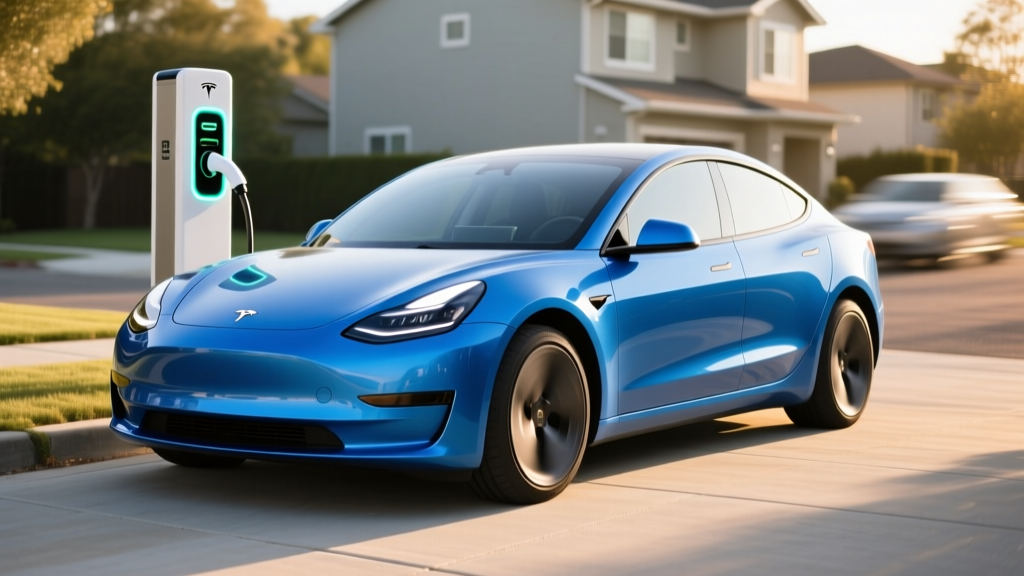
Charging speed is where Tesla ownership still holds a tangible edge over competitors — even on a used vehicle. The Model 3's NACS connector grants native access to Tesla's Supercharger network, which consistently outperforms third-party networks in uptime and reliability.
| Charging Level | Power (kW) | Speed | Notes |
|---|---|---|---|
| Level 1 (120V) | ~1.4 kW | 3–5 mi/hr | Emergency/trickle only |
| Level 2 (240V, 48A) | 11.5 kW | ~44 mi/hr | Full charge in ~7–8 hrs (LR) |
| DC Fast (Supercharger V3) | Peak 250 kW | ~170 mi in 15 min | 10–80% in ~25 min (LR) |
| DC Fast (CCS adapter) | Peak 250 kW | Varies by network | Electrify America, EVgo compatible |
Charging curve reality check: The 250 kW peak applies only between roughly 10–30% state of charge. Above 50%, charge rate tapers to ~100 kW, and above 80% it drops to ~40 kW. This is standard lithium-ion behavior, but it means the advertised "15 minutes for 170 miles" assumes you arrive at a low SoC. Plan road-trip stops to charge from 15% to 75% for the fastest average speed.
The RWD model with its LFP battery tops out at 170 kW on DC fast charging, making road trips slightly longer. Tesla recommends charging LFP batteries to 100% regularly (unlike NMC, which prefers an 80% daily limit), which partially offsets the slower charge rate by giving you the full pack capacity for daily use.
Pricing: Used Market Values and the §25E Tax Credit
Here's where the used-Tesla math gets compelling. A 2024 Model 3 Long Range with 15,000–25,000 miles trades between $30,000 and $36,000 in early 2026, depending on condition, color, and FSD transfer status. The base RWD model can be found for $25,000–$29,000.
| Cost Factor | Model 3 RWD (Used) | Model 3 LR AWD (Used) |
|---|---|---|
| Typical Used Price (2024 MY, ~20k mi) | $27,000 | $33,000 |
| §25E Used EV Credit (30%, max $4,000) | −$4,000 | −$4,000 |
| Effective Price After Credit | $23,000 | $29,000 |
| New 2026 MSRP (for comparison) | $38,990 | $47,740 |
§25E Used Clean Vehicle Credit Eligibility Rules
The §25E credit is the reason buying used can beat leasing new. Per IRS guidelines, you must meet all of the following:
- Vehicle price cap: Sale price must be $25,000 or less (before credit) — this eliminates most used Long Range and Performance trims but captures the RWD.
- Buyer income limits: AGI ≤ $75,000 (single), $112,500 (head of household), $150,000 (married filing jointly).
- Vehicle age: Must be at least 2 model years old (a 2024 model qualifies starting in 2026).
- Dealer requirement: Must be purchased from a licensed dealer (private-party sales don't qualify) who reports the sale to the IRS.
- Credit amount: 30% of sale price, capped at $4,000. A $25,000 RWD yields the maximum $4,000.
- One-time use per vehicle: The VIN must not have been used to claim §25E before.
- Point-of-sale transfer: Available through registered dealers — reduces your drive-off cost immediately.
Warranty Coverage on a Used Tesla Model 3
Tesla's warranty transfers fully to subsequent owners, which is a significant advantage for used buyers:
- Basic Vehicle Limited Warranty: 4 years / 50,000 miles (whichever comes first). A 2024 model is still covered through 2028 or 50,000 miles.
- Battery & Drive Unit Warranty: 8 years / 100,000 miles for RWD (LFP); 8 years / 120,000 miles for Long Range and Performance (NMC). Capacity retention must fall below 70% for a warranty claim.
- CPO Warranty (Tesla direct): If purchased through Tesla's CPO program, an additional 1 year / 10,000 miles of bumper-to-bumper coverage is added on top of any remaining new-vehicle warranty.
For lease-assumption buyers, verify with Tesla that the lease transfer includes full warranty rights. Third-party dealers may offer their own extended warranties — compare these carefully against Tesla's remaining factory coverage before paying extra.
Technology, Driver Assistance, and the FSD Question
The Highland-refresh Model 3 (2024+) features meaningful tech upgrades over the pre-2024 version that used buyers should prioritize:
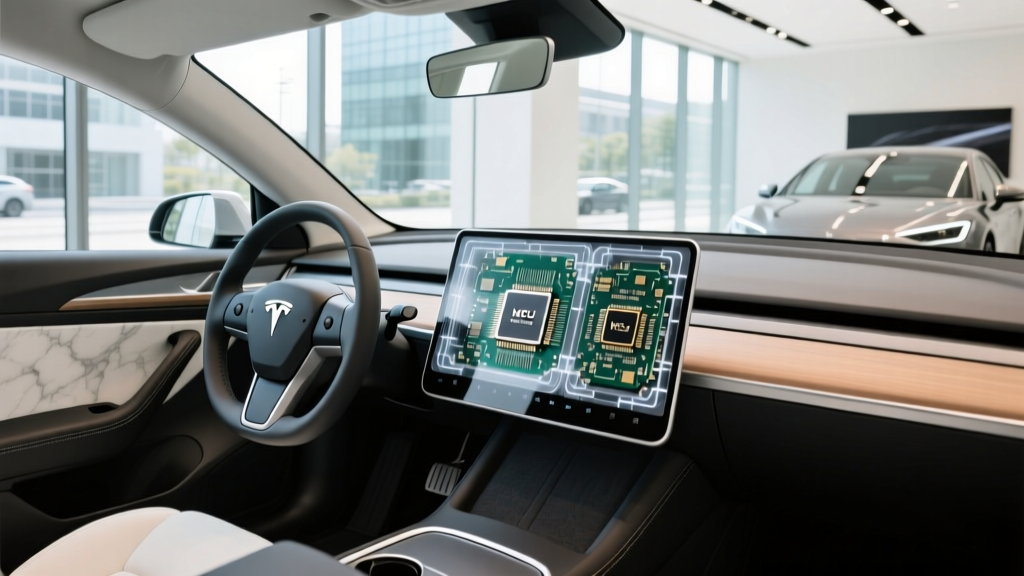
- Infotainment: 15.4-inch center touchscreen (same as Model S/X), with rear-seat 8-inch touchscreen for climate and media control. Ventilated front seats, ambient lighting, and acoustic glass significantly reduce cabin noise.
- Autopilot (standard): SAE Level 2 driver assistance — adaptive cruise control, lane centering, automatic emergency braking. This is not self-driving; you must remain engaged at all times.
- FSD Supervised ($8,000 option or $99/mo): Also SAE Level 2 — adds Navigate on Autopilot, Auto Lane Change, Autopark, Summon, and traffic light/stop sign control. Requires constant driver supervision. Does not make the vehicle autonomous.
- HW4 cameras: Higher-resolution camera suite than HW3, improving FSD performance and future-proofing for potential capability upgrades.
Model 3 vs. Competitors: Is the Used Tesla Worth It?
- Best-in-class Supercharger network access (NACS native)
- 363-mile EPA range (LR) leads the segment
- Over-the-air updates continuously add features
- Industry-leading efficiency (25 kWh/100mi LR)
- Strong resale value retention
- Minimal maintenance costs (no oil, plugs, or timing belts)
- Excellent safety ratings (IIHS Top Safety Pick+, 5-star NHTSA)
- No physical buttons — all controls through touchscreen (turn signals on steering wheel buttons, stalks removed)
- Rear-seat space is tighter than Hyundai Ioniq 6 or BMW i4
- No Apple CarPlay or Android Auto
- FSD doesn't transfer on most used purchases
- Insurance premiums 15–25% higher than comparable sedans
- Ride quality firm on 19-inch sport wheels
- §25E credit price cap excludes Long Range/Performance
Against the Hyundai Ioniq 6 (used): The Ioniq 6 SE offers a 361-mile EPA range and 800V charging architecture (10–80% in ~18 min vs. Tesla's ~25 min). However, the Ioniq 6 requires a CCS-to-NACS adapter for Supercharger access, and its third-party charging experience is less reliable. Choose the Ioniq 6 if you prioritize faster DC charging and physical buttons; choose the Model 3 for the Supercharger network and software ecosystem.
Against the BMW i4 eDrive40 (used): The i4 offers superior build quality, Apple CarPlay, and a more traditional luxury interior. Range is competitive at ~300 miles EPA. But used i4 pricing sits $5,000–$8,000 higher than a comparable Model 3 LR, and DC fast charging tops out at 205 kW. Choose the i4 for refinement; choose the Model 3 for value and efficiency.
Who Should Buy a Used Tesla Model 3?
Choose the used Model 3 RWD if: You commute under 60 miles daily, can charge at home, want the lowest possible entry price under $25,000 (after credit), and rarely take road trips exceeding 200 miles.
Choose the used Model 3 Long Range AWD if: You regularly drive 200+ miles, live in a cold climate where AWD and NMC cold-weather performance matter, need dual-motor traction for snow, or plan frequent road trips using the Supercharger network.
Look elsewhere if: You need back-seat space for tall adults (consider Ioniq 5 or Model Y), you insist on Apple CarPlay (consider BMW i4), or you want true fast-charging speeds under 20 minutes (consider Hyundai/Kia 800V platforms).
Frequently Asked Questions
Can you lease a used Tesla directly from Tesla?
No. Tesla does not offer leases on used or certified pre-owned vehicles. Tesla's CPO program is purchase-only. The closest alternative is assuming an existing Tesla lease through a third-party lease-transfer marketplace like Swapalease or LeaseTrader, subject to Tesla's lease-transfer approval process and a transfer fee.
What is the real-world range of a used Model 3?
A 2024–2025 Model 3 Long Range AWD with 20,000–30,000 miles will typically deliver 290–310 highway miles in mild weather and 230–260 highway miles in freezing conditions. The RWD model with its smaller LFP battery delivers roughly 210–230 highway miles in mild weather and 160–190 in extreme cold. Battery degradation at this age is typically 3–5%.
How fast does a used Model 3 charge?
The Long Range and Performance models peak at 250 kW on a V3 Supercharger, reaching 10–80% in approximately 25 minutes. The RWD model peaks at 170 kW with a 10–80% time of roughly 30 minutes. At home on a 48-amp Level 2 charger (11.5 kW), all trims add about 44 miles of range per hour — a full overnight charge from 20% to 100% takes roughly 7–8 hours for the Long Range.
Does a used Tesla Model 3 qualify for any tax credit?
The used Model 3 RWD qualifies for the §25E Used Clean Vehicle Credit (up to $4,000) if the sale price is $25,000 or less, the buyer's AGI falls within IRS limits ($75K single / $150K married), and the vehicle is at least 2 model years old, purchased from a licensed dealer. The Long Range and Performance trims typically exceed the $25,000 price cap and do not qualify. The new-vehicle §30D credit ($7,500) does not apply to used purchases. Always verify current IRS §25E rules with a tax professional.
Is a used Model 3 worth it vs. buying new?
Financially, a used Model 3 RWD at $25,000 (less $4,000 credit) nets to $21,000 — a $17,990 savings versus a new 2026 RWD at $38,990. You sacrifice roughly 2 years of basic warranty and accept 3–5% battery degradation. For the Long Range, the savings gap narrows because the used price typically exceeds the §25E cap, making a new LR with the $7,500 §30D credit (if eligible) potentially competitive. Run the numbers on your specific situation: used savings vs. new tax credits vs. warranty remaining.
Does FSD transfer when I buy a used Tesla?
Generally, no. Tesla ties FSD to the original owner's account, and it does not automatically transfer on third-party or private-party used purchases. Tesla has run limited-time FSD transfer promotions — check current policy before paying a premium for a used listing advertised as "FSD included." Vehicles purchased directly through Tesla's CPO inventory may occasionally include FSD, but this is not guaranteed.