Quick Verdict: The 2018 Model X in 2026
The Tesla 2018 Model X represents a fascinating intersection of ambition and compromise. As a used SUV in the current market, it offers falcon-wing doors, genuine three-row seating, and access to the Supercharger network—features that still turn heads. However, prospective buyers must navigate the realities of battery degradation on older NMC cells, outdated MCU1 infotainment hardware in early builds, and the physical limitations of its 2010s-era charging architecture.
This review analyzes the 2018 Model X specifically through the lens of a modern EV owner: how does its charging speed compare to 800V architectures? Is the 100 kWh battery holding up? And does it make financial sense versus a newer, smaller crossover?
Spec Sheet: 2018 Tesla Model X
| Feature | Specification |
|---|---|
| EPA Range (Long Range) | 295 miles (100D) |
| Battery Capacity | 100 kWh (NMC Chemistry) |
| Peak DC Charge Rate | ~120 kW (Supercharger V2 limited) |
| 10-80% Charge Time | ~45-55 minutes |
| Level 2 Charging | 11.5 kW (48A) / ~30 mi/hr |
| 0-60 mph (P100D) | 2.7 seconds (Ludicrous) |
| Drivetrain | Dual Motor AWD |
| Efficiency | 86 MPGe (combined) |
| Cargo Volume | 88.1 cu ft (max) |
| Battery Warranty | 8 years / 150,000 miles (original) |
Real-World Range and Efficiency Analysis
EPA Sticker: 295 miles (100D) / 250 miles (75D)
Real-World Highway (70 mph): ~230-260 miles
Cold Weather Impact: Expect 20-30% reduction without preconditioning.
The 2018 Model X is a heavy vehicle (over 5,000 lbs) pushing a large frontal area. In real-world highway testing at 70 mph, efficiency typically hovers around 330-350 Wh/mile. This means a 100 kWh pack (with ~95 kWh usable) yields roughly 260 miles of range in moderate weather. In freezing temperatures, without a heat pump (which Tesla did not introduce until later refreshes), resistance heating can push consumption above 400 Wh/mile, effectively cutting range to under 200 miles if you are not careful with preconditioning.
For context, modern 800V SUVs achieve 350+ miles with smaller batteries due to superior aerodynamics and heat pump integration. The 2018 X relies on brute force: a massive battery pack to overcome its drag coefficient.
Charging Architecture: The V2 Bottleneck
The most critical limitation of the 2018 Model X in 2026 is its DC fast-charging ceiling. While modern EVs charge at 250 kW to 350 kW, the 2018 Model X is physically limited by its battery management system and pack architecture to approximately 120 kW on V2 Superchargers.
| Charging Level | Power Output | Charging Speed |
|---|---|---|
| Level 1 (120V) | 1.4 kW | ~3-4 miles/hour |
| Level 2 (240V/48A) | 11.5 kW | ~30 miles/hour |
| DC Fast (V2 Supercharger) | 120 kW (Peak) | 10-80% in ~50 min |
| DC Fast (V3 Supercharger) | ~120 kW (Capped) | No V3 speed benefit |
Even if you plug into a 250 kW V3 Supercharger, the 2018 Model X cannot accept more than ~120 kW due to its older pack configuration. This results in 10-80% sessions taking nearly an hour, compared to 15-20 minutes in a modern Hyundai Ioniq 5 or Tesla Model Y. For daily home charging on Level 2, however, the 11.5 kW onboard charger is robust, adding roughly 30 miles of range per hour—enough to fully replenish overnight.
Battery Health and Chemistry Concerns
The 2018 Model X utilizes NMC (Nickel Manganese Cobalt) chemistry. While energy-dense, NMC is more susceptible to degradation from high states of charge (SoC) and extreme heat than the LFP (Lithium Iron Phosphate) packs found in newer base models.
Buying a 2018 model in 2026 means the battery is approximately 8 years old. You must check the State of Health (SoH). A degradation curve of 10-15% is normal for this age, but vehicles frequently Supercharged to 100% may show higher loss. The original 8-year/150,000-mile battery warranty is expiring or expired for most 2018 units, meaning any cell failure or replacement (costing $15,000-$20,000) is out-of-pocket.
Performance and Driving Dynamics
Despite its age, the performance remains startling. The P100D with Ludicrous Mode hits 0-60 mph in 2.7 seconds, a figure that still embarrasses modern performance SUVs. The dual-motor AWD system provides excellent traction, and the air suspension (standard on most 2018 trims) offers a compliant ride, though it is a known maintenance item—air struts on 2016-2018 models are prone to failure around 80,000 miles.
Handling is competent but not sporty; the weight is noticeable in corners. This is a grand tourer, not a canyon carver. The steering is precise but lacks the feedback of the Model S or Model 3.
Interior, Tech, and the MCU1 vs MCU2 Divide
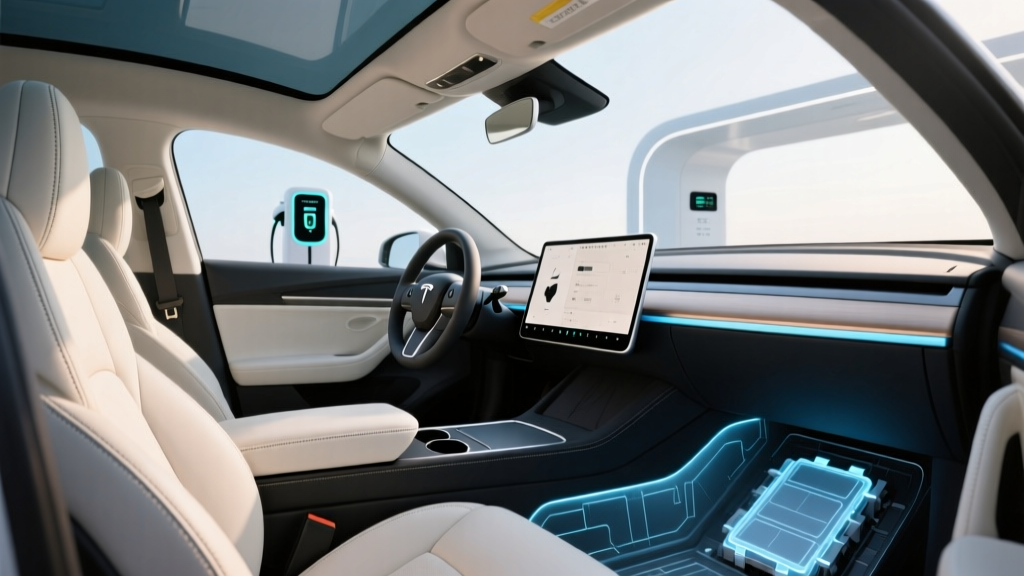
The 2018 Model X interior is minimalist, dominated by the 17-inch portrait touchscreen. However, a critical distinction exists: early 2018 models may still have the MCU1 (Nvidia Tegra 3) computer, which is sluggish and lacks support for modern software features like Sentry Mode or the latest Netflix/YouTube apps. Late 2018 models received the MCU2 (Intel Atom) upgrade, which is significantly faster and supports current Tesla OS features.
Buyers should verify the MCU version via the software menu or VIN. Upgrading MCU1 to MCU2 costs roughly $1,500-$2,000 at a Tesla Service Center.
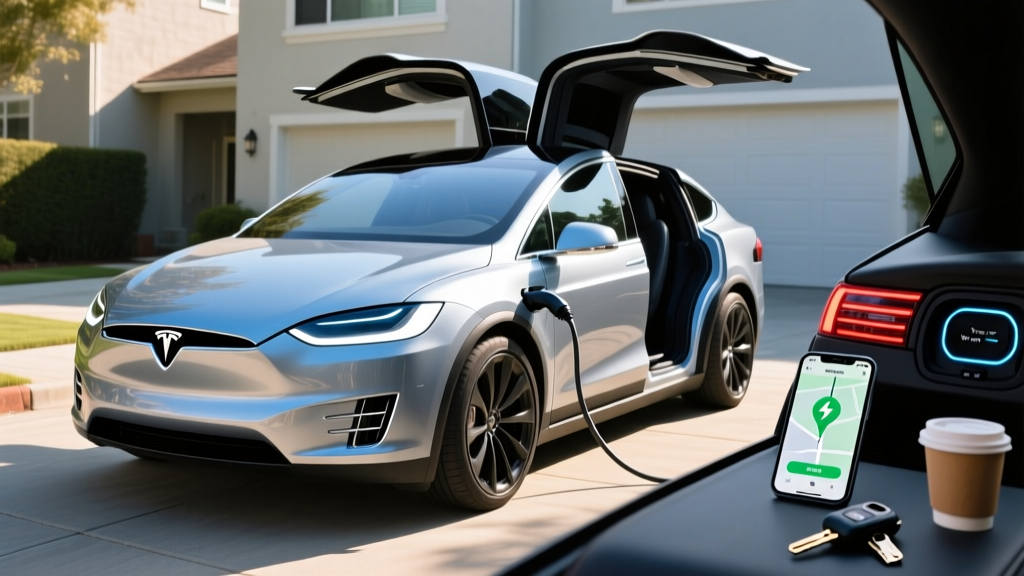
The falcon-wing doors are the X's signature. They provide excellent access to the second and third rows in tight parking spots but add complexity. Sensors prevent them from hitting obstacles, but the hydraulic struts and seals are known wear items. If a door actuator fails, it can be a costly and time-consuming repair.
Pricing and Tax Credit Reality (2026)
As of 2026, the 2018 Model X is exclusively a used vehicle purchase. Prices typically range from $35,000 to $55,000 depending on mileage, trim (75D, 100D, P100D), and condition.
Federal Used EV Tax Credit (§25E):
- Amount: Up to $4,000 (30% of sale price, capped at $4k).
- Price Cap: Vehicle must cost $25,000 or less to qualify.
- Income Cap: AGI ≤ $75k (single) / $150k (joint).
- Eligibility: Must be purchased from a licensed dealer.
The Catch: Because most 2018 Model X units sell for well over the $25,000 cap, they do not qualify for the federal used EV tax credit in 2026. Buyers seeking tax incentives should look at older Model 3s or other used EVs that fall under the price threshold. Always consult a tax professional and verify current IRS guidelines.
Pros and Cons
Pros
- Space: Genuine 5-7 seat capacity with frunk and massive cargo area.
- Supercharger Network: Native access to the most reliable charging network (no adapter needed for V2/V3).
- Performance: P100D acceleration remains world-class.
- Towing: 5,000 lb capacity (rare for EV SUVs of this era).
Cons
- Charging Speed: Capped at ~120 kW; slow by 2026 standards.
- Maintenance: Air suspension, MCU1, and door actuators are expensive failure points.
- Efficiency: High Wh/mile compared to modern platforms.
- No Tax Credit: Exceeds the $25k used credit cap.
Frequently Asked Questions
What is the real-world range of the 2018 Model X?
Expect 230-260 miles on the highway in moderate weather. City driving with regenerative braking can approach the EPA sticker of 295 miles, but cold weather will reduce this by 20-30%.
Does the 2018 Model X support NACS?
It has the proprietary Tesla connector, which is now the NACS standard. It can charge at non-Tesla networks using an adapter (CCS or CHAdeMO), but charging speeds will still be limited by the car's internal hardware.
Is it worth buying vs a new Model Y?
A new Model Y is more efficient, charges faster, has a modern interior, and qualifies for the $7,500 new EV credit (if eligible). The 2018 Model X only makes sense if you strictly require 7 seats, falcon-wing doors, or the larger cargo footprint, and are willing to accept higher maintenance risk.