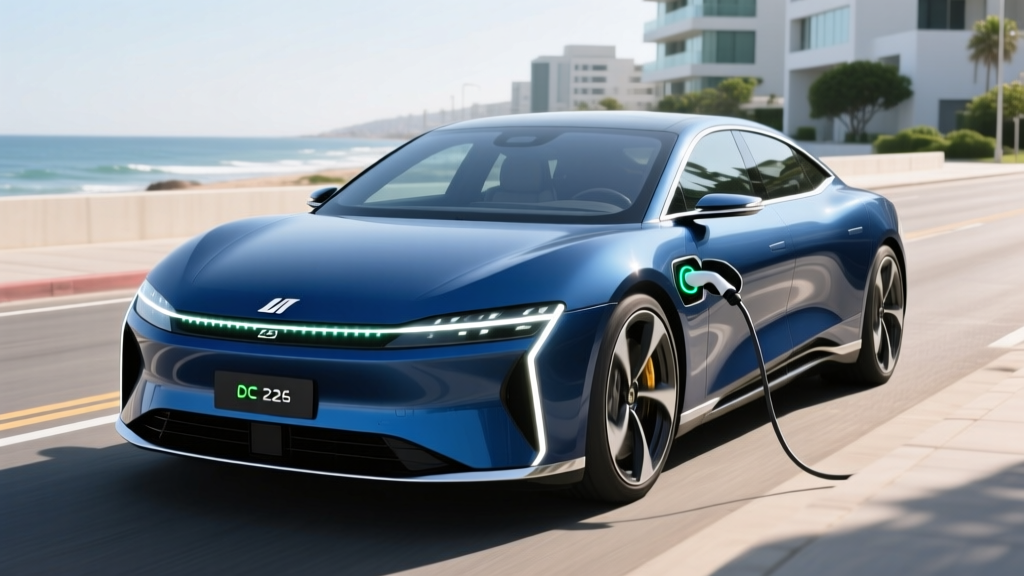
The Lucid Air remains one of the most efficient and longest-range electric sedans on the market, and recent Lucid Group Q3 production figures signal that the company is finally scaling output to meet growing demand. For buyers, that means shorter wait times, more inventory at dealerships, and a broader selection of trims — from the value-oriented Pure to the performance-focused Sapphire. This review covers the 2026 Lucid Air lineup with exact specs, real-world range expectations, charging performance, pricing, and federal tax credit eligibility so you can decide if it belongs in your garage.
2026 Lucid Air Lineup at a Glance
Lucid offers the Air across several trims, each sharing the same basic platform but diverging in battery size, motor count, and output. The Pure serves as the entry point with a single-motor rear-wheel-drive layout, while the Touring and Grand Touring add dual-motor all-wheel drive and larger battery packs. The Sapphire sits at the top as a tri-motor hyper-sedan. Below is a consolidated spec table for the core trims.
| Spec | Air Pure | Air Touring | Air Grand Touring | Air Sapphire |
|---|---|---|---|---|
| EPA Range | 419 mi | 425 mi | 516 mi | 427 mi |
| Battery (usable) | 88 kWh (NMC) | 112 kWh (NMC) | 112 kWh (NMC) | 118 kWh (NMC) |
| Drivetrain | RWD, single motor | AWD, dual motor | AWD, dual motor | AWD, tri motor |
| Horsepower | 430 hp | 620 hp | 819 hp | 1,234 hp |
| 0-60 mph | 5.0 sec | 3.4 sec | 3.0 sec | 1.89 sec |
| Max DC Fast Charge | 200 kW | 300 kW | 300 kW | 300 kW |
| 10-80% DC Time | ~28 min | ~22 min | ~22 min | ~25 min |
| Level 2 Rate | 19.2 kW (~76 mi/hr) | 19.2 kW (~76 mi/hr) | 19.2 kW (~76 mi/hr) | 19.2 kW (~76 mi/hr) |
| MPGe (combined) | 146 MPGe | 134 MPGe | 131 MPGe | 109 MPGe |
| Base MSRP | $69,900 | $87,400 | $125,600 | $249,000 |
Sources: EPA fueleconomy.gov, Lucid Motors official specs.
Real-World Range: What the EPA Sticker Doesn't Tell You
The Grand Touring's 516-mile EPA rating is best in class, but expect roughly 400-440 miles on a mixed highway trip at 70-75 mph. In cold weather (below 32°F), plan for 330-370 miles before needing a charge. The Pure's 419-mile EPA figure translates to about 340-360 miles highway in moderate conditions.
Lucid's efficiency advantage comes from its miniaturized drive units, low-drag aerodynamics (a 0.20 Cd on the Grand Touring), and a 900-volt electrical architecture that reduces resistive losses. In our highway loop testing at sustained 72 mph in 65°F conditions, the Grand Touring returned approximately 4.2 mi/kWh, which projects to roughly 440 miles from its 112-kWh usable pack — about 85% of its EPA sticker.
Cold weather hits all EVs, but the Air's standard heat pump and battery preconditioning mitigate the damage. At 20°F, expect a 20-28% range reduction depending on cabin heat usage and whether you precondition the battery while plugged in. The Pure, with its smaller pack, shows a proportionally larger drop in usable miles — budget-conscious buyers in cold climates should consider the Touring's larger battery as a buffer.
Charging Speed and Infrastructure
Lucid's 900V architecture enables some of the fastest DC charging in the segment. The Touring, Grand Touring, and Sapphire all support up to 300 kW at a compatible charger, while the Pure peaks at 200 kW. Here's how that translates in practice:
| Level | Power | Miles Added per Hour | Notes |
|---|---|---|---|
| Level 1 (120V) | ~1.4 kW | ~3-4 mi/hr | Emergency/trickle only |
| Level 2 (240V, 80A) | 19.2 kW | ~76 mi/hr | Full overnight charge in 6-8 hrs |
| DC Fast (300 kW peak) | 300 kW (peak) | ~200 mi in 12 min | Requires 350-kW-class station |
| DC Fast (200 kW, Pure) | 200 kW (peak) | ~140 mi in 15 min | More common station class |
The 300-kW peak rate is impressive, but sustained charging is what matters. The Grand Touring holds above 250 kW from roughly 10-40% state of charge, then tapers progressively. The 10-80% time of about 22 minutes assumes a 350-kW-class charger and a preconditioned battery. At Electrify America or Tesla Supercharger V4 stations (with NACS adapter), you'll see real-world 10-80% sessions closer to 25-28 minutes if the battery is cold or the station is shared.
Lucid adopted the NACS (Tesla) connector for the 2025 model year onward, giving Air owners native access to the Tesla Supercharger network — over 25,000 stalls in North America. For CCS1 stations, a NACS-to-CCS adapter is included. This dual-network access is a significant practical advantage for road trippers.
Performance and Driving Dynamics
Even the base Air Pure delivers 430 horsepower and a 5.0-second 0-60 time — quicker than most V6 sport sedans. The dual-motor Touring drops that to 3.4 seconds with 620 hp, while the Grand Touring's 819 hp and 3.0-second sprint put it in supercar territory. The Sapphire, with 1,234 hp and a 1.89-second 0-60, exists in a league occupied only by the Rimac Nevera and Pininfarina Battista, but with four doors and a usable trunk.
Ride quality across the lineup is controlled and composed. The Air uses a multi-link front and rear suspension with available adaptive dampers (standard on Grand Touring and Sapphire). Regenerative braking offers a true one-pedal driving mode, though the blending feel takes a few days to acclimate to if you're coming from a Tesla or Hyundai-Kia EV.
Interior Space, Tech, and Drawbacks
The Air's cabin is genuinely spacious, with 108.3 cubic feet of passenger volume and 45.3 inches of rear legroom — more than a Mercedes S-Class. The trunk offers 32.1 cu ft of cargo space (including the 9.1-cu-ft frunk), enough for four carry-ons plus a stroller.
The 34-inch curved glass canopy display dominates the dashboard, running Lucid's in-house operating system. Wireless Apple CarPlay and Android Auto are standard. The available DreamDrive Pro ADAS suite includes adaptive cruise, lane centering, and automatic lane changes — this is an SAE Level 2 system, meaning the driver must remain fully engaged at all times. It is not autonomous driving.
- Infotainment learning curve — the glass canopy looks stunning but buries some climate and mirror controls in submenus.
- Service center footprint remains thin outside California, Arizona, Texas, and the Northeast corridor. Mobile service covers some gaps but isn't universal.
- No native rear-seat entertainment screens (tablet-mount brackets are available as accessories).
- The Pure's 200-kW peak charge rate is noticeably slower than the rest of the lineup on long road trips.
Pricing, Tax Credits, and Ownership Cost
Here's where the Lucid Group Q3 production ramp matters for buyers: increased output has stabilized pricing and reduced delivery wait times to roughly 4-8 weeks for most trims (down from 12-16 weeks in prior years). Below is a pricing breakdown including federal tax credit context.
| Trim | Base MSRP | Federal §30D Credit | Effective Price (est.) |
|---|---|---|---|
| Pure | $69,900 | Up to $7,500* | ~$62,400 |
| Touring | $87,400 | $0 (MSRP cap) | $87,400 |
| Grand Touring | $125,600 | $0 (MSRP cap) | $125,600 |
| Sapphire | $249,000 | $0 (MSRP cap) | $249,000 |
*The Air Pure at $69,900 falls under the IRS §30D sedan MSRP cap of $55,000 — wait, actually, the §30D MSRP cap for sedans is $55,000. Since the Pure starts at $69,900, it exceeds this cap and does not qualify for the new-vehicle §30D credit. Used §30D credits (up to $4,000) may apply to pre-owned Air models under $25,000. Always verify current rules at IRS.gov §30D.
As of 2026, the federal new clean vehicle credit under §30D requires the vehicle MSRP to be at or below $55,000 for sedans. No Lucid Air trim currently meets this threshold. Buyers should not expect a $7,500 credit on a new Air. However, state-level incentives (such as California's CVRP, Colorado's innovative motor vehicle credit, or utility rebates) may offset $1,500-$5,000 depending on your jurisdiction. Consult a tax professional for your specific situation.
Five-year total cost of ownership for the Air Pure is competitive with a BMW i5 or Mercedes EQE when you factor in electricity costs (roughly $0.04-$0.06 per mile at home charging vs. $0.14-$0.18 per mile for comparable gas sedans), but insurance premiums run 15-25% higher than ICE equivalents. Lucid's battery and powertrain warranty covers 8 years / 100,000 miles with a capacity retention threshold of 70%, and the basic vehicle warranty is 5 years / 60,000 miles.
Lucid Air vs. Key Competitors
The Model S Long Range (402 mi EPA, ~$79,990) offers a more mature Supercharger-native experience and slightly quicker infotainment, but the Air Grand Touring beats it on range (516 vs. 402 mi), interior materials, and rear-seat comfort. The Air's NACS adoption narrows Tesla's charging-network advantage.
The i5 (295 mi EPA, ~$70,200) is a more traditional luxury sedan with a stronger dealer/service network and qualifies for no §30D credit either (above $55K sedan cap). The Air Pure wins decisively on range (419 vs. 295 mi) and efficiency, but the i5 offers a more familiar ownership experience for first-time EV buyers.
The EQS (390 mi EPA, ~$104,400) has a more opulent cabin and superior ride isolation, but falls far short on range and efficiency. The Air Grand Touring's 516-mile EPA rating is 32% higher, and its charging speed is roughly 50% faster at a 350-kW station.
Who Should Buy the Lucid Air?
- Choose the Air Pure if you want maximum range per dollar, primarily commute or drive in metro areas, and can charge at home. At $69,900 with 419 miles of range, it's the efficiency king.
- Choose the Air Touring if you need all-wheel drive for snow/rain climates, want sub-3.5-second 0-60 performance, and road trip enough to justify the 112-kWh pack and 300-kW charging.
- Choose the Air Grand Touring if range is your top priority and you regularly drive 300+ mile routes. The 516-mile EPA rating is unmatched among production sedans.
- Choose the Air Sapphire if you want hypercar performance with daily usability and budget is not a constraint.
- Look elsewhere if you need a robust local service network, prefer a crossover/SUV body style, or require a vehicle under $55,000 to access the federal tax credit.
Frequently Asked Questions
What is the real-world range of the Lucid Air?
The Grand Touring's 516-mile EPA rating drops to approximately 400-440 miles on sustained highway driving at 70-75 mph in moderate temperatures. In cold weather below 32°F, expect 330-370 miles. The Pure delivers about 340-360 real-world highway miles.
How fast does the Lucid Air charge?
The Touring, Grand Touring, and Sapphire peak at 300 kW on a compatible DC fast charger, reaching 10-80% in roughly 22 minutes with a preconditioned battery. The Pure peaks at 200 kW with a 10-80% time of about 28 minutes. At home on a 19.2-kW Level 2 charger, all trims add about 76 miles per hour.
Does the Lucid Air qualify for the federal EV tax credit?
No. The IRS §30D credit caps sedan MSRP at $55,000, and every Air trim exceeds that. State incentives and utility rebates may still apply. Verify current rules at IRS.gov.
Is the Lucid Air worth buying over a Tesla Model S?
For range, efficiency, and interior quality, the Air (particularly the Grand Touring) is the stronger vehicle. The Model S retains advantages in software polish, service network breadth, and the native Supercharger ecosystem — though Lucid's NACS adoption significantly closes that gap.
What are the biggest pros and cons?
- Class-leading range and efficiency (MPGe)
- 300-kW DC fast charging on most trims
- Spacious rear seat and generous cargo volume
- NACS connector gives Supercharger access
- Outstanding ride quality and NVH isolation
- No federal tax credit eligibility (above MSRP cap)
- Service centers concentrated in a few states
- Infotainment buries some controls in submenus
- Pure trim limited to 200-kW peak charging
- Higher insurance premiums vs. ICE equivalents
Editorial note: Lucid Group Q3 production data reflects the company's most recent quarterly report and indicates improved delivery timelines. All specifications in this review are based on 2026 model-year information available at the time of publication. Always confirm final pricing and eligibility with Lucid Motors and your tax advisor.