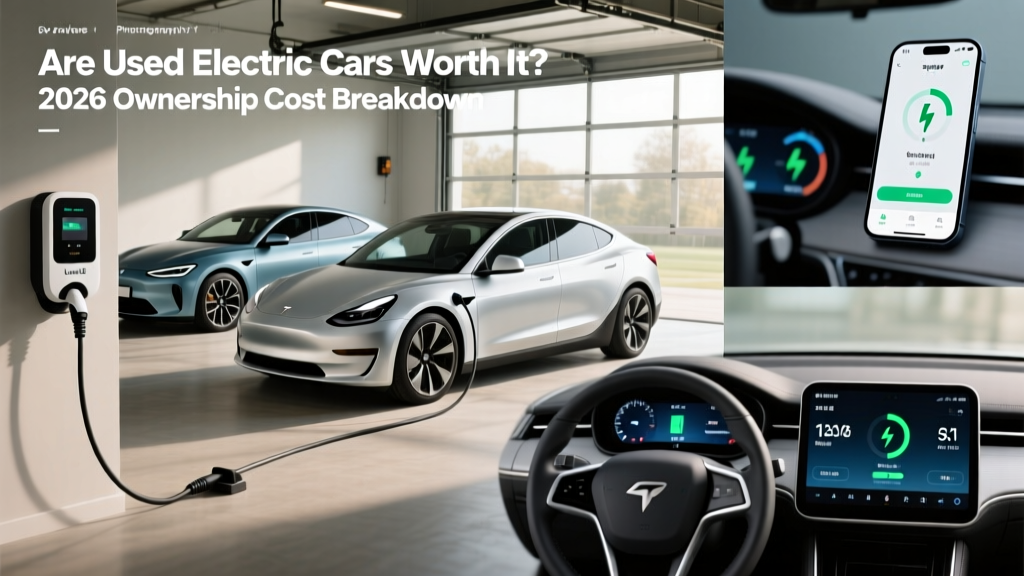
The 2015 Tesla Model S was a watershed vehicle — the car that proved a battery-electric sedan could compete with luxury flagships on performance, technology, and daily usability. More than a decade later, the Tesla 2015 interior still sparks debate among used-EV shoppers: its minimalist 17-inch touchscreen was revolutionary at the time, but how does it hold up against today's EV cabins? And more critically, what does owning a 2015 Model S look like in 2026 — from battery degradation to charging speeds to out-of-warranty repair costs?
This guide breaks down everything a prospective used-Model-S buyer needs to know, with hard numbers on range, charging, and total cost of ownership.
2015 Tesla Model S: Quick Verdict
The 2015 Model S remains one of the most compelling used EVs on the market — provided you buy with eyes open. The 85 kWh variant delivers roughly 265 miles of EPA-rated range when new, though a decade of battery wear means realistic range in 2026 is closer to 210–240 miles depending on the pack's State of Health (SoH). The interior, while dated in material quality compared to 2026 luxury EVs, still offers class-leading cargo space and a touchscreen interface that, thanks to Tesla's over-the-air updates, remains functional for daily use.
Best suited for: budget-conscious EV adopters who want a large luxury sedan with Supercharger access, strong performance, and don't mind the risk of out-of-warranty repairs on an aging platform.
Range, Battery, and Real-World Efficiency
Real-World Range in 2026: Expect 210–240 miles (85 kWh) depending on battery SoH. Highway driving at 75 mph reduces this to ~190–210 miles. In freezing temperatures (below 32°F), add another 15–25% range loss due to cabin heating and increased battery resistance.
Efficiency: 89 MPGe combined / 38 kWh per 100 miles (85 kWh model, per fueleconomy.gov)
The 2015 Model S came in three battery configurations:
| Variant | Battery Capacity | Chemistry | EPA Range (New) | Est. 2026 Range |
|---|---|---|---|---|
| 60 kWh | 60 kWh (usable ~58) | NMC (Nickel Manganese Cobalt) | 208 mi | 160–185 mi |
| 85 kWh | 85 kWh (usable ~81) | NMC | 265 mi | 210–240 mi |
| P85D (Performance) | 85 kWh (usable ~81) | NMC | 253 mi | 200–230 mi |
All 2015 packs use NMC chemistry — not the LFP (lithium iron phosphate) Tesla introduced in later standard-range models. NMC offers higher energy density but is more sensitive to sustained high-State-of-Charge storage. Owners who routinely charged to 100% and let the car sit will see more degradation than those who maintained a 20–80% daily window.
Battery degradation reality: Data from Tesla fleet analytics and owner surveys suggest the 85 kWh packs from this era lose approximately 10–15% capacity over the first 100,000 miles, with degradation slowing significantly afterward. A 2015 Model S with 90,000 miles and 88% SoH is common and still practical. Always request a battery health reading (accessible through the car's service menu or third-party tools like TeslaFi) before purchasing.
Charging Speeds: DC Fast, Level 2, and Level 1
The 2015 Model S uses Tesla's proprietary connector (now being rebranded as NACS — North American Charging Standard). It can access the full Tesla Supercharger network, which in 2026 remains the most reliable DC fast-charging infrastructure in the U.S. With an adapter, it can also use CCS-equipped stations.
| Charging Level | Power (kW) | Speed | Notes |
|---|---|---|---|
| Level 1 (120V) | ~1.4 kW | ~3–4 mi/hr | Emergency/trickle only |
| Level 2 (240V, 40A) | ~10 kW (dual charger: ~20 kW) | ~29 mi/hr (single) / ~58 mi/hr (dual) | Home or public Level 2 stations |
| DC Fast (Supercharger V2) | Peak ~120 kW | 10–80% in ~40–50 min | Older pack; taper above 60% SoC |
| DC Fast (Supercharger V3/V4) | Capped ~120 kW | 10–80% in ~40–50 min | 2015 hardware cannot reach 250 kW |
Charging-curve reality: The 2015 Model S peaks near 120 kW only when the battery is preconditioned and at a low State of Charge (below 30%). Above 60% SoC, the charge rate tapers sharply — often dropping below 40 kW. This means the published 10–80% time is realistic, but 10–90% or 10–100% sessions take disproportionately longer. Plan road-trip stops around 10–80% charges for optimal time efficiency.
For home charging, the onboard charger supports up to 40 amps (10 kW) on a single charger, or 80 amps (20 kW) with the optional dual-charger package. Most 2015 models have the single charger. A Tesla Wall Connector or any J1772 station with a Tesla adapter will work; installation on a 240V/50A circuit typically costs $800–$1,500 depending on panel proximity.
Performance and Drivetrain
| Variant | 0–60 mph | Horsepower | Drivetrain |
|---|---|---|---|
| 85 (RWD) | 5.4 sec | 362 hp | Rear-Wheel Drive |
| 85D (AWD) | 4.9 sec | 417 hp (combined) | Dual-Motor AWD |
| P85D (Performance AWD) | 3.2 sec | 691 hp (combined) | Dual-Motor AWD |
The P85D's "Insane Mode" launch was a cultural moment in 2015 — it demonstrated that EVs could out-accelerate most supercars while seating five adults with a full frunk and trunk. In 2026, that 3.2-second 0–60 time still holds up against new performance EVs costing twice as much.
The dual-motor AWD variants (85D and P85D) provide genuine all-weather traction, making them strong picks for buyers in snow-belt states. Regenerative braking is aggressive enough for near-one-pedal driving in most conditions, though it lacks the adjustable regen settings found in newer EVs like the Hyundai Ioniq 5 or BMW i4.
The Tesla 2015 Interior: Design, Tech, and Practicality
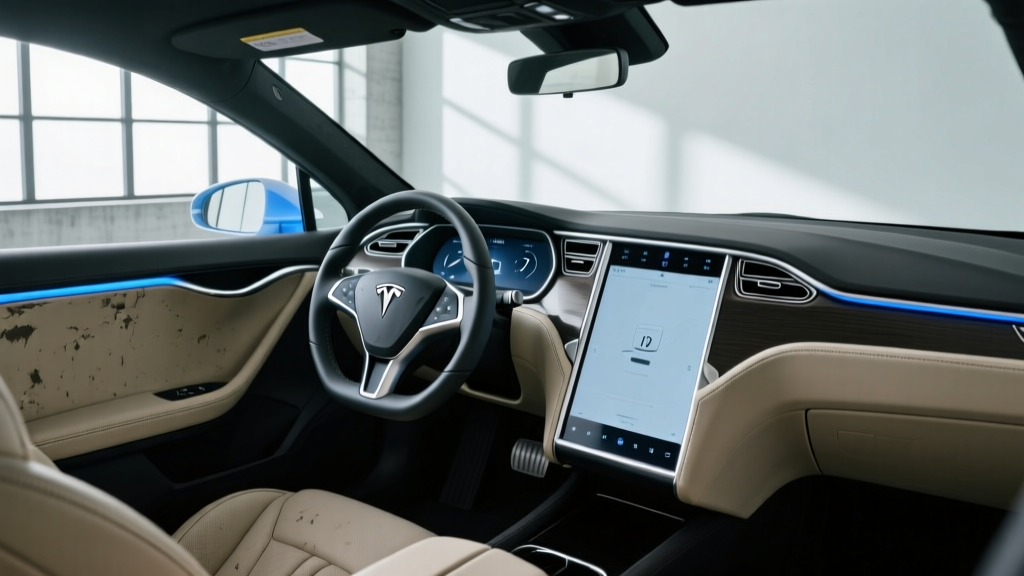
The Tesla 2015 interior was polarizing at launch and remains so today. Tesla stripped away nearly every physical button, routing climate controls, media, navigation, and vehicle settings through the 17-inch vertically oriented touchscreen. In 2015, this was futuristic; in 2026, it feels both prophetic (nearly every new EV follows this playbook) and dated (the screen's resolution and processor speed lag behind modern infotainment).
Interior Dimensions and Cargo
| Measurement | 2015 Model S |
|---|---|
| Front legroom | 42.7 in |
| Rear legroom | 35.4 in |
| Front headroom | 38.8 in |
| Rear headroom | 35.3 in |
| Trunk (rear) | 26.3 cu ft |
| Frunk (front trunk) | 5.3 cu ft |
| Cargo w/ rear seats folded | 58.1 cu ft |
| Optional rear-facing jump seats | Adds 2 child seats (rare) |
The Model S's hatchback design and flat floor give it more usable cargo volume than nearly any sedan on the road, new or used. The frunk, while modest, handles a charging cable and groceries. With rear seats folded, the 58 cu ft space rivals compact SUVs.
Infotainment and Software
Tesla's over-the-air (OTA) update architecture means a 2015 Model S in 2026 still receives software improvements — though the older MCU1 (Media Control Unit) hardware is sluggish compared to the MCU2 (introduced in 2018) and the current Ryzen-based processors. Common MCU1 complaints include slow map rendering, occasional screen delamination (a known issue that Tesla addressed under a service campaign), and limited app functionality.
MCU upgrade option: Tesla offers an MCU1-to-MCU2 retrofit for approximately $1,500–$2,000, which dramatically improves responsiveness and unlocks features like Sentry Mode and the latest navigation. This is a worthwhile investment for any used 2015 buyer planning long-term ownership.
Driver Assistance: Autopilot
2015 was the year Tesla introduced its first-generation Autopilot hardware (HW1), supplied by Mobileye. This system provides adaptive cruise control and lane-centering assist — classified as SAE Level 2 driver assistance. The driver must remain fully engaged, with hands on the wheel and eyes on the road.
HW1 does not support Tesla's Full Self-Driving (Supervised) software and never will — the hardware lacks the cameras and compute required. If advanced driver assistance is a priority, the 2015 Model S will disappoint compared to 2026 vehicles with current-generation ADAS.
Pricing, Tax Credits, and Used-EV Value
The 2015 Model S is no longer eligible for the new-vehicle federal tax credit (§30D), which applies only to new purchases. However, it may qualify for the Used Clean Vehicle Credit (§25E), which provides up to $4,000 (or 30% of the sale price, whichever is less) for qualifying pre-owned EVs.
| Item | Details |
|---|---|
| Original MSRP (2015) | $71,200 (60) / $76,200 (85) / $103,200 (P85D) |
| Typical 2026 Used Price | $18,000–$32,000 (varies by mileage, condition, battery SoH) |
| Used EV Tax Credit (§25E) | Up to $4,000 (30% of sale price, max $4,000) |
| Income Cap (Modified AGI) | $75,000 single / $112,500 HOH / $150,000 joint |
| Dealer Requirement | Must purchase from a licensed dealer (private sales excluded) |
| Price Cap | Sale price must be $25,000 or less |
| Vehicle Age Requirement | Model year at least 2 years older than current year (2015 qualifies in 2026) |
Critical caveat: The §25E used-EV credit has strict rules. The vehicle must sell for $25,000 or less, be purchased from a dealer (not a private party), and the buyer must fall under income caps. Per IRS guidelines, the credit can be transferred to the dealer at the point of sale, reducing your out-of-pocket cost immediately. Confirm eligibility with a tax professional before relying on this credit.
At a typical used price of $20,000–$28,000, the 2015 Model S 85 offers one of the lowest cost-per-mile-of-range values in the used EV market — undercutting most 2026 new EVs even after their $7,500 new-vehicle credits.
Warranty and Out-of-Warranty Repair Risk
| Coverage | Original Warranty | 2026 Status |
|---|---|---|
| Basic Vehicle | 4 yr / 50,000 mi | Expired on all 2015 models |
| Battery & Drive Unit | 8 yr / unlimited mi (85 kWh) 8 yr / 100,000 mi (60 kWh) | Expired on most; some 85 kWh packs may have residual coverage if under mileage and purchased late 2015 |
| Roadside Assistance | 4 yr / 50,000 mi | Expired |
This is the most important section for any used 2015 Model S buyer. The battery and drive-unit warranty has expired (or is expiring) for virtually every 2015 vehicle. An out-of-warranty battery replacement costs between $12,000 and $20,000 depending on whether you source a new, refurbished, or used pack. Drive-unit (motor) replacements run $5,000–$8,000.
Risk mitigation strategies:
- Purchase a vehicle with a documented battery SoH above 85%
- Budget $500–$1,000/year for potential high-voltage system repairs
- Consider third-party EV warranties (e.g., XCare, Endurance) — availability varies by state and mileage
- Verify the car has not had a rebuilt or salvaged title, which voids any remaining Tesla service support
Pros and Cons: 2015 Tesla Model S in 2026
Pros
- Spacious hatchback sedan with 58 cu ft cargo capacity — more practical than most new EV crossovers
- Access to the Tesla Supercharger network — still the gold standard for road-trip charging reliability
- Strong performance, especially P85D (3.2 sec 0–60)
- Low used pricing ($18K–$32K) with potential $4,000 used-EV tax credit
- OTA updates still provide minor feature improvements
- Air suspension provides excellent ride quality (when functioning)
Cons
- Battery and drivetrain warranty expired — $12K–$20K replacement risk
- MCU1 infotainment is sluggish; $1,500+ upgrade recommended
- HW1 Autopilot is basic and cannot be upgraded to FSD
- Air suspension failures are common and costly ($2,000–$4,000 per corner)
- Peak DC charge rate limited to ~120 kW — slower than modern 250–350 kW EVs
- No heat pump — resistive cabin heater reduces winter range significantly
- Build quality (panel gaps, rattles) below 2026 luxury standards
Who Should Buy a 2015 Tesla Model S?
- You want a large, fast luxury EV sedan under $30,000
- You have home Level 2 charging and primarily drive under 200 miles/day
- You value Supercharger access for occasional road trips
- You're mechanically inclined or budget for out-of-warranty repairs
- You need sedan-level cargo space with hatchback versatility
- You want modern ADAS (lane changes, intersection handling) — consider a 2020+ Model 3/Y or a new Hyundai Ioniq 6
- You need a worry-free warranty — a new Chevrolet Equinox EV or Tesla Model 3 starts at ~$38K with full coverage
- You live in extreme cold and need a heat pump for winter efficiency
- You want the fastest possible DC charging for frequent long road trips
Frequently Asked Questions
What is the real-world range of a 2015 Tesla Model S in 2026?
Expect 210–240 miles from the 85 kWh model in moderate temperatures with mixed driving. Highway-only driving at 75 mph drops this to roughly 190–210 miles. In sub-freezing weather, plan for 160–190 miles due to the resistive cabin heater and cold-battery losses. The 60 kWh model delivers roughly 160–185 miles in real-world use.
How fast does the 2015 Model S charge at home and on road trips?
At home on a 240V Level 2 charger (40A), it adds approximately 29 miles of range per hour — a full overnight charge from 20% to 80% takes about 6–7 hours. On Tesla Superchargers, it peaks near 120 kW but tapers significantly above 60% SoC, making 10–80% charges take roughly 40–50 minutes. This is noticeably slower than modern EVs charging at 250+ kW.
Does the 2015 Tesla Model S qualify for any tax credit?
Not the new-vehicle §30D credit. However, it may qualify for the Used Clean Vehicle Credit (§25E) — up to $4,000 — if the sale price is $25,000 or less, you buy from a licensed dealer, and your modified AGI is under $75,000 (single) or $150,000 (joint). Per IRS rules, this credit can be applied at the point of sale. Always verify with a tax professional.
Is the 2015 Model S worth buying vs. newer used EVs?
It depends on priorities. The 2015 Model S offers more interior space, better performance, and Supercharger access than a similarly priced used Chevrolet Bolt EUV or Nissan Leaf. However, a 2020+ Tesla Model 3 (used, ~$25K–$32K) offers better range, faster charging, HW3 Autopilot, and likely some remaining battery warranty. If space and prestige matter most, the 2015 Model S wins. If reliability and modern tech matter more, look newer.
What are the biggest risks of owning a 2015 Model S?
The three main financial risks are: (1) battery replacement ($12,000–$20,000 if the pack fails), (2) air suspension failure ($2,000–$4,000 per corner — a very common issue at 80,000+ miles), and (3) drive-unit replacement ($5,000–$8,000). Budget $2,000–$4,000 in the first year for deferred maintenance and potential repairs. A pre-purchase inspection by a Tesla-qualified independent shop is essential.
Can I use non-Tesla chargers with a 2015 Model S?
Yes, with an adapter. The 2015 Model S uses Tesla's proprietary connector. Tesla sells a CCS adapter (~$250) that enables charging at Electrify America, EVgo, and other CCS networks. You can also use J1772 public Level 2 stations with the J1772-to-Tesla adapter that came with the car. CHAdeMO stations require a third-party adapter (e.g, Setec) and are increasingly rare.